How to Repack Wheel Bearings
To repack wheel bearings, first remove the wheel and lift the vehicle safely. Clean the old grease and debris from the bearings thoroughly, then press fresh, high-quality grease evenly into the rollers and gaps.
Reinstall the bearings and seals carefully, then snug the hub nut with a slight back-off to avoid play. Finally, spin the wheel to check for smooth rotation and minimal movement.
Keep going to uncover key tips and avoid common mistakes for a safe, smooth ride.
Key Takeaways
- Remove the wheel and access the bearings by loosening lug nuts and lifting the vehicle with jack stands.
- Clean bearings thoroughly with solvent, removing old grease and debris before drying them completely.
- Pack bearings evenly with high-quality wheel bearing grease using a bearing grease pack tool or by hand.
- Reinstall inner bearing, grease seal, hub, and outer bearing, then adjust the hub nut to snug with slight back-off.
- Test by spinning the wheel for smooth rotation, checking for minimal play, and ensuring no unusual noises or grinding.
What Wheel Bearings Are and Why Repacking Matters
What exactly are wheel bearings, and why should you care about repacking them? Wheel bearings are small but crucial components that allow your wheels to spin smoothly and support the vehicle’s weight. They reduce friction between the wheel and the axle, ensuring a steady, safe ride.
Over time, the grease inside these bearings breaks down or leaks out, which can cause increased friction and wear. Repacking your wheel bearings means cleaning out the old, dirty grease and applying fresh grease to keep them lubricated.
Signs Your Wheel Bearings Need Repacking
If you hear unusual noises coming from your wheels or notice excessive play when you wiggle them, your wheel bearings might need attention. You should also watch for any grease leaking around the wheel hub.
Catching these signs early can save you from bigger repairs down the road.
Unusual Wheel Noises
How can you tell when your wheel bearings need repacking? One of the clearest signs is unusual wheel noises that change with speed or turning. You might hear grinding, humming, or growling sounds indicating worn or dry bearings.
These noises usually get louder as you accelerate or when you turn, signaling friction and damage inside the hub.
| Noise Type | When It Occurs | What It Means |
|---|---|---|
| Grinding | Accelerating or braking | Bearings lack lubrication |
| Humming | Constant speed | Worn bearing races |
| Growling | Turning or cornering | Damaged or contaminated |
Pay attention to these sounds. They’re your wheel bearings’ way of asking for maintenance before bigger issues arise.
Excessive Wheel Play
Wondering whether your wheel bearings need attention? One clear sign is excessive wheel play. When you grab your tire at the 12 and 6 o’clock positions and rock it back and forth, you shouldn’t feel noticeable movement.
If the wheel shifts considerably, it indicates worn or loose bearings. This play can affect your vehicle’s handling and cause uneven tire wear. Ignoring it might lead to more severe damage or even unsafe driving conditions.
Checking for excessive wheel play is simple and effective. Just lift the vehicle and test the wheel by hand. If you detect too much movement, it’s time to repack or replace your wheel bearings to restore smooth, safe operation. Don’t put off this essential maintenance step.
Grease Leakage Signs
What clues can grease leakage give you about your wheel bearings? If you notice grease seeping out around the wheel hub or on the inside of the tire, it’s a clear sign your wheel bearings need attention.
Grease leakage usually means the seals are worn or damaged, allowing lubricant to escape and contaminants to enter. Without enough grease, bearings can overheat and wear quickly, leading to failure.
You might also spot dark, dirty grease buildup around the hub, indicating old grease mixed with debris. Don’t ignore these signs. If you see grease leakage, it’s time to repack your wheel bearings to restore proper lubrication and protect your vehicle’s performance and safety.
Taking care of this early prevents costly repairs down the road.
Tools and Materials Needed for Repacking Wheel Bearings
Before you start repacking your wheel bearings, you’ll need to gather the right tools and materials. You’ll want essentials like a bearing packer, grease, and a clean workspace.
Getting everything ready will make the process smoother and more efficient.
Essential Tools Overview
Which tools will make repacking your wheel bearings easier and more effective? Having the right tools not only speeds up the job but ensures you won’t damage any parts. Here’s what you’ll need:
- Bearing Grease Pack Tool This helps you evenly coat the bearings with grease without making a mess or missing spots.
- Bearing Puller or Seal Puller Essential for safely removing old bearings and seals without causing damage.
- Socket Set and Wrenches You’ll use these to remove the wheel and hub assembly, plus tighten everything back securely.
With these tools ready, you’ll be set for a smooth, efficient bearing repack job, reducing the chances of errors or injury. Getting organized before you start saves a lot of hassle later.
Required Materials List
Having the right tools laid out makes the next step, gathering all necessary materials, much easier. For repacking wheel bearings, you’ll need high-quality wheel bearing grease, a clean container for old grease, and replacement bearings or races if worn. Don’t forget new bearing seals to prevent contamination.
Grab a wire brush or brake cleaner to thoroughly clean the hub and bearings. You’ll also want a lint-free cloth or shop towels for wiping parts down. A bearing packer tool helps apply grease evenly, but you can also pack by hand.
Lastly, keep some gloves handy to protect your hands and avoid grease contamination. Having these materials ready ensures you work efficiently and maintain your wheel bearings properly.
Removing Your Wheel and Accessing the Bearings Safely
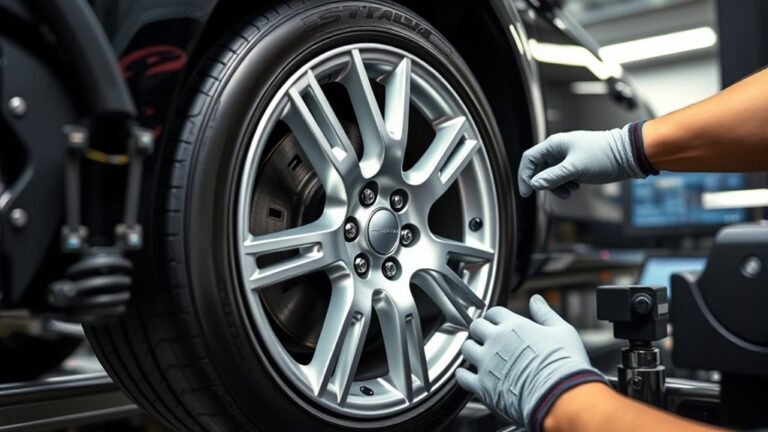
How do you safely remove your wheel to access the bearings without causing damage? Start by securing your vehicle on a flat surface and using wheel chocks to prevent movement. Always wear gloves and safety glasses for protection.
Follow these steps:
- Loosen Lug Nuts: Before lifting, slightly loosen the lug nuts with a wrench while the wheel is still on the ground.
- Lift the Vehicle: Use a jack to raise the vehicle, then place jack stands underneath for stability. Never rely solely on the jack.
- Remove the Wheel: Fully unscrew the lug nuts and carefully pull the wheel off to expose the hub and bearings.
Cleaning and Inspecting Your Wheel Bearings
When should you clean your wheel bearings to guarantee they function smoothly? Ideally, you should clean them every time you service your wheels or notice any signs of wear, noise, or rough rotation.
Begin by soaking the bearings in a solvent like kerosene or a dedicated bearing cleaner to dissolve old grease and dirt. Use a soft brush to remove stubborn grime, then carefully dry them with compressed air or a lint-free cloth.
Inspect each bearing thoroughly. Look for pitting, corrosion, or discoloration on the rollers and race. Also, check the bearing seals for cracks or damage. If you spot any defects, replace the bearings rather than risk failure.
Proper cleaning and inspection ensure your wheel bearings stay reliable and extend their lifespan.
How to Pack Bearings With the Right Amount of Grease
Why is applying the right amount of grease essential for your wheel bearings? Too little grease won’t protect against friction and wear, while too much can cause overheating and damage seals. To pack your bearings correctly, follow these steps:
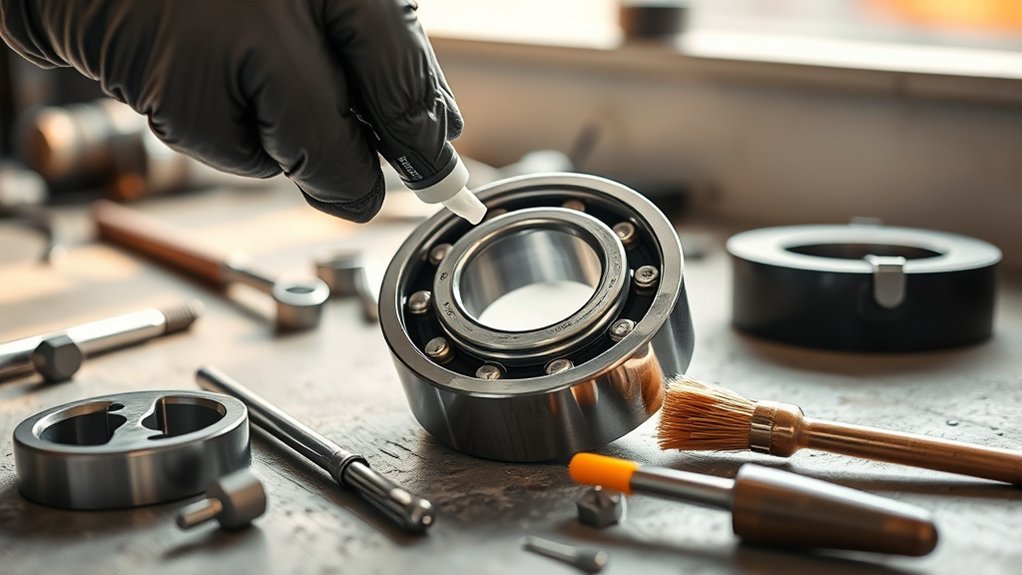
- Scoop a small amount of grease onto your palm. Using your fingers, press the grease into the bearing rollers, ensuring each roller is coated.
- Work the grease thoroughly by pushing it through the bearing until it oozes out the other side, filling all gaps.
- Apply a thin layer on the bearing’s outer surface to ensure full coverage without overfilling.
This method guarantees even distribution, prevents premature failure, and extends your wheel bearings’ lifespan.
Reinstalling Bearings and Adjusting the Hub Nut Correctly
Where should you begin once your bearings are packed correctly? Start by carefully placing the inner bearing into the hub, followed by the grease seal.
Then, slide the hub onto the spindle, making sure everything fits snugly. Next, install the outer bearing and the washer.
When it comes to the hub nut, tighten it until it’s snug, then back it off slightly to avoid overtightening. Proper adjustment ensures smooth rotation and prevents premature wear.
| Step | Action | Feeling |
|---|---|---|
| 1 | Insert inner bearing | Confidence |
| 2 | Fit grease seal | Assurance |
| 3 | Slide hub onto spindle | Control |
| 4 | Install outer bearing | Precision |
| 5 | Adjust hub nut correctly | Satisfaction |
Testing Your Wheel Bearings After Repacking and Common Mistakes to Avoid
How can you be sure your wheel bearings are properly repacked and ready for use? Testing them is essential to avoid premature failure or unsafe driving conditions. Start by spinning the wheel by hand; it should rotate smoothly without grinding or rough spots.
Next, check for any play by rocking the wheel back and forth. There should be minimal movement. Finally, listen for unusual noises when you spin the wheel; a quiet, consistent rotation means the bearings are seated correctly.
Common mistakes to avoid include:
- Overpacking bearings with grease, which causes excess heat.
- Under-tightening the hub nut, leading to bearing play.
- Forgetting to clean the hub and bearings before repacking, which traps debris.
Follow these steps to guarantee safe, long-lasting performance.
Frequently Asked Questions
How Often Should Wheel Bearings Be Repacked on Average?
You should repack your wheel bearings every 12,000 to 15,000 miles or at least once a year.
If you drive in harsh conditions, consider doing it more frequently to keep your wheels running smoothly and safely.
Can Wheel Bearings Be Repacked Without Removing the Wheel?
You can’t repack wheel bearings without removing the wheel, as 90% of the grease and debris buildup is hidden inside.
Removing the wheel gives you proper access to clean, inspect, and re-lubricate the bearings effectively.
What Type of Grease Is Best for Wheel Bearings?
You’ll want to use high-quality, high-temperature wheel bearing grease, usually lithium-based or synthetic. It handles heat, pressure, and water well, keeping bearings lubricated and protected for a long time without breaking down.
Are There Any Health Risks From Handling Bearing Grease?
Worried about health risks from bearing grease? You shouldn’t be overly concerned, but you should avoid prolonged skin contact and never ingest it.
Wearing gloves and washing hands after handling keeps you safe and healthy every time.
Can Repacking Wheel Bearings Improve Fuel Efficiency?
Yes, repacking wheel bearings can improve fuel efficiency by reducing friction in your wheels. When bearings run smoothly, your vehicle uses less energy to move, helping you save fuel and maintain better overall performance.
Conclusion
Repacking your wheel bearings might seem like a small gesture, but it’s truly a gentle way to keep your ride humming smoothly. By giving those bearings a fresh coat of grease and a careful check, you’re quietly extending their life and ensuring your wheels glide with ease.
Remember, a little attention now prevents bigger hiccups down the road—so treat your bearings with care. They’ll reward you with countless trouble-free miles when you take the time to repack wheel bearings properly.