How Do I Test a Fuel Pump Relay
To test your fuel pump relay, start by locating it in your vehicle’s fuse box or engine compartment. This is the first step in diagnosing potential fuel delivery issues. Use a multimeter to check for voltage and continuity, making sure the relay clicks when the ignition is on.
Remove the relay carefully before testing to avoid inaccurate readings from other components. Inspect the relay socket for corrosion or loose connections that could affect performance.
If you want to ensure reliable results and avoid common mistakes, the next steps will guide you through detailed testing and replacement tips. Following these instructions will help you maintain your vehicle’s fuel system effectively.
Key Takeaways
- Locate the fuel pump relay in the fuse box or relay panel using the vehicle’s service manual or fuse box diagram.
- Remove the relay carefully, noting its orientation for proper replacement.
- Use a multimeter to check for coil continuity and proper voltage according to relay specifications.
- Test relay operation by applying power to the coil and listening for a clicking sound, indicating activation.
- Inspect the relay socket for corrosion or loose connections, and avoid testing the relay while still plugged in.
What Is a Fuel Pump Relay and Why It Matters
A fuel pump relay controls the power sent to your vehicle’s fuel pump, ensuring it runs only when needed. When you turn your ignition on, the relay activates, sending electricity to the fuel pump so it can pressurize the fuel system.
Without this relay, your fuel pump might run constantly or not at all, leading to serious engine problems or even a no-start condition. The relay acts as a switch, protecting the fuel pump from electrical surges and preventing unnecessary wear.
Understanding its role helps you appreciate why testing it is essential when troubleshooting fuel delivery issues. If the relay fails, it can interrupt the fuel flow, causing your engine to stall or fail to start, making it a key component in your vehicle’s operation.
Symptoms and Signs of a Faulty Fuel Pump Relay
If your fuel pump relay is failing, you’ll likely notice symptoms like engine stalling or difficulty starting. These issues happen because the relay controls power to the fuel pump, so a bad relay can disrupt fuel delivery.
Recognizing these signs early helps you avoid bigger engine problems down the road.
Common Relay Failure Symptoms
When your vehicle struggles to start or suddenly stalls, the fuel pump relay might be to blame. You may notice the engine cranks but doesn’t catch, which often signals the relay isn’t sending power to the fuel pump.
Another common symptom is intermittent starting problems. Sometimes your car starts fine, other times it won’t. You might also hear a faint clicking sound from the relay when turning the key, or no sound at all if it’s completely failed.
Additionally, your fuel pump might run continuously, draining the battery if the relay sticks in the “on” position. Paying attention to these signs can help you identify relay issues early before they cause more serious problems.
Impact on Engine Performance
How does a faulty fuel pump relay affect your engine’s performance? When the relay fails, it disrupts the power flow to the fuel pump, causing inconsistent fuel delivery. You might notice your engine sputtering, stalling, or struggling to start.
In some cases, the engine may crank but won’t fire up because the fuel pump isn’t running. Hesitation during acceleration and poor overall engine performance can also signal relay issues.
If the relay intermittently fails, your engine might run fine one moment and stall the next, making the problem tricky to pinpoint. Recognizing these symptoms early helps you avoid getting stranded and prevents potential damage to other engine components.
Testing the relay ensures your fuel pump works reliably, keeping your engine running smoothly.
How to Gather Tools to Test a Fuel Pump Relay
Gathering the right tools is essential to accurately test a fuel pump relay and ensure your vehicle’s fuel system works properly. Before you start, make sure you have everything you need at hand to avoid interruptions. Here’s a quick list of essential tools:
| Tool | Purpose |
|---|---|
| Multimeter | Measures voltage and continuity |
| Screwdriver Set | Removes relay covers or panels |
| Relay Tester (optional) | Quickly checks relay function |
| Vehicle Service Manual | Provides relay specifications |
Having these tools ready will help you test the relay efficiently. The multimeter is your primary device for checking electrical signals, while screwdrivers help access the relay safely. A relay tester speeds up diagnosis but isn’t mandatory.
Lastly, your vehicle’s service manual offers vital details like relay pin configuration and voltage requirements.
How to Locate the Fuel Pump Relay in Your Vehicle
Wondering where to find the fuel pump relay in your vehicle? It’s usually tucked away in one of a few common spots, but you’ll need to dig a little to locate it. Start by checking these areas:
- Under the hood, inside the fuse box, often near the battery
- Beneath the dashboard on the driver’s side, behind kick panels
- Inside the engine compartment’s relay box, sometimes near the firewall
- In the passenger side footwell area, behind a service panel
Refer to your vehicle’s manual or the fuse box cover for relay diagrams, which can pinpoint the exact relay. Finding the relay quickly saves you time and frustration, so take a moment to explore these spots carefully before moving on.
How to Test a Fuel Pump Relay With a Multimeter
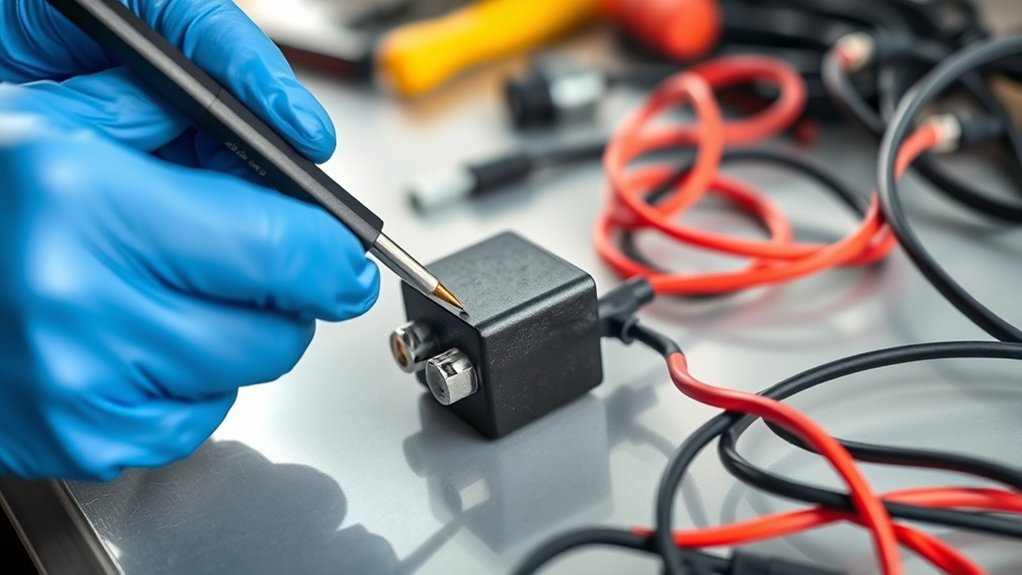
When testing a fuel pump relay with a multimeter, you’ll want to verify that the relay is functioning correctly before replacing it. First, remove the relay from its socket. Set your multimeter to the ohms (Ω) setting to check for continuity.
Identify the relay’s coil terminals, usually marked on the relay. Place the multimeter probes on these terminals; you should see a resistance reading between 50 to 120 ohms, indicating the coil is intact.
Next, test the switch terminals by applying 12 volts to the coil terminals using a power source or battery. With the coil energized, check for continuity between the switch terminals. If you don’t get a proper reading, the relay is faulty and needs replacement.
How to Test a Fuel Pump Relay Using a Test Light
Besides using a multimeter, you can also test a fuel pump relay with a test light to quickly check if power is reaching the relay and if the relay is activating properly. First, connect the test light clip to a good ground. Then, probe the relay’s power terminals while someone turns the ignition key. The light should illuminate if power is present.
Next, listen for a clicking sound as the relay activates, and check the output terminal with the test light. If it doesn’t light up, the relay might be faulty. Remember these key steps:
- Connect test light to ground securely
- Probe power and output terminals carefully
- Have someone turn the ignition on/off
- Watch and listen for relay activation
This method gives you a fast, hands-on way to verify your fuel pump relay’s functionality.
What to Do When Your Fuel Pump Relay Isn’t Working
How can you tell if your fuel pump relay has failed, and what steps should you take next? First, if your engine won’t start or stalls unexpectedly, your relay might be the culprit. Listen for a subtle humming sound from the fuel pump when you turn the key. No sound often points to relay trouble.
Once you suspect a bad relay, check your vehicle’s manual to locate it. Avoid driving the car, as a failing relay can cause fuel delivery issues. Instead, inspect the relay visually for damage or corrosion.
If you find signs of wear or your tests confirm failure, prepare to replace the relay promptly. Meanwhile, keep a backup relay handy to minimize downtime and avoid being stranded.
How to Remove and Replace Your Fuel Pump Relay Safely
Before you start, make sure the vehicle is turned off and the keys are removed from the ignition to prevent any electrical hazards. Locate the fuel pump relay, usually found in the fuse box under the hood or inside the cabin. Carefully pull the relay straight out, avoiding any damage to the socket or wiring. When installing the new relay, ensure it’s the correct replacement and push it firmly into place.
Keep these tips in mind for a safe process:
- Wear gloves to protect your hands from sharp components.
- Avoid forcing the relay to prevent breaking pins.
- Double-check the relay orientation before insertion.
- Disconnect the battery if uncertain about electrical safety.
Common Fuel Pump Relay Testing Mistakes to Avoid
Why do so many people overlook simple errors when testing a fuel pump relay? One common mistake is not disconnecting the battery before removing the relay, which can cause electrical shorts or damage.
Another is failing to use a proper multimeter setting, leading to inaccurate readings. You might also neglect to check the relay’s socket for corrosion or loose connections, which can mimic relay failure.
Avoid testing the relay while it’s still plugged in; this can cause misleading results due to other components influencing the circuit. Finally, don’t assume a relay is faulty just because the fuel pump isn’t working. Other parts like fuses or the pump itself might be to blame.
Stay methodical and double-check each step to avoid these pitfalls.
Why Regular Fuel Pump Relay Checks Prevent Starting Issues
Avoiding common mistakes during fuel pump relay tests helps you spot issues early, but regular checks go beyond troubleshooting. They keep your vehicle reliable and save you from unexpected headaches.
By routinely inspecting the relay, you ensure your car starts smoothly every time. Neglecting this simple step can leave you stranded when you least expect it. Here’s why regular checks matter:
- Prevent sudden no-start situations that disrupt your day
- Catch relay wear before it causes costly repairs
- Maintain consistent fuel delivery for engine performance
- Gain peace of mind knowing your car won’t fail you
Taking a few minutes to test your fuel pump relay regularly keeps your vehicle dependable and your drives stress-free.
Frequently Asked Questions
Can a Faulty Fuel Pump Relay Affect Fuel Efficiency?
Yes, a faulty fuel pump relay can reduce your fuel efficiency because it may cause inconsistent fuel delivery.
You’ll notice poor engine performance and wasted fuel when the relay doesn’t properly power the pump.
How Long Does a Fuel Pump Relay Typically Last?
Imagine a driver whose relay lasted eight years before failing. You’ll find fuel pump relays typically last between 5 to 10 years, but factors like heat and vibration can shorten their lifespan.
Are Fuel Pump Relays Universal or Vehicle-Specific?
Fuel pump relays aren’t universal; they’re vehicle-specific. You’ll need to check your car’s make, model, and year to find the correct relay.
Using the wrong one can cause electrical issues or fuel delivery problems.
Can a Bad Fuel Pump Relay Cause Engine Stalling?
Like a knight’s sudden armor failure, a bad fuel pump relay can cause your engine to stall unexpectedly. You’ll notice hesitation, sputtering, or complete shutdown because the fuel supply gets interrupted, halting your ride abruptly.
Is It Safe to Drive With a Failing Fuel Pump Relay?
It’s not safe to drive with a failing fuel pump relay because your engine might stall unexpectedly, leaving you stranded or causing an accident.
You should get it checked and replaced as soon as possible to avoid risks.
Conclusion
Testing your fuel pump relay is crucial since about 30% of starting issues trace back to electrical components like it. By regularly checking your relay, you can avoid frustrating breakdowns and costly repairs.
With the right tools and steps, you’ll quickly know if your relay’s the problem, keeping your vehicle reliable and ready. Don’t overlook this small but vital part—it’s often the key to smooth starts and trouble-free drives.
In conclusion, knowing how to test a fuel pump relay can save you time and money by pinpointing electrical faults early. Make this test part of your routine maintenance to ensure your vehicle starts and runs smoothly every time.