What Is Wheel Offset
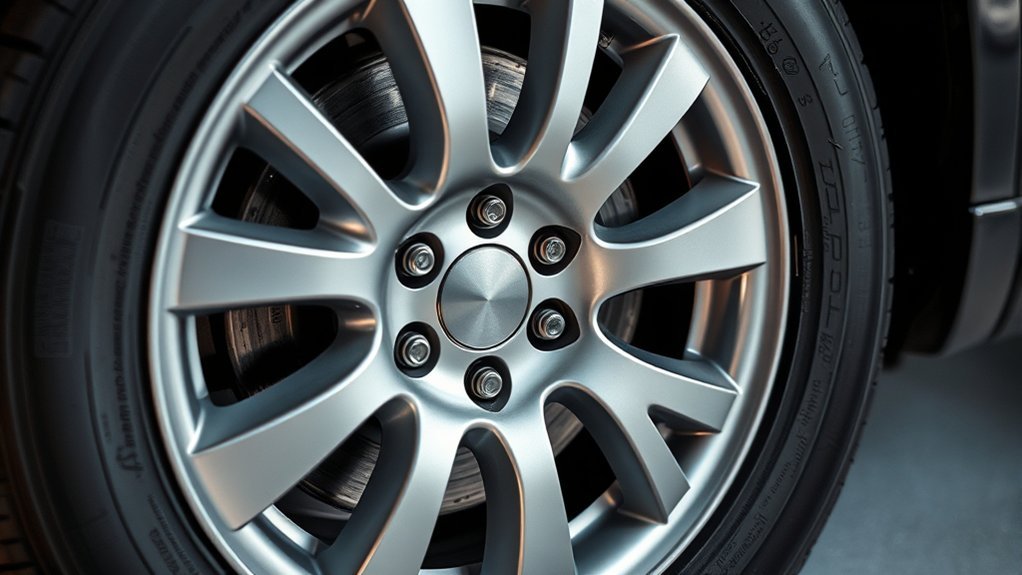
Wheel offset is the distance between your wheel’s mounting surface and its centerline, determining how your wheels sit relative to your car’s body and suspension. Understanding wheel offset is essential for proper fitment, preventing rubbing, and maintaining stability.
Positive offset tucks wheels inward, while negative offset pushes them outward for a wider stance. Getting your offset right means better handling, even tire wear, and the right look.
Knowing how to balance wheel offset helps you achieve the perfect blend of performance and style. Keep exploring to find out how.
Key Takeaways
- Wheel offset is the distance between the wheel’s mounting surface and its centerline.
- It determines how the wheel sits relative to the vehicle’s suspension and body.
- Offset types include positive (mounting surface closer to outer edge), negative (closer to inner edge), and zero (aligned with centerline).
- Proper offset ensures correct fitment, preventing rubbing and maintaining vehicle stability.
- Offset affects handling, tire wear, track width, and overall vehicle performance.
What Is Wheel Offset And Why It Matters
What exactly is wheel offset, and why should you care about it? Wheel offset is the distance between your wheel’s mounting surface and its centerline. This measurement affects how your wheel sits in relation to your car’s suspension and body.
If you don’t pay attention to offset, your wheels might stick out too far or sit too far inside the wheel well, causing rubbing issues or poor handling. Proper offset ensures your wheels fit correctly, maintain stability, and avoid unnecessary wear.
It also impacts your vehicle’s track width, influencing grip and performance. Understanding wheel offset helps you choose wheels that not only look good but also maintain safety and driveability. So, getting this right is crucial for both function and style.
Positive, Negative, And Zero Wheel Offset Explained
How does the direction of wheel offset affect your vehicle’s fit and performance? Positive offset means the hub mounting surface sits closer to the wheel’s outer edge, pushing the wheel inward. This setup is common on front-wheel-drive cars and helps avoid rubbing against suspension components.
Negative offset places the hub mounting surface toward the wheel’s inner edge, pushing the wheel outward. You’ll often see this on trucks or off-road vehicles for a wider stance and improved stability.
Zero offset means the hub mounting surface aligns perfectly with the wheel’s centerline, offering a balanced fit. Choosing the right offset ensures your wheels fit properly, avoid clearance issues, and maintain handling characteristics.
Understanding these differences helps you pick wheels that enhance both style and safety.
Measuring Wheel Offset: Step-By-Step Guide
To measure your wheel offset accurately, you’ll need a few simple tools like a ruler and a flat surface. Start by measuring the distance from the hub mounting surface to the rim’s centerline.
Then, use these measurements to calculate the offset value and understand how your wheels will fit.
Required Tools Overview
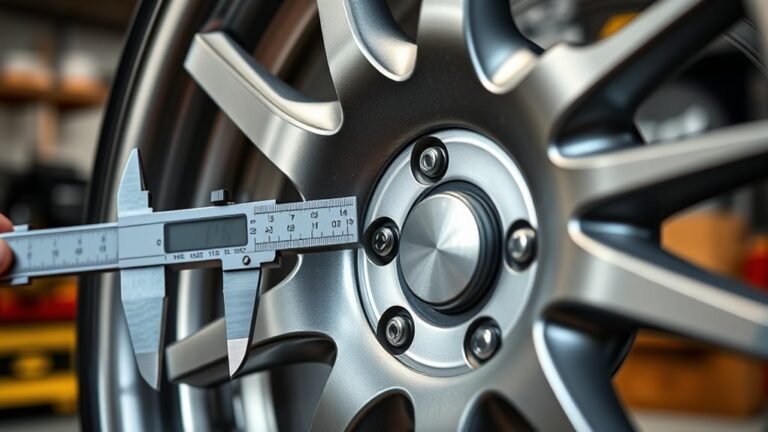
Several essential tools will help you accurately measure wheel offset and guarantee reliable results. First, you’ll need a straight edge or ruler to span the wheel’s width precisely. A caliper or tape measure is crucial for measuring distances from the hub mounting surface to the wheel’s centerline.
Additionally, a flat surface or workbench provides a stable base for consistent measurements. Having a marker or tape helps mark reference points on the wheel. A level can assist in ensuring your measurements are perfectly horizontal, avoiding skewed results.
Lastly, some prefer a digital measuring tool for enhanced accuracy. By gathering these tools before starting, you’ll streamline the process and ensure your wheel offset calculations are spot on.
Measuring Hub To Rim
Where exactly do you start when measuring wheel offset? Begin by focusing on the distance between the hub mounting surface and the rim’s centerline. This measurement is crucial for understanding how your wheel will sit relative to your vehicle’s suspension and fenders.
Here’s how you break it down:
- Find the Hub Mounting Surface: This is where the wheel bolts to the vehicle. Make sure it’s clean and free from debris for an accurate reading.
- Identify the Rim Centerline: Measure the total width of the wheel and divide by two to find the exact middle.
- Measure the Distance: Use a straight edge or ruler to measure from the hub surface to the rim centerline. This distance helps determine the wheel’s offset direction and magnitude.
Calculating Offset Value
Once you’ve measured the distance between the hub mounting surface and the rim centerline, you can start calculating the wheel offset value. Subtract the distance from the rim centerline to the hub surface if the hub is closer to the inside edge of the wheel. That gives you a positive offset.
If the hub surface is closer to the outside edge, subtract the rim centerline distance from the hub surface distance, resulting in a negative offset. For example, if the hub mounting surface is 20mm from the rim centerline toward the wheel’s face, your offset is +20mm.
If it’s 15mm toward the back, your offset is -15mm. This simple subtraction helps you accurately determine whether your wheel has positive, negative, or zero offset.
How Wheel Offset Affects Your Car’s Handling
Your wheel offset directly impacts how your car steers and handles on the road. If the offset is off, you might notice changes in steering response and uneven tire wear.
Understanding this connection helps you keep your ride smooth and safe.
Impact On Steering Response
Although wheel offset might seem like a minor detail, it plays an essential role in how your car responds to steering inputs. When you change the offset, you affect the leverage your wheels have on the steering system, which directly impacts how quickly and precisely your car reacts.
Here’s how offset influences steering response:
- Improved Responsiveness: A proper offset keeps the steering geometry intact, making turns feel sharp and controlled.
- Reduced Steering Effort: Correct offset aligns your wheels to lessen the force needed to turn the wheel, enhancing comfort.
- Avoided Steering Pull: Incorrect offset can cause your car to pull to one side, forcing constant correction.
Influence On Tire Wear
How does wheel offset impact tire wear? When your wheel offset is off, it changes how your tires contact the road. Too much positive or negative offset can cause uneven tire wear, meaning your tires wear out faster on one edge.
Here’s a quick look at wheel offset’s influence on tire wear:
| Offset Type | Tire Wear Pattern | Effect on Handling |
|---|---|---|
| Positive Offset | Inner edge wear | Understeer tendency |
| Negative Offset | Outer edge wear | Oversteer tendency |
| Correct Offset | Even wear | Balanced handling |
The Impact Of Wheel Offset On Tire Wear
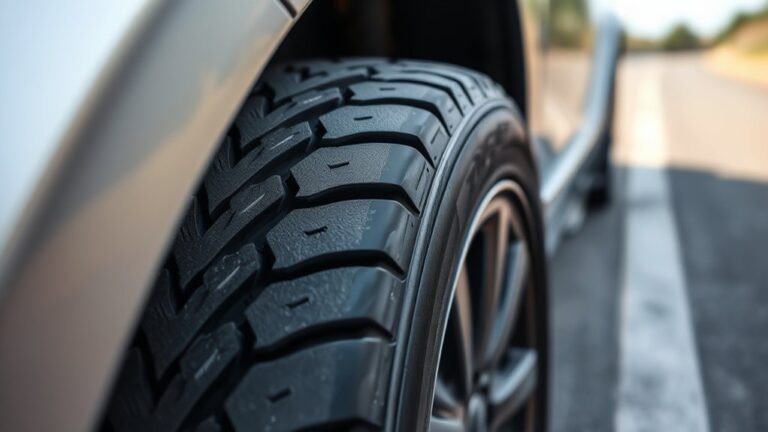
When your wheel offset isn’t properly matched to your vehicle, it can cause uneven tire wear that shortens tire life. This happens because the tires don’t sit correctly in the wheel well, affecting how the tread contacts the road. You might notice premature wear on the inner or outer edges of your tires.
Here’s how offset impacts tire wear:
Understanding offset’s effect on tire wear helps maintain even tread and extends tire life.
- Incorrect Load Distribution: Misaligned offset puts more pressure on certain tire areas, causing uneven wear.
- Altered Suspension Geometry: This affects how the tire grips the road, leading to irregular wear patterns.
- Increased Rolling Resistance: Poor offset increases friction, accelerating tire degradation.
Ensuring the right wheel offset helps your tires wear evenly and last longer.
Troubles You’ll Face With The Wrong Wheel Offset
Uneven tire wear is just one of the problems you’ll encounter with the wrong wheel offset. When your wheels sit too far in or out, you risk rubbing against suspension components or the wheel well, which can damage both your tires and vehicle.
This misalignment also puts extra strain on your steering system, causing it to feel less responsive or even make handling unpredictable. You might notice vibrations or pulling to one side while driving, which not only affects comfort but also compromises safety.
Additionally, incorrect offset can lead to premature wear on wheel bearings and suspension parts, meaning costly repairs down the line. Addressing wheel offset issues promptly keeps your vehicle running smoothly and protects your investment.
How To Choose The Right Wheel Offset For Your Vehicle
Wondering which wheel offset suits your vehicle best? Choosing the right offset is essential to ensure proper fitment and avoid handling issues. Here’s how you can pick the perfect one:
- Check Manufacturer Specs: Start with your vehicle’s manual or manufacturer recommendations. They provide the ideal offset range tailored for your model.
- Consider Wheel Width and Tire Size: Wider wheels may require a different offset to prevent rubbing against suspension or fenders.
- Account for Suspension and Brake Components: If you have aftermarket parts, make sure the offset allows enough clearance to avoid interference.
Wheel Offset And Vehicle Appearance
How does wheel offset influence your vehicle’s look? It shapes how your wheels sit relative to your car’s body, dramatically affecting its stance. A lower or negative offset pushes wheels outward, giving your ride a wider, more aggressive appearance.
On the other hand, a higher or positive offset tucks wheels inward, creating a sleeker, more streamlined profile. Choosing the right offset can enhance your vehicle’s aesthetics and highlight its design lines.
But if the offset’s off, your wheels might look awkward or cause fender rubbing. So, when selecting wheels, consider how the offset affects how far your wheels stick out or sit inside the wheel wells.
This subtle adjustment can transform your car’s visual appeal, making it stand out or maintain a clean, factory look.
How To Adjust Wheel Offset When Upgrading Wheels
When upgrading your wheels, where you set the offset plays a pivotal role in fitment and performance. To adjust wheel offset correctly, you need to consider how it affects clearance and handling.
Here are three key steps to guide you:
1. Measure existing offset
Know your current offset to understand how much change your new wheels will bring.
2. Determine desired stance and clearance
Decide if you want a wider stance or more inner clearance, then select an offset that matches.
3. Consult manufacturer specs
Check your vehicle’s recommended offset range to avoid issues with suspension or bodywork.
Easy Tools And Tips To Check Wheel Offset Yourself
You can easily measure your wheel offset at home using just a few simple tools like a ruler and a straight edge. By checking the distance between the mounting surface and the wheel’s centerline, you’ll get an accurate reading.
Let’s walk through the steps to make sure you get it right.
Measuring Wheel Offset
Wondering how to measure wheel offset accurately without specialized equipment? You can do it yourself with a few simple steps. First, measure the wheel’s width from bead seat to bead seat.
Second, find the wheel’s centerline by dividing the width by two. Finally, measure the distance from the mounting surface (where the wheel contacts the hub) to the wheel’s centerline. This distance is your wheel offset.
Positive offset means the mounting surface is closer to the outside, while negative offset places it closer to the inside.
Here’s a quick summary:
- Measure wheel width between bead seats.
- Calculate centerline by halving the width.
- Measure from mounting surface to centerline to find offset.
This method helps you understand your wheel’s fitment precisely.
Using Simple Tools
Simple tools like a ruler, caliper, and measuring tape can help you check wheel offset accurately at home. First, remove the wheel and place it face down on a flat surface. Measure the wheel’s total width from edge to edge.
Next, measure the distance from the mounting surface (where the wheel meets the hub) to the inside edge of the wheel. Using a caliper will improve precision here. Subtract this second measurement from half the total width to find the offset.
If the mounting surface is closer to the inside edge, you’ve got a positive offset; if it’s closer to the outside, it’s negative. By using these simple tools and steps, you can confidently determine your wheel offset without expensive equipment or professional help.
Frequently Asked Questions
Can Wheel Offset Affect Fuel Efficiency?
Yes, wheel offset can affect your fuel efficiency. If your offset causes extra drag or rolling resistance, your engine works harder, burning more fuel.
Does Wheel Offset Impact Brake Performance?
Yes, wheel offset can impact brake performance by altering clearance between the wheel and brake components.
If your offset’s off, it might cause rubbing or reduce cooling, potentially leading to brake wear or overheating issues.
Are Wheel Spacers Recommended Instead of Changing Offset?
You shouldn’t rely on wheel spacers instead of changing offset because spacers can cause stress on suspension components and affect handling. It’s better to choose wheels with the correct offset for safety and performance.
How Does Wheel Offset Influence Off-Road Driving?
Think of wheel offset as your vehicle’s stance in a dance; it affects stability and clearance. You’ll gain better traction and avoid rubbing obstacles off-road by choosing the right offset, enhancing control on rugged terrain.
Can Incorrect Offset Damage Wheel Bearings?
Yes, incorrect offset can damage your wheel bearings by placing extra stress on them. When the wheel sits too far in or out, it changes load distribution, causing premature wear and potential failure of your bearings over time.
Conclusion
Understanding wheel offset is like finding the perfect puzzle piece—it guarantees your wheels fit just right for peak performance and style. Getting the offset right improves handling, prevents uneven tire wear, and enhances your vehicle’s look.
When upgrading wheels, always consider offset carefully to keep your ride safe and smooth. With the right knowledge and simple tools, you can confidently choose and check wheel offset yourself.
This ensures every drive is better and safer, highlighting the importance of understanding wheel offset.