How Can You Test a Fuel Pump
You can test a fuel pump by first listening for a steady humming sound when you turn the key to ON without starting the engine. This initial check helps confirm the pump is activating properly.
Next, use a fuel pressure gauge on the fuel rail’s test port to check if the pressure falls within the normal 40-60 psi range. Accurate pressure measurement is crucial for diagnosing fuel pump performance.
Also, inspect electrical connections and test voltage with a multimeter to guarantee stable power delivery. Ensuring proper electrical supply helps identify if issues stem from wiring or the pump itself.
If problems persist, you’ll want to explore detailed diagnostics and next steps to address potential fuel system faults.
Key Takeaways
- Listen for a steady hum from the fuel pump when turning the ignition to the ON position without starting the engine.
- Use a fuel pressure gauge on the fuel rail’s test port to check pressure against vehicle specs (40-60 psi normal).
- Observe fuel flow by disconnecting the fuel line safely; steady spray indicates proper pump function.
- Measure voltage at the fuel pump connector with a multimeter, expecting stable 12–14 volts during operation.
- Inspect electrical connections and test the fuel pump relay for clicking sound and proper switching.
Signs Your Fuel Pump Is Failing
If your car struggles to start or stalls frequently, your fuel pump might be on its way out. You’ll notice a drop in fuel pressure that causes the engine to misfire or hesitate during acceleration.
Sometimes, your engine might sputter or lose power when driving uphill or carrying heavy loads. You could also experience a whining noise from the fuel tank, which signals the pump is struggling.
Engine sputtering uphill or a whining fuel tank noise often indicate your fuel pump is struggling.
Another sign is a sudden loss of power at high speeds, indicating inconsistent fuel delivery. If your vehicle won’t start despite a full tank, the pump could be failing completely.
Paying attention to these symptoms early on can help you avoid getting stranded and costly repairs down the road.
Tools Needed to Test a Fuel Pump at Home
What tools do you need to test a fuel pump at home? First, grab a fuel pressure gauge. It’s essential for checking if your pump delivers the right pressure.
You’ll also want a multimeter to measure voltage and continuity in the pump’s electrical circuit. Don’t forget basic hand tools like screwdrivers and wrenches for accessing the fuel pump and removing related components safely.
Having safety goggles and gloves is smart to protect yourself from fuel exposure. Additionally, a fuel line disconnect tool can make it easier to detach fuel lines without damage.
Finally, keep a container or rag handy to catch any fuel spills. With these tools, you’re ready to start diagnosing your fuel pump’s condition efficiently and safely.
Perform a Basic Fuel Pump Pressure Test
How do you know if your fuel pump is working properly? One simple way is to listen for a humming sound from the fuel tank area when you turn the key to the “on” position (without starting the engine). This indicates the pump is priming.
Next, check the fuel line for pressure by disconnecting it carefully at a safe point, usually near the engine or fuel rail. Be ready to catch any fuel with a rag or container.
If fuel sprays out steadily when you turn the ignition on, your pump is delivering fuel. If it sputters or doesn’t flow, the pump may be faulty.
Remember to follow all safety precautions since you’re handling flammable fuel. This basic test gives you a quick idea of your pump’s functionality.
Using a Fuel Pressure Gauge to Measure Pump Pressure
A fuel pressure gauge provides a precise way to measure your pump’s output and diagnose potential issues. First, connect the gauge to the fuel rail’s test port. Turn the ignition on without starting the engine to pressurize the system.
Watch the gauge for the pressure reading, then compare it to your vehicle’s specifications. If the pressure’s too low or fluctuates, your pump might be failing.
| Pressure Reading (psi) | Meaning | Emotion |
|---|---|---|
| 40-60 | Normal | Confidence |
| Below 40 | Low Pressure | Concern |
| Above 60 | High Pressure | Alarm |
| Fluctuating | Inconsistent | Frustration |
Using the gauge helps you pinpoint problems quickly and avoid costly repairs.
Check Fuel Pump Electrical Connections and Relay
Now, check the fuel pump’s electrical connections for any signs of damage or corrosion. Make sure the wiring is intact and secure.
Then, test the relay to confirm it’s switching power properly to the pump.
Inspect Wiring Integrity
Where should you start when checking your fuel pump’s electrical system? Begin by inspecting the wiring integrity. Look for damaged, frayed, or corroded wires leading to the fuel pump.
Damaged wiring can cause intermittent power loss or prevent the pump from running altogether. Use a multimeter to check continuity and ensure no breaks exist in the wiring harness.
Pay attention to connectors; dirty or loose connections can mimic wiring faults.
| Inspection Step | What to Look For |
|---|---|
| Visual Inspection | Frayed wires, corrosion, dirt |
| Continuity Testing | Unbroken electrical path |
| Connector Check | Tight fit, clean terminals |
Test Relay Functionality
How can you confirm that your fuel pump relay is working properly? Start by locating the relay in your vehicle’s fuse box. Remove the relay and visually inspect it for corrosion or damage.
Next, use a multimeter to check for continuity between the relay’s terminals; this guarantees the internal switch functions. You can also swap the relay with a similar one in your fuse box to see if the pump activates.
When testing, listen for a clicking sound from the relay when the ignition is turned on. That indicates it’s engaging. Additionally, verify all electrical connections to the relay and fuel pump are secure and free of corrosion.
Testing relay functionality is essential since a faulty relay can prevent your fuel pump from receiving power.
Test Fuel Pump Voltage With a Multimeter
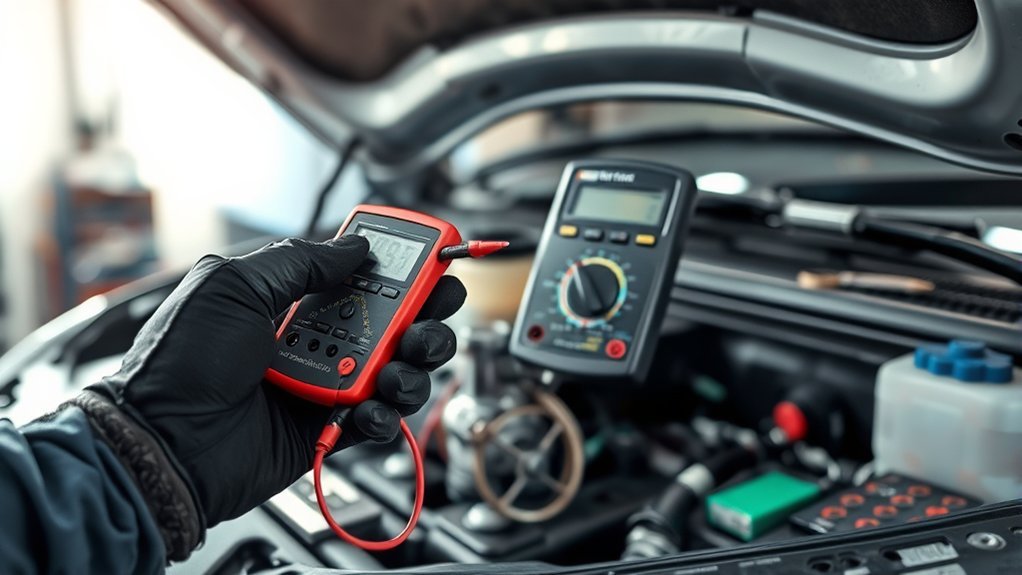
To test the fuel pump voltage, start by locating the fuel pump connector under the vehicle or near the tank. Set your multimeter to the appropriate voltage setting before connecting it to the terminals.
Then, check the readings carefully to determine if the pump is receiving the correct voltage.
Locating Fuel Pump Connector
Finding the fuel pump connector is an essential step before you test the pump voltage with a multimeter. To locate it, start by checking the fuel tank area since the connector is often nearby. You might need to remove an access panel or lift the rear seat in some vehicles.
Look for a wiring harness that plugs into the pump itself.
Here’s how to locate the connector:
- Open the trunk or rear compartment and remove any covers or panels.
- Trace the wiring from the fuel tank or pump area to find the connector.
- Identify the connector by its shape and wires, usually two or more, designed to fit snugly into the pump.
Once you find it, you’re ready to test voltage safely.
Setting Multimeter To Voltage
When you’re ready to test the fuel pump voltage, setting your multimeter correctly is essential for accurate readings. Start by turning your multimeter’s dial to the DC voltage setting, usually marked as “V” with a straight line and dashed line beneath it.
Make sure the range is appropriate for your vehicle’s system, typically 20 volts or less. Next, connect the multimeter’s red lead to the positive terminal and the black lead to the negative terminal of the fuel pump connector.
Double-check your connections to avoid shorts or incorrect readings. Keep your hands steady and ensure the multimeter probes make solid contact.
With the multimeter set properly, you’re now prepared to measure the voltage supplied to the fuel pump safely and effectively.
Interpreting Voltage Readings
How do you know if your fuel pump is getting the right voltage? Using your multimeter, you’ll measure the voltage at the pump’s connector while the ignition is on. Here’s what to look for:
- Correct Voltage Range: You should see close to the battery voltage, typically around 12 to 14 volts. Anything significantly lower might indicate wiring issues or a weak battery.
- Stable Reading: The voltage should stay steady, not fluctuate wildly. Fluctuations can signal a failing relay or poor electrical connections.
- No Voltage: If you get zero volts, check the fuse, relay, and wiring for breaks or corrosion.
Interpreting these readings helps you pinpoint whether the pump is receiving adequate power or if electrical faults need fixing.
Listen for Fuel Pump Operation Sounds
Why does your vehicle make a humming or buzzing sound right after you turn the key? That noise comes from the fuel pump priming the fuel system. Listening closely can help you identify if the pump is working correctly.
Here’s what to listen for:
| Sound Type | Meaning |
|---|---|
| Steady humming | Fuel pump is operating normally |
| Intermittent buzzing | Possible electrical or mechanical issue |
| No sound | Fuel pump may not be running |
| Grinding or whining | Pump might be failing or worn out |
Turn your key to the “on” position without starting the engine. If you don’t hear the steady hum within a few seconds, your fuel pump might not be activating properly. This quick check helps you assess pump operation before further testing.
What to Do If Your Fuel Pump Is Failing
Noticing your fuel pump is failing can be frustrating, but acting quickly can prevent further damage. First, reduce strain on your engine by avoiding hard acceleration and long drives.
Second, check your fuel filter; a clogged filter can mimic pump failure and worsen the issue. Third, monitor your dashboard for warning lights and listen for unusual noises like whining or sputtering.
Here’s what you should do next:
- Inspect electrical connections to ensure the pump gets power.
- Use a fuel pressure gauge to test if the pump delivers adequate pressure.
- Schedule a professional diagnostic if problems persist to avoid breakdowns.
Taking these steps helps you manage the situation safely and prolong your vehicle’s health.
When to Replace Your Fuel Pump
When should you consider replacing your fuel pump? If your vehicle shows signs like difficulty starting, engine sputtering, or sudden stalls, it’s time to take action. A fuel pump that can’t maintain proper pressure or makes unusual noises often needs replacement.
Also, if your fuel filter is clear but problems persist, the pump might be the culprit. Don’t wait for a complete failure; delaying can leave you stranded or cause engine damage. Regular maintenance and testing help you spot issues early.
If tests confirm low fuel pressure or inconsistent flow, replacing the fuel pump is the best move. Trust your diagnostics and symptoms to decide. Replacing the pump ensures your engine runs smoothly and reliably.
Frequently Asked Questions
What Types of Fuel Pumps Exist in Different Vehicles?
You’ll find mechanical, electric, and in-tank fuel pumps, plus high-pressure pumps in diesels. Each serves different vehicles and engine types, so you’ll need to know your specific setup to choose or troubleshoot the right one effectively.
How Does a Fuel Pump Work in a Car’s Fuel System?
You rely on power, pressure, and precision. The fuel pump pushes gas from the tank through lines, delivering steady pressure to your engine.
It guarantees your car starts, runs smoothly, and keeps moving without hesitation.
Can a Clogged Fuel Filter Mimic Fuel Pump Failure Symptoms?
Yes, a clogged fuel filter can mimic fuel pump failure symptoms. You’ll notice poor engine performance, stalling, or difficulty starting because the restricted fuel flow affects your engine just like a failing pump would.
What Are the Risks of Driving With a Bad Fuel Pump?
Driving with a bad fuel pump risks engine stalling, poor performance, and potential breakdowns. You could get stranded, damage other components, and face costly repairs.
Don’t ignore warning signs. Get it checked promptly.
How Long Does a Typical Fuel Pump Last on Average?
You can expect a typical fuel pump to last around 100,000 to 150,000 miles.
However, how well you maintain your vehicle and driving conditions can make it wear out sooner or keep it running longer.
Conclusion
Now that you know how to test your fuel pump, don’t ignore the signs of failure—it’s like relying on a horse and carriage in the age of cars. Grab your tools, check the pressure, listen carefully, and test the voltage to pinpoint issues.
If your pump’s failing, act fast to avoid getting stranded. Keeping your fuel pump in good shape guarantees your ride stays smooth and reliable, no matter the road ahead.
Regular maintenance and timely checks are key to ensuring optimal performance. Remember, knowing how to test a fuel pump can save you time and money in the long run.