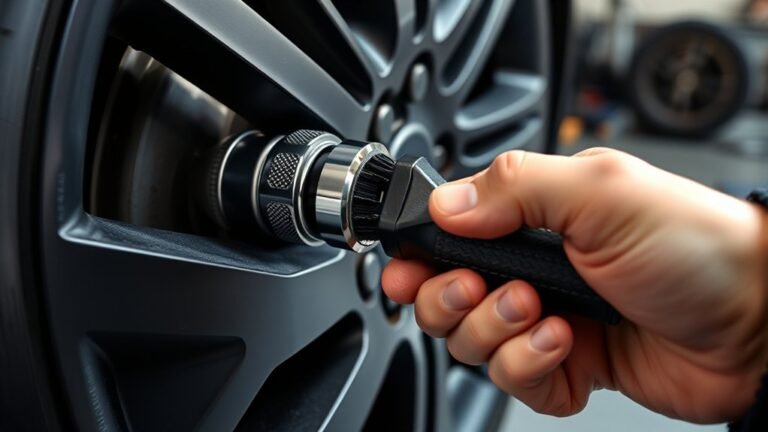
What Are Wheel Nuts
Wheel nuts are essential components that hold your vehicle’s wheels securely onto the hub, preventing wobble and loosening during driving. They clamp the wheel firmly, ensuring it stays attached through acceleration, braking, and turning.
Using the correct torque and tightening pattern is key to maintaining safety and avoiding damage. You’ll want to regularly check their tightness and watch for wear or rust that could compromise performance.
Keep going to understand how to properly care for and use wheel nuts.
Key Takeaways
- Wheel nuts secure wheels to the vehicle hub, preventing loosening and wobbling during driving.
- They clamp the wheel firmly against the hub, ensuring stability during acceleration, braking, and cornering.
- Proper tightening torque avoids over-tightening damage and under-tightening risks like wheel detachment.
- Wheel nuts come in types like tapered, ball, flat seat, and locking variants for different wheel designs.
- Regular inspection and correct torque application maintain wheel safety and prevent accidents or uneven tire wear.
What Are Wheel Nuts and Why Do They Matter?
Every vehicle relies on wheel nuts to keep its wheels securely attached. You might not think much about these small components, but they play a crucial role in your vehicle’s safety and performance.
Wheel nuts are the fasteners that hold the wheels onto the hub, preventing them from wobbling or coming loose while you drive. Without properly tightened wheel nuts, you risk dangerous situations like wheel detachment or uneven tire wear.
They’re designed to withstand intense pressure and vibrations from the road, ensuring stability and control. When you change tires or perform maintenance, you’ll handle wheel nuts directly, so understanding their purpose helps you appreciate their importance.
In short, wheel nuts keep your driving experience safe and smooth by firmly securing your wheels.
How Wheel Nuts Secure Your Wheels
When you tighten wheel nuts, they clamp the wheel firmly against the hub, creating the grip needed to keep the wheel from moving independently. This tight connection ensures your wheel stays in place despite forces from acceleration, braking, and cornering.
Tightening wheel nuts secures the wheel to the hub, preventing movement during driving forces.
The nuts apply pressure evenly around the wheel’s mounting surface, preventing any wobbling or loosening during your drive. If the nuts aren’t secure, the wheel can shift, leading to unsafe driving conditions or even detachment.
You rely on the proper torque when tightening these nuts to maintain this secure fit. Using the right torque helps avoid over-tightening, which can damage threads, or under-tightening, which risks loosening.
In short, wheel nuts are crucial for holding your wheels steady and safe on the road.
Types of Wheel Nuts and Their Uses
You’ll find several common types of wheel nuts, each designed for specific uses and vehicles. Knowing which one fits your wheels guarantees proper security and safety.
Let’s explore the different types and where you’d typically use them.
Common Wheel Nut Types
How do you choose the right wheel nuts for your vehicle? First, you need to know the common types available. Tapered seat nuts are the most popular; their cone-shaped base centers the wheel perfectly.
Then, there are ball seat nuts, which use a rounded base to match specific wheel designs. Flat seat nuts, with their flat base, suit wheels designed without a taper.
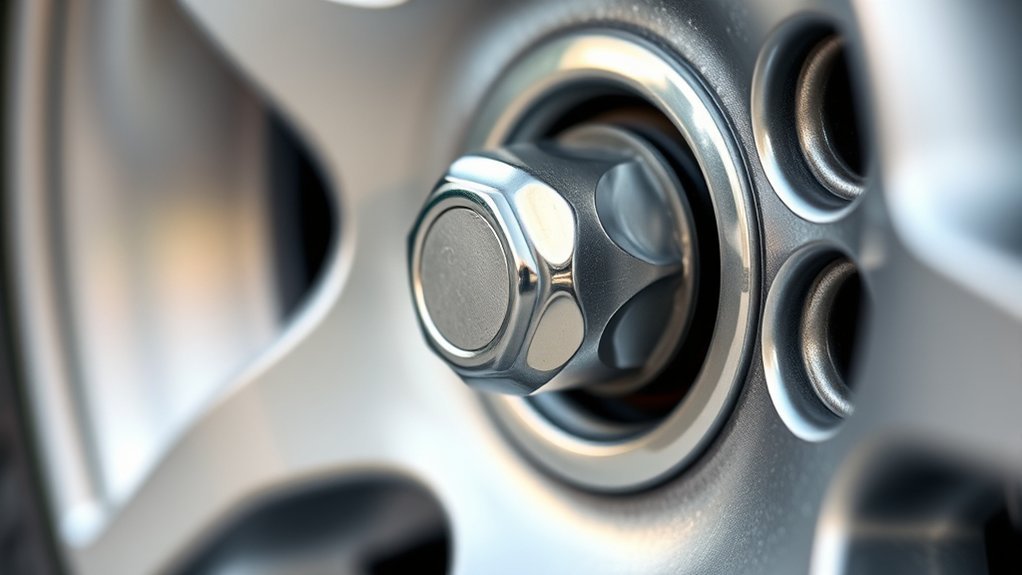
You might also encounter splined or locking nuts, which add extra security by requiring a special key to remove. Each type fits different wheel styles and ensures proper fastening.
Applications of Wheel Nuts
Why do wheel nuts come in so many varieties? It’s because different vehicles and driving conditions demand specific types for safety and performance. You’ll find wheel nuts designed to fit various wheel styles and materials, ensuring a secure hold.
Here are three common applications of wheel nuts:
- Passenger Cars: Standard hex nuts provide reliable fastening for everyday driving.
- Performance Vehicles: Tuner nuts often feature lightweight materials like aluminum, enhancing both aesthetics and weight reduction.
- Heavy-Duty Trucks: Lug nuts with extended threads or locking features ensure durability under heavy loads and prevent theft.
Materials Used to Make Wheel Nuts
You’ll find wheel nuts made from different materials, each offering unique benefits. Understanding the properties of these materials helps you choose the right nut for strength and durability.
Let’s explore the most common materials and what makes them effective.
Common Wheel Nut Materials
What makes a wheel nut strong enough to withstand the demands of your vehicle? It all comes down to the materials chosen. You’ll find wheel nuts made from several common materials, each suited to different needs and conditions.
Here are the three primary materials used:
- Steel The most popular choice, known for its strength and durability. It’s often coated to resist rust.
- Aluminum Lightweight and corrosion-resistant, aluminum wheel nuts are common in performance vehicles but aren’t as strong as steel.
- Titanium Used in high-end or racing applications, titanium offers excellent strength-to-weight ratio and corrosion resistance but comes at a higher cost.
Understanding these materials helps you choose the right wheel nuts for your vehicle’s performance and safety.
Material Properties and Benefits
Each material used for wheel nuts brings its own set of properties that affect performance and durability. Steel nuts, for example, offer excellent strength and resistance to wear, making them ideal for everyday driving and heavy loads.
Aluminum nuts, though lighter, resist corrosion well and reduce overall wheel weight, benefiting performance vehicles. Titanium nuts combine lightness with high strength and exceptional corrosion resistance, but they come at a higher cost.
Understanding these properties helps you pick the right wheel nuts for your needs, whether you prioritize durability, weight savings, or resistance to rust. Choosing the appropriate material ensures your wheel nuts perform reliably, maintain safety, and extend the lifespan of your wheels under various driving conditions.
How to Check Wheel Nut Tightness
How often should you check your wheel nut tightness to guarantee safety? Ideally, you should inspect them every time you change a tire, after long trips, or following any rough terrain driving. Ensuring proper tightness prevents accidents and prolongs wheel life.
Check wheel nut tightness after tire changes, long trips, or rough terrain to ensure safety and extend wheel life.
Here’s how to check wheel nut tightness effectively:
- Use a torque wrench to measure the exact tightness according to your vehicle’s specifications.
- Inspect visually and manually for any loose or damaged nuts; hand-tighten if necessary before using tools.
- Recheck after driving about 50-100 miles, as wheel nuts can settle and loosen slightly.
Regular checks keep your wheels secure and your driving safe. Don’t skip this simple but crucial step.
Essential Tools for Tightening Wheel Nuts
To tighten your wheel nuts properly, you’ll need the right tools, like different types of wrenches designed for the job. It’s essential to follow torque specifications to avoid over-tightening or under-tightening.
Always take safety precautions to protect yourself and guarantee the nuts are secure.
Types Of Wrenches
What tools do you need to securely tighten wheel nuts? Choosing the right wrench is crucial for safety and efficiency. Here are the three main types you’ll encounter:
- Lug Wrench Often included with your vehicle, this cross-shaped tool fits multiple nut sizes and provides good leverage.
- Torque Wrench This tool lets you apply precise torque, preventing over-tightening or under-tightening, which can cause damage or loosening.
- Impact Wrench Powered by air or electricity, it quickly tightens or loosens wheel nuts but requires careful handling to avoid excessive force.
Using the proper wrench ensures your wheel nuts are firmly secured without damaging the threads or wheel, keeping your vehicle safe on the road.
Torque Specifications Importance
Why does tightening wheel nuts to the correct torque matter so much? If you don’t apply the right amount of force, your wheel nuts could either be too loose or too tight.
Loose nuts risk your wheel wobbling or even falling off, while overtightened nuts can damage threads or warp brake components. Using a torque wrench ensures you apply the exact recommended torque specified by your vehicle’s manufacturer.
This tool gives you control, prevents damage, and guarantees your wheels stay secure. Always check your owner’s manual for the correct torque value. By using the proper torque specifications, you maintain your vehicle’s safety and performance, avoiding costly repairs or accidents caused by improperly tightened wheel nuts.
Safety Precautions During Tightening
How can you guarantee safe and effective tightening of your wheel nuts? It starts with following essential safety precautions. First, always use the right tools designed for wheel nut tightening, such as a calibrated torque wrench.
Second, make sure your vehicle is securely lifted and stable before you start working on the wheels. Third, tighten nuts in a star or crisscross pattern to ensure even pressure distribution, preventing wheel warping or loosening.
Here’s a quick checklist to keep in mind:
- Use a calibrated torque wrench for accurate tightening.
- Ensure your vehicle is properly supported and stable.
- Tighten nuts in a star pattern to distribute pressure evenly.
How to Properly Torque Wheel Nuts for Safety
When tightening wheel nuts, you can’t afford to guess the right amount of torque. Too loose, and the wheel might wobble; too tight, and you risk damaging the studs or nuts. Use a torque wrench set to your vehicle manufacturer’s recommended torque value.
Tighten the nuts in a star or crisscross pattern to evenly distribute pressure and avoid warping the wheel.
| Step | Action | Tip |
|---|---|---|
| 1 | Clean threads | Remove dirt for accuracy |
| 2 | Hand-tighten nuts | Prevent cross-threading |
| 3 | Use torque wrench in star pattern | Follow recommended torque |
| 4 | Recheck torque after driving | Ensure nuts stay tight |
Proper torque ensures your safety and prolongs wheel life.
Signs of Worn or Damaged Wheel Nuts
What should you watch for to know if your wheel nuts are worn or damaged? Catching these signs early helps prevent wheel detachment or accidents. Keep a close eye on:
1. Visible Wear or Stripping
If the threads on the wheel nuts look rounded, stripped, or damaged, they won’t hold properly.
2. Cracks or Deformation
Check for any cracks, dents, or warping on the nuts. These weaken their grip and can cause failure under stress.
3. Rust or Corrosion
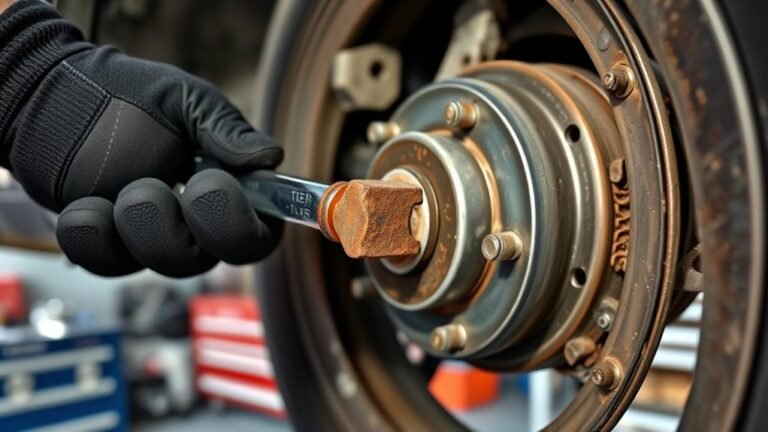
Excessive rust weakens metal integrity. Corroded nuts might not tighten correctly and can seize onto the studs, making removal difficult.
If you notice any of these issues, replace the wheel nuts promptly to maintain vehicle safety and performance. Don’t ignore these warning signs; they’re crucial for your wheels’ secure fit.
Common Wheel Nut Tightening Mistakes to Avoid
Why do so many people struggle with tightening wheel nuts correctly? One common mistake is over-tightening, which can strip threads or warp brake rotors. Don’t assume tighter is better. Use a torque wrench to apply the manufacturer’s recommended torque.
Another error is uneven tightening. Tighten nuts in a star or crisscross pattern to ensure even pressure and proper wheel seating. Avoid using impact wrenches for final tightening, as they often apply inconsistent torque.
Also, never skip cleaning the threads or inspecting nuts before tightening. Dirt or damage can affect fit and safety. By avoiding these mistakes, you’ll secure your wheels properly, prevent damage, and maintain safe driving conditions without surprises on the road.
When and Why to Replace Your Wheel Nuts
Properly tightened wheel nuts keep your wheels secure, but over time, they can wear out or become damaged. You should replace your wheel nuts to maintain safety and avoid potential wheel detachment. Here’s when and why you need to act:
- Visible Damage: If you notice cracks, rust, or stripped threads on your wheel nuts, replace them immediately to prevent failure.
- Frequent Removal: After repeated wheel changes or repairs, nuts may weaken and lose grip, requiring replacement for reliable fastening.
- Incorrect Fit: Using the wrong size or type can damage your wheel nuts, so swap them for the correct ones to ensure proper torque and safety.
Regularly inspect and replace worn wheel nuts to keep your vehicle safe on the road.
Frequently Asked Questions
Can Wheel Nuts Affect Vehicle Fuel Efficiency?
Yes, wheel nuts can affect your vehicle’s fuel efficiency if they’re not properly tightened, causing wheel misalignment or vibrations that increase drag.
Make sure you regularly check and tighten them to keep your ride smooth and efficient.
Are Wheel Nuts Universal Across All Car Brands?
No, wheel nuts aren’t universal across all car brands. You’ll find different sizes, thread pitches, and shapes depending on your vehicle.
Always check your car’s specifications to assure you use the right wheel nuts for safety and performance.
How Do Weather Conditions Impact Wheel Nut Performance?
You’d think wheel nuts could survive a hurricane! But harsh weather can cause rust, loosen them, or freeze threads.
You’ve got to check and tighten them regularly to keep your wheels safe and secure.
Can Wheel Nuts Be Reused After Removal?
You can often reuse wheel nuts if they’re in good condition, but you should inspect them carefully for damage or wear. If they’re stretched, corroded, or stripped, it’s best to replace them to guarantee safety.
What Is the History Behind the Design of Wheel Nuts?
You’ll find wheel nuts evolved from simple fasteners to precise, durable designs for safety and performance. Engineers improved them over time to handle higher speeds, stronger materials, and easier maintenance, ensuring your wheels stay securely attached.
Conclusion
Now that you know wheel nuts are the unsung heroes holding your wheels in place, don’t overlook them. Think of them as the glue keeping your drive steady—without proper care, everything could come undone.
Regularly check their tightness, spot signs of wear, and avoid common mistakes to stay safe on the road. Replace them when needed, because a small slip in attention can lead to big trouble.
Your safety rides on these tiny but mighty parts! Always remember, proper maintenance of your wheel nuts is essential for a secure and smooth driving experience.