How Check Fuel Pressure
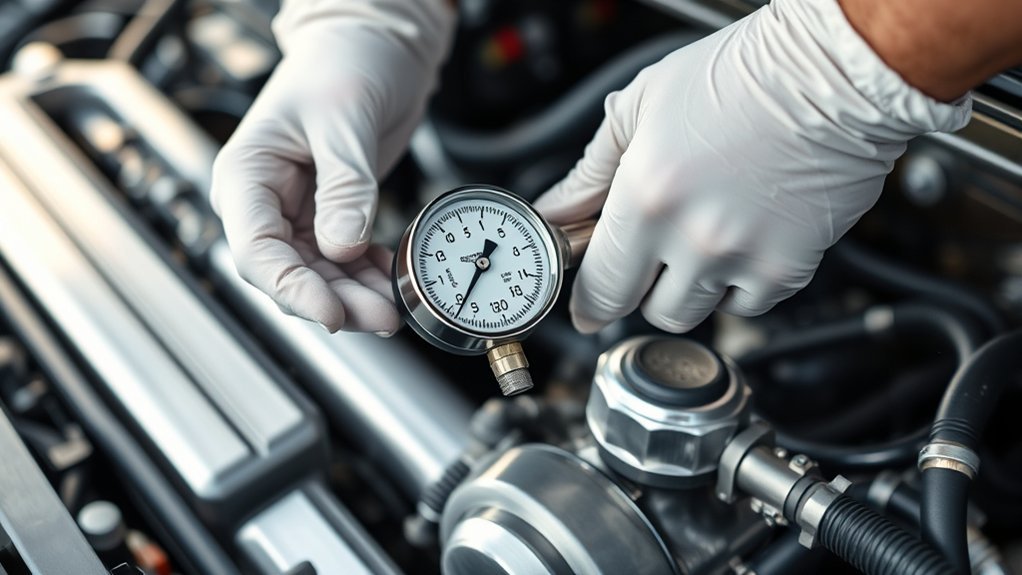
To check fuel pressure, first park your vehicle on a level surface, turn off the engine, and disconnect the negative battery terminal for safety. Then, attach a fuel pressure gauge securely to the fuel rail’s test port.
Turn the ignition on to prime the pump without starting the engine, and watch the gauge. Compare the pressure to your vehicle’s specs to spot issues like a weak pump or clogged filter.
Keep going to uncover how to interpret readings and fix common problems.
Key Takeaways
- Park the vehicle on a level surface, turn off the engine, and disconnect the negative battery terminal for safety.
- Locate the fuel rail test port and clean the surrounding area before attaching the pressure gauge.
- Wear safety glasses and gloves, then securely connect the pressure gauge to the test port on the fuel rail.
- Turn the ignition to “on” without starting the engine to activate the fuel pump and observe the pressure reading.
- Compare the gauge reading to manufacturer specifications to identify if fuel pressure is within the proper range.
What Is Fuel Pressure Testing and Why It Matters
Why should you care about fuel pressure testing? Because your engine depends on consistent fuel pressure to run smoothly. Fuel pressure testing measures the pressure within your vehicle’s fuel system, ensuring it delivers the right amount of fuel to the engine.
If the pressure is too low or too high, your engine might misfire, stall, or lose power. By testing fuel pressure, you can quickly identify issues like a failing fuel pump, clogged fuel filter, or faulty pressure regulator.
Catching these problems early saves you from costly repairs and keeps your vehicle running efficiently. So, understanding and performing fuel pressure tests helps you maintain optimal engine performance and avoid unexpected breakdowns on the road.
Preparing Your Vehicle for a Fuel Pressure Test
Before you start testing your vehicle’s fuel pressure, you need to make sure it’s properly prepared. First, park your car on a level surface and engage the parking brake to prevent any movement.
Turn off the engine and allow it to cool down if it’s been running, as hot components can cause burns. Next, disconnect the negative battery terminal to avoid electrical hazards while working with the fuel system.
Locate the fuel rail or fuel line where the pressure test port is usually found. Clean the area around the port to prevent dirt from entering the system when you attach the gauge.
Finally, gather all necessary tools and safety gear, like gloves and safety glasses, so you’re ready to proceed safely and efficiently with the test.
Checking Fuel Pressure Safely: Step-by-Step
How do you guarantee accurate fuel pressure readings while staying safe? First, make sure your engine is off and cool to prevent burns. Wear safety glasses and gloves to protect yourself from fuel spray.
Locate the fuel pressure test port, usually on the fuel rail, and attach your pressure gauge securely. Double-check connections to avoid leaks.
Next, turn the ignition to the “on” position without starting the engine; this primes the fuel pump. Observe the gauge reading carefully. If your vehicle uses a fuel pump relay, you might need to activate it to pressurize the system.
After recording the pressure, turn off the ignition before disconnecting the gauge. Always release fuel pressure slowly and clean any spills immediately. Following these steps keeps you safe while ensuring reliable fuel pressure measurements.
Interpreting Fuel Pressure Gauge Readings
Once you’ve safely obtained a fuel pressure reading, the next step is understanding what that number means for your vehicle’s performance. Compare your reading to the manufacturer’s specifications, usually found in your vehicle’s service manual.
If the pressure falls within the recommended range, your fuel system is likely functioning properly. A reading that’s too low could indicate a weak fuel pump or clogged fuel filter, while a pressure that’s too high might suggest a faulty pressure regulator.
Remember, variations in reading can occur due to engine temperature or ignition status, so check conditions before interpreting results. Also, ensure the gauge you’re using is calibrated correctly to avoid misleading numbers.
Accurate interpretation helps you make informed decisions about your vehicle’s fuel system health.
Common Fuel Pressure Problems and How to Fix Them
Why does your fuel pressure sometimes drop or spike unexpectedly? Common issues include a clogged fuel filter, a failing fuel pump, or a faulty pressure regulator. If your pressure drops, start by checking the fuel filter; replace it if it’s dirty.
A weak fuel pump can’t maintain proper pressure, so test the pump’s output and replace it if necessary. On the other hand, if pressure spikes, the pressure regulator might be stuck closed, causing excess pressure. Inspect and replace it if needed.
Also, check for leaks or damaged fuel lines that can cause irregular pressure. By systematically diagnosing these parts, you’ll quickly pinpoint the problem and fix it, ensuring your engine runs smoothly without fuel delivery hiccups.
Frequently Asked Questions
Can Low Fuel Pressure Cause Engine Misfires?
Yes, low fuel pressure can cause your engine to misfire because it starves the engine of fuel, leading to incomplete combustion.
You’ll notice rough idling, hesitation, or power loss when fuel pressure drops too low.
How Often Should Fuel Pressure Be Tested?
You should test fuel pressure at least once a year or whenever you notice engine issues like misfires or poor performance.
Checking it regularly helps you catch problems early and keep your engine running smoothly.
What Tools Do Professionals Use for Fuel Pressure Testing?
You know what they say, “Measure twice, cut once.” Professionals use a fuel pressure gauge, a fuel pressure tester kit, and sometimes a scan tool to accurately check fuel pressure and guarantee your vehicle’s fuel system runs smoothly.
Can Bad Fuel Pressure Affect Fuel Economy?
Yes, bad fuel pressure can hurt your fuel economy. When pressure’s off, your engine won’t get the right fuel amount, causing poor combustion, wasted fuel, and reduced mileage.
Fixing it helps your car run efficiently and save gas.
Is Fuel Pressure Testing Covered by Vehicle Warranties?
You know what they say, “An ounce of prevention is worth a pound of cure.” Usually, fuel pressure testing is covered by warranties if it’s part of diagnosing a covered issue, but always check your specific warranty terms first.
Conclusion
When you check your fuel pressure, imagine it like the heartbeat of your engine—steady, strong, and reliable. If it falters, your car won’t run smoothly.
By following the steps carefully and reading the gauge right, you’re giving your vehicle the care it needs to perform its best. Don’t ignore the signs;
a healthy fuel pressure means your engine’s ready to roar, every time you turn the key. Always remember, how to check fuel pressure is key to maintaining your car’s performance.