What Is a Wheel Alignment
A wheel alignment ensures your tires meet the road at the right angle, helping your vehicle handle smoothly and wear tires evenly. Proper wheel alignment improves fuel efficiency by reducing rolling resistance and keeps your steering stable and safe.
Misalignment can cause pulling, shaky rides, and rapid tire wear, which wastes money and risks safety. By understanding alignment basics, you’ll discover how to spot problems early and maintain your vehicle’s performance longer.
Key Takeaways
- Wheel alignment adjusts the angles of tires to ensure they meet the road correctly for optimal performance.
- Proper alignment promotes even tire wear, extending tire life and saving replacement costs.
- It improves handling, vehicle stability, and ensures safer, predictable steering response.
- Correct alignment lowers rolling resistance, enhancing fuel efficiency and reducing energy waste.
- Misalignment causes uneven tire wear, pulling, shaky rides, and can compromise driving safety.
What Is Wheel Alignment and Why It Matters
Why does wheel alignment matter for your vehicle? Proper wheel alignment ensures your tires meet the road at the right angle, promoting even tire wear and improving handling. When your wheels are aligned, you’ll experience better fuel efficiency because your tires roll smoothly without unnecessary resistance.
Misalignment causes uneven tire wear, forcing you to replace tires sooner, which wastes money. It also affects steering, making your vehicle pull to one side or causing a shaky ride, which can be unsafe.
How Do You Know If Your Vehicle Needs a Wheel Alignment?
You’ll notice your vehicle pulling to one side or the steering wheel vibrating if your wheels are misaligned. These signs can affect your driving comfort and cause uneven tire wear.
Paying attention to these symptoms helps you keep your car performing safely and efficiently.
Signs of Misalignment
How can you tell if your vehicle needs a wheel alignment? Watch for clear signs that your wheels aren’t aligned correctly. You might notice your car pulling to one side while driving, forcing you to constantly adjust the steering wheel.
Uneven or rapid tire wear is another strong indicator that alignment is off. Also, if your steering wheel doesn’t sit straight when you’re driving on a flat road, it’s time for an alignment check.
Look out for these symptoms:
- Steering wheel drift or pulling to one side
- Uneven tire wear patterns
- Off-center steering wheel while driving straight
If you experience any of these signs, scheduling a wheel alignment can help maintain your vehicle’s safety and handling.
Impact on Vehicle Performance
A misaligned wheel setup can substantially affect your vehicle’s performance, making your driving experience less smooth and safe. You might notice uneven tire wear, pulling to one side, or a shaky steering wheel.
These issues not only reduce comfort but also compromise control and increase tire replacement costs. Knowing these impacts helps you identify when to seek a wheel alignment.
| Symptom | Impact on Driving | What It Means |
|---|---|---|
| Uneven Tire Wear | Reduced tire lifespan | Tires don’t contact road evenly |
| Vehicle Pulling | Steering difficulty | Wheels not aligned straight |
| Steering Wheel Vibration | Less control | Suspension or alignment issues |
If your car shows these signs, it’s time for a professional alignment check to improve safety and performance.
Common Causes of Wheel Alignment Problems
You might not realize it, but hitting road hazards can quickly throw off your wheel alignment. Worn suspension components and improper tire inflation also play a big role in causing alignment issues.
Knowing these common causes helps you spot problems before they get worse.
Hitting Road Hazards
Why do sudden bumps and potholes often throw your vehicle’s alignment off? When your tires hit these unexpected obstacles, the impact can shift your wheels from their proper angles.
This misalignment not only affects your car’s handling but also leads to uneven tire wear and reduced fuel efficiency. Common road hazards that cause alignment issues include:
- Potholes that cause sudden jolts to the suspension
- Curbs that you might accidentally scrape against
- Debris or uneven pavement creating abrupt tire shifts
Each hit can bend or displace parts of your steering and suspension system, causing your wheels to drift out of alignment. Staying aware of these hazards and avoiding them when possible helps keep your wheels properly aligned and your ride smooth.
Worn Suspension Components
How do worn suspension components affect your vehicle’s alignment? When parts like ball joints, tie rods, or control arm bushings wear out, they can cause your wheels to shift from their proper positions. This misalignment leads to uneven tire wear, pulling to one side, and a shaky steering wheel.
If you ignore these issues, you’ll notice reduced handling and increased tire replacement costs. Worn suspension parts don’t just affect alignment; they compromise your vehicle’s safety by reducing stability and control. Regular inspections help catch these problems early, ensuring your suspension stays in good shape and your wheels stay aligned.
Improper Tire Inflation
Worn suspension components can throw off your vehicle’s balance, but improper tire inflation also plays a significant role in wheel alignment issues. When your tires aren’t inflated to the right pressure, it affects how your vehicle handles and wears down your tires unevenly.
This imbalance can cause your wheels to misalign sooner than expected. You should regularly check tire pressure because:
- Overinflated tires reduce traction and cause premature wear in the center tread.
- Underinflated tires increase rolling resistance, leading to uneven outer tread wear.
- Inconsistent tire pressure across tires creates uneven load distribution, impacting alignment.
The 3 Main Types of Wheel Alignment
When you bring your vehicle in for an alignment, technicians focus on three main types to guarantee your wheels are set correctly. The first is camber, which is the tilt of your wheels when viewed from the front or back. If your wheels lean too much inward or outward, it can cause uneven tire wear.
Next is toe alignment, which measures how much your wheels point inward or outward when viewed from above. Proper toe settings ensure your tires roll straight without dragging or scrubbing.
Lastly, caster refers to the angle of the steering axis when viewed from the side. It affects your vehicle’s stability and steering feel. By adjusting these three types precisely, technicians help your car drive smoothly and safely.
How Wheel Alignment Impacts Handling, Tire Wear, and Fuel Efficiency
Properly adjusting camber, toe, and caster does more than just keep your wheels aligned. It directly influences how your vehicle handles on the road, how evenly your tires wear over time, and even how efficiently your car uses fuel.
Adjusting camber, toe, and caster enhances handling, tire wear, and fuel efficiency.
When your alignment is off, you might notice your car pulling to one side, which can make driving unsafe and tiring. Misaligned wheels cause uneven tire wear, meaning you’ll replace tires more often than necessary.
Also, poor alignment increases rolling resistance, forcing your engine to work harder and burn more fuel. Here’s what you gain from proper alignment:
- Improved steering response and vehicle stability
- Longer tire life with even tread wear
- Better fuel economy by reducing drag
Keeping your wheels aligned helps you save money and drive safer.
What Happens During a Wheel Alignment Service?
How does a wheel alignment service actually work? When you bring your car in, the technician first inspects your tires and suspension components for damage or wear.
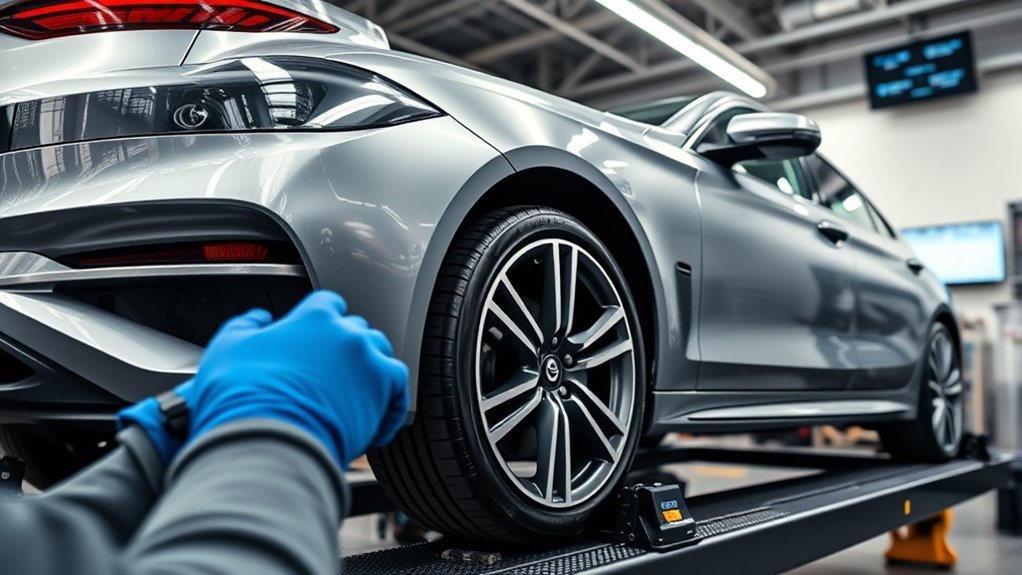
Then, your vehicle is driven onto an alignment rack, where sensors attach to each wheel. These sensors connect to a computer that measures your wheels’ angles: camber, caster, and toe to see if they match your car’s specifications.
If adjustments are needed, the technician fine-tunes the suspension components to bring the wheels into proper alignment. This precise calibration ensures your tires meet the road correctly, improving handling and tire life.
Finally, the technician performs a test drive or rechecks the measurements to confirm everything’s set perfectly before you hit the road again.
When to Check Your Wheel Alignment
After your wheel alignment service, keeping an eye on your vehicle’s alignment over time helps maintain optimal performance and tire life. You should check your alignment if you notice any unusual signs or after certain events. Look out for these situations:
Monitor your wheel alignment regularly to ensure peak performance and extend tire lifespan.
- Your steering wheel pulls to one side while driving straight
- Uneven or rapid tire wear appears
- You hit a curb, pothole, or other road hazards
Regular checks are also wise if you drive frequently on rough roads or carry heavy loads often. Addressing alignment issues promptly prevents further damage and keeps your vehicle handling smoothly. Remember, timely alignment checks save you money and enhance safety on the road.
Tips to Maintain Proper Wheel Alignment Between Services
Wondering what you can do to keep your wheel alignment in check between professional services? First, regularly inspect your tires for uneven wear, which often signals alignment issues. Keep your tires properly inflated, as under- or over-inflation can affect alignment and handling.
Avoid hitting potholes, curbs, or other road hazards that can knock your wheels out of alignment. When loading your vehicle, distribute weight evenly to prevent strain on suspension components.
Also, maintain your suspension system by checking shocks and struts, as worn parts can impact alignment. Finally, if you notice your vehicle pulling to one side or the steering wheel isn’t centered, have your alignment checked promptly.
Taking these steps helps you catch problems early and maintain smooth, safe driving between alignment services.
Why Proper Wheel Alignment Saves You Money and Enhances Safety
Why should you care about proper wheel alignment beyond just smooth driving? Because it directly impacts your wallet and your safety. Misaligned wheels cause uneven tire wear, meaning you’ll replace tires more often, costing you money. Plus, your vehicle won’t handle as well, increasing the risk of accidents.
Proper alignment ensures your car drives straight and responds predictably. Here’s why it saves you money and enhances safety:
- Reduces tire wear: Extends tire life, saving replacement costs.
- Improves fuel efficiency: Less rolling resistance means better mileage.
- Enhances vehicle control: Boosts stability and reduces accident risk.
Frequently Asked Questions
Can I Perform a Wheel Alignment at Home?
You can try a basic wheel alignment at home, but it’s tricky without professional tools. It’s best to visit a mechanic to ensure precise adjustments, so your car handles safely and tires wear evenly.
How Much Does a Wheel Alignment Typically Cost?
You’ll typically pay between $75 and $150 for a wheel alignment, depending on your vehicle and location. Some shops might charge more for luxury or trucks, but basic alignments usually stay within that range.
Does Wheel Alignment Affect My Car’s Warranty?
Oh, of course, your car’s warranty absolutely depends on your wheel alignment except it doesn’t. You won’t lose coverage just for needing an alignment, but ignoring issues might cause other warranty problems down the road.
Can Misalignment Cause Vibration or Noise?
Yes, misalignment can cause vibration or noise while driving. You’ll notice uneven tire wear and steering wheel shaking.
Getting your wheels aligned promptly helps you avoid further damage and guarantees a smoother, quieter ride.
How Long Does a Wheel Alignment Service Take?
Picture your car’s wheels perfectly straight and ready to roll smoothly. That’s what a wheel alignment does, usually taking about 30 to 60 minutes.
You’ll be back on the road quickly, driving with confidence.
Conclusion
Keeping your wheels properly aligned is the key to driving smoothly and saving money in the long run. If you ignore alignment issues, you might be throwing good money after bad with uneven tire wear and poor fuel efficiency.
By staying on top of alignment checks and maintenance, you’ll keep your vehicle handling like a dream and avoid costly repairs. Remember, a stitch in time saves nine—don’t wait until small problems become big ones!
In conclusion, regular wheel alignment is essential for maintaining your vehicle’s performance and extending the life of your tires.