How to Install a 5th Wheel Hitch
To install a 5th wheel hitch, first pick one that fits your truck’s bed size and weight capacity, ensuring it exceeds your trailer’s gross weight. This is essential for safe towing and proper hitch function.
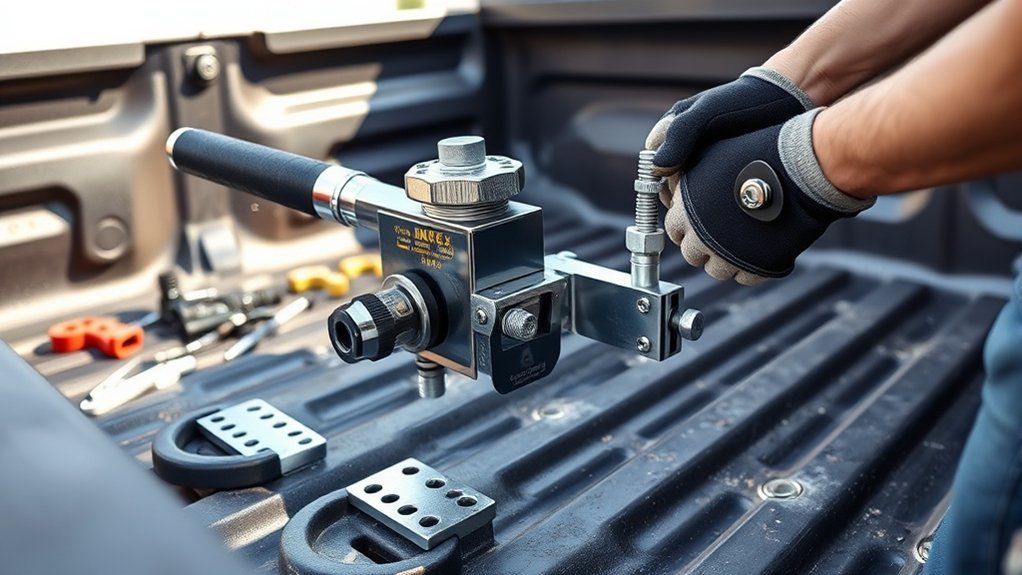
Clean and prep your truck bed, removing the tailgate if needed. Use the right tools to securely bolt the hitch to the truck frame, aligning it precisely for safe locking and electrical connections.
Double-check fasteners and perform a full inspection before towing. Keep going—you’ll find tips to avoid common mistakes and maintain your hitch properly.
Key Takeaways
- Clean and clear the truck bed, remove the tailgate if needed, and inspect for damage before installation.
- Measure and mark exact mounting points using the bed center as a reference for proper hitch alignment.
- Securely bolt mounting brackets to the truck frame using a reliable socket set and torque wrench.
- Attach the hitch head, ensure locking mechanisms engage properly, and verify electrical connections if present.
- Inspect all bolts for tightness, check alignment and clearance, and perform a test lock before towing.
Choosing the Right 5th Wheel Hitch for Your Truck
How do you know which 5th wheel hitch fits your truck best? Start by checking your truck’s make and model to find hitches compatible with its bed size and weight capacity. You’ll want a hitch that matches your truck’s towing limits to ensure safety and performance.
Consider the hitch’s weight rating; it should exceed your trailer’s gross weight. Look into the type of hitch, slider or fixed, based on your need for maneuverability or clearance. Also, think about ease of installation and adjustability.
Reading user reviews and manufacturer specifications helps you make an informed choice. Choosing the right hitch ensures a secure connection, smooth towing, and peace of mind on the road.
Essential Tools and Materials for 5th Wheel Hitch Installation
Before you start installing your 5th wheel hitch, make sure you have the right tools and materials on hand. You’ll need a checklist of essential items like wrenches, drill bits, and mounting hardware, plus safety gear to protect yourself during the process.
Being prepared will make the installation smoother and safer.
Required Tools Overview
What tools do you need to install a 5th wheel hitch properly? You’ll want a reliable socket set, including metric and standard sizes, to handle various bolts. A torque wrench is essential to tighten fasteners to manufacturer specifications, ensuring safety.
A drill with metal bits will help if you need to create mounting holes. Have a breaker bar handy for stubborn bolts. An adjustable wrench and screwdrivers will assist with adjustments and smaller fasteners.
Don’t forget a measuring tape to align the hitch precisely. Safety gear like gloves and eye protection is a must. These tools will make your installation smoother and more secure, helping you avoid common mistakes and ensuring your hitch functions correctly.
Essential Materials Checklist
Where do you start when gathering everything needed for your 5th wheel hitch installation? First, you’ll want to have all the essential materials ready to guarantee a smooth process.
Here’s a quick checklist to get you set up:
- 5th wheel hitch kit (including rails and mounting hardware)
- Torque wrench for precise tightening
- Drill with appropriate bits for mounting holes
- Measuring tape to ensure accurate placement
- Threadlocker to secure bolts firmly
Having these materials on hand before you begin will save you time and prevent interruptions. Each item plays a pivotal role, from positioning the hitch rails correctly to guaranteeing the bolts stay tight during use.
With this checklist, you’re well on your way to a successful installation.
Safety Equipment Recommendations
Gathering the right safety equipment helps protect you while working with heavy tools and components during your 5th wheel hitch installation. Start with sturdy work gloves to shield your hands from sharp edges and pinch points.
Safety glasses are a must to protect your eyes from metal shards or debris. Wear steel-toed boots to guard your feet against dropped tools or parts.
A good pair of earplugs or earmuffs will help reduce noise exposure if you’re using power tools. Consider a dust mask if you’re drilling or grinding to avoid inhaling particles.
Finally, using a reliable jack stand ensures your truck stays securely lifted while you work underneath. Don’t skip these essentials; they keep you safe and make the installation smoother.
Preparing Your Truck Bed for 5th Wheel Hitch Installation
Start by thoroughly cleaning and clearing out your truck bed to ensure a smooth installation process.
Next, carefully measure and mark the exact points where the hitch will be mounted. These steps set the foundation for a secure and accurate 5th wheel hitch setup.
Cleaning And Clearing Bed
Before installing your 5th wheel hitch, you need to thoroughly clean and clear your truck bed to ensure a smooth setup. Any debris, dirt, or leftover items can interfere with the hitch’s fit and function.
Start by removing all loose objects and thoroughly sweeping the bed. Check for any sticky residues or stains and clean them with a mild detergent. Don’t forget to inspect the bed for rust or damage that might need repair before installation.
Here’s a quick checklist to prepare your truck bed:
- Remove tailgate if necessary for better access
- Clear out all tools, mats, and cargo
- Sweep and vacuum the entire bed surface
- Wash with soap and water, then dry completely
- Inspect for rust, dents, or other damage
This prep will help your 5th wheel hitch fit securely and work flawlessly.
Measuring And Marking Points
After cleaning and clearing your truck bed, the next step is to measure and mark the exact points where the 5th wheel hitch will be installed. Start by locating the center of the truck bed, usually between the wheel wells.
Use a tape measure to find this midpoint accurately, as it ensures even weight distribution. Next, refer to your hitch’s installation guide for the recommended mounting locations and mark these spots with a pencil or masking tape.
Double-check your measurements to avoid mistakes. Mark the bolt holes clearly, so you’ll know where to drill or attach hardware later.
Taking your time during this step helps guarantee a secure, level installation, preventing any alignment issues when you mount the 5th wheel hitch.
Step-by-Step 5th Wheel Hitch Installation Guide
Wondering how to properly install a 5th wheel hitch in your truck? Follow these clear steps to get it done right. First, prepare your workspace by clearing the truck bed and gathering tools.
Next, position the hitch base where you marked earlier. Then, secure the mounting brackets firmly to the truck frame using the right bolts.
After that, attach the hitch head to the base and ensure it locks into place. Finally, double-check all connections before use.
Clear the truck bed and gather tools
Align the hitch base with your marks
Bolt mounting brackets tightly to the frame
Attach and lock the hitch head securely
Inspect all bolts and connections thoroughly
This method ensures a solid, safe installation every time.
Checking and Adjusting 5th Wheel Hitch Alignment for Safety
How can you be sure your 5th wheel hitch is perfectly aligned for safe towing? Start by visually inspecting the hitch jaws to ensure they fully close around the kingpin without gaps.
Ensure your 5th wheel hitch jaws fully close around the kingpin with no gaps for safe towing.
Next, measure the height from the truck bed to the hitch’s top surface; it should match the trailer’s kingpin height to avoid uneven weight distribution.
Use a level to check that the hitch plate sits flat and is parallel to the truck bed. If you notice any tilt or misalignment, adjust the mounting brackets or shims as needed.
Finally, perform a test connection and gently tug the trailer to confirm the hitch locks securely. Proper alignment prevents excessive wear, improves handling, and ensures your towing setup remains safe on the road.
5 Common Installation Mistakes (And How to Avoid Them)
Although installing a 5th wheel hitch might seem straightforward, many people make avoidable mistakes that compromise safety and performance. To ensure your installation goes smoothly, watch out for these common errors:
Ignoring the truck bed’s weight capacity: Always verify it supports your hitch and trailer weight.
Poorly tightening bolts: Use a torque wrench to meet manufacturer specs and prevent loosening.
Misaligning the hitch: Double-check alignment before finalizing to avoid uneven wear or difficulty coupling.
Skipping the grease application: Proper lubrication reduces friction and wear on moving parts.
Neglecting wiring connections: Ensure all electrical components are correctly connected for brake and signal functions.
Avoiding these pitfalls ensures your 5th wheel hitch performs reliably and keeps you safe on the road.
Essential Maintenance Tips to Extend Your 5th Wheel Hitch’s Life
When should you perform maintenance on your 5th wheel hitch to keep it functioning smoothly? Ideally, inspect and lubricate it before each trip or at least every few months. Start by cleaning dirt and debris from the hitch, especially the jaws and locking mechanism.
Perform maintenance on your 5th wheel hitch before each trip or at least every few months for smooth operation.
Apply a high-quality grease to the moving parts to reduce friction and prevent rust. Check all bolts and fasteners to ensure they’re tight and secure. Look for signs of wear or damage, like cracks or excessive play, and replace parts as needed.
Don’t forget to inspect the electrical connections if your hitch has integrated wiring. Regular maintenance not only extends the life of your hitch but also ensures safe towing every time you hit the road.
Stay proactive, and your 5th wheel hitch will serve you well for years.
Frequently Asked Questions
Can I Install a 5th Wheel Hitch Without Professional Help?
Yes, you can install a 5th wheel hitch yourself if you have the right tools and follow the instructions carefully.
Just make sure to double-check measurements and torque specs to ensure safety and proper fitment.
Will a 5th Wheel Hitch Affect My Truck’s Fuel Efficiency?
Yes, a 5th wheel hitch can reduce your truck’s fuel efficiency because it adds weight and changes aerodynamics. You’ll notice slightly lower gas mileage, especially when towing heavy trailers or driving at higher speeds.
How Do I Choose the Right Trailer for My 5th Wheel Hitch?
Choosing the right trailer for your 5th wheel hitch is like finding the perfect dance partner. Consider weight capacity, trailer type, and compatibility with your truck.
Make sure it matches your towing needs and stays within your hitch’s limits.
Are There Any Legal Requirements for Towing With a 5th Wheel Hitch?
Yes, you’ll need to follow weight limits, secure the hitch properly, and ensure your vehicle’s brakes meet regulations.
Also, check local laws for speed limits and any special permits required when towing with a 5th wheel hitch.
Can a 5th Wheel Hitch Be Used on Any Truck Model?
About 70% of trucks on the market can fit a 5th wheel hitch, but you’ll need to check your specific model’s bed size, frame strength, and manufacturer guidelines before installing one. This ensures safe towing.
Conclusion
Installing a 5th wheel hitch might seem daunting, but with the right tools and steps, you’ll have it ready in no time. Did you know that properly installed hitches reduce trailer sway by up to 70%? That means a safer, smoother ride for you and your cargo.
Stay attentive during installation, avoid common mistakes, and keep up with maintenance to enjoy years of reliable towing. With careful effort, mastering how to install a 5th wheel hitch ensures you’re set for safe and efficient towing every time. You’ve got this!