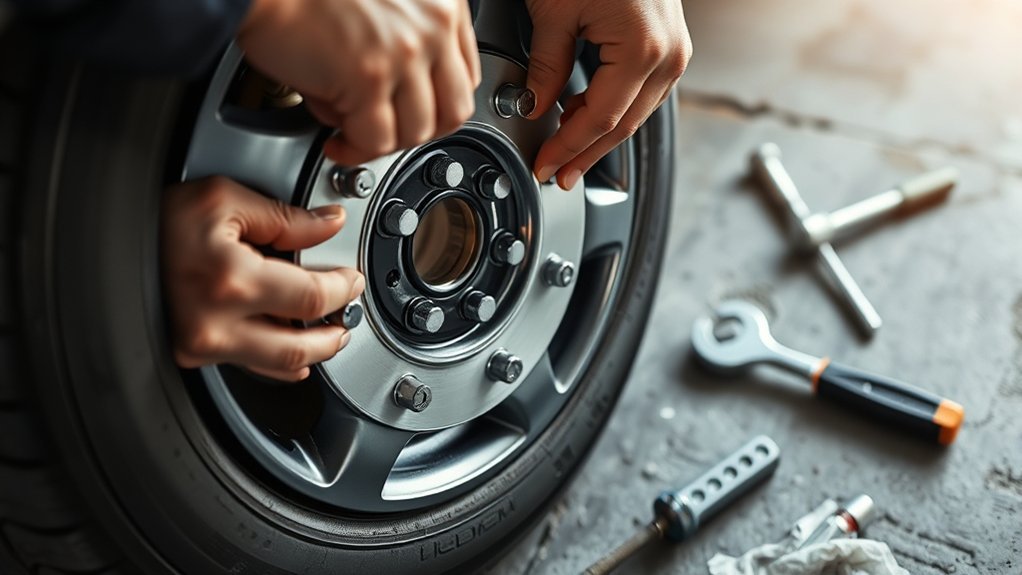
How to Install Wheel Spacers
To install wheel spacers, first ensure they match your vehicle’s specifications for bolt pattern, hub bore, and thickness. This step is crucial for a proper fit and safe performance.
Lift your vehicle safely, remove the wheels, and clean the hub surface thoroughly to prevent any debris from causing misalignment.
Align the spacer flush against the hub, hand-tighten the lug nuts, then torque them in a star pattern to the manufacturer’s specifications. After driving a short distance, re-check torque for safety.
Following these steps ensures proper fit and durability—there’s more to learn about tool choices, maintenance, and detailed safety checks ahead.
Key Takeaways
- Remove wheels by loosening lug nuts counterclockwise and then fully detaching them.
- Clean the hub surface thoroughly before placing the spacer flush against the hub.
- Align spacer bolt holes with wheel studs and hand-tighten lug nuts to secure the spacer.
- Torque lug nuts to manufacturer specifications using a star/crisscross pattern for even tightening.
- After 50-100 miles, re-check torque and inspect spacers for damage or looseness.
Understanding Wheel Spacers and Their Benefits
What exactly are wheel spacers, and why might you consider using them? Wheel spacers are components that fit between your vehicle’s wheel hub and the wheel itself. They push the wheels outward, increasing the track width.
You might want to use them to improve your car’s stance, giving it a wider, more aggressive look. Beyond aesthetics, wheel spacers can enhance handling by providing better stability during turns. They also allow you to fit larger brake calipers or wheels that otherwise wouldn’t clear your vehicle’s components.
Additionally, if your wheels have an offset that’s not ideal, spacers help correct it, ensuring a proper fit. Understanding these benefits helps you decide if wheel spacers are the right upgrade for your ride.
How to Choose the Right Wheel Spacers for Your Vehicle
To pick the right wheel spacers, you’ll need to match the spacer size with your vehicle’s specifications to guarantee proper fit and safety. You should also consider the material, since high-quality metals like aluminum offer better durability and performance.
Paying attention to these details will help you get spacers that work perfectly and last longer.
Spacer Size Compatibility
Choosing the right wheel spacers for your vehicle hinges on understanding spacer size compatibility. You need to match the spacer’s thickness, bolt pattern, hub bore, and stud size to your wheels and vehicle specs. If any of these don’t align, installation issues or unsafe driving conditions could arise.
Keep these key points in mind:
- Spacer Thickness: Controls how far your wheels extend outward.
- Bolt Pattern: Must match your vehicle’s lug configuration exactly.
- Hub Bore Diameter: Should fit snugly on your hub to prevent vibrations.
- Stud/Thread Size: Needs to correspond with your lug nuts and wheel holes.
Material and Durability
Matching spacer size compatibility sets a solid foundation, but the material and durability of your wheel spacers play a big role in ensuring long-lasting performance and safety. You want spacers made from high-quality aluminum alloy because it offers strength without adding unnecessary weight.
Avoid plastic or low-grade materials, as they can crack or deform under stress. Look for spacers with CNC machining for precise fitment and smooth surfaces, reducing the risk of vibrations or loosening.
Also, consider corrosion resistance; anodized finishes protect against rust and wear, extending lifespan. Choosing durable materials means your spacers will withstand road conditions and maintain proper wheel alignment.
In the end, investing in quality spacers helps you avoid costly repairs and keeps your vehicle safe on every drive.
Tools and Materials Needed to Install Wheel Spacers
Before you start installing wheel spacers, you’ll need to gather the essential tools and materials to make the process smooth. Make sure you have a reliable lug wrench, torque wrench, and the correct spacers for your vehicle.
Having everything ready will save you time and help ensure a safe installation.
Essential Tools Checklist
What tools do you need to install wheel spacers safely and efficiently? Having the right tools is essential to ensure a smooth installation process and avoid damage to your vehicle or spacers.
You’ll want to gather everything beforehand to make the job easier and faster.
Here’s a quick checklist to get you started:
- Torque wrench: to tighten lug nuts to the manufacturer’s specifications
- Socket set: various sizes to remove and reinstall wheels and spacers
- Jack and jack stands: to lift and securely support your vehicle
- Breaker bar: to loosen tight lug nuts without straining
Make certain your tools are in good condition. Using these essentials will help you install your wheel spacers accurately and safely every time.
Required Spacer Materials
Which materials do you need to ensure a proper wheel spacer installation? First, you’ll need high-quality wheel spacers that match your vehicle’s bolt pattern and hub size. Choose spacers made from durable materials like billet aluminum for strength and lightweight performance.
Don’t forget new, longer wheel studs or bolts designed to handle the extra thickness of the spacers. You’ll also want thread locker to secure the studs or bolts and prevent loosening over time.
Finally, use hub centric rings if your spacers aren’t hub centric to maintain proper alignment and reduce vibration. Having these materials ready ensures a safe, secure fit and helps you avoid common installation issues. With the right parts, you’re set for a smooth, reliable upgrade.
Safely Lift Your Vehicle for Wheel Spacer Installation
How do you safely lift your vehicle to install wheel spacers? First, ensure the vehicle is on a flat, stable surface. Avoid lifting on uneven ground to prevent shifting. Use a quality hydraulic floor jack rated for your vehicle’s weight. Before lifting, engage the parking brake and place wheel chocks behind the wheels remaining on the ground.
Follow these key safety steps:
- Locate the manufacturer’s recommended jacking points to avoid damage.
- Lift the vehicle slowly and steadily, watching for any instability.
- Once raised, position sturdy jack stands under the frame or designated support areas.
- Never rely solely on the jack to hold the vehicle while working.
Taking these precautions ensures a secure lift and safe working environment for your wheel spacer installation.
How to Remove Wheels and Install Wheel Spacers
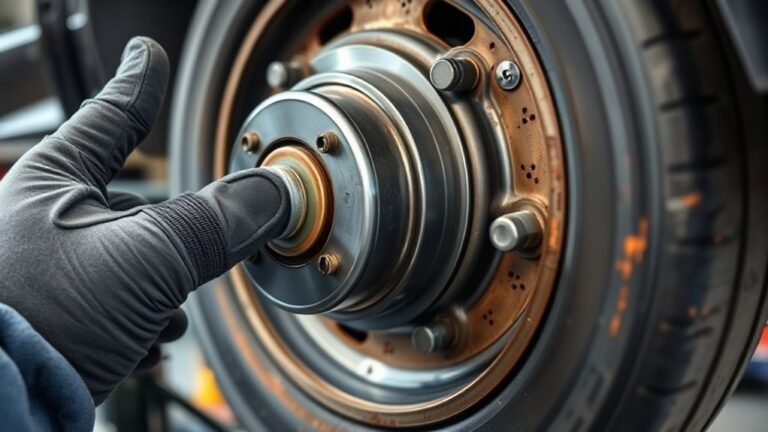
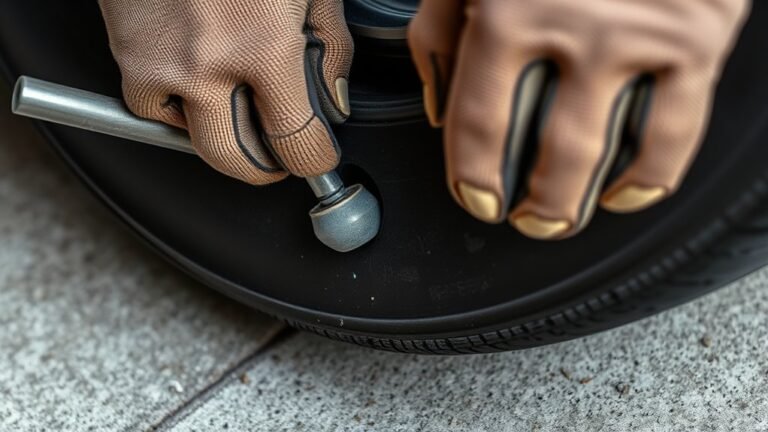
Once your vehicle is securely lifted and supported, you can start removing the wheels to install the spacers. Begin by loosening the lug nuts with a wrench or impact gun, turning them counterclockwise. Remove the nuts completely and carefully pull the wheel off the hub, setting it aside.
Next, clean the hub surface to assure proper spacer fitment. Place the wheel spacer onto the hub, aligning the bolt holes precisely. Push it firmly against the hub so it sits flush.
Once the spacer is in place, attach the spacer’s lug nuts or bolts, tightening them by hand to hold it securely. Repeat this process for each wheel you’re working on, ensuring every spacer fits snugly and evenly before moving on.
How to Torque Wheel Nuts Correctly After Installation
Proper torque application guarantees your wheel nuts stay secure and your wheels perform safely. After installing your wheel spacers and wheels, use a torque wrench to tighten the nuts to the manufacturer’s specified torque. Avoid guessing; under-tightening risks loosening, while over-tightening can damage studs or nuts.
Proper torque ensures wheel nuts stay secure and prevents damage or loosening after installation.
Follow these steps for correct torque application:
- Tighten nuts in a star or crisscross pattern to ensure even pressure.
- Start with a lower torque setting, then increase to the final specified value.
- Double-check torque after driving 50-100 miles, as nuts may settle.
- Use a quality torque wrench calibrated regularly for accuracy.
Safety Checks to Do Before You Drive
Before you hit the road, what safety checks should you perform to ensure your wheel spacers and wheels are securely installed? First, visually inspect each wheel spacer for proper alignment and confirm all lug nuts are tightened to the recommended torque. Double-check that no nuts or bolts are loose or missing.
Next, spin the wheels by hand to listen for unusual noises or resistance, which could indicate improper installation. Also, check for any gaps between the wheel spacer and hub; they should sit flush.
Finally, lower your vehicle and perform a slow test drive in a safe area, paying attention to any vibrations or handling issues. If you notice anything off, stop immediately and recheck your installation. These steps will help you drive safely with your new wheel spacers.
Keeping Your Wheel Spacers in Good Shape
How often you maintain your wheel spacers directly affects their performance and safety. To keep them in good condition, you need to regularly inspect and clean them. Dirt and debris can cause corrosion or uneven wear, which compromises their integrity.
Also, check the torque on your spacer bolts to ensure they’re tight but not over-tightened. Reapply anti-seize lubricant when necessary to prevent rust and make future removal easier. Here’s what you should do routinely:
- Clean spacers with a mild detergent and water
- Inspect for cracks, rust, or damage
- Check and retighten spacer bolts to manufacturer specs
- Apply anti-seize lubricant on bolts and spacer contact surfaces
Frequently Asked Questions
Can Wheel Spacers Affect My Vehicle’s Warranty?
Yes, wheel spacers can affect your vehicle’s warranty if they cause damage or are considered modifications.
You should check with your dealer before installing them to avoid voiding warranty coverage on suspension or wheel-related components.
Are Wheel Spacers Legal in All States or Countries?
Laws around wheel spacers are a patchwork quilt. You won’t find them legal in all states or countries. You’ll want to check local regulations before installing to avoid fines or safety issues. Don’t skip this step!
How Do Wheel Spacers Impact Fuel Efficiency?
Wheel spacers can slightly reduce your fuel efficiency because they increase your vehicle’s aerodynamic drag and add weight. You might notice a minor drop in mileage, especially at higher speeds, but it’s usually not significant.
Can Wheel Spacers Cause Uneven Tire Wear?
Yes, wheel spacers can cause uneven tire wear if they’re improperly installed or if they alter alignment. You’ll want to guarantee correct fitment and balance to avoid premature tire damage and maintain safe handling.
Will Wheel Spacers Affect My Vehicle’s Alignment?
Yes, wheel spacers can affect your vehicle’s alignment by altering the wheel offset and track width. You’ll want to have your alignment checked and adjusted after installing spacers to guarantee proper handling and tire wear.
Conclusion
Installing wheel spacers might seem tricky at first, but with the right tools and careful steps, it’s straightforward and rewarding. While they can enhance your vehicle’s stance and handling, remember that improper installation risks safety and performance.
Taking the time to choose the right spacers, torque nuts correctly, and perform safety checks transforms a simple upgrade into a smart, secure improvement. Don’t rush—precision now means peace of mind on every drive.
In conclusion, proper installation of wheel spacers is essential to ensure both safety and optimal vehicle performance.