What Does Front Wheel Drive Mean
Front wheel drive means your car’s engine sends power directly to the front wheels. These wheels handle both steering and moving you forward. This setup places the engine’s weight over the drive wheels, improving traction.
This helps you stay stable in rain or light snow. Front wheel drive also boosts fuel efficiency by reducing drivetrain components. This can lower maintenance costs as well.
If you want to understand how front wheel drive affects handling and efficiency, there’s more to explore. It’s important to know whether this setup is right for you.
Key Takeaways
- Front wheel drive (FWD) means the engine power is sent directly to the front wheels of the vehicle.
- The front wheels handle both steering and propulsion simultaneously in a FWD layout.
- FWD improves traction by placing engine weight over the driven front wheels, aiding stability and control.
- This drivetrain setup is common in passenger cars due to better fuel efficiency and lower maintenance costs.
- FWD vehicles are practical for everyday driving, offering better interior space utilization and reliable performance on paved roads.
What Does Front Wheel Drive (FWD) Mean?
What exactly does front wheel drive (FWD) mean? FWD is a vehicle drivetrain layout where the engine’s power is sent directly to the front wheels. This means those front wheels handle both steering and propelling the car forward.
When you drive a car with FWD, you’re relying on the front wheels to pull the vehicle along the road, unlike rear wheel drive where the back wheels push. This setup simplifies the drivetrain by combining power delivery and steering functions in one axle.
You’ll find FWD in many everyday cars because it offers better traction in slippery conditions and generally improves fuel efficiency. Understanding this basic concept helps you appreciate how your car moves and handles on various roads.
How Does Front Wheel Drive Move Your Car?
You’ll see how power from the engine travels through the transmission to the front axles, which then turn your wheels. This setup directly affects how your car handles on the road, especially in different driving conditions.
Understanding this process helps you appreciate why front wheel drive feels the way it does behind the wheel.
Power Transmission Process
When you press the accelerator, the engine generates power that travels through the transmission to the front wheels, propelling your car forward. This power transmission process starts as the engine’s crankshaft spins, transferring energy to the transmission.
The transmission adjusts the power output and sends it through the driveshaft to the front differential. The differential splits this power between the two front wheels, allowing them to rotate at different speeds when needed, such as during turns.
This efficient system guarantees your car moves smoothly and responds well to your inputs. By focusing power delivery to the front wheels, front wheel drive provides better traction and control, especially on slippery roads, making your driving safer and more efficient.
Role Of Front Axles
After power reaches the front differential, the front axles take over to deliver that energy directly to your wheels. These axles are essential because they transfer torque while allowing the wheels to turn and move independently, especially when you steer.
The front axles consist of inner and outer joints that accommodate suspension movement and steering angles without losing power transmission.
Here’s a quick look at the front axles’ role:
| Component | Function |
|---|---|
| Inner Joint | Connects differential to axle shaft, absorbs movement |
| Axle Shaft | Transmits torque from differential to wheel |
| Outer Joint | Allows steering angle and wheel movement |
Understanding this helps you appreciate how front-wheel drive efficiently moves your car forward.
Impact On Vehicle Handling
How exactly does front-wheel drive affect the way your car handles on the road? With front-wheel drive, the engine sends power directly to the front wheels, which pull the car forward. This setup improves traction, especially in wet or slippery conditions, because the weight of the engine rests over the drive wheels.
You’ll notice better stability during acceleration and easier control while turning. However, front-wheel drive can lead to understeer, where the car tends to push straight ahead in sharp turns if you’re not careful.
Why Does Front Wheel Drive Offer Better Traction in Slippery Conditions?
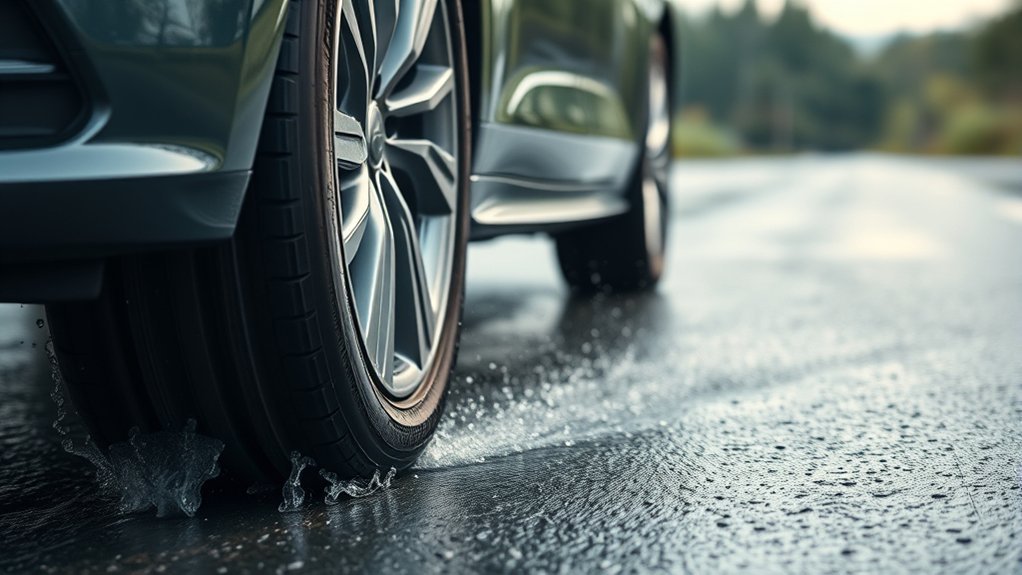
You’ll notice front wheel drive gives you better traction in slippery conditions because the engine’s weight sits over the drive wheels. This extra weight helps the tires grip the road more effectively.
When the front wheels pull and push the car, you get improved control and stability on slick surfaces.
Weight Distribution Benefits
Why does front wheel drive provide better traction in slippery conditions? It mainly comes down to weight distribution. In front wheel drive cars, the engine sits over the front wheels, adding extra weight right where the power is delivered.
This added weight increases the grip those tires have on the road, especially when it’s wet, snowy, or icy. When you accelerate or climb hills, that weight helps keep the front wheels firmly planted, reducing the chance of slipping.
You’ll notice that this setup improves stability and control in slick conditions without needing extra systems. So, the weight over the front wheels directly contributes to better traction by pressing the tires down more effectively, helping you maintain a safer grip when the road gets tricky.
Drive Wheel Traction
What makes front wheel drive excel in slippery conditions is the direct connection between the engine’s power and the wheels that steer. When you accelerate, the weight naturally shifts forward, pressing the front tires firmly against the road. This added pressure boosts traction, helping you maintain control on wet, icy, or snowy surfaces.
Since the front wheels both pull and guide the car, they’re better able to grip slippery pavement compared to rear-wheel drive, where power pushes from behind and traction can become unstable. You’ll notice that front wheel drive reduces the chances of fishtailing or spinning out because the driving force aligns with the steering direction.
In short, front wheel drive’s traction advantage gives you more confidence and safer handling when road conditions turn slick.
How Does Front Wheel Drive Improve Fuel Efficiency Compared to Other Drivetrains?
How exactly does front wheel drive boost fuel efficiency compared to other drivetrains? It mainly comes down to weight and mechanical simplicity. Since front wheel drive sends power directly to the front wheels, it eliminates the need for a long driveshaft and rear differential found in rear or all-wheel drive systems.
This reduction in components means your car weighs less, so the engine doesn’t have to work as hard, saving fuel. Additionally, the compact design reduces drivetrain energy losses, allowing more power to reach the wheels efficiently.
You’ll also find that front wheel drive vehicles often have better packaging, improving aerodynamics, which further enhances fuel economy. Overall, these factors combine to make front wheel drive a smart choice if fuel efficiency matters to you.
What Are the Pros and Cons of Front Wheel Drive?
Considering front wheel drive for your vehicle? It has clear advantages but also some drawbacks you should weigh. Here’s a quick look at the pros and cons:
1. Better Traction in Snow and Rain
Since the engine’s weight is over the front wheels, you get improved grip in slippery conditions.
2. More Interior Space
Front wheel drive eliminates the need for a driveshaft to the rear, freeing up cabin and trunk space.
3. Understeer Issues
When pushed hard, front wheel drive cars tend to understeer, which can feel less responsive in sharp turns.
Knowing these points helps you decide if front wheel drive aligns with your driving needs and preferences.
Why Is Front Wheel Drive So Popular Today?
Why do so many car manufacturers favor front wheel drive nowadays? It’s mainly because front wheel drive offers better fuel efficiency and lower production costs. When you drive a front wheel drive car, the engine, transmission, and drivetrain are all packed into one compact unit, which saves space and weight.
Front wheel drive is popular for its fuel efficiency and compact, cost-saving design.
This efficient design means manufacturers can build cars that are lighter and use less fuel, saving you money at the pump.
You’ll also find that front wheel drive vehicles perform well in everyday conditions, especially on wet or slippery roads, thanks to better traction from the engine’s weight over the front wheels. Plus, this setup often creates more cabin and cargo space, giving you extra comfort and practicality.
These benefits make front wheel drive a smart choice for most drivers today.
How to Decide If a Front Wheel Drive Car Is Right for You
Wondering whether a front wheel drive car fits your needs? Consider your driving habits, climate, and budget before deciding. Front wheel drive cars excel in everyday driving, especially in urban settings, thanks to better traction and fuel efficiency.
Here’s how to decide if it’s right for you:
- Assess Your Driving Conditions: If you mostly drive on paved roads or in moderate climates, front wheel drive works well. It handles rain and light snow effectively.
- Think About Fuel Economy: These cars generally consume less fuel, saving you money on long commutes or daily errands.
- Evaluate Maintenance Costs: Front wheel drive vehicles tend to have fewer drivetrain components, which can mean lower repair and maintenance expenses.
If these points match your lifestyle, a front wheel drive car might be your best choice.
Frequently Asked Questions
Can You Convert a Rear-Wheel Drive Car to Front-Wheel Drive?
You technically can convert a rear-wheel drive car to front-wheel drive, but it’s complex and costly. You’d need to change the engine layout, transmission, and drivetrain components, so it’s usually not practical or worth the effort.
How Does Front-Wheel Drive Affect Tire Wear Patterns?
Front-wheel drive usually causes your front tires to wear faster because they handle both steering and power delivery. You’ll likely notice more wear on the edges from turning and acceleration, so rotating tires regularly is key.
Are Front-Wheel Drive Cars More Expensive to Maintain?
If your front-wheel-drive car needs a new CV joint, it’s usually cheaper than replacing rear drivetrain parts in all-wheel-drive vehicles. You’ll find maintenance costs generally lower, but keep an eye on tire wear for extra expenses.
Do Front-Wheel Drive Cars Handle Better on Steep Hills?
You’ll find front-wheel drive cars generally handle better on steep hills because the engine’s weight over the front wheels improves traction. However, in icy or loose conditions, you might still face challenges compared to all-wheel drive.
What Is the History Behind the Development of Front-Wheel Drive?
Did you know front-wheel drive cars now make up over 80% of new vehicles? You’ll find it started in the early 1900s, evolving for better traction and space efficiency, revolutionizing car design worldwide.
Conclusion
Now that you know what front wheel drive means and how it works, you might think choosing your next car is straightforward. But wait—there’s more to contemplate. Its traction benefits and fuel efficiency are clear, yet the pros and cons might surprise you.
Before you decide if a front wheel drive fits your needs, think about where and how you drive most. Consider factors like weather conditions, road types, and your driving style. These elements can greatly influence your overall satisfaction.
Ready to make the right choice? Understanding what front wheel drive means could change your driving experience entirely.