How to Remove Locking Wheel Nut Without Key
If you need to remove a locking wheel nut without the key, start by checking your glove box, trunk, or car documents for it. Sometimes the key is stored in an unexpected spot, so a thorough search is worthwhile.
If you can’t find the key, try gripping the nut with locking pliers or use a rubber mallet and socket to gently loosen it. A universal removal tool is another option that can help turn locked nuts without causing damage.
As a last resort, carefully drilling the nut is possible, but it requires caution to avoid damaging the wheel. Keep reading to discover safer methods and essential tips for removing locking wheel nuts without the key.
Key Takeaways
- Search your car’s glove box, trunk, and documents for the locking nut key before attempting removal.
- Use locking pliers or a vice grip to grip and turn the locking wheel nut manually.
- Tap a smaller socket onto the nut with a hammer, then turn it off using the socket and breaker bar.
- Employ a universal locking nut removal tool designed to grip and unscrew locking nuts safely.
- As a last resort, drill out the nut carefully using a metal-cutting bit while wearing safety gear.
Why Locking Wheel Nuts Need a Key
Why do locking wheel nuts require a special key? You use them to prevent thieves from easily removing your wheels. Unlike standard nuts, locking wheel nuts have unique patterns that only match a specific key.
This design adds an extra layer of security, making it tough for anyone without the right tool to steal your wheels. When you buy locking nuts, the key comes with them and fits perfectly onto the nut’s pattern.
Without this key, standard tools won’t work, and you can’t loosen or tighten the nut. This security measure keeps your wheels safe, especially if you park in public or unfamiliar areas.
Quick Checks Before Removing Locking Nuts Without a Key
Locking wheel nuts provide security by requiring a specific key, but you might find yourself without that key when you need to remove them. Before trying anything, check if you have the key stored in your vehicle’s glove box, trunk, or with your car documents.
Sometimes, keys are attached to your spare tire kit or inside the owner’s manual. Also, inspect the locking nut carefully to determine its pattern; this can help identify the type of key you need or if a universal remover might fit.
Confirm the nut isn’t damaged or overly rusted, as this affects removal methods. Finally, verify your tools are suitable and in good condition to avoid causing damage to the wheel or nut during removal attempts.
How to Remove Locking Wheel Nuts Without the Key
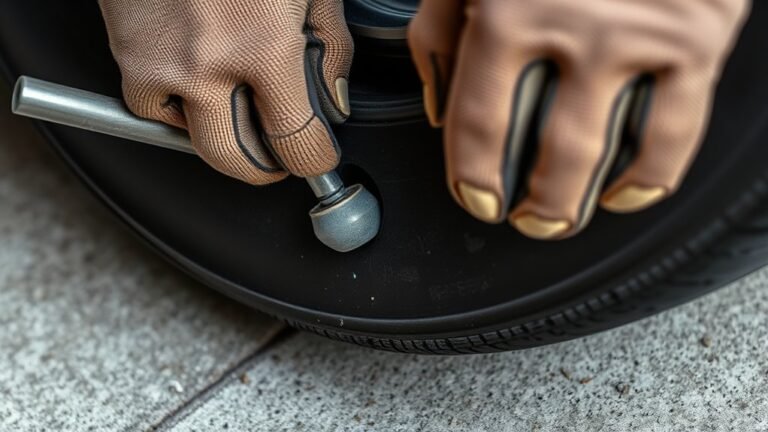
Wondering how to remove wheel nuts when you don’t have the key? Start by trying to grip the nut with locking pliers or vice grips tightly. If that fails, you can try tapping a socket slightly smaller than the nut onto it with a hammer, turning the nut off manually.
Be careful to avoid damaging the wheel. Another method involves using a rubber mallet to loosen the nuts gradually. Here’s a quick comparison of methods:
| Method | Tools Needed | Risk Level |
|---|---|---|
| Locking Pliers | Locking pliers | Low |
| Hammer & Socket | Hammer, socket | Medium |
| Rubber Mallet | Rubber mallet | Low |
| Cutting Tools | Angle grinder, saw | High (damage risk) |
Choose the safest method to avoid wheel damage.
Using a Universal Locking Nut Removal Tool
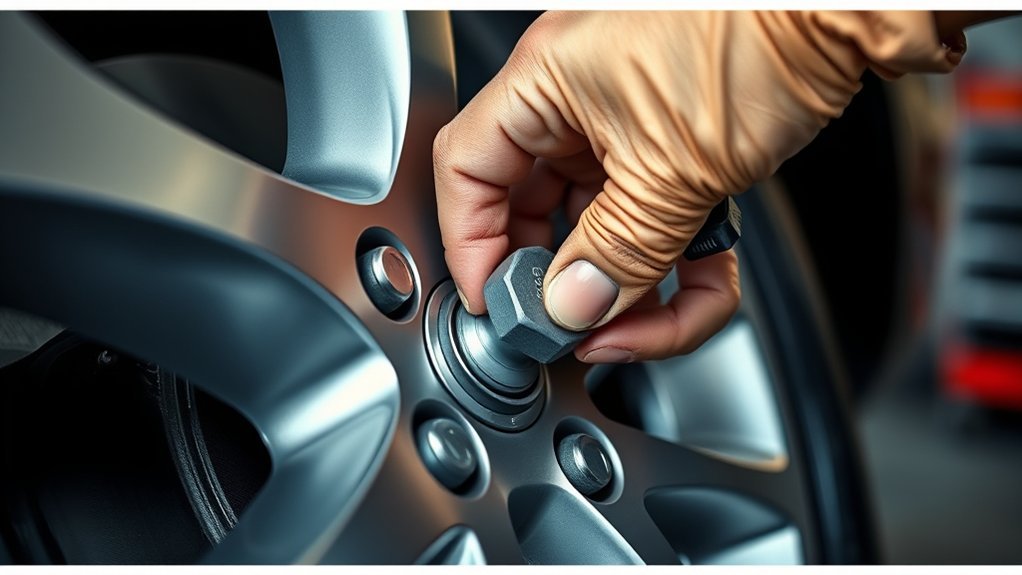
How can you quickly remove a locking wheel nut without its key? Using a universal locking nut removal tool is a straightforward solution. This tool is designed to grip and turn locked nuts, even when you don’t have the original key.
Follow these steps to use it effectively:
- Select the right size socket from the universal tool set that fits snugly over the locking nut.
- Attach the socket to a breaker bar or wrench for better leverage.
- Turn the tool counterclockwise with steady force to loosen and remove the locking nut.
Universal removal tools save time and prevent damage to your wheel, making them a smart choice when you’re locked out. Keep one handy for emergencies!
Removing Locking Nuts With Household Tools
If you don’t have a universal locking nut removal tool on hand, household items can sometimes come to the rescue. You can try using a rubber band for extra grip: place a thick rubber band over the locking nut, then firmly use a lug wrench to turn it. The rubber adds friction, helping loosen stubborn nuts.
Alternatively, a pair of locking pliers (vise grips) can grip the nut tightly, allowing you to twist it off. Make sure to position the pliers securely to avoid slipping. If you have a socket set, try using a slightly larger socket that can grip the nut’s outer edges.
These methods aren’t guaranteed but often work when you’re in a pinch and don’t have specialized tools nearby.
When and How to Drill Out Locking Wheel Nuts Safely
When should you consider drilling out locking wheel nuts? You should opt for drilling only if other removal methods fail and you have no key available. Drilling requires caution to avoid damaging the wheel. Here’s how to drill safely:
- Prepare the right tools: Use a drill with a metal-cutting bit sized slightly smaller than the nut’s center. Wear safety goggles and gloves.
- Secure the wheel: Stabilize it to prevent movement, ensuring accuracy and safety while drilling.
- Drill carefully: Apply steady pressure on the nut’s center until you break through. Avoid excessive force to prevent slipping and damage.
Once the nut is drilled out, you can remove it with pliers or a standard wrench.
Avoiding Damage to Wheels When Removing Locking Wheel Nuts
To avoid risking costly damage to your wheels while removing locking nuts, to prevent scratches or dents, always use the correct tools and apply steady, controlled force. Avoid improvised tools that can slip or mar the wheel surface.
If you’re drilling, protect the wheel by placing a piece of tape over the nut and drilling slowly to prevent heat buildup. Use a drill bit suited for metal and keep it perpendicular to the nut.
When using extraction tools, ensure they fit snugly to minimize slipping. Take your time and avoid rushing, as haste often leads to mistakes.
If you notice any resistance that feels unusual, stop and reassess your approach to prevent irreversible damage to your valuable wheels.
How to Prevent Losing Your Locking Nut Key and When to Call a Professional
How can you keep track of your locking nut key to avoid the hassle of losing it? First, always store the key in a dedicated spot in your glove compartment or toolbox. Second, attach the key to your keychain or a brightly colored lanyard to make it easier to spot.
Third, take a photo of the key and save it on your phone for quick reference.
Despite your best efforts, if you lose the key and can’t remove the locking nuts, it’s time to call a professional. A tire specialist or mechanic has the right tools and experience to safely remove the nuts without damaging your wheels.
Don’t try risky DIY methods that could cause costly damage.
Frequently Asked Questions
Can Locking Wheel Nuts Be Reused After Removal Without the Key?
Yes, you can reuse locking wheel nuts after removal without the key if they’re undamaged.
Just make sure to inspect them carefully for wear or damage before reinstalling to keep your wheels secure and safe.
Are Locking Wheel Nuts Compatible With All Types of Wheels?
Imagine fitting a puzzle piece that almost clicks but not quite. Locking wheel nuts aren’t compatible with all wheels. You’ll find they mostly work with steel or alloy wheels designed for them, so check before you buy or install.
Do Locking Wheel Nuts Improve Vehicle Security Significantly?
Yes, locking wheel nuts improve your vehicle’s security by deterring casual thieves. They add an extra layer of protection, making it harder to steal your wheels, but determined thieves with tools might still bypass them.
How Do Locking Wheel Nuts Compare to Regular Lug Nuts in Cost?
Locking wheel nuts usually cost more than regular lug nuts because of their added security features. You’ll pay extra for the specialized design and key, but that investment can help protect your wheels from theft.
Can Weather Conditions Affect the Performance of Locking Wheel Nuts?
Ever felt the bite of winter? Yes, weather can affect locking wheel nuts by causing rust or freezing, making removal tougher.
You’ll want to check them regularly and apply anti-seize to keep things running smoothly.
Conclusion
Losing your locking wheel nut key doesn’t have to feel like you’re facing a locked treasure chest without a map. With patience and the right tools, you can unseal the mystery and get back on the road.
Just remember, like a skilled locksmith, taking care not to damage your wheels is key. If the challenge feels too great, don’t hesitate to call in a professional. Sometimes, the best heroes wear tool belts.
When all else fails, knowing how to remove locking wheel nut without key can save the day and keep you moving forward.