How Long Do Wheel Bearings Last
You can expect your wheel bearings to last between 85,000 and 100,000 miles, but this varies depending on how you drive and maintain your vehicle. Wheel bearings are essential components that allow your wheels to spin smoothly, so their lifespan can be affected by various factors.
Rough roads, weather conditions, and heavy loads can wear them out sooner. You’ll notice signs like humming noises, vibrations, or uneven tire wear when they start failing. Acting quickly can prevent further damage.
Keep an eye out, and you’ll find useful tips on extending their lifespan and when to replace them. Proper maintenance and timely inspections can help you get the most out of your wheel bearings.
Key Takeaways
- Wheel bearings typically last between 85,000 and 100,000 miles under normal conditions.
- Lifespan varies based on driving environment, maintenance, and part quality.
- Exposure to rough roads, moisture, and road salt can reduce bearing durability.
- Regular inspection and lubrication can extend wheel bearing lifespan.
- Gradual wear signs include noise, vibration, and uneven tire wear before failure.
What Are Wheel Bearings and Why They Matter
Understanding wheel bearings is key to grasping how your vehicle stays safe and smooth on the road. Wheel bearings are small, but crucial components that allow your wheels to spin freely with minimal friction.
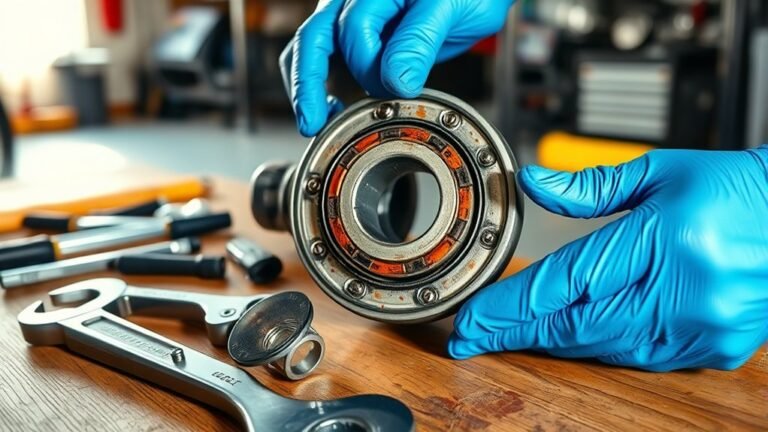
They sit between the wheel hub and axle, supporting the vehicle’s weight and enabling smooth rotation. Without well-functioning wheel bearings, your wheels might wobble, causing unstable handling and increasing wear on other parts.
You might not notice a failing bearing at first, but ignoring it can lead to serious safety risks, like wheel lockup or detachment. By knowing what wheel bearings do, you’ll appreciate how they contribute to your car’s performance and safety, making it easier to recognize when something’s off and needs attention.
How Long Do Wheel Bearings Typically Last
You can expect wheel bearings to last anywhere between 85,000 and 100,000 miles, but several factors like driving conditions and maintenance habits will impact their lifespan.
It’s important to recognize early signs of bearing wear, such as unusual noises or vibrations, so you can address issues before they become serious. Understanding these key points will help you keep your vehicle running smoothly.
Average Wheel Bearing Lifespan
How long can you expect your wheel bearings to last before they need replacing? On average, wheel bearings last anywhere from 85,000 to 100,000 miles. This range gives you a general idea, but it’s not a guarantee.
Many drivers find their wheel bearings reach this mileage without issues, while others might notice wear earlier. If you regularly maintain your vehicle and drive carefully, you can often get closer to the higher end of this lifespan.
Keep in mind that wheel bearings don’t usually fail suddenly; they tend to degrade gradually, giving you time to spot signs like unusual noises or vibrations. Staying aware of these signs helps you plan replacements before serious damage occurs, ensuring your vehicle runs smoothly.
Factors Affecting Durability
While many wheel bearings last between 85,000 and 100,000 miles, several factors can influence their actual durability. You’ll find that driving conditions, maintenance habits, and vehicle type all play key roles in how long your wheel bearings hold up.
If you want to maximize their lifespan, understanding these elements is crucial.
Here are some factors that affect wheel bearing durability:
- Driving environment: Rough roads and off-roading expose bearings to more stress and debris.
- Weather conditions: Moisture and salt from winter roads can cause corrosion.
- Load and towing: Carrying heavy loads or towing increases bearing strain.
- Maintenance routine: Regular inspections and lubrication help prevent premature wear.
- Quality of parts: Higher-quality bearings usually last longer under the same conditions.
Signs Of Bearing Wear
When do wheel bearings start showing signs of wear? You’ll typically notice symptoms once the bearing begins to degrade, often between 85,000 to 100,000 miles.
The most common sign is a humming or grinding noise coming from the wheel area, especially when turning or accelerating. You might also feel vibration or looseness in the steering, indicating the bearing isn’t holding the wheel securely.
Uneven tire wear can be another clue, as worn bearings affect wheel alignment. If you hear unusual noises or experience handling issues, don’t ignore them.
Early detection helps prevent further damage and costly repairs. Regular inspections during routine maintenance can catch bearing wear before it becomes a serious problem, keeping your vehicle safe and running smoothly.
Factors That Affect Wheel Bearings’ Lifespan
What determines how long your wheel bearings last? Several factors play a crucial role in their lifespan. You can’t control everything, but being aware helps you maintain them better.
The conditions your vehicle faces and how you drive directly impact bearing durability. Here are key factors affecting wheel bearings’ lifespan:
Driving habits: Aggressive driving and frequent hard stops strain bearings.
Road conditions: Rough, unpaved, or salty roads increase wear and corrosion.
Load weight: Carrying heavy loads stresses bearings more than usual.
Maintenance: Proper lubrication and timely inspections prevent premature failure.
Seals and protection: Damaged seals let dirt and moisture in, accelerating damage.
Understanding these helps you extend your wheel bearings’ life and avoid costly replacements.
How to Recognize Early Symptoms of Wheel Bearing Wear
You’ll want to listen for unusual noises, like humming or grinding, when you’re driving.
Pay attention if your vehicle starts handling differently, such as pulling to one side or feeling loose. These signs often point to early wheel bearing wear that shouldn’t be ignored.
Unusual Noises While Driving
How can you tell if your wheel bearings are starting to fail? One of the clearest signs is unusual noises while driving. These sounds often indicate that the bearings are worn and need attention.
You might notice:
- A grinding or growling noise coming from the wheel area
- A humming or rumbling sound that increases with speed
- Clicking or popping noises when turning
- Noise that changes or stops when you shift weight or change direction
- Vibrations that accompany the sound, especially during acceleration
If you hear any of these, don’t ignore them. Early detection helps prevent more serious damage and keeps you safe on the road. Act promptly to inspect and replace faulty wheel bearings before the problem worsens.
Vehicle Handling Changes
Wondering if your vehicle’s handling is signaling a wheel bearing issue? Early signs often show up in how your car responds on the road. You might notice steering feels loose or your vehicle pulls to one side. These subtle changes can mean the wheel bearing is wearing down and needs attention.
Here’s a quick guide to help you spot handling symptoms:
| Symptom | Possible Cause |
|---|---|
| Steering feels loose | Worn or damaged wheel bearing |
| Vehicle pulls left or right | Uneven bearing wear |
| Vibration in steering wheel | Bearing imbalance or damage |
| Difficulty in cornering | Bearing affecting wheel alignment |
If you experience these, get your wheel bearings checked promptly to avoid further damage.
What to Expect When Wheel Bearings Go Bad
What signs should you watch for when wheel bearings start to fail? You’ll likely notice a few clear symptoms that signal trouble. Pay close attention to any unusual noises or changes in your vehicle’s behavior.
Watch for unusual noises or changes in your vehicle’s behavior indicating wheel bearing issues.
Here are five common signs:
- A grinding or humming noise coming from the wheel area
- Vibration or wobbling felt through the steering wheel
- Uneven tire wear
- Loose or play in the wheel when you try to shake it
- ABS warning light activation due to sensor issues
Ignoring these signs can lead to more severe damage or unsafe driving conditions. If you spot any of these symptoms, it’s important to get your wheel bearings checked and replaced if necessary to maintain safe vehicle operation.
Tips to Extend the Life of Your Wheel Bearings
When should you take steps to protect your wheel bearings? As soon as you start noticing unusual noises or vibration, or during regular maintenance checks. Proper care can substantially extend their life.
Keep your wheel bearings clean and lubricated, and avoid driving through deep water or rough terrain that can cause damage.
Here’s a quick guide to help you maintain your wheel bearings:
| Action | Benefit |
|---|---|
| Regular lubrication | Reduces friction and wear |
| Avoid water exposure | Prevents rust and corrosion |
| Timely inspections | Detects issues early |
When and How to Replace Wheel Bearings
How do you know it’s time to replace your wheel bearings? Listen for a grinding or humming noise coming from the wheels, especially when turning. You might also feel vibrations or looseness in the steering, or notice uneven tire wear.
If you suspect worn bearings, act quickly to avoid further damage.
Here’s when to replace your wheel bearings:
- Persistent noise from the wheel area
- Excessive play or looseness in the wheel hub
- Vibration or wobbling while driving
- Uneven tire wear patterns
- ABS warning light related to wheel sensors
To replace them, you’ll need to lift the vehicle, remove the wheel, brake caliper, and rotor, then extract the old bearing. Press in the new bearing carefully and reassemble everything.
If unsure, seek professional help.
Frequently Asked Questions
Can Wheel Bearings Cause Uneven Tire Wear?
Yes, wheel bearings can cause uneven tire wear. If they’re worn or damaged, your wheels won’t spin smoothly, leading to misalignment and uneven pressure on tires.
You’ll notice faster, irregular wear patterns developing.
Are Wheel Bearings Covered Under Car Warranty?
When it comes to wheel bearings, you’re often covered under your car’s warranty, but it’s not a sure thing. Check the fine print, as coverage can vary wildly. Don’t put all your eggs in one basket!
How Much Does Wheel Bearing Replacement Typically Cost?
You’ll typically pay between $150 and $400 for wheel bearing replacement, depending on your car model and labor rates.
Doing it yourself can save money, but professional service guarantees proper installation and safety.
Can I Drive Safely With a Bad Wheel Bearing?
Driving with a bad wheel bearing is like walking on a cracked bridge. You shouldn’t.
It risks wheel lockup or failure, so don’t push it. Get it fixed immediately to keep yourself and others safe on the road.
Do Wheel Bearings Require Lubrication After Installation?
No, you don’t need to lubricate wheel bearings after installation if they’re sealed. Sealed bearings come pre-lubricated and maintenance-free, so just install them properly, and they’ll stay lubricated throughout their lifespan.
Conclusion
Wheel bearings wear with time, but with wise watchfulness, you can ward off weariness and wrench woes. By recognizing rough rumbles and routine rust, you’ll know when to replace or repair.
Remember, regular rides with right maintenance really reinforce their resilience. So stay sharp, spot signs swiftly, and save yourself from costly surprises.
Taking timely tips to treat your wheel bearings ensures smooth, safe, and satisfying spins every single time. Proper care is key to maximizing how long wheel bearings last.