What Causes Tire Cupping
Tire cupping happens because your suspension, wheel balance, or alignment isn’t working right, causing uneven wear with bumpy, scalloped patches on your tires. This problem often results from worn shocks or struts that make your tires bounce unevenly. Wheel imbalance and misalignment also create vibrations that wear the tread irregularly.
Aggressive driving and poor maintenance can speed up cupping, making the issue worse over time. Fixing these problems restores a smooth ride and prevents further damage to your tires.
Keep going to discover how each factor plays a role and what you can do about it.
Key Takeaways
- Worn or damaged suspension components cause uneven tire contact, leading to tire cupping.
- Wheel imbalance creates vibrations that result in irregular tread wear and cupping patterns.
- Misaligned wheels alter tire contact patches, promoting uneven wear and cupping on the tread.
- Aggressive driving and poor road conditions increase tire stress, accelerating cupping development.
- Neglecting regular tire maintenance like balancing, rotation, and proper inflation contributes to cupping.
What Is Tire Cupping and How to Spot It
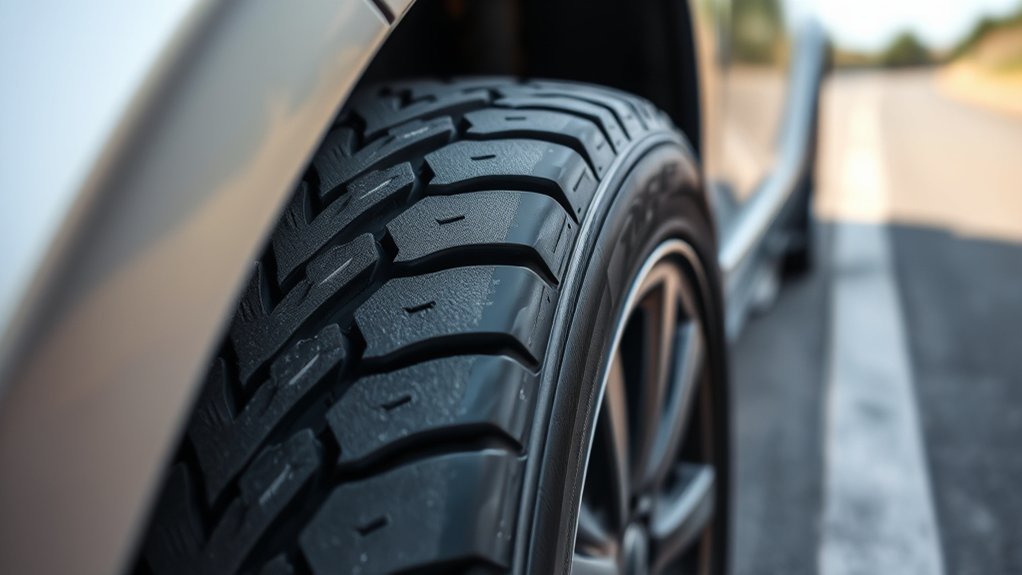
What exactly is tire cupping, and how can you recognize it? Tire cupping is a pattern of uneven wear where your tire develops high and low spots, creating a scalloped or wavy surface. You’ll notice this by running your hand over the tire tread; it won’t feel smooth but bumpy.
Visually, cupping appears as alternating patches of tread wear that look like dips and raised areas. It often causes a noticeable vibration or humming noise when you drive, especially at higher speeds.
If you spot these irregular wear patterns or hear unusual sounds from your tires, it’s a sign that cupping might be happening. Catching it early helps you prevent further damage and maintain a safer, smoother ride.
How Suspension Issues Cause Tire Cupping
When you notice tire cupping, it’s often a sign that something’s off with your vehicle’s suspension system. Your suspension components, like shocks, struts, and springs, work to keep your tires firmly on the road.
If these parts wear out or fail, they can’t absorb bumps properly. That causes your tires to bounce unevenly, leading to the characteristic high and low spots of cupping. Driving with worn suspension means your tires don’t maintain consistent contact with the road, increasing uneven wear.
To prevent tire cupping, you should regularly inspect and replace any damaged suspension parts. Fixing suspension issues early not only extends your tire life but also improves your vehicle’s handling and safety on the road.
How Wheel Imbalance Leads to Tire Cupping
When your wheels have uneven weight distribution, they don’t rotate smoothly, causing vibrations as you drive. These vibrations create irregular contact between the tire and the road, leading to uneven tire wear.
Over time, this uneven wear results in tire cupping that affects your ride quality and safety.
Effects of Uneven Weight
Uneven weight distribution on your wheels can quickly cause tire cupping by creating irregular contact between the tire and the road. When the wheel isn’t balanced properly, certain spots on the tire bear more load, leading to inconsistent pressure and vibration.
As you drive, these vibrations cause the tire to bounce or hop slightly, preventing smooth rolling. This repeated bouncing wears down specific areas unevenly, forming the characteristic high and low spots of tire cupping.
If you ignore this imbalance, the tire’s structural integrity weakens, and your ride becomes noisy and uncomfortable. To avoid these effects, you need to ensure your wheels are balanced correctly.
Regular maintenance like wheel balancing helps distribute weight evenly, keeping your tires in good shape and preventing cupping from developing.
Impact on Tire Wear
Tire wear takes a significant hit from wheel imbalance, directly causing the uneven patterns known as tire cupping. When your wheels aren’t balanced, they wobble as they spin, creating inconsistent contact with the road.
This leads to patches of your tire wearing down faster than others, resulting in that distinctive cupped look. If you ignore these signs, the uneven wear can reduce traction, increase noise, and shorten your tire’s lifespan.
| Cause | Effect on Tire Wear |
|---|---|
| Wheel imbalance | Tire bouncing, uneven wear |
| Uneven contact pressure | Localized tread wear |
| Vibration at high speeds | Cupped tire surface |
| Ignored maintenance | Accelerated tire deterioration |
How Wheel Misalignment Causes Uneven Tire Wear
When your wheels are misaligned, your tires don’t make proper contact with the road, causing uneven wear patterns. This misalignment also throws off your suspension’s balance, leading to more stress on certain tire areas.
You’ll notice this wear affecting your tire’s performance and lifespan if it’s not corrected.
Impact On Tire Contact
How does wheel misalignment affect the way your tires make contact with the road? When your wheels aren’t properly aligned, the tire tread doesn’t sit flat against the surface. Instead, parts of the tire bear more pressure than others, leading to uneven contact patches.
This uneven pressure causes certain sections of your tires to wear down faster, creating irregular tread patterns. Over time, this uneven wear can lead to tire cupping, where the tread forms high and low points.
You might notice vibrations or a rough ride because the tires don’t grip the road consistently. By keeping your wheels aligned, you ensure the entire tire surface contacts the road evenly, promoting uniform wear and better handling.
This helps extend your tire’s life and keeps your drive smooth.
Effects On Suspension Alignment
Why does wheel misalignment disrupt your suspension system? When your wheels aren’t aligned properly, your suspension has to work harder to maintain stability.
Misalignment causes uneven pressure on tires, leading to irregular wear patterns like cupping. This uneven wear throws off the balance and smoothness of your ride. As a result, you’ll feel vibrations or pulling to one side while driving.
Over time, misaligned wheels strain suspension components, causing premature wear and costly repairs. You might also notice decreased fuel efficiency and compromised handling.
To prevent these issues, regularly check and adjust your wheel alignment. Keeping your suspension aligned ensures even tire wear, better control, and a safer, more comfortable driving experience.
How Driving Habits Contribute to Tire Cupping
Have you ever noticed uneven wear patterns on your tires after a few months of driving? Your driving habits play a big role in causing tire cupping. If you frequently accelerate hard, brake suddenly, or take corners aggressively, you put extra stress on your tires.
This repeated impact can cause the tire tread to wear unevenly, leading to cupping. Similarly, driving over potholes, rough roads, or speed bumps without reducing speed can create shocks that damage the tire’s structure.
Consistently driving at high speeds also heats the tires excessively, contributing to premature wear. By adopting smoother acceleration, braking gently, and avoiding rough surfaces when possible, you can reduce the risk of tire cupping and extend the life of your tires.
How Poor Tire Maintenance Leads to Cupping
Your driving habits aren’t the only factor that can lead to tire cupping. Neglecting proper tire maintenance plays a big role too. When you skip regular tire rotations, uneven wear patterns develop, causing certain areas to wear more quickly and contribute to cupping.
Failing to keep your tires properly inflated also leads to uneven pressure distribution, which stresses parts of the tire unevenly and promotes irregular wear. Additionally, not balancing your tires allows vibrations to persist, increasing the likelihood of cupping.
Ignoring wheel alignment means your tires don’t make optimal contact with the road, further accelerating uneven wear. By overlooking these maintenance steps, you put your tires at risk for developing those telltale high and low spots that characterize cupping.
How to Fix and Prevent Tire Cupping
Wondering how to tackle tire cupping once it appears? Start by addressing the root causes to fix and prevent it effectively. First, inspect and replace worn shocks or struts, as these components keep your tires in smooth contact with the road.
Second, maintain proper tire inflation; under- or over-inflated tires wear unevenly, encouraging cupping. Third, rotate your tires regularly, typically every 5,000 to 7,000 miles, to promote even wear across all tires.
Additionally, balance your tires and align your wheels to reduce vibrations that cause irregular wear patterns. By following these steps, you’ll not only fix current cupping issues but also extend the life of your tires and improve overall ride comfort and safety.
Frequently Asked Questions
Can Tire Cupping Affect Fuel Efficiency?
Yes, tire cupping can affect your fuel efficiency because uneven tire wear increases rolling resistance.
You’ll notice your car uses more fuel as the engine works harder to maintain speed with those uneven tires.
Is Tire Cupping Covered by Vehicle Warranties?
Most vehicle warranties don’t cover tire cupping since it’s usually caused by maintenance issues or road conditions.
You’ll want to check your specific warranty, but generally, this wear isn’t considered a manufacturer defect.
How Long Does It Take for Tire Cupping to Develop?
Tire cupping can develop within a few thousand miles, depending on your driving habits and road conditions. If you don’t address suspension or alignment issues quickly, you’ll notice uneven wear and noise much sooner.
Are Certain Tire Brands More Prone to Cupping?
Some specific suppliers show slightly stronger signs of tire cupping, but you shouldn’t solely blame brands.
You’ll find that poor maintenance, rough roads, and misalignment mainly make your tires more susceptible to serious surface scuffing.
Can Tire Cupping Cause Noise Inside the Vehicle?
Yes, tire cupping can cause noise inside your vehicle. You’ll notice a rhythmic, thumping sound as the uneven tire surface hits the road.
This noise can get louder at higher speeds and affect your ride comfort considerably.
Conclusion
Tire cupping affects about 20% of drivers at some point, often sneaking up due to suspension or alignment issues. It can lead to uneven wear and a rough driving experience.
By keeping your tires balanced, maintaining proper alignment, and adopting smooth driving habits, you can avoid this costly problem. Regular tire maintenance isn’t just smart—it’s essential to prolong your tire’s life and keep your ride comfortable.
Stay proactive, and you’ll save money while enjoying a safer, smoother drive every time. Understanding what causes tire cupping helps you take the right steps to prevent it.