How Do Tire Pressure Sensors Work
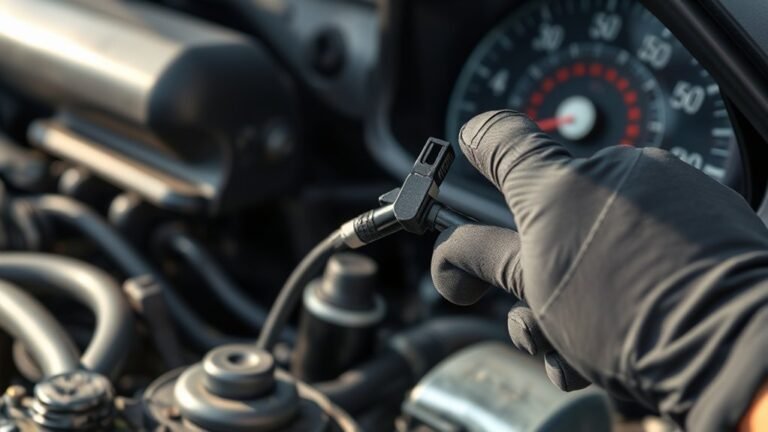
Tire pressure sensors keep you safe by continuously measuring your tire’s air pressure and sending that info to your car’s dashboard. These tire pressure sensors use direct or indirect methods—either sensing the actual pressure inside the tire or estimating it through wheel rotation data.
The vehicle then alerts you if pressure’s too low, helping prevent accidents and improve fuel efficiency. If you want to understand how these sensors work and how to care for them, there’s more useful info ahead.
Key Takeaways
- Tire pressure sensors directly or indirectly measure tire pressure, with direct sensors providing real-time accurate inside-tire readings.
- Direct sensors use pressure detection methods like piezoelectric or capacitive elements to convert pressure into electrical signals.
- Sensors wirelessly transmit pressure data via low-frequency radio or Bluetooth to the vehicle’s computer system.
- The vehicle’s control module processes sensor signals, comparing pressure against safe thresholds and alerts the driver if pressure is low.
- Indirect sensors infer tire pressure by monitoring wheel speed and rotation patterns without measuring actual air pressure inside the tire.
What Tire Pressure Sensors Are and Why They Matter
What exactly are tire pressure sensors, and why should you care about them? These small devices monitor the air pressure inside your tires and send that information to your car’s dashboard.
You might think they’re just a convenience, but they actually play a crucial role in your safety and vehicle performance. When tire pressure drops below the recommended level, these sensors alert you, helping you avoid flat tires, blowouts, or uneven tire wear.
Keeping your tires properly inflated not only ensures better handling and braking but also improves fuel efficiency. By paying attention to tire pressure sensors, you’re actively protecting yourself, your passengers, and your vehicle’s longevity without having to check tire pressure manually all the time.
How Tire Pressure Sensors Measure Air Pressure
You’ll find that tire pressure sensors come in different types, each using a unique method to detect air pressure. Some measure pressure directly inside the tire, while others estimate it through wheel speed or other signals.
Let’s look at how these sensors capture and report the pressure levels.
Sensor Types Explained
How exactly do tire pressure sensors detect the air pressure inside your tires? There are mainly two types you’ll encounter: direct and indirect sensors.
Direct sensors sit inside the tire and measure the actual air pressure by using pressure-sensitive components like piezoelectric or capacitive sensors. These sensors convert physical pressure into an electrical signal, which they send to your car’s monitoring system.
Indirect sensors, on the other hand, don’t measure pressure directly. Instead, they monitor wheel speed and use algorithms to infer pressure changes based on how the tire rotates.
Both types keep you informed about your tire’s condition, but direct sensors provide more accurate, real-time data. Understanding these differences helps you appreciate how your vehicle maintains safety and performance.
Pressure Detection Methods
Ever wondered how tire pressure sensors actually measure the air pressure inside your tires? They use different pressure detection methods to monitor your tire’s condition in real-time. The most common methods include piezoelectric sensors, capacitive sensors, and strain gauge sensors.
Each works by detecting changes caused by air pressure inside the tire, converting them into electrical signals that your vehicle’s system reads.
| Method | How It Works | Benefit |
|---|---|---|
| Piezoelectric | Measures pressure-induced voltage | Highly sensitive |
| Capacitive | Detects changes in capacitance | Energy efficient |
| Strain Gauge | Measures tire deformation | Durable and reliable |
| Optical (less common) | Uses light refraction changes | Immune to electrical noise |
These methods help keep your ride safe and smooth.
Direct vs. Indirect Tire Pressure Sensors: What’s the Difference?
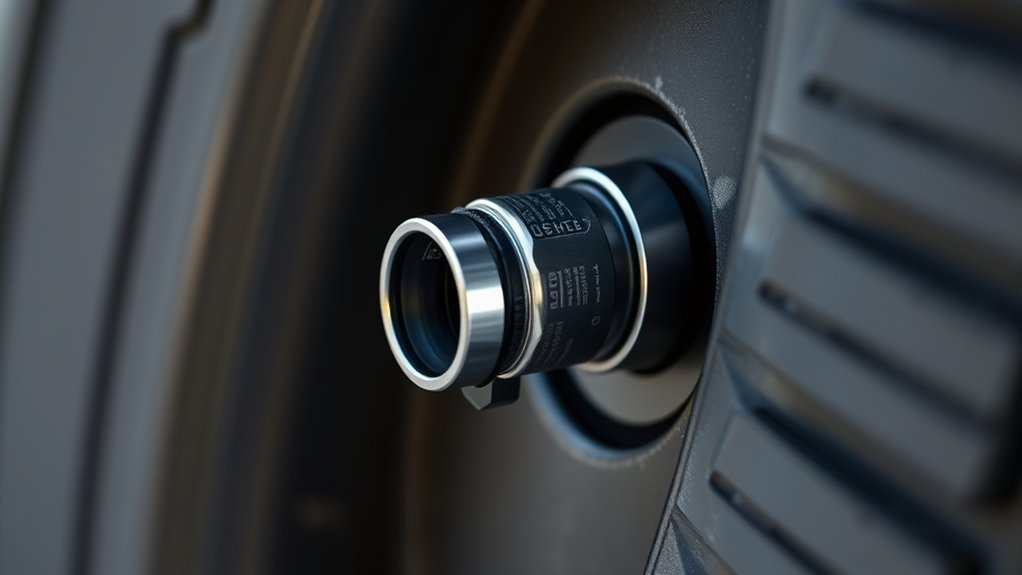
Wondering how your vehicle keeps tabs on tire pressure? It uses either direct or indirect tire pressure sensors. Direct sensors sit inside each tire, measuring pressure with a tiny sensor on the valve stem. They provide real-time, accurate readings for each tire.
Indirect sensors don’t measure pressure directly; instead, they monitor wheel speed and rotation through your vehicle’s ABS system. When a tire’s pressure drops, it changes the tire’s rolling diameter, which the system detects.
While direct sensors offer precise data, they can be more expensive and require battery replacements. Indirect sensors are cost-effective and maintenance-free but less accurate.
Understanding these differences helps you appreciate how your car keeps you safe by alerting you to low tire pressure.
How Tire Pressure Sensors Transmit Data to Your Vehicle’s Computer
Your tire pressure sensor first generates a signal based on the current pressure inside the tire. Then, it wirelessly transmits this data to your vehicle’s computer using radio frequency.
Finally, your vehicle’s computer receives and processes the information to keep you informed.
Sensor Signal Generation
How exactly do tire pressure sensors send information to your vehicle’s computer? Inside the sensor, a pressure-sensitive element detects the air pressure in your tire. Then, an electronic circuit converts this pressure reading into an electrical signal. Finally, this signal is prepared for transmission.
Here’s how the sensor signal generation works step-by-step:
- Sensing: A piezoelectric or capacitive sensor measures the tire’s air pressure changes.
- Conversion: The sensor converts this mechanical pressure into an electrical voltage or frequency.
- Signal Conditioning: The circuit processes the raw signal, amplifying and encoding it for accurate data transmission.
This precise signal generation ensures your vehicle’s computer receives reliable pressure information to keep you safe on the road.
Wireless Data Transmission
Where does the electrical signal go after the tire pressure sensor generates it? The sensor immediately converts the pressure reading into a digital signal. It then uses a tiny built-in transmitter to send this data wirelessly.
Typically, the transmission happens via low-frequency radio waves or Bluetooth technology, depending on the sensor system. This wireless method lets the sensor communicate without physical wires, which is essential since the sensor rotates with the tire.
The signal is sent at regular intervals or whenever a pressure change occurs, ensuring you get timely updates. The sensor’s power source, usually a small battery, supports this wireless communication.
Vehicle Computer Reception
Once the tire pressure sensor sends its wireless signal, your vehicle’s computer steps in to receive and process this data. Here’s how it works:
- Signal Reception: Your vehicle’s onboard computer uses an antenna to pick up the radio signal sent by each tire sensor.
- Data Decoding: The computer decodes the signal, translating it into readable pressure information for each tire.
- Alert Generation: If any tire’s pressure falls outside the safe range, the computer triggers a warning light on your dashboard, alerting you instantly.
This seamless communication helps you maintain proper tire pressure, improving safety and fuel efficiency. You don’t have to check manually; your vehicle does the monitoring for you, keeping you informed in real time.
How Your Vehicle Interprets Tire Pressure Data
Why does your vehicle constantly monitor tire pressure? It’s so your onboard computer can interpret real-time data and keep you informed. When sensors send tire pressure info, your vehicle’s control module analyzes it against preset thresholds.
If pressure falls below or rises above these limits, your system flags it immediately. The computer processes signals from each tire individually, comparing values to detect inconsistencies or leaks.
Then, it triggers a dashboard alert, like the TPMS light, so you know when to check your tires. This interpretation helps the vehicle adjust warnings in real time, ensuring you receive accurate feedback on tire conditions.
Essentially, your car translates raw sensor data into actionable info, helping you maintain proper tire health and drive confidently.
Why Accurate Tire Pressure Sensor Readings Matter for Tire Safety
How can you ensure your tires keep you safe on the road? Accurate tire pressure sensor readings are crucial because they help you maintain optimal tire conditions. When your sensors provide precise data, you can:
- Prevent tire blowouts by keeping pressure within safe limits.
- Improve fuel efficiency since properly inflated tires reduce rolling resistance.
- Enhance vehicle handling and braking performance, ensuring better control in emergencies.
If your sensors give inaccurate readings, you might drive on underinflated or overinflated tires without realizing it. This increases the risk of accidents, uneven tire wear, and costly repairs. By trusting reliable sensor data, you stay informed and proactive, protecting yourself and others on the road. Accurate sensors aren’t just convenient; they’re a vital safety feature you can’t afford to ignore.
Common Symptoms of Failing Tire Pressure Sensors
You’ll often notice a warning light on your dashboard when a tire pressure sensor starts to fail. Sometimes, the readings might jump around or show irregular pressure levels.
Recognizing these signs early helps you avoid potential safety issues.
Warning Light Indicators
When should you pay attention to your tire pressure warning light? You should never ignore it, as it signals potential issues with your tire pressure sensors.
Here are three common warning light indicators that suggest your sensors might be failing:
- Constant Illumination: If the warning light stays on continuously, even after you check and adjust tire pressures, your sensor could be malfunctioning.
- Intermittent Lighting: A flickering or sporadic warning light often indicates an inconsistent sensor signal or battery issues.
- Delayed Activation: When the warning light takes longer than usual to appear despite low tire pressure, it might mean the sensor isn’t detecting changes properly.
Recognizing these signs early helps you avoid unsafe driving conditions and maintain accurate sensor performance.
Irregular Tire Pressure Readings
Why do your tire pressure readings sometimes jump around or show unexpected values? Irregular readings often signal a failing tire pressure sensor. When sensors malfunction, they can send inconsistent or inaccurate data to your vehicle’s monitoring system.
You might notice pressure levels shifting dramatically from one moment to the next or values that don’t match the actual tire condition. This erratic behavior can confuse you and cause unnecessary worry or neglect.
Dirt, moisture, or battery issues inside the sensor can disrupt its performance. If you see sudden, unexplained pressure changes or frequent warning light flickers, it’s a good idea to inspect or replace the sensor.
Keeping your sensors in good shape ensures reliable tire pressure info and safer driving.
How Tire Pressure Sensors Improve Vehicle Safety and Efficiency
How exactly do tire pressure sensors enhance your vehicle’s safety and efficiency? These sensors constantly monitor your tire pressure and alert you if it drops below optimal levels, helping you avoid dangerous driving conditions. Here’s how they make a difference:
- Prevent Accidents: Underinflated tires affect handling and braking, increasing accident risks. Sensors warn you early to maintain control.
- Improve Fuel Efficiency: Properly inflated tires reduce rolling resistance, meaning your engine uses less fuel, saving you money.
- Extend Tire Life: Maintaining correct pressure minimizes uneven wear, so your tires last longer and perform better.
How to Maintain and Calibrate Tire Pressure Sensors
Maintaining and calibrating your tire pressure sensors keeps them accurate and reliable. Regularly check sensor batteries and replace them when needed. After rotating tires or adjusting pressure, recalibrate sensors to ensure precise readings. Use your vehicle’s manual or a diagnostic tool for calibration steps.
| Maintenance Task | Frequency | Tips |
|---|---|---|
| Battery Check | Every 2 years | Replace batteries promptly |
| Sensor Cleaning | During tire service | Remove dirt gently to avoid damage |
| Calibration | After tire changes | Use vehicle’s specific procedure |
| Pressure Monitoring | Weekly | Adjust pressure to recommended level |
Following these steps helps prevent false alerts and extends sensor life, keeping your driving safe and efficient.
Debunking Common Tire Pressure Sensor Myths
Ever wondered if your tire pressure sensors need constant replacement or if they’re as fragile as some say? Let’s clear up some of the most common myths to help you trust your sensors more confidently.
1. Sensors fail frequently
Actually, tire pressure sensors are designed to last several years. Regular maintenance and avoiding harsh impacts can extend their life.
2. They cause frequent false alerts
Most alerts happen due to real pressure changes, not sensor errors. Calibration ensures accuracy.
3. Replacing tires means replacing sensors
You usually don’t need to replace sensors when changing tires unless they’re damaged.
Frequently Asked Questions
Can Tire Pressure Sensors Be Installed on All Types of Vehicles?
You can install tire pressure sensors on most vehicles, but some older models or specialty vehicles might need specific sensor types or adapters.
Always check compatibility with your vehicle to assure accurate monitoring and safety.
How Long Do Tire Pressure Sensors Typically Last Before Needing Replacement?
Imagine your tire sensor as a tiny guardian. It usually lasts 5 to 10 years before needing replacement.
You’ll know it’s time when it stops sending accurate pressure alerts or the battery finally dies.
Are Tire Pressure Sensors Affected by Extreme Weather Conditions?
Yes, tire pressure sensors can be affected by extreme weather. You might notice reduced battery life or sensor damage in very hot or cold conditions.
It’s smart to check them regularly to guarantee accurate readings.
Can Aftermarket Tires Cause Tire Pressure Sensor Errors?
If you swap in aftermarket tires, sensor errors can sneak up like shadows at dusk. Since these tires might not match original specs, your sensors could misread pressure, triggering warnings that don’t always reflect reality.
Do Tire Pressure Sensors Increase the Overall Cost of Tire Maintenance?
Yes, tire pressure sensors can increase your tire maintenance costs because they add parts that might need repair or replacement. However, they help you avoid bigger expenses by alerting you to pressure issues early, saving you money overall.
Conclusion
Now that you know how tire pressure sensors work, you see they’re more than just gadgets—they’re your safety net, your efficiency booster, your early warning system. They watch, they measure, they alert, keeping you in control and on the road.
So, don’t ignore those warnings; trust the sensors, trust your ride. After all, when it comes to tire pressure, a little attention goes a long way—keeping you safe, saving you money, and driving peace of mind.
Remember, tire pressure sensors play a crucial role in maintaining your vehicle’s performance and safety.