How Do Fuel Injectors Work
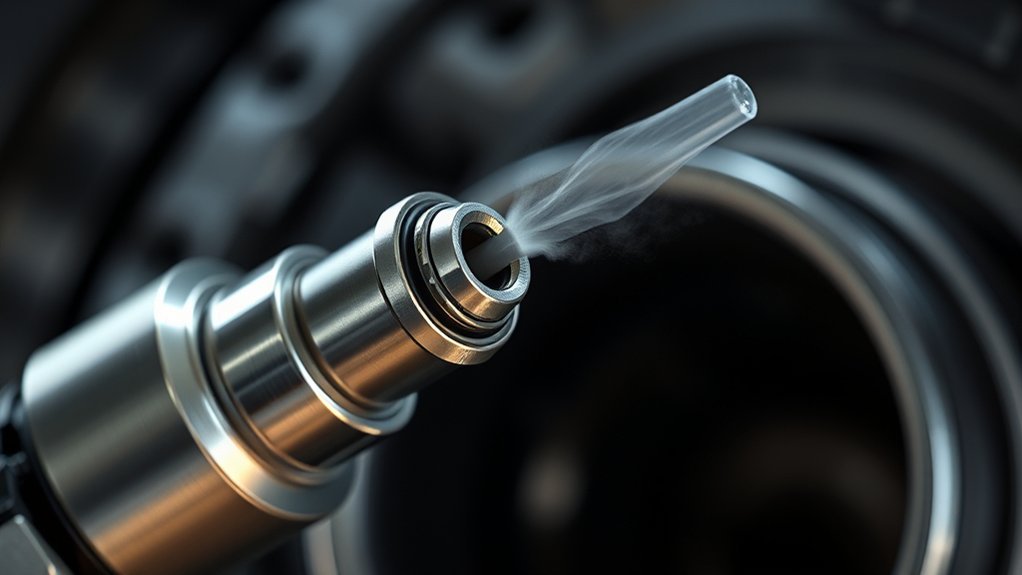
Fuel injectors deliver precise sprays of fuel directly into your engine’s combustion chamber or intake manifold, ensuring the right amount hits at the right time. Fuel injectors atomize fuel into a fine mist for even air-fuel mixing, helping your engine run efficiently with low emissions.
Controlled electronically, injectors adjust fuel flow based on engine needs like speed and temperature. This precise control maximizes performance and fuel economy.
If you want to understand how different types work or how to spot issues, keep exploring the details ahead.
Key Takeaways
- Fuel injectors spray precise amounts of fuel directly into the combustion chamber or intake manifold for optimal combustion.
- High-pressure pumps force fuel through tiny nozzles, atomizing it into a fine mist for better air-fuel mixing.
- Electronic control units regulate injection timing and quantity based on engine speed, temperature, and load.
- This precise fuel delivery ensures efficient combustion, reducing emissions and improving engine performance.
- Fuel injectors operate continuously, adjusting fuel flow dynamically to meet changing engine demands.
What Fuel Injectors Do in an Engine
What role do fuel injectors play in your engine? They act as precise delivery systems, spraying fuel directly into the combustion chamber or intake manifold. This ensures your engine gets the right amount of fuel at the right time.
Without fuel injectors, your engine would struggle to burn fuel efficiently, leading to poor performance and higher emissions. You rely on these tiny devices to atomize the fuel, turning it into a fine mist that mixes evenly with air for optimal combustion.
How Fuel Injectors Deliver Fuel Efficiently
Fuel injectors manage to deliver fuel so efficiently? They spray precise amounts of fuel directly into the engine’s combustion chamber, ensuring optimal air-fuel mixture. This precise timing and atomization mean your engine burns fuel more completely, improving power and reducing waste.
Fuel injectors use high-pressure pumps to force fuel through tiny nozzles, breaking it into a fine mist. This mist mixes well with air, promoting thorough combustion.
Plus, electronic control units constantly adjust injection based on engine demands, like speed and temperature, so you only get what you need.
Signs of Fuel Injector Failure
Wondering if your fuel injectors are failing? You’ll notice several signs that point to trouble. Poor engine performance, rough idling, and decreased fuel efficiency often indicate clogged or leaking injectors. You might also experience engine misfires or a strong fuel smell.
Here’s a quick overview of common symptoms:
| Symptom | What It Means |
|---|---|
| Rough Idling | Injector may be clogged |
| Engine Misfire | Fuel delivery inconsistent |
| Poor Fuel Economy | Leaking or inefficient spray |
| Strong Fuel Smell | Fuel leaking into combustion |
If you spot these signs, it’s best to have your fuel injectors checked to avoid further engine damage.
Common Fuel Injector Types
Different fuel injector types deliver fuel in various ways to optimize engine performance and efficiency. You’ll commonly encounter port fuel injectors, which spray fuel directly into the intake manifold just before the intake valve. They offer precise fuel delivery and are widely used in gasoline engines.
Direct fuel injectors are another type; they inject fuel straight into the combustion chamber, improving power and fuel economy while reducing emissions. Throttle body injectors, though less common today, spray fuel into the throttle body area, acting like a carburetor replacement.
Lastly, you might see mechanical injectors in diesel engines, which rely on engine-driven pumps to deliver fuel. Understanding these types helps you recognize how your engine gets the right fuel-air mix for smooth operation.
Tips to Keep Your Fuel Injectors Running Smoothly
Why should you pay close attention to your fuel injectors? Because clean, well-maintained injectors ensure efficient fuel delivery, better engine performance, and lower emissions.
To keep them running smoothly, use high-quality fuel with additives that prevent buildup. Regularly replace your fuel filter to avoid contaminants reaching the injectors. Consider adding a fuel injector cleaner to your gas tank every few thousand miles to dissolve deposits.
Also, schedule periodic professional inspections to catch issues early. Avoid letting your fuel level drop too low, as sediment can clog injectors.
Frequently Asked Questions
Can Fuel Injectors Be Repaired or Only Replaced?
You can sometimes repair fuel injectors by cleaning or replacing seals, but often, replacement is more reliable.
Repairs depend on damage severity, so if performance issues persist, you’ll likely need to replace the injector entirely.
How Do Fuel Injectors Differ in Diesel vs. Gasoline Engines?
You see precision spraying gasoline in tiny bursts, while diesel injectors deliver high-pressure, powerful sprays directly into the combustion chamber.
You’ll notice diesel injectors handle more pressure and complexity compared to gasoline’s gentler, timed injections.
What Tools Are Needed to Clean Fuel Injectors at Home?
You’ll need a fuel injector cleaning kit, a fuel pressure gauge, safety gloves, and eye protection. Also, grab some cleaning solvent and basic hand tools like screwdrivers or wrenches to disconnect and clean the injectors safely.
Do Aftermarket Fuel Injectors Affect Engine Warranty?
You won’t instantly void your engine warranty by using aftermarket fuel injectors, but manufacturers can get picky.
If those injectors cause damage, expect warranty denial. So, choose wisely and keep records to protect yourself.
How Does Fuel Injector Technology Impact Emissions Standards?
You’ll see cleaner emissions because modern fuel injectors precisely control fuel delivery, reducing unburned fuel and pollutants. This accuracy helps your engine meet stricter emissions standards while improving fuel efficiency and performance.
Conclusion
Now that you know how fuel injectors work, you can appreciate their essential role in your engine’s performance. They deliver fuel with pinpoint precision, keeping your ride smooth and efficient. Ignoring injector issues is like letting a tiny leak flood your entire engine—disastrous!
Keep them clean and well-maintained, and your car will thank you with better mileage and fewer headaches. Trust me, your fuel injectors are the unsung heroes under your hood!
In conclusion, understanding how fuel injectors work helps you realize why they are vital for optimal engine function and longevity.