How Long Does a Tire Rotation Take
A typical tire rotation takes about 30 to 45 minutes, whether you do it yourself or leave it to a professional. Tire rotation is essential for maintaining even tire wear and extending the life of your tires.
DIY rotations often take longer due to setup and learning, while pros use specialized tools to speed up the process and guarantee accuracy. Factors like vehicle type, tire condition, and preparation also affect the timing.
If you want to keep your tires lasting longer and improve safety, understanding rotation frequency, patterns, and tips can really help. Proper tire rotation ensures better performance and a smoother driving experience.
Key Takeaways
- A professional tire rotation typically takes about 30 to 45 minutes to complete.
- Compact cars usually require 20-30 minutes, while trucks may take 40-60 minutes.
- DIY rotations often take longer due to setup, learning curve, and tool limitations.
- Tire condition and vehicle type can affect the total rotation time needed.
- Proper tools and preparation can significantly speed up the tire rotation process.
How Long Does a Typical Tire Rotation Take?
How long does a typical tire rotation take? Usually, you can expect it to take about 30 to 45 minutes. When you bring your vehicle in, the technician will lift the car, remove the tires, and swap them according to the recommended pattern.
This process helps even out wear, improving your tires’ lifespan and performance. If you’re doing it yourself, it might take a bit longer, depending on your experience and tools. Tire rotations are straightforward but require attention to detail to ensure safety and proper alignment.
What Affects How Long a Tire Rotation Takes?
How long your tire rotation takes depends a lot on the type of vehicle you have. Different models require different steps, which can add time.
Plus, a more experienced technician can usually get the job done faster without cutting corners.
Vehicle Type Differences
Why does the type of vehicle you drive impact the time it takes to rotate your tires? Different vehicles have different wheel and brake setups, which affect the process.
For example, rotating tires on a compact car is usually quicker because the wheels and lug nuts are easier to access. On the other hand, trucks or SUVs often have larger, heavier wheels and more complex suspension systems, which can slow things down.
Additionally, some vehicles require specific rotation patterns based on whether they have all-wheel drive, front-wheel drive, or rear-wheel drive, which adds complexity. If your vehicle has unique features like run-flat tires or specialized rims, the rotation might take extra care and time.
Technician Experience Level
What makes some tire rotations quicker than others often comes down to the technician’s experience level. When you bring your car in, an experienced technician knows exactly how to lift the vehicle, remove the tires, and swap them efficiently without wasting time.
They’ve handled various vehicle models, so they anticipate challenges and avoid common mistakes. If the technician is newer, they might move slower, double-check procedures, or need extra time to consult manuals. This can add minutes to the process.
Also, seasoned pros often spot uneven tire wear or other issues quickly, helping you address problems sooner. So, when scheduling a rotation, remember that a skilled technician can get the job done faster and with better results, saving you both time and potential future costs.
How Does DIY Tire Rotation Time Compare to Professional Service?
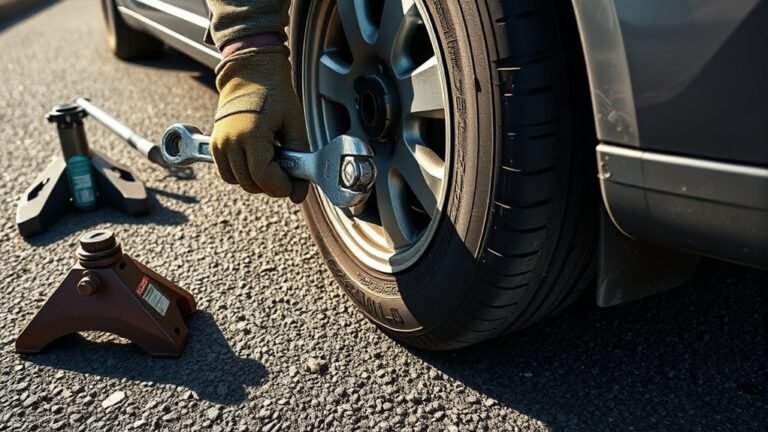
When you rotate tires yourself, it usually takes more time because you might not have all the right tools or experience.
Professionals use specialized equipment and know the process well, making their service quicker and more efficient. Understanding these differences can help you decide whether to DIY or go pro.
Time Efficiency Differences
How quickly can you get your tires rotated at home compared to a professional shop? When you do it yourself, you control the pace but might spend extra time setting up, consulting guides, or double-checking steps.
Professionals, on the other hand, streamline the process with experience and specialized tools, often finishing in about 30 to 45 minutes. While you might save money DIY, the time difference can be significant, especially if it’s your first attempt.
Pro shops efficiently handle the entire procedure, including lifting the car and torqueing bolts to specification. If you’re pressed for time, a professional service usually wins on speed.
However, if you enjoy hands-on work and have the right setup, DIY can be a rewarding, if slightly slower, alternative.
Skill and Equipment Impact
Why does skill level and equipment quality make such a difference in tire rotation time? When you rotate tires yourself, your experience and tools directly affect how quickly you finish.
If you’re new to the process, you’ll likely spend extra time figuring out the steps and handling equipment. Professionals, on the other hand, use specialized lifts and pneumatic tools, speeding up the job considerably.
Their practiced hands and efficient gear can complete a rotation in about 30 minutes or less. Meanwhile, you might take 45 minutes to an hour, depending on your familiarity and toolset.
Investing in quality equipment and gaining experience can narrow this gap, but professional service still tends to be faster and more precise, saving you time and effort.
What Tools Speed Up Tire Rotation?
Which tools can make your tire rotation faster and easier? A good quality floor jack helps you lift your vehicle swiftly and safely, cutting down on effort and time. Pair it with sturdy jack stands for stability while you work.
An impact wrench or electric cordless wrench speeds up removing and reinstalling lug nuts compared to a manual lug wrench. A torque wrench ensures you tighten lug nuts to the correct specification, preventing future issues.
An impact or cordless wrench speeds up lug nut removal, while a torque wrench ensures proper tightening for safety.
Using a tire iron with a comfortable grip can also save time during manual rotations. Lastly, a creeper lets you slide under the vehicle without strain, speeding up positioning.
Having these tools ready boosts your efficiency and cuts your tire rotation time significantly.
How Often Should You Rotate Your Tires?
You should rotate your tires every 5,000 to 8,000 miles to keep them wearing evenly. Factors like your driving habits and vehicle type can change how often you need to rotate.
Sticking to a regular rotation schedule helps improve tire life and maintain safe handling.
Recommended Rotation Intervals
How often should you rotate your tires to keep them performing well? Most experts recommend rotating your tires every 5,000 to 7,500 miles. This interval helps ensure even tread wear and extends the life of your tires, saving you money and improving safety.
Sticking to a regular rotation schedule can prevent uneven wear that leads to poor handling and costly replacements.
Keep these points in mind:
- Protect your investment by extending tire life
- Maintain balanced traction and control
- Avoid unexpected tire failures on the road
- Enhance fuel efficiency with properly worn tires
Factors Affecting Rotation Frequency
When should you adjust your tire rotation schedule? It depends on several factors unique to your driving habits and vehicle. If you frequently drive on rough roads or carry heavy loads, your tires wear unevenly and need more frequent rotations.
Similarly, if you drive mostly in stop-and-go traffic or do lots of turning, your front tires might wear faster, prompting earlier rotations. The type of tires you use also matters; performance tires often wear quicker than all-season ones.
Additionally, your vehicle’s drivetrain, whether front-wheel, rear-wheel, or all-wheel drive, affects which tires wear faster. Keep an eye on your tire tread and consult your owner’s manual to tailor your rotation schedule precisely.
Adjusting based on these factors helps you maintain even tire wear and optimal performance.
Benefits Of Regular Rotation
Adjusting your tire rotation schedule based on driving conditions and vehicle type keeps wear even and extends tire life. When you rotate your tires regularly, you not only get a smoother ride but also maximize safety and save money in the long run.
Uneven tire wear can lead to poor handling and increase the risk of blowouts, so staying on top of rotations helps you avoid these dangers. Plus, it boosts your vehicle’s fuel efficiency by reducing rolling resistance.
Here’s what regular tire rotation does for you:
- Keeps your tires wearing evenly, preventing early replacements
- Enhances traction and handling on all road surfaces
- Improves fuel economy by reducing drag
- Saves you money by extending tire lifespan and avoiding costly repairs
Make tire rotation a priority; you’ll feel the difference every time you hit the road.
How Do Different Vehicle Types Affect Tire Rotation Time?
Why does the type of vehicle you drive affect the time it takes to rotate your tires? Different vehicles have varying tire sizes, wheel configurations, and suspension setups, which influence how quickly mechanics can complete the rotation. For example, an SUV’s larger tires take more effort, while a compact car’s smaller wheels are faster to handle.
Here’s a quick look:
| Vehicle Type | Approximate Rotation Time |
|---|---|
| Compact Car | 20-30 minutes |
| SUV | 30-45 minutes |
| Truck | 40-60 minutes |
Knowing this helps you plan your service appointment better. The more complex your vehicle’s setup, the longer the rotation will take.
Can Tire Condition Make a Rotation Take Longer?
Vehicle type plays a big role in how long a tire rotation takes, but the condition of your tires can also affect the time needed. If your tires are worn unevenly or damaged, the process can slow down as the mechanic carefully inspects and handles them.
You might face delays if tires are stuck due to rusted lug nuts or if the tread is excessively worn, requiring extra caution.
Consider these tire conditions that can extend rotation time:
- Stubborn lug nuts that won’t budge easily
- Tires with uneven wear needing thorough evaluation
- Damaged sidewalls requiring careful handling
- Tires with built-up debris or mud complicating removal
Being proactive about tire care helps keep your rotation quick and smooth.
What Happens During a Mechanic’s Tire Rotation?
What exactly does a mechanic do during a tire rotation? First, they lift your car using a hydraulic jack or lift to access all four tires safely. Then, they remove each tire and inspect them for uneven wear or damage.
Next, they switch the tires according to a specific rotation pattern suited for your vehicle’s drivetrain: front-wheel, rear-wheel, or all-wheel drive. This might mean moving the front tires to the rear and vice versa, sometimes crossing sides to promote even tread wear.
After repositioning the tires, the mechanic securely tightens the lug nuts to the manufacturer’s torque specifications. Finally, they lower your car back down and often check the tire pressure, ensuring everything is safe and ready for the road. This process helps extend your tires’ lifespan and maintain optimal performance.
How Can You Prepare Your Car to Make Tire Rotation Faster?
How can you speed up the tire rotation process at your mechanic’s shop? Preparing your car ahead of time makes a huge difference. When you come ready, your mechanic can get to work faster, saving you time and stress.
Here’s how to get ready:
Clear the area around your tires so the mechanic can access them without hassle.
Check your tire pressure and inflate if needed to avoid delays.
Remove any wheel locks or special lug nuts to prevent the mechanic from searching for the key.
Park on a flat surface with enough space to move around comfortably.
These small steps help your mechanic work efficiently and get you back on the road sooner.
How Do You Know If Your Tire Rotation Was Done Right and On Time?
Taking steps to prepare your car can speed up the tire rotation process, but you’ll also want to guarantee the job was done correctly and on schedule. You can tell by checking your tire tread wear, ensuring the rotation pattern matches the recommended one, and confirming the service date aligns with your maintenance plan.
Ask the technician for a rotation report or receipt to verify timing.
| Checkpoint | What to Look For | Why It Matters |
|---|---|---|
| Tread Wear | Even wear across all tires | Confirms proper rotation |
| Rotation Pattern | Correct front-to-back or cross | Ensures balanced tire usage |
| Service Date | Matches your maintenance schedule | Keeps your car on track |
Following these steps ensures your tires last longer and perform safely.
Frequently Asked Questions
Can Tire Rotation Improve Fuel Efficiency?
Yes, rotating your tires can improve fuel efficiency by promoting even tire wear. When your tires wear evenly, your car rolls smoother, reducing drag and helping you get better mileage without extra effort on your part.
Is Tire Rotation Necessary for Winter Tires?
You should rotate your winter tires regularly; studies show uneven wear can reduce tread life by 30%.
Rotating guarantees even wear, improving traction and safety on icy roads, so don’t skip it during the cold season.
How Much Does a Professional Tire Rotation Cost?
You’ll usually pay between $20 and $50 for a professional tire rotation, depending on your location and shop.
Some places include it free with other services, so it’s worth asking before you schedule.
Can Uneven Tire Wear Cause Vibration?
Yes, uneven tire wear can cause vibration while you’re driving. When tires wear unevenly, they create imbalance, making your ride feel shaky.
Getting them rotated or replaced helps you avoid that annoying vibration.
Are There Risks to Rotating Tires Too Often?
Yes, rotating tires too often can wear them unevenly or loosen lug nuts. You should follow your vehicle’s recommended schedule to avoid these risks and keep your tires balanced and lasting longer.
Conclusion
You’d think something as simple as swapping tires around would take forever, but it’s surprisingly quick—usually under an hour. Whether you DIY or trust a pro, a little prep and the right tools make all the difference.
So, next time you procrastinate on tire rotation, remember: it’s faster than deciding what to watch on Netflix. Don’t wait for a flat to remind you—keep those tires moving and your ride smooth!
When it comes to how long does a tire rotation take, the answer is: less time than you might expect, making it an easy maintenance task to stay on top of.