How Does a Wheel and Axle Work
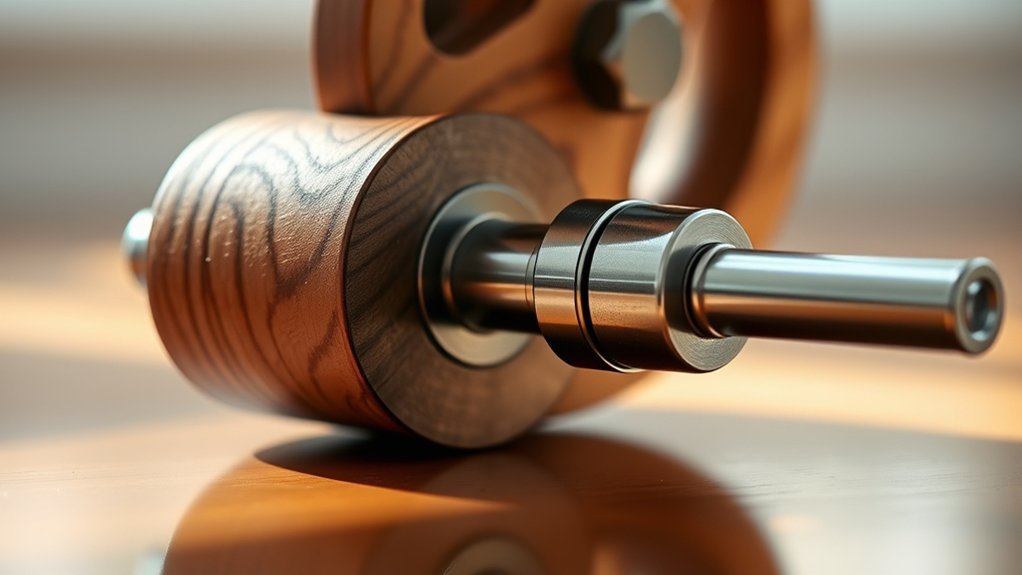
A wheel and axle work by letting you turn a large wheel that spins a smaller axle, so you apply less force over a greater distance. This simple machine multiplies your effort, making it easier to move or lift heavy objects. You’re basically spreading force smartly, reducing strain and friction.
You see this mechanism in things like car steering wheels and rolling carts. Understanding how size and force play together can help you use these machines even better. The wheel’s larger radius compared to the axle means you exert less effort while achieving more movement.
By turning the wheel, the axle rotates with greater force, allowing heavy loads to be moved efficiently. This clever design is fundamental in many tools and machines we use every day.
Key Takeaways
- A wheel turns around an axle, spinning it and allowing movement with less effort.
- The wheel covers more distance per rotation, acting like a lever to spread force.
- Larger wheels reduce the force needed by increasing the distance over which the force is applied.
- The axle moves a smaller distance but exerts a greater force, multiplying effort efficiently.
- This mechanism reduces friction and enables easier movement or lifting of objects in many tools.
What Is a Wheel and Axle and How Does It Work?
How exactly does a wheel and axle work to make tasks easier? When you turn the wheel, it spins the axle at its center. This setup lets you move or lift objects with less effort because the wheel covers more distance with each turn than the axle does.
The wheel acts like a lever, spreading out the force you apply over a larger area, so you don’t have to push or pull as hard. You’ll find this simple machine in many everyday tools and vehicles, helping you save energy and work more efficiently.
Types of Wheel and Axle
Where can you find different types of wheel and axle systems? You’ll spot them everywhere, from simple tools to complex machines.
Generally, there are two main types: the fixed axle and the movable axle. With a fixed axle, the wheel turns around the axle, like in a car tire.
In contrast, a movable axle rotates along with the wheel, often seen in rolling carts. You’ll also encounter variations based on size and purpose, such as large wheels paired with small axles to increase speed or force.
Some systems combine multiple wheels and axles, like bicycles, to enhance efficiency. Understanding these types helps you recognize how various devices use wheel and axle systems to perform specific tasks effectively.
How Wheel and Axle Reduce Effort
You’ll see how the wheel and axle create a mechanical advantage that makes your work easier. By spreading out the force, they reduce the effort you need to move objects.
This efficient motion helps you get tasks done with less energy.
Mechanical Advantage Explained
Why does a wheel and axle make lifting or moving objects feel easier? It’s all about mechanical advantage, the ratio of output force to input force. When you turn the larger wheel, you apply a smaller force over a greater distance.
This force transfers to the smaller axle, which moves less distance but with greater force. Because the wheel’s radius is larger than the axle’s, you multiply your effort without extra strain.
Simply put, the wheel and axle let you exert less effort to achieve the same work. This means you can lift heavier loads or move objects more easily than if you tried without this tool.
Understanding mechanical advantage shows you how these simple machines make tough tasks manageable.
Force Distribution Benefits
Mechanical advantage helps explain how a wheel and axle multiply your effort, but the way they spread out force also plays a key role in reducing the effort needed. When you apply force to the wheel, it distributes that force over a larger area compared to directly moving the axle.
This distribution lowers the pressure on any single point, making it easier to turn or lift objects. By spreading the load evenly, the wheel and axle reduce friction and wear, letting you work more smoothly and with less strain.
Efficiency in Motion
How exactly does a wheel and axle make moving objects feel easier? When you apply force to the wheel, it turns the axle, which then moves the object with less effort than pushing or pulling directly.
The wheel’s larger radius means you cover more distance with less force, while the axle’s smaller radius focuses this force to move the load efficiently. This mechanical advantage reduces friction and distributes your effort evenly, letting you move heavier objects smoothly.
Why Force and Distance Matter for Efficiency
You’ll notice that the wheel and axle let you apply less force to move something heavier. However, this comes with a trade-off: you’ll have to turn the wheel a greater distance.
Understanding how force amplification and distance balance each other helps you use the system more efficiently.
Force Amplification Benefits
Why does turning a large wheel make it easier to move a heavy object attached to a smaller axle? It’s because the wheel amplifies the force you apply. When you push the large wheel, you exert force over a greater distance, which translates into a stronger force on the axle.
This mechanical advantage lets you move heavy loads with less effort.
You’ll appreciate force amplification benefits because it:
- Saves your energy and reduces strain
- Makes lifting or moving heavy objects possible
- Increases control and precision in handling loads
- Boosts your confidence by making tough tasks manageable
Distance Trade-Offs
Where does the effort go when you turn a wheel to move an object? The key is in the balance between force and distance. When you apply less force on a larger wheel, you increase the distance the wheel’s edge travels compared to the axle.
This distance trade-off means you push farther but with less effort, making the task easier. Understanding this helps you see why force and distance matter for efficiency.
| Component | Force Applied | Distance Moved |
|---|---|---|
| Wheel | Low | High |
| Axle | High | Low |
| Result | Amplified force | Reduced distance |
Common Wheel and Axle Examples in Daily Life
How often do you use tools or devices that rely on the wheel and axle mechanism? You might not realize it, but this simple machine is everywhere, making your life easier every day.
When you turn a doorknob, ride a bicycle, or even use a rolling office chair, you’re benefiting from the wheel and axle’s clever design. It reduces effort and increases efficiency in countless ways.
Here are some common examples you encounter daily:
- Bicycles: They let you travel faster with less effort.
- Car steering wheels: They help you maneuver smoothly.
- Rolling suitcases: They ease heavy lifting during travel.
- Fans: They spin blades to cool you down quickly.
These examples show how integral the wheel and axle are to your daily comfort and convenience.
Why Wheel and Axle Are Still Important Today
The wheel and axle continue to play an essential role in modern life because they simplify tasks and save energy. When you use a car, bike, or even a doorknob, you rely on this simple machine to make your actions easier and more efficient.
The wheel and axle simplify everyday tasks, making actions easier and more energy-efficient.
It reduces the effort needed to move heavy objects or change directions smoothly. Without wheels and axles, transportation and machinery would become much more complicated and labor-intensive.
You benefit from faster travel, improved tools, and reliable equipment thanks to this mechanism. Even with advanced technology, the wheel and axle remain fundamental components in countless devices you use daily.
Their ability to multiply force and decrease friction keeps them indispensable in both everyday life and industry.
Frequently Asked Questions
Who Invented the Wheel and Axle Mechanism?
You won’t find a single inventor for the wheel and axle since ancient humans developed it over time. Early civilizations, like Mesopotamians, gradually improved this mechanism to help with transportation and tools, shaping human progress.
How Does Friction Affect Wheel and Axle Performance?
Friction slows, friction grips, friction wears. You’ll find it both helps and hinders wheel and axle performance.
Too much friction drags your motion; too little slips. You’ve got to balance it for smooth, efficient movement.
Can Wheel and Axle Systems Be Powered by Electricity?
Yes, you can power wheel and axle systems with electricity. Electric motors turn the axle, making the wheel spin efficiently.
This setup’s common in electric vehicles, robotics, and many machines you use daily.
What Materials Are Best for Making Durable Wheel and Axle?
You’ll want to use steel or aluminum for durable wheels and axles because they’re strong and resist wear.
For lighter applications, reinforced plastics or carbon fiber also work well while keeping weight down.
How Do Wheel and Axle Designs Differ in Various Cultures?
You’ll notice wheel and axle designs vary by culture, reflecting local materials, needs, and technology. Some use sturdy wood, others metal, and shapes differ based on transport type, terrain, and traditional craftsmanship styles unique to each region.
Conclusion
Now that you know how a wheel and axle work, you can see they’re the unsung heroes making your tasks easier. They’re like silent partners, trading your effort for smooth motion. Whether you’re pushing a cart or turning a doorknob, these simple machines multiply your force and save your energy.
So next time you use one, remember—it’s not just a tool, but a clever trick of physics working quietly for you. The wheel and axle truly show how simple machines can make a big difference in everyday life.