How to Work Out Wheel Offset
To work out wheel offset, start by measuring your wheel’s total width and the distance from the mounting surface to the wheel’s inner edge. Convert these measurements to millimeters for accuracy.
Next, divide the total width by two to find the centerline.
Subtract the inner-edge distance from the centerline to calculate the offset. A positive offset means the mounting surface is closer to the outside of the wheel, while a negative offset means it’s closer to the inside.
Getting this right is crucial for ensuring proper fit and performance. Keep going to uncover common pitfalls and tips.
Key Takeaways
- Measure total wheel width, then find the centerline by dividing this width by two.
- Identify the mounting surface and measure its distance from the wheel’s inner edge.
- Subtract the inner-edge distance from the centerline to calculate the offset value.
- Positive offset means the mounting surface is closer to the wheel’s outer face; negative means closer to the inside.
- Confirm your calculated offset matches the vehicle manufacturer’s recommended specifications for proper fitment and safety.
What Wheel Offset Is and Why It Matters
What exactly is wheel offset, and why should you care about it? Wheel offset is the distance between your wheel’s mounting surface and its centerline. It determines how your wheel sits relative to your car’s suspension and body.
If you don’t get the offset right, your wheels might stick out too far or sit too deep inside the wheel well. This can lead to poor handling, uneven tire wear, or even damage to suspension components.
You want the correct offset to ensure your wheels align properly with your vehicle’s design, maintaining safety and performance. So, understanding wheel offset helps you choose wheels that fit perfectly, improving your car’s look and driving experience without risking mechanical issues.
Tools You Need to Measure Wheel Offset
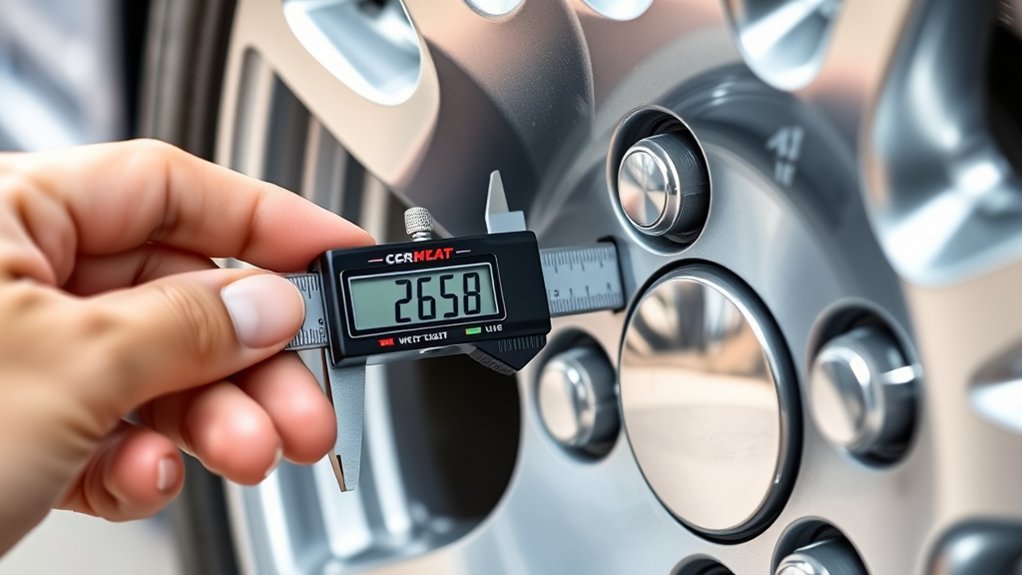
Measuring wheel offset accurately requires specific tools to guarantee your results are reliable. Without the right equipment, you risk incorrect measurements that could affect your vehicle’s performance and safety.
Here are the basic tools you’ll need:
- Caliper or Ruler: A precise measuring tool to determine the distance from the mounting surface to the wheel’s centerline.
- Straight Edge: Helps you establish a flat reference point across the wheel for accurate comparison.
- Tape Measure: Useful for measuring the overall wheel width and verifying distances.
Make sure your tools are calibrated and in good condition before starting. Having these on hand ensures you can measure wheel offset confidently and avoid costly errors later on.
How to Measure Wheel Offset Step-by-Step
Now that you have the right tools ready, you can start determining your wheel’s offset with confidence. First, place the wheel on a flat surface, face down, so the back of the wheel is against the ground.
Next, measure the wheel’s total width from outer edge to outer edge using your tape measure or ruler. Then, find the wheel’s mounting surface, the part that touches the hub, and measure the distance from this surface to the inner edge of the wheel.
Use a straight edge or caliper to ensure accuracy. Keep your measurements precise and record them carefully. By following these steps, you’ll have the exact distances you need to calculate the wheel offset accurately in the next phase.
Calculating Wheel Offset From Your Measurements
With two key measurements in hand, the total wheel width and the distance from the mounting surface to the inner edge, you’re ready to calculate the wheel offset. Here’s how to do it:
- Convert measurements to the same unit (usually millimeters) for accuracy.
- Divide the total wheel width by 2 to find the wheel’s centerline.
- Subtract the distance from the mounting surface to the inner edge from the centerline measurement.
The result is your wheel offset. A positive value means the mounting surface is closer to the outside edge, while a negative value means it’s closer to the inside. This straightforward calculation ensures you understand your wheel’s fitment perfectly before making any adjustments or purchases.
Common Wheel Offset Mistakes and How to Avoid Them
Why do so many people slip up when determining wheel offset? The biggest mistake is confusing positive and negative offset. Positive offset means the mounting surface is closer to the wheel’s face, while negative offset places it toward the back. Mixing these up can cause fitment problems.
Another common error is relying solely on the wheel width without considering the backspacing or hub diameter. You should always measure carefully and double-check your numbers. Don’t forget that tire size affects clearance, too.
To avoid these pitfalls, use reliable tools and reference your vehicle’s specifications. Always cross-check your calculations before buying or installing wheels. Taking these steps ensures you get the right offset, preventing issues like rubbing, poor handling, or premature wear.
Frequently Asked Questions
How Does Wheel Offset Affect Tire Wear and Suspension?
You’ll notice improper wheel offset causes uneven tire wear and stresses your suspension components. It can lead to handling issues and premature wear, so you should always match the offset to your vehicle’s specifications for optimal performance.
Can Incorrect Wheel Offset Cause Vehicle Alignment Issues?
Think of your wheels as the sails on a boat. Incorrect offset can misalign them, causing your vehicle to pull or wander. You’ll notice uneven tire wear and steering issues, so you should fix offset problems promptly.
What Are the Differences Between Positive and Negative Offset?
Positive offset means the wheel’s mounting surface is closer to the outside, pushing wheels inward.
Negative offset places it closer to the inside, pushing wheels outward. You’ll notice handling and clearance differences between the two.
How Does Wheel Offset Impact Fuel Efficiency?
You’ll see fuel efficiency drop if your wheel offset causes increased rolling resistance or affects aerodynamics. Incorrect offset can strain your suspension, making your engine work harder, which ultimately reduces your miles per gallon.
Are There Wheel Offset Standards for Different Vehicle Types?
Yes, you’ll find wheel offset standards vary by vehicle type. Passenger cars, trucks, and SUVs each have typical ranges. These standards help guarantee proper fit, handling, and safety, so always check your specific vehicle’s requirements.
Conclusion
Now that you know how to measure wheel offset, you’re ready to hit the road with confidence. Remember, getting your offset right is like finding the perfect rhythm in a song—it keeps your ride smooth and safe. Avoid common mistakes by double-checking your measurements and using the right tools.
With these steps, you’ll ensure your wheels fit perfectly, improving both performance and style. Keep your wheels aligned and your journey steady! Mastering wheel offset is key to achieving the best fit and drive quality for your vehicle.