Do Turbos Increase Fuel Economy
Yes, turbos can increase your fuel economy by forcing more air into the engine, allowing it to burn fuel more efficiently and produce greater power without needing a bigger engine.
Smaller turbo engines use less fuel during light driving and weigh less, which helps boost mileage. However, aggressive driving or poor tuning can reduce these benefits.
If you want to understand how your driving style, maintenance, and vehicle type influence turbo efficiency, there’s more to explore.
Key Takeaways
- Turbos improve fuel economy by enabling smaller engines to produce more power efficiently without increasing fuel consumption at low loads.
- Boost activates on demand, allowing engines to burn less fuel during light driving and increase efficiency.
- Aggressive driving and frequent maximum boost use can reduce fuel economy by forcing the engine to consume more fuel.
- Proper tuning and maintenance optimize boost control and fuel mixture, enhancing turbo efficiency and fuel savings.
- Smooth driving habits and steady speeds minimize unnecessary turbo use, helping maintain better fuel economy.
How Turbochargers Boost Engine Efficiency
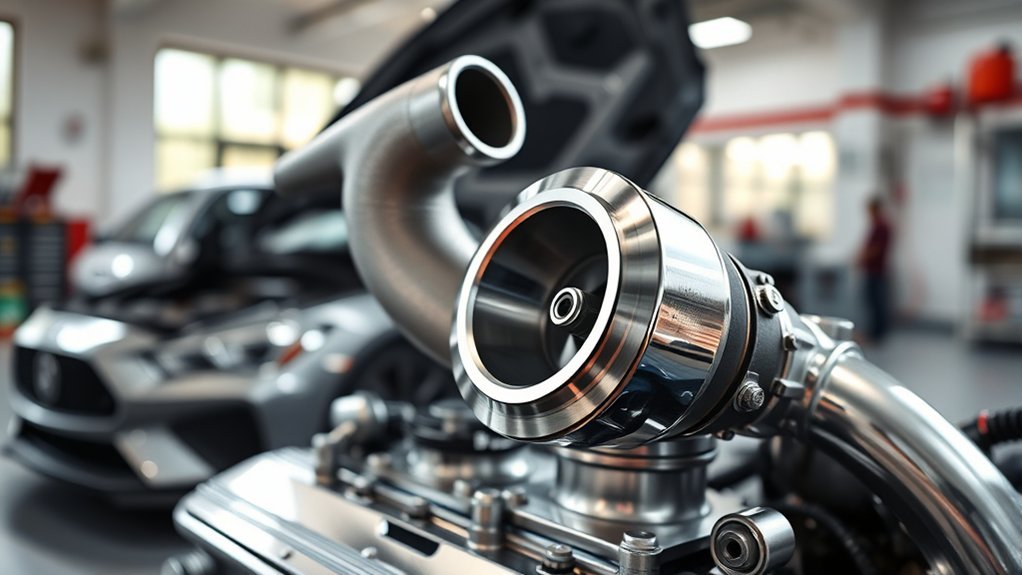
How exactly do turbochargers boost engine efficiency? You’ll find that turbos force more air into the engine’s combustion chamber than it would normally draw in. By compressing the intake air, turbos increase the oxygen available for combustion.
This means you can burn more fuel efficiently, producing greater power without increasing engine size. Because the turbo uses exhaust gases to spin a turbine, it recycles energy that would otherwise be wasted.
You get improved performance from the same displacement, allowing the engine to work smarter, not harder. This process boosts the engine’s power output and thermal efficiency.
Why Smaller Turbo Engines Use Less Fuel
Turbochargers allow smaller engines to deliver power comparable to larger ones by maximizing air intake and combustion efficiency. This means you get strong performance without the extra fuel consumption of a bigger engine. Here’s why smaller turbo engines use less fuel:
- Reduced Displacement: Smaller engines have less internal volume, so they burn less fuel during low-load driving.
- Boost On Demand: The turbo activates only when you press the accelerator, avoiding unnecessary fuel use.
- Improved Thermal Efficiency: Boosted combustion extracts more energy per drop of fuel, increasing miles per gallon.
- Lower Weight: Smaller engines weigh less, reducing overall vehicle weight and the energy needed to move it.
When Turbos Hurt Fuel Economy
When do turbos actually lower your fuel efficiency? It happens when the turbo forces the engine to burn more fuel than necessary, especially under heavy acceleration or towing. If you frequently push the turbo to produce maximum boost, your engine consumes extra fuel to meet the demand.
Also, older or poorly tuned turbo systems can cause inefficiencies, leading to richer fuel mixtures and wasted fuel. Additionally, turbos add complexity and some energy loss through exhaust backpressure, which can reduce overall efficiency during steady cruising.
How Driving Habits Affect Turbo Fuel Economy
You can boost your turbo’s fuel economy by adjusting how you accelerate and keeping the turbo within its best RPM range. Avoid sudden, hard acceleration that forces the turbo to work harder and consume more fuel.
Maintaining a steady speed also helps your turbo operate efficiently and saves fuel over time.
Impact Of Acceleration Style
How you accelerate plays a major role in your turbocharged vehicle’s fuel efficiency. Aggressive acceleration forces the turbo to work harder, consuming more fuel. To get the most from your turbo, focus on smooth and gradual throttle inputs.
Here are four tips to improve fuel economy through better acceleration style:
- Start Slow: Avoid flooring the gas pedal from a standstill; instead, accelerate gently to reduce turbo lag and fuel use.
- Steady Speed: Maintain a consistent acceleration rate instead of sudden bursts to keep the turbo operating efficiently.
- Anticipate Traffic: Look ahead and ease off the throttle early to prevent unnecessary turbo boost.
- Use Engine Braking: Decelerate smoothly to minimize fuel consumption and reduce turbo strain.
Maintaining Optimal Turbo RPM
Why does maintaining optimal turbo RPM matter for your fuel economy? When you keep the turbo spinning within its ideal RPM range, you help your engine run efficiently, delivering just the right amount of boost without wasting fuel.
If you push the turbo too hard or let it lag, your engine works inefficiently, burning more fuel than necessary. You can maintain optimal turbo RPM by shifting gears smoothly and avoiding aggressive throttle inputs that spike turbo speed unnecessarily.
Also, don’t lug the engine at low RPMs where the turbo isn’t effective. Staying within the turbo’s sweet spot improves combustion and reduces fuel consumption.
Role Of Consistent Speed
When does driving consistency make the biggest difference in your turbo’s fuel economy? It’s most noticeable during highway cruising, where steady throttle reduces unnecessary turbo spool-ups and fuel surges. By keeping your speed stable, you allow the turbo to operate efficiently without frequent boost changes.
Here’s how consistent speed impacts your turbo’s fuel economy:
- Reduces turbo lag by maintaining steady boost pressure.
- Minimizes fuel consumption spikes from rapid acceleration.
- Enhances air-fuel mixture stability for cleaner combustion.
- Lowers engine stress, prolonging turbo life and efficiency.
How Tuning and Software Impact Turbo Fuel Economy
Ever wondered what role tuning and software play in getting the most out of your turbocharged engine’s fuel economy? Modern engines rely heavily on ECU (Engine Control Unit) programming to manage fuel delivery, boost pressure, and ignition timing.
When properly tuned, your turbo can operate efficiently, balancing power and fuel savings. Poor tuning, however, can lead to excessive fuel consumption or engine strain.
| Aspect | Impact on Fuel Economy |
|---|---|
| ECU Calibration | Optimizes fuel and air mixture |
| Boost Control | Prevents unnecessary fuel use |
| Ignition Timing | Enhances combustion efficiency |
| Fuel Mapping | Matches fuel delivery to load |
| Software Updates | Incorporates latest efficiency improvements |
With precise tuning and updated software, you’ll maximize your turbo’s fuel economy potential.
Debunking Common Turbo Fuel Economy Myths
Understanding how tuning and software affect your turbo’s fuel economy sets a solid foundation for addressing common misconceptions. You might hear that turbos always save fuel, but that’s not always true. Here are four common myths debunked:
Tuning and software play key roles in turbo fuel economy, debunking common myths about fuel savings.
- Turbos always increase mileage: They can, but only when driven efficiently.
- More boost equals better fuel economy: Higher boost often means more fuel consumption.
- Turbo engines require premium fuel: Many modern turbos run fine on regular gas.
- Turbo lag wastes fuel: Lag doesn’t directly affect fuel economy; driving habits do.
Turbocharged vs. Naturally Aspirated: Which Uses Less Fuel?
You might wonder if a turbocharged engine really saves fuel compared to a naturally aspirated one. The answer depends on how each affects fuel efficiency and performance under different driving conditions.
Let’s explore which setup uses less fuel and why.
Fuel Efficiency Comparison
How much fuel can a turbocharged engine really save compared to a naturally aspirated one? When you compare them directly, turbocharged engines often offer better fuel efficiency under certain conditions. Here’s what you need to know:
- Turbo engines compress more air, allowing smaller engines to produce power efficiently.
- They typically consume less fuel during steady cruising or light loads.
- Naturally aspirated engines may use more fuel to achieve similar power, especially at higher speeds.
- However, aggressive driving with a turbo can negate fuel savings due to increased boost demand.
In general, if you drive moderately, a turbocharged engine tends to use less fuel than a naturally aspirated engine of similar power. Your driving style plays a crucial role in realizing these efficiency benefits.
Performance Impact on Consumption
When comparing turbocharged and naturally aspirated engines, which one truly uses less fuel depends largely on performance demands. If you drive aggressively and often tap into high power, a turbocharged engine might consume more fuel due to increased boost and fuel delivery.
However, if you mostly cruise or drive moderately, turbos can be more efficient by providing extra power only when needed, allowing the engine to operate smaller and lighter. Naturally aspirated engines deliver power linearly without forced induction, which can mean more fuel is used to achieve higher performance since they lack the efficiency boosts turbos offer.
Ultimately, your driving style dictates fuel consumption more than the engine type. So, think about how you drive before choosing between turbocharged and naturally aspirated for better fuel economy.
Vehicle Types That Gain the Most Fuel Savings From Turbos
Which vehicles benefit most from turbocharged engines in terms of fuel savings? You’ll find that certain types maximize the advantages turbos offer by improving efficiency without sacrificing power. Here are four vehicle categories that gain the most:
- Compact cars: Turbocharging smaller engines helps you get better mileage without losing performance.
- Mid-size sedans: They balance power and economy well, benefiting from turbo boost during acceleration.
- Crossovers and small SUVs: These vehicles often need extra torque, and turbos provide it efficiently.
- Diesel-powered vehicles: Diesel turbos improve combustion efficiency, leading to significant fuel savings.
If you drive any of these, a turbocharged engine can help you reduce fuel consumption while maintaining the driving experience you expect.
Tips to Maximize Fuel Economy in Turbocharged Cars
If you drive a turbocharged vehicle, you can take specific steps to get the most out of its fuel-saving potential. First, avoid aggressive acceleration; turbos respond quickly, but sudden throttle bursts waste fuel.
Second, keep your tires properly inflated to reduce rolling resistance. Third, maintain regular engine tune-ups to ensure the turbo and fuel system run efficiently.
| Action | Benefit | Emotion |
|---|---|---|
| Smooth acceleration | Better fuel efficiency | Confidence |
| Proper tire pressure | Lower fuel consumption | Control |
| Regular maintenance | Longer engine life | Peace of mind |
Frequently Asked Questions
How Does Turbocharger Maintenance Affect Long-Term Fuel Economy?
Regularly maintaining your turbocharger keeps it running efficiently, which helps maintain optimal fuel economy over time.
Neglecting maintenance can cause performance drops, increasing fuel consumption and costing you more in the long run.
Are Turbo Engines More Expensive to Insure Due to Fuel Economy Claims?
You won’t necessarily pay more to insure turbo engines just because of fuel economy claims. Insurers focus more on repair costs, performance, and risk factors.
Your premiums depend on those rather than just the turbo’s fuel efficiency.
What Impact Do Turbochargers Have on Vehicle Resale Value?
You’ll often find turbocharged vehicles hold better resale value due to their performance and efficiency appeal.
However, buyers might worry about maintenance costs, so keeping service records and ensuring reliability will boost your car’s resale price.
Can Turbo Fuel Economy Benefits Vary by Climate or Altitude?
Wonder if turbo fuel economy changes with climate or altitude? It does. You’ll notice better efficiency at lower altitudes and milder climates, while high altitude or extreme temperatures might reduce those benefits due to thinner air or engine strain.
How Do Turbochargers Affect Emissions Compared to Non-Turbo Engines?
Turbochargers generally reduce emissions by improving combustion efficiency, but they can also increase NOx levels due to higher combustion temperatures.
You’ll find emissions vary depending on engine tuning and whether emission controls are effectively managed.
Conclusion
So, do turbos really boost your fuel economy? The answer isn’t as simple as you might think. While they can help you save fuel by making smaller engines more efficient, your driving habits and how the turbo is tuned play huge roles.
Sometimes, they might even drain more fuel if misused. Want to release the true potential of your turbo? It’s all about how you drive and maintain it—don’t let that power go to waste!
In conclusion, turbos can increase fuel economy when used correctly, but your approach behind the wheel ultimately determines the benefits of turbos on fuel economy.