What Do Tire Sizes Mean
Tire sizes tell you important info about fit, performance, and safety. The numbers show width in millimeters, aspect ratio as a sidewall height percentage, and wheel diameter in inches. Letters like “R” indicate construction type, usually radial.
Load index ensures your tires can handle your vehicle’s weight, while speed ratings affect handling and safety at different speeds. Getting the right size helps avoid uneven wear and poor handling.
Keep going to uncover how each factor impacts your ride.
Key Takeaways
- Tire size format (e.g., P215/65R15) indicates width, aspect ratio, construction type, and wheel diameter.
- Width is the tire’s sidewall-to-sidewall measurement in millimeters, affecting grip and fuel efficiency.
- Aspect ratio shows sidewall height as a percentage of tire width, influencing ride comfort and handling.
- The letter (e.g., R) specifies tire construction type, with “R” meaning radial construction.
- The final number indicates wheel diameter in inches, important for fit, speedometer accuracy, and clearance.
How To Read The Numbers On A Tire Sidewall
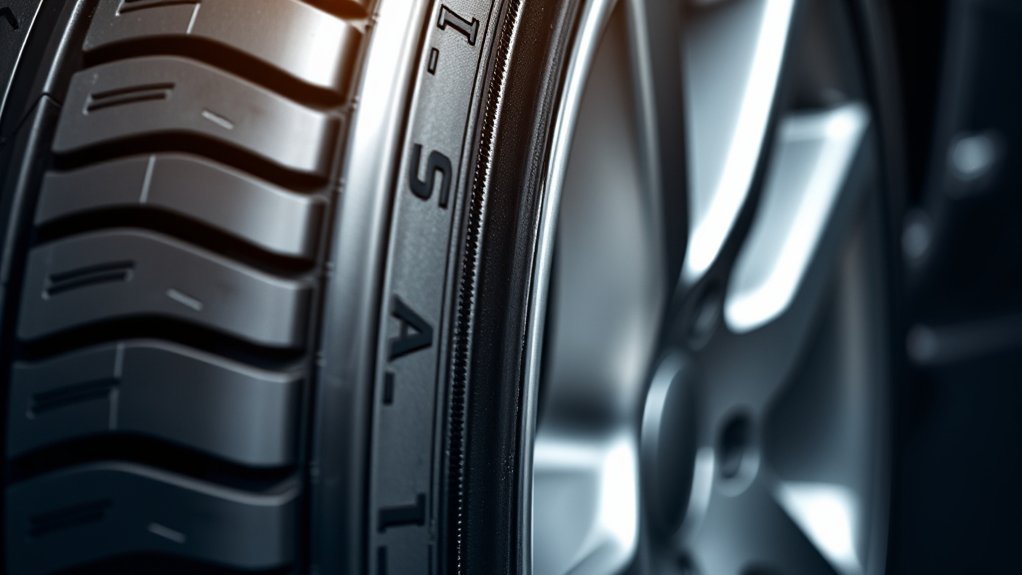
How do you make sense of the numbers stamped on your tire’s sidewall? First, you’ll notice a series like “P215/65R15.” The “P” indicates the tire type, such as passenger vehicle.
Next, the numbers after the letter tell you the tire’s size details. The first number represents the tire’s aspect ratio or profile height relative to its width. The letter “R” stands for radial construction, which is common in modern tires.
The final number indicates the diameter of the wheel the tire fits, measured in inches. Understanding these numbers helps you ensure your tires match your vehicle’s specifications, promoting safety and performance.
You don’t need to guess; the sidewall provides all the essential info you need.
What Tire Width Numbers Tell You
The tire width number is measured in millimeters and shows how wide the tire is from sidewall to sidewall. This width affects your vehicle’s grip, handling, and fuel efficiency.
Understanding this number helps you choose the right tire for your driving needs.
Measurement Units Explained
Wondering what those numbers on your tire’s sidewall actually mean? They’re measurements that tell you important details about your tire’s size and fit. The first number usually represents the tire’s width in millimeters, showing how wide the tire is from sidewall to sidewall.
Next, you’ll see the aspect ratio, a percentage indicating the tire’s sidewall height relative to its width. For example, an aspect ratio of 55 means the height is 55% of the width.
Then, you’ll find the wheel diameter, measured in inches, which tells you the size of the rim the tire fits. Understanding these units helps you choose tires that match your vehicle’s specifications exactly, ensuring proper fit without guessing.
Impact On Performance
Why does tire width matter for your vehicle’s performance? The width directly affects your grip on the road. Wider tires provide a larger contact patch, improving traction during acceleration, cornering, and braking.
This means you’ll feel more confident handling sharp turns or sudden stops. However, wider tires can increase rolling resistance, slightly reducing fuel efficiency. They may also cause more road noise and a harsher ride.
On the other hand, narrower tires offer less grip but can improve fuel economy and provide a smoother ride. When choosing tire width, consider your driving style and conditions.
If you prioritize sporty handling, wider tires are beneficial. For everyday commuting and efficiency, narrower tires might suit you better. Understanding these trade-offs helps you make informed tire choices.
Understanding The Aspect Ratio In Tire Sizes
You’ll find the aspect ratio on your tire’s sidewall as a percentage that shows the height of the sidewall compared to the tire’s width. This number affects how your tire handles, rides, and even looks.
Let’s break down how to calculate the sidewall height and why it matters for your tire’s performance.
Definition Of Aspect Ratio
The aspect ratio in tire sizes tells you the height of the tire’s sidewall as a percentage of its width. For example, if the tire width is 200 mm and the aspect ratio is 55, the sidewall height is 55% of 200 mm, which equals 110 mm.
This number helps you visualize how tall or short the tire’s sidewall is compared to its width. Understanding this can make you feel more confident when choosing tires because:
- You’ll know what your tires actually look like.
- You’ll better understand tire markings.
- You can communicate clearly with tire professionals.
- You’ll avoid confusion when shopping online.
- You’ll feel empowered to make informed decisions.
Knowing the aspect ratio is a simple yet crucial step in understanding tire sizes.
How Aspect Ratio Affects Performance
How does the aspect ratio impact your tire’s performance on the road? The aspect ratio, which is the height of the tire’s sidewall compared to its width, directly influences ride comfort, handling, and stability.
A lower aspect ratio means a shorter sidewall, giving you sharper handling and better cornering because the tire flexes less. However, this also results in a firmer ride since there’s less cushion to absorb bumps.
On the other hand, a higher aspect ratio provides more sidewall height, which improves shock absorption and ride comfort but can make the handling feel less precise and slower during turns. Choosing the right aspect ratio depends on whether you prioritize a smooth ride or sporty performance, helping you tailor your driving experience to your needs.
Calculating Tire Sidewall Height
Wondering how to figure out your tire’s sidewall height? It’s simpler than you think. The sidewall height depends on the aspect ratio, which is the percentage of the tire’s width.
To calculate it, multiply the tire width by the aspect ratio. For example, a tire marked 225/45 has a width of 225 mm and an aspect ratio of 45%. So, 225 mm × 0.45 = 101.25 mm sidewall height.
Knowing this helps you:
- Understand ride comfort
- Predict handling characteristics
- Choose compatible tires
- Avoid speedometer errors
- Maintain vehicle safety
What Tire Size Diameter Means For Your Vehicle
Why does tire diameter matter for your vehicle’s performance? The diameter directly affects your speedometer accuracy and overall ride quality. If you choose a tire with a larger diameter than what your vehicle is designed for, your speedometer will under-report your speed, potentially leading to speeding without realizing it.
Conversely, smaller diameters cause over-reporting. Diameter also impacts ground clearance; a bigger diameter raises your vehicle, which can help off-road but may affect handling. Additionally, it influences the final drive ratio, altering acceleration and fuel efficiency.
Picking the right diameter ensures your vehicle handles as intended and maintains accurate instrument readings. Always check your manufacturer’s recommended tire size before making changes to avoid performance and safety issues.
What Tire Construction Letters Mean (R, B, D)
After understanding how tire diameter affects your vehicle’s performance, it’s important to recognize what the letters printed on your tire’s sidewall represent. These letters, R, B, and D, indicate the tire’s construction type, which directly impacts ride comfort, durability, and handling.
- R (Radial): Most common, flexible sidewalls, better fuel economy, and smoother rides.
- B (Bias Belted): Hybrid design, offers improved stability and strength.
- D (Diagonal or Bias Ply): Older style, stiffer ride, often used in heavy-duty or vintage vehicles.
Your choice affects how your vehicle grips the road and absorbs shocks. Knowing these letters helps you pick tires that match your driving style and needs.
Understanding these codes ensures you get the right tire for safety and performance.
What Load Index Numbers Mean For Tire Safety
How much weight can your tires safely carry? That’s where the load index number comes in. This number, found on your tire’s sidewall, tells you the maximum weight a single tire can support when properly inflated.
It’s essential to match or exceed the load index recommended by your vehicle’s manufacturer to guarantee safety and peak performance. Overloading tires beyond their load index can lead to excessive heat buildup, increased wear, or even tire failure.
When selecting new tires, check the load index number to certify they meet your vehicle’s weight requirements. Paying attention to this number helps you avoid dangerous situations on the road and keeps your tires functioning as they should, protecting both you and your vehicle.
How Speed Ratings Affect Tire Performance
Understanding your tire’s load index helps ensure safety by matching weight capacity, but there’s another key number on your tire’s sidewall that impacts performance: the speed rating. This letter indicates the maximum speed your tire can safely handle, affecting handling, heat resistance, and overall driving experience.
Choosing the right speed rating means you won’t compromise safety or performance when hitting the road.
When you consider speed ratings, remember:
- They ensure your tires can handle your vehicle’s top speed
- Higher ratings improve cornering and traction
- Mismatched ratings can lead to premature tire wear
- Using lower-rated tires can risk blowouts at high speeds
- Speed ratings reflect tire construction quality and materials
Pay attention to this rating. It directly influences your tire’s reliability and your peace of mind behind the wheel.
How To Ensure Your Tires Fit Your Vehicle
Wondering if your tires will fit your vehicle properly? Start by checking your owner’s manual or the tire information placard, usually found on the driver’s door jamb. These sources specify the exact tire size and type recommended for your vehicle.
Next, verify the tire’s dimensions match those specifications, including width, aspect ratio, and diameter. Don’t forget to consider the load index and speed rating to ensure safe performance.
When in doubt, consult a tire professional to confirm compatibility. Avoid choosing tires that are too large or too small, as they can affect handling, fuel efficiency, and safety. Taking these steps guarantees your new tires will fit correctly and maintain your vehicle’s optimal performance.
Why You Should Always Match Your Tire Sizes Exactly
Ensuring your tires fit your vehicle correctly is just the first step; you also need to match all tire sizes exactly. When tire sizes differ, you risk uneven wear, poor handling, and compromised safety. Your vehicle’s performance depends on uniform tires working together seamlessly.
Here’s why you shouldn’t settle for mismatched tire sizes:
- Uneven traction can lead to dangerous skids
- Increased strain on your vehicle’s drivetrain
- Reduced fuel efficiency that drains your wallet
- Compromised braking distances risking accidents
- Faster tire wear forcing costly replacements
Frequently Asked Questions
How Do Tire Sizes Affect Fuel Efficiency?
You’ll notice larger, wider tires increase rolling resistance, making your engine work harder and lowering fuel efficiency.
Smaller, narrower tires reduce drag, helping you save fuel, but might affect grip and ride comfort.
Can Tire Size Impact Vehicle Handling in Different Weather?
Like a dancer adjusting to the stage, you’ll find that tire size can change your grip and control in rain or snow. Larger tires may struggle in mud, while smaller ones often offer better traction and stability.
What Happens if I Use Tires With Different Aspect Ratios?
If you use tires with different aspect ratios, you’ll experience uneven handling, reduced stability, and possible speedometer inaccuracies. Your ride could feel rougher, and it might cause premature wear or strain on your vehicle’s suspension and drivetrain.
How Often Should Tire Sizes Be Checked or Updated?
Like checking the time on a sundial, you should inspect your tire sizes every oil change or season. Regular updates keep your ride safe and efficient, preventing surprises that could throw your journey off course.
Do Tire Sizes Influence Ride Comfort and Noise Levels?
Yes, tire sizes influence ride comfort and noise levels. You’ll notice larger tires may feel rougher but quieter, while smaller tires offer smoother rides but can be noisier.
Choose sizes based on your comfort and noise preference.
Conclusion
Understanding tire sizes is like decoding a secret language that keeps you safe on the road. Each number and letter on your tire’s sidewall tells a story about its width, height, construction, load capacity, and speed rating.
By reading these details carefully, you’ll guarantee your tires fit perfectly and perform reliably. Remember, matching your tire sizes exactly isn’t just a recommendation—it’s the foundation for a smooth, secure ride every time you hit the road.
In conclusion, knowing what tire sizes mean is essential for maintaining safety and performance on your vehicle.