What Does a Wheel Bearing Look Like
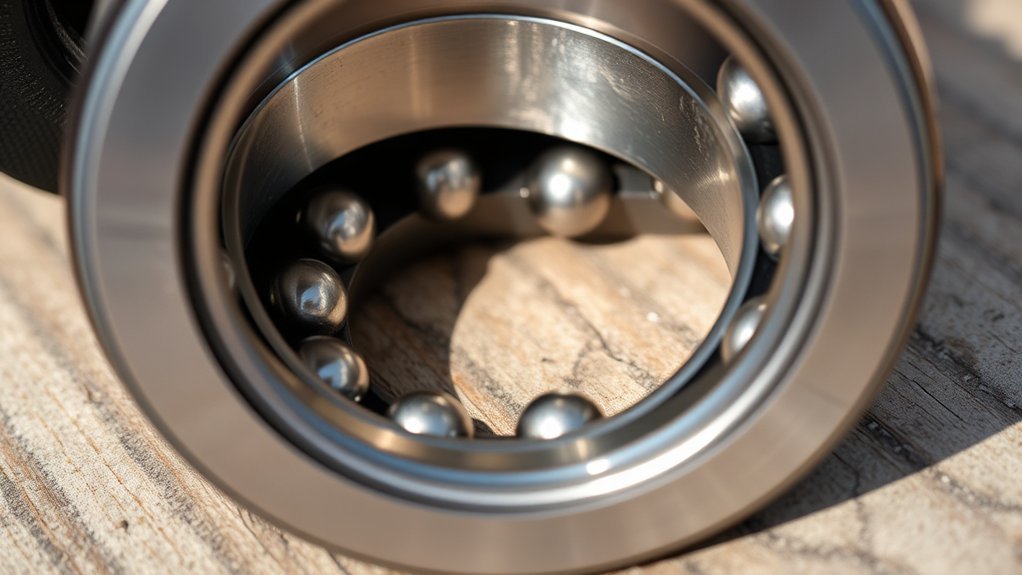
A wheel bearing looks like a compact, circular metal part nestled inside your vehicle’s wheel hub. This essential component features an outer ring that holds everything together and an inner ring that spins with the axle. Between these rings, you’ll find steel balls or rollers that reduce friction, allowing your wheels to turn smoothly.
Wheel bearings might be sealed with protective covers or open for inspection. Their design helps maintain smooth wheel rotation and supports the vehicle’s weight. If you want to understand more about different types and signs of wear, keep exploring further details.
Key Takeaways
- A wheel bearing is a compact, circular metal component found inside the wheel hub assembly.
- It consists of an outer ring, an inner ring, and rolling elements like steel balls or rollers.
- The outer ring houses the bearing securely, while the inner ring rotates with the axle.
- Ball bearings have spherical balls, while roller bearings use cylindrical rollers for friction reduction.
- Sealed bearings have protective covers, whereas open bearings expose the rolling elements.
What Is a Wheel Bearing and Why It Matters
What exactly is a wheel bearing, and why should you care about it? A wheel bearing is a small but essential component that allows your vehicle’s wheels to spin smoothly with minimal friction.
It sits between the wheel and the axle, supporting the wheel’s rotation and helping to carry the vehicle’s weight. If your wheel bearing fails, you’ll notice noise, vibration, or even unsafe driving conditions.
Ignoring a worn wheel bearing can lead to more serious damage and costly repairs. By understanding what a wheel bearing does, you can better recognize when it might be time for inspection or replacement.
Keeping your wheel bearings in good shape ensures safer, smoother rides and prolongs your vehicle’s lifespan.
What a Wheel Bearing Looks Like Up Close
Have you ever wondered how a wheel bearing actually looks up close? When you take a closer look, you’ll see it’s a compact, circular component made mostly of metal. It’s designed to fit snugly inside the wheel hub, allowing the wheel to spin smoothly.
A wheel bearing is a small, metal part that fits inside the hub, enabling smooth wheel rotation.
Here’s what you’ll notice:
- Outer ring: This sturdy metal ring sits on the outside, housing everything securely.
- Inner ring: Located inside, it rotates with the axle.
- Rolling elements: Between the rings, you’ll find small steel balls or rollers that reduce friction.
Together, these parts form a precise mechanism that handles heavy loads and high rotation speeds, all while keeping your wheel stable and efficient.
Spotting Different Types of Wheel Bearings
How can you tell one wheel bearing from another? First, look at the design. You’ll find two main types: ball bearings and roller bearings. Ball bearings use spherical balls to reduce friction, while roller bearings use cylindrical rollers, offering higher load capacity.
Next, check the size and shape; some are compact and sealed, others are larger and serviceable. Sealed bearings come with protective covers, keeping grease in and dirt out, so they usually look more enclosed. Open bearings expose the balls or rollers, requiring regular maintenance.
Also, note the number of rows. Single-row bearings handle lighter loads, while double-row or tapered roller bearings support heavier vehicles. By observing these features, you can quickly identify the type of wheel bearing you’re dealing with.
Where Wheel Bearings Are Located on Your Vehicle
Wheel bearings sit at the heart of each wheel hub assembly, connecting the wheel to the vehicle’s axle. You’ll find these essential components inside the wheel hub, where they help the wheel spin smoothly while supporting your vehicle’s weight. Their exact location depends on your vehicle’s design, but here’s a simple breakdown:
- Front Wheels: Usually integrated within the front wheel hub assembly, especially on front-wheel-drive cars.
- Rear Wheels: Often located inside the rear wheel hub, particularly on rear-wheel or all-wheel-drive vehicles.
- Inside the Hub Assembly: Whether front or rear, the bearing fits snugly between the axle and the wheel hub, allowing rotation while minimizing friction.
Knowing where wheel bearings live helps you understand their role and makes maintenance or replacement easier.
Signs Your Wheel Bearing Might Be Failing
Wondering if your wheel bearing is starting to fail? One of the first signs you might notice is a humming or growling noise coming from your wheels, especially when you turn or accelerate.
You could also feel vibrations through the steering wheel or the vehicle’s floor, which become more pronounced at higher speeds. If your wheel bearing is worn out, your wheel might wobble or feel loose when you shake it while the car is lifted.
You may also experience uneven tire wear, which happens because the bearing no longer holds the wheel firmly in place. Ignoring these signs can lead to more serious damage or even unsafe driving conditions, so it’s important to pay attention and address the problem promptly.
When to Check and How to Replace Your Wheel Bearings
You should check your wheel bearings as soon as you notice unusual noises or vibrations while driving.
Replacing a wheel bearing involves several key steps, from removing the wheel to installing the new bearing properly. Let’s walk through the process to help you handle this task with confidence.
Signs To Inspect
How do you know when it’s time to check your bearings? You’ll notice a few clear signs that shouldn’t be ignored. First, listen for unusual noises like grinding or humming coming from your wheels.
Second, pay attention if your vehicle feels unstable or wobbly while driving, especially around turns. Third, check for uneven tire wear, which can signal bearing issues affecting wheel alignment.
Here’s a quick checklist for signs to inspect:
- Unusual noises (grinding, humming) near wheels
- Vehicle instability or wobbling during motion
- Uneven or rapid tire wear patterns
If you spot any of these, it’s a good idea to inspect your wheel bearings promptly to avoid further damage or safety risks.
Step-By-Step Replacement
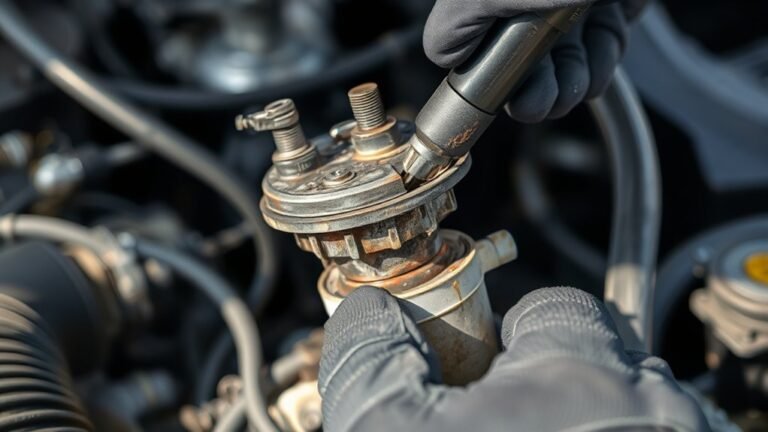
Noticing signs like unusual noises or wobbling means it’s time to inspect your wheel bearings more closely. First, safely lift your vehicle and remove the wheel. Then, take off the brake caliper and rotor to access the hub assembly.
Carefully unbolt the hub to reveal the wheel bearing. Check for roughness or play by spinning the bearing and feeling for resistance. If it’s damaged, remove the old bearing using a press or appropriate tools.
Clean the hub thoroughly before pressing in the new bearing. Reassemble the hub, rotor, and brake caliper, then remount the wheel. Lower your vehicle and torque the lug nuts to specification.
Regularly checking your bearings every 30,000 to 50,000 miles helps prevent unexpected failures and keeps your ride smooth.
How Wheel Bearings Affect Your Car’s Performance
Why does a smooth ride suddenly feel rough or noisy? It’s often your wheel bearings. These small but essential components directly affect your car’s performance. When they wear out, you’ll notice changes that impact safety and comfort. Here’s how:
- Handling and Stability: Worn bearings cause wheel wobble or vibrations, making your car harder to control, especially at higher speeds.
- Noise Levels: Damaged bearings create grinding or humming sounds, distracting you and signaling potential failure.
- Fuel Efficiency: Increased friction from bad bearings forces your engine to work harder, lowering gas mileage.
Frequently Asked Questions
Can Wheel Bearings Be Reused After Removal?
You shouldn’t reuse wheel bearings after removal because they wear out and lose precision. Reusing them risks failure, noise, or damage, so it’s safer to replace them with new ones for reliable, smooth wheel performance.
What Tools Are Needed to Install Wheel Bearings?
Imagine you’re replacing a wheel bearing on your car; you’ll need a jack, lug wrench, socket set, hammer, bearing puller, and torque wrench. These tools help you remove old bearings and install new ones securely and correctly.
How Long Do Wheel Bearings Typically Last?
Wheel bearings typically last between 85,000 to 100,000 miles, but you might need to replace them sooner if you hear noise or feel vibration.
Regular maintenance helps you catch issues before they worsen.
Are Wheel Bearings the Same for All Vehicle Types?
No, wheel bearings aren’t the same for all vehicles. You’ll find different sizes and designs depending on your car’s make, model, and whether it’s front or rear-wheel drive.
Always check your specific requirements before buying.
Can Bad Wheel Bearings Cause Tire Wear?
Think of your wheel bearing as the heartbeat of your wheel; if it’s bad, yes, it can cause uneven tire wear by making your wheel wobble or drag. This messes with your tire’s smooth, even rotation.
Conclusion
Now that you know what a wheel bearing looks like, why it matters, and where it sits, you can spot signs of wear, check regularly, and replace it when needed.
You protect your car’s performance, guarantee your safety, and save on costly repairs.
Remember, understanding, maintaining, and acting on your wheel bearings keeps your ride smooth, steady, and secure every mile you drive. Proper care of the wheel bearing is essential for a safe and efficient driving experience.