
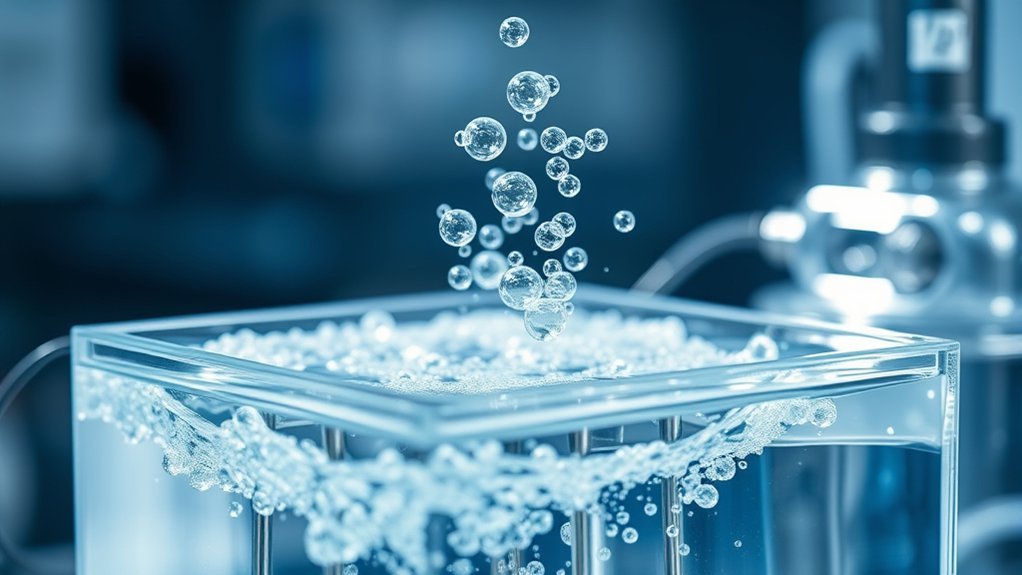
How Do You Make Hydrogen Fuel
You make hydrogen fuel by splitting water into hydrogen and oxygen using electricity, a process called electrolysis. This method produces clean hydrogen, especially when powered by renewable energy like solar or wind, avoiding carbon emissions.
Other ways include breaking down methane or coal, but those release pollutants.
Hydrogen is then purified, stored, and transported carefully for safe use.
Exploring these production methods and emerging technologies reveals how hydrogen could power a cleaner future.
Key Takeaways
- Hydrogen fuel is mainly produced by splitting water into hydrogen and oxygen through electrolysis using electricity.
- Electrolysis efficiency depends on electrode materials, current control, and purified water with conductive additives.
- Green hydrogen is made via electrolysis powered by renewable energy sources like solar, wind, and hydro to avoid carbon emissions.
- Fossil fuel methods like Steam Methane Reforming and coal gasification produce hydrogen but release CO2 and require purification.
- Hydrogen gas is collected at the cathode during electrolysis and must be safely stored and transported under high pressure or low temperature.
What Is Hydrogen Fuel and Why It Matters
What makes hydrogen fuel so important today? You’re looking at a clean, efficient energy source that produces zero emissions when used, making it a key player in fighting climate change.
Hydrogen fuel stands out because it offers a way to store and transport energy without the pollution linked to fossil fuels. When you use hydrogen in fuel cells, it combines with oxygen to produce electricity, leaving only water as a byproduct.
This means you can power vehicles, homes, and industries sustainably. Plus, hydrogen has a high energy density, so it packs a lot of power in a small amount. Understanding hydrogen fuel matters because it’s not just an alternative; it’s a potential game-changer in creating a cleaner, more sustainable energy future for you and everyone else.
How Electrolysis Produces Hydrogen From Water
You’ll see that electrolysis uses electricity to split water molecules into hydrogen and oxygen. When you apply an electric current, the water breaks down at the electrodes, releasing hydrogen gas.
This simple process is key to producing clean hydrogen fuel.
Electrolysis Process Overview
Electrolysis breaks down water into hydrogen and oxygen using an electric current. When you apply electricity to water, it flows through electrodes submerged in the water. These electrodes create a chemical reaction that separates the hydrogen and oxygen atoms.
The positive electrode, called the anode, attracts oxygen, while the negative electrode, the cathode, attracts hydrogen. As the current passes through, hydrogen gas collects at the cathode, and oxygen gas forms at the anode. You can then capture the hydrogen for fuel use.
This process requires pure water with some conductive material added to improve efficiency. By controlling the electric current and electrode materials, you optimize hydrogen production. Electrolysis offers a clean way to generate hydrogen without burning fossil fuels.
Water Molecule Breakdown
How exactly does breaking down water molecules produce hydrogen gas? When you apply an electric current to water during electrolysis, you’re forcing water molecules (H₂O) to split into hydrogen (H₂) and oxygen (O₂) gases.
The water molecules break apart at two electrodes: hydrogen ions gather at the cathode, gaining electrons to form hydrogen gas. Meanwhile, oxygen forms at the anode as water loses electrons.
This process separates water into its elemental gases, allowing you to collect pure hydrogen. Since hydrogen is highly flammable and a clean fuel source, this breakdown is essential for producing hydrogen fuel.
How Renewable Energy Powers Green Hydrogen
Where does green hydrogen get its clean energy? It comes from renewable sources like solar, wind, and hydropower. You use electricity generated by these clean sources to power electrolysis, which splits water into hydrogen and oxygen without releasing carbon emissions.
This process guarantees the hydrogen you produce is truly green. Unlike traditional methods relying on fossil fuels, renewable energy provides a sustainable and eco-friendly way to create hydrogen fuel.
How Steam Methane Reforming Creates Hydrogen
Ever wondered how most hydrogen is produced today? It’s mainly through steam methane reforming (SMR), where methane from natural gas reacts with steam under high heat. You’ll find this method efficient but it releases CO₂, so it’s less green than renewable methods.
Here’s a quick breakdown:
| Step | Reaction | Output |
|---|---|---|
| 1. Steam input | Add steam to methane | Methane + steam |
| 2. Reforming | CH₄ + H₂O → CO + 3H₂ | Carbon monoxide + hydrogen |
| 3. Water-gas shift | CO + H₂O → CO₂ + H₂ | Carbon dioxide + hydrogen |
| 4. Separation | Separate hydrogen from gases | Pure hydrogen |
| 5. Use | Hydrogen for fuel or industry | Energy source |
SMR efficiently produces hydrogen but you’ll want to consider emissions when choosing this method.
How Hydrogen Is Made From Coal
You’ll see that hydrogen from coal starts with the coal gasification process, where coal is converted into a gas mixture. You’ll also need to contemplate the carbon emissions challenges that come with this method.
Finally, hydrogen purification techniques are key to getting clean hydrogen out of the mix.
Coal Gasification Process
Coal gasification transforms solid coal into a clean, versatile gas mixture that includes hydrogen. In this process, you heat coal at high temperatures while controlling oxygen and steam levels, causing it to break down into synthesis gas, or syngas.
Syngas mainly contains hydrogen, carbon monoxide, and carbon dioxide. To increase hydrogen yield, you react carbon monoxide with steam in a water-gas shift reaction, producing more hydrogen and carbon dioxide.
Afterward, you separate hydrogen from other gases using pressure swing adsorption or other purification methods. This approach lets you turn coal into valuable hydrogen fuel efficiently.
While it requires specialized equipment, coal gasification offers a way to produce hydrogen on a large scale using abundant coal resources.
Carbon Emissions Challenges
Although producing hydrogen from coal offers a promising energy source, it also comes with significant carbon emissions challenges. When you rely on coal gasification, you release large amounts of CO2, contributing to climate change. Managing these emissions is critical if you want hydrogen to be a truly clean fuel.
Here are four major challenges you face:
- High Carbon Intensity: Coal contains substantial carbon, which produces CO2 when processed.
- Capturing Emissions: You need advanced carbon capture technology to trap CO2 before it escapes.
- Storage and Transport: Storing captured CO2 safely underground or transporting it poses logistical issues.
- Economic Costs: Implementing carbon capture and storage raises production costs, affecting hydrogen’s competitiveness.
You must address these hurdles to make coal-based hydrogen a sustainable option.
Hydrogen Purification Techniques
How do you guarantee the hydrogen extracted from coal is pure enough for use? You use purification techniques to remove impurities like carbon monoxide, carbon dioxide, and sulfur compounds.
Pressure Swing Adsorption (PSA) is a common method where gas passes through adsorbent materials that trap contaminants, leaving high-purity hydrogen behind. Another technique is membrane separation, which filters hydrogen through selective membranes based on molecule size.
You can also apply cryogenic separation, cooling gases until impurities liquefy and separate from hydrogen gas. These methods ensure the hydrogen meets quality standards for fuel cells or industrial use.
How Biomass Gasification Produces Hydrogen
Wondering how biomass gasification can turn organic materials into hydrogen? You start by heating biomass like wood chips or agricultural waste in a low-oxygen environment, which prevents full combustion. This process breaks down the material into a gas mixture called syngas, rich in hydrogen and carbon monoxide.
Then, you refine this gas to separate and capture hydrogen for fuel use.
Here’s how it works step-by-step:
- Feedstock Preparation: Dry and size biomass for efficient gasification.
- Gasification: Heat biomass with limited oxygen, producing syngas.
- Syngas Cleaning: Remove impurities like tar and particulates.
- Hydrogen Separation: Extract hydrogen from syngas using methods like pressure swing adsorption.
This method efficiently converts waste into clean hydrogen fuel.
Pros and Cons of Different Hydrogen Production Methods
You’ll want to weigh the efficiency of electrolysis against the environmental impact of fossil fuel-based methods. Consider how each production method fits with renewable energy sources.
Understanding these pros and cons helps you choose the best path for clean hydrogen fuel.
Electrolysis Efficiency
Why does electrolysis stand out among hydrogen production methods? Because it directly splits water into hydrogen and oxygen using electricity, offering a clean and renewable pathway. However, its efficiency varies based on technology and energy sources.
Here’s what you should know about electrolysis efficiency:
- Energy Input vs. Output: Electrolysis typically converts 60-80% of electrical energy into hydrogen’s chemical energy.
- Electrolyzer Type: Proton exchange membrane (PEM) electrolyzers offer higher efficiency but cost more than alkaline ones.
- Electricity Source: Using renewable electricity maximizes environmental benefits but may affect cost and availability.
- Operational Conditions: Temperature, pressure, and maintenance impact overall efficiency and longevity.
Understanding these factors helps you evaluate electrolysis as a viable method for sustainable hydrogen production.
Fossil Fuel Impact
Although hydrogen offers a clean energy alternative, producing it often relies on fossil fuels, which complicates its environmental benefits. When you use natural gas for hydrogen production through steam methane reforming, you get a cost-effective and scalable method. However, this process emits significant CO2, contributing to greenhouse gases.
On the other hand, coal gasification produces hydrogen but with even higher emissions and environmental concerns. While these fossil fuel methods are established and efficient, they undermine hydrogen’s green potential unless paired with carbon capture technologies.
You should weigh these pros and cons carefully, understanding that relying heavily on fossil fuels limits hydrogen’s role in reducing overall carbon footprints. Choosing production methods wisely is key to making hydrogen a truly sustainable fuel option.
Renewable Energy Integration
How can hydrogen production truly become sustainable? You need to integrate renewable energy sources effectively, balancing benefits and drawbacks. Here’s a quick look at four common methods:
- Electrolysis powered by solar or wind: Produces green hydrogen with zero emissions but depends on intermittent energy.
- Biomass gasification: Uses organic waste, reducing landfill, but can emit pollutants if not managed well.
- Hydropower-driven electrolysis: Offers stable power and low emissions but is limited by geographic availability.
- Geothermal energy electrolysis: Provides consistent power with low emissions, yet geothermal sites are location-specific and costly.
How Hydrogen Is Stored and Transported Safely
Where do you think hydrogen goes after it’s produced? You store and transport it carefully to keep it safe and ready for use. Hydrogen is highly flammable and light, so it needs special containers and handling methods.
Here’s how hydrogen is stored and transported safely:
| Method | Description |
|---|---|
| Compressed Gas | Stored at high pressure in tanks |
| Liquefied Hydrogen | Cooled to very low temperatures |
| Chemical Storage | Bound in materials like metal hydrides |
Each method ensures hydrogen stays contained, preventing leaks and minimizing risks. When transporting, you’ll use reinforced tanks and follow strict safety protocols to handle this clean fuel without hazards.
Challenges Facing Hydrogen Fuel Production Today
Storing and transporting hydrogen safely is just one piece of the puzzle. You also face significant challenges producing it efficiently and sustainably. Here are four key hurdles:
Producing hydrogen efficiently and sustainably presents major challenges beyond safe storage and transport.
1. High Production Costs
Generating hydrogen, especially green hydrogen, often requires expensive equipment and energy inputs.
2. Energy Intensity
Many production methods consume a lot of energy, reducing overall efficiency.
3. Limited Infrastructure
The current lack of widespread facilities and pipelines restricts large-scale production and distribution.
4. Carbon Emissions
Some common methods, like steam methane reforming, emit greenhouse gases unless paired with carbon capture.
Addressing these challenges is crucial if you want hydrogen fuel to become a viable, eco-friendly energy source.
How Emerging Technologies Could Transform Hydrogen Making
What if producing hydrogen could become faster, cheaper, and greener? Emerging technologies are making that possible. You’ll see innovations like advanced electrolysis using renewable energy, which splits water more efficiently without emissions.
New catalysts reduce energy needs, making the process less costly. Additionally, photoelectrochemical cells harness sunlight directly to produce hydrogen, cutting out extra steps.
You’ll also find breakthroughs in biomass conversion, turning organic waste into hydrogen, which helps tackle waste and creates fuel simultaneously. These technologies are scaling up, aiming to replace traditional methods that rely on fossil fuels.
Frequently Asked Questions
What Appliances Can Run on Hydrogen Fuel in Homes?
You can run hydrogen-powered boilers, stoves, and water heaters in your home. These appliances use hydrogen fuel cells to generate heat and energy efficiently while reducing carbon emissions, making your household more eco-friendly and energy-independent.
How Does Hydrogen Fuel Compare to Electric Batteries for Cars?
Like choosing between a lightning bolt and a marathon runner, you’ll find hydrogen fuel offers quicker refills and longer range, while electric batteries deliver instant torque and convenience.
Your choice depends on your driving rhythm and priorities.
What Safety Precautions Do Consumers Need With Hydrogen-Powered Vehicles?
You need to check for leaks regularly, avoid sparks near the fuel system, and follow refueling instructions carefully.
Always park in well-ventilated areas and trust that hydrogen tanks are built with strong safety standards to protect you.
How Long Does Hydrogen Fuel Last in Storage Before Use?
Hydrogen fuel can last several months in specialized, high-pressure tanks designed to minimize leaks. However, if stored improperly, it can dissipate quickly.
You’ll want to guarantee your storage system is well-maintained for maximum fuel retention.
Are There Government Incentives for Using Hydrogen Fuel at Home?
You’ll find that some governments do offer incentives for using hydrogen fuel at home, like tax credits or rebates. It’s worth checking your local programs since availability and amounts can vary widely depending on where you live.
Conclusion
You hold the key to a cleaner future by understanding hydrogen fuel’s journey—from water’s split breath to coal’s fiery embrace. Like unbolting nature’s secret code, each method shapes the energy landscape, lighting the path ahead.
Though challenges cloud the horizon, emerging technologies are the dawn breaking through. By embracing these innovations, you’re not just fueling machines—you’re igniting hope, turning the tide toward a greener, brighter world for generations to come.
The future lies in your hands, and by advancing hydrogen fuel, you are powering a sustainable tomorrow.