How Do I Check if My Fuel Pump Is Working
To check if your fuel pump is working, start by listening for a loud whining noise from the fuel tank area when you turn the ignition on. This sound often indicates that the pump is running.
Next, inspect the fuel pump relay, fuse, and wiring for any loose connections or signs of corrosion. These components can affect the pump’s operation if they are faulty or damaged.
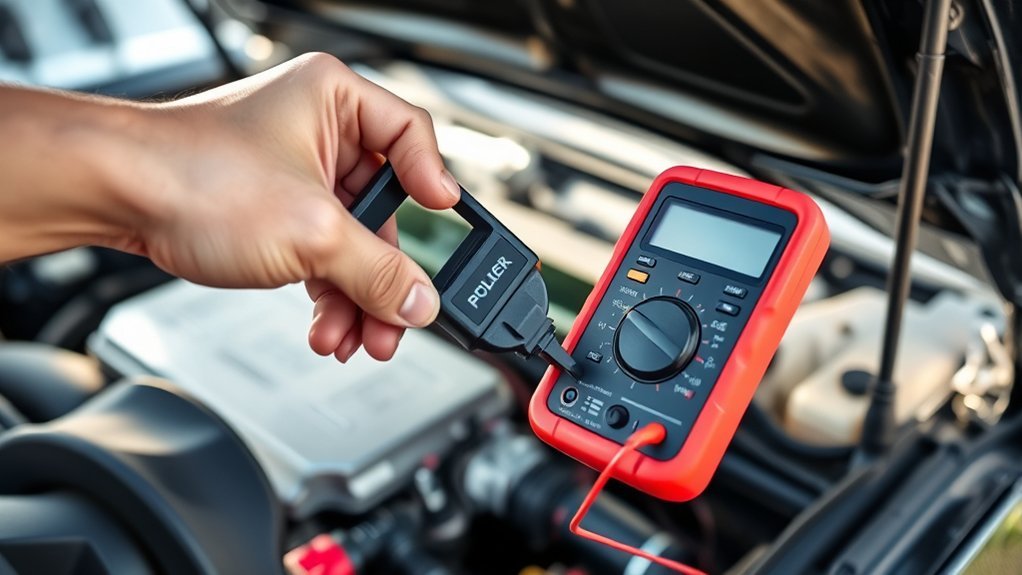
Use a fuel pressure gauge at the fuel rail to test the pressure and ensure it meets the manufacturer’s specifications. Additionally, measure the voltage at the pump connector with a multimeter to verify electrical supply.
If problems persist, you can also manually activate the pump to confirm its operation. Keep exploring to understand detailed testing methods and possible fixes.
Key Takeaways
- Listen for a humming or whining noise from the fuel tank area when the ignition is turned on, indicating the pump is running.
- Check the fuel pump relay and fuse for clicking sounds and visible damage to ensure electrical power supply.
- Use a multimeter to measure voltage at the fuel pump connector; around 12 V with ignition on indicates proper power.
- Test fuel pressure at the fuel rail with a gauge, comparing readings to vehicle specifications to confirm fuel delivery.
- Inspect fuel lines and connections for leaks, clogs, or damage that could affect fuel flow and pump performance.
How to Listen for Signs Your Fuel Pump Is Failing
How can you tell if your fuel pump is starting to fail? One clear sign is unusual noises coming from your fuel tank area. If you hear a loud whining or humming sound when you turn the key to the “on” position, it could mean the pump is struggling.
Another indication is if your engine sputters or hesitates during acceleration, showing inconsistent fuel delivery. You might also notice difficulty starting your car, especially after it sits for a while, or the engine may stall unexpectedly while driving.
Pay attention to any decrease in fuel efficiency or power. These symptoms suggest your fuel pump isn’t delivering fuel properly. Catching these signs early helps prevent more serious engine problems down the road.
Check Your Fuel Pump Relay, Fuse, and Electrical Connections
Where should you start when your fuel pump seems unresponsive? Begin by checking the relay, fuse, and electrical connections. These components control power to the pump and often cause issues when faulty.
Use the table below to guide your inspection:
| Component | What to Look For |
|---|---|
| Fuel Pump Relay | Clicking sound when ignition on |
| Fuse | Blown fuse or visible damage |
| Wiring Connections | Loose, corroded, or damaged wires |
| Connector Plugs | Secure fit and no corrosion |
| Battery Voltage | Proper voltage at the relay/fuse |
If the relay doesn’t click or the fuse is blown, replace them. Tighten any loose connections and clean corroded terminals. This simple check often restores your fuel pump’s function without further trouble.
How to Test Fuel Pump Pressure at the Fuel Rail
To test fuel pump pressure at the fuel rail, you’ll need a fuel pressure gauge and some basic tools. First, make sure you relieve the fuel system pressure to avoid any accidents.
Then, follow a clear step-by-step process to connect the gauge and read the pressure accurately.
Required Tools Overview
Before you test the fuel pump pressure at the fuel rail, you’ll need a few essential tools to get accurate readings and assure safety. First, grab a fuel pressure gauge designed for your vehicle’s fuel system. This tool measures the pressure in the fuel rail precisely.
You’ll also need a set of wrenches or screwdrivers to access the test port, depending on your vehicle model. Safety goggles and gloves are crucial to protect you from fuel spray. Have a rag or small container handy to catch any spilled fuel.
Additionally, a repair manual specific to your car can guide you to the exact fuel rail location and pressure specifications. With these tools ready, you’ll be prepared to test effectively and safely.
Step-by-Step Testing Process
How exactly do you test the fuel pump pressure at the fuel rail? First, locate the fuel rail under the hood and find the Schrader valve, which looks like a tire valve. Attach a fuel pressure gauge to this valve securely.
Next, turn the ignition key to the “on” position without starting the engine. This will activate the fuel pump and pressurize the system. Check the gauge reading against your vehicle’s specified fuel pressure, usually found in the service manual.
If the pressure matches, your pump is working properly. If it’s lower or absent, you might have a failing pump or clogged filter. Finally, release the pressure from the gauge carefully, detach it, and replace any caps or covers you removed. You’re done!
Use a Multimeter to Measure Fuel Pump Voltage
To check your fuel pump voltage, start by setting up your multimeter correctly for a DC voltage reading. Next, locate the fuel pump connector under your vehicle or near the fuel tank. Finally, measure the voltage and compare it to your vehicle’s specifications to see if the pump is getting power.
Preparing Your Multimeter
Where should you start when checking your fuel pump’s voltage? First, get your multimeter ready. Turn it on and set it to DC voltage mode, usually symbolized by a “V” with a straight line above it.
Make sure the range is appropriate. If your multimeter isn’t auto-ranging, select a range that covers at least 12 volts. Next, inspect the multimeter leads for any damage and connect the black lead to the common (COM) port and the red lead to the voltage (V) port. This setup ensures accurate readings.
Before testing the fuel pump, familiarize yourself with your multimeter’s controls and safety features. With your multimeter properly prepared, you’re set to measure the fuel pump voltage confidently and safely.
Locating Fuel Pump Connector
Now that your multimeter is set up and ready, the next step involves finding the fuel pump connector in your vehicle. This connector links the wiring harness to the fuel pump, allowing you to measure voltage accurately.
Typically, you’ll find it near the fuel tank or under the rear seat, depending on your car model.
Here’s a quick guide to help you locate the fuel pump connector:
| Location | Description |
|---|---|
| Fuel tank area | Common spot under or near the tank |
| Rear seat | Some cars hide the connector beneath |
| Trunk | Occasionally accessed through the trunk |
| Owner’s manual | Best source for exact connector info |
Once located, unplug the connector carefully to test voltage with your multimeter.
Interpreting Voltage Readings
How exactly do you interpret the voltage readings from your multimeter when testing the fuel pump? First, ensure your multimeter is set to measure DC voltage. Connect the probes to the fuel pump connector terminals, positive to positive, negative to negative.
A healthy fuel pump typically shows around 12 volts when the ignition is on. If the reading is significantly lower, say below 9 volts, it indicates a weak or faulty power supply. No voltage means the pump isn’t receiving power, pointing to wiring issues, a blown fuse, or a bad relay.
If the voltage fluctuates or is inconsistent, your pump might be malfunctioning or the electrical connections are loose. Use these voltage insights to decide your next troubleshooting steps confidently.
Inspect Fuel Lines and Connections for Fuel Pump Problems
Inspecting the fuel lines and connections is a pivotal step when diagnosing fuel pump issues. Start by visually checking the fuel lines for cracks, leaks, or signs of wear. Pay close attention to areas near clamps and fittings where leaks often occur.
Tighten any loose connections to prevent fuel loss and pressure drops. Make sure the fuel filter isn’t clogged, as this can mimic fuel pump failure. Also, inspect the fuel line clamps and connectors for corrosion or damage that could disrupt fuel flow.
If you spot leaks or damaged lines, replace or repair them immediately to maintain proper fuel pressure. Ensuring the fuel lines and connections are intact helps you avoid unnecessary fuel pump replacements and keeps your fuel system running smoothly.
Manually Activate Your Fuel Pump to Test It
Wondering how to confirm if your fuel pump is working without specialized tools? You can manually activate it by accessing the fuel pump relay or fuse.
First, locate your vehicle’s fuse box, usually under the hood or inside the cabin, and find the fuel pump fuse or relay using the diagram on the cover. Remove the relay and use a jumper wire to connect the relay terminals that complete the circuit, or swap the relay with a similar one if you’re unsure.
When you turn the ignition to the “on” position without starting the engine, you should hear a humming sound from the fuel tank area, indicating the pump is running. If you don’t hear anything, manually testing confirms the pump isn’t activating, signaling a potential issue.
What to Do Next If Your Fuel Pump Fails the Test
If your fuel pump fails the test, what should you do next? First, don’t panic. You’ll want to confirm the diagnosis before replacing parts. Start by checking the fuel pump fuse and relay to rule out simple electrical issues. If those are fine, inspect the wiring for damage or loose connections.
If your fuel pump fails, first check the fuse, relay, and wiring before replacing parts.
Next, consider the fuel filter; a clogged filter can mimic pump failure symptoms.
Here’s what to do next:
- Test the fuel pump circuit with a multimeter to identify electrical faults.
- Replace the fuel filter if it’s dirty or clogged.
- If problems persist, prepare to replace the fuel pump or consult a professional mechanic for a thorough diagnosis.
Taking these steps helps you avoid unnecessary repairs and get your vehicle running smoothly again.
Frequently Asked Questions
What Causes a Fuel Pump to Fail Prematurely?
You’ll find fuel pumps fail prematurely due to dirty fuel clogging them, running on low fuel often, electrical issues, or using poor-quality fuel.
Keeping your tank clean and topped up helps prevent early pump failure.
How Long Does a Typical Fuel Pump Last?
A typical fuel pump lasts about 100,000 to 150,000 miles. You’ll want to watch for signs of wear, but regular maintenance and clean fuel can help your pump stay reliable for a long time.
Can a Bad Fuel Pump Affect Engine Performance?
Yes, a bad fuel pump can seriously affect your engine’s performance. You’ll notice issues like stalling, sputtering, or difficulty starting because the engine isn’t getting enough fuel pressure or flow to run smoothly.
Are There Warning Lights for Fuel Pump Issues?
Imagine a tiny guardian light on your dashboard. Yes, you’ll often see a check engine light or fuel warning if your fuel pump struggles. Don’t ignore these signals; they’re your car’s way of speaking up for help.
Is It Safe to Drive With a Failing Fuel Pump?
It’s not safe to drive with a failing fuel pump because it can cause your engine to stall unexpectedly. You’ll risk getting stranded or causing further damage, so get it checked and repaired as soon as possible.
Conclusion
Think of your fuel pump as the heart of your car’s engine—without a steady, strong pulse, the whole system falters. By listening carefully, checking connections, and testing pressure and voltage, you’re giving this crucial organ a thorough health check.
If it stumbles, don’t ignore the signs. Act quickly to keep your car’s heart beating strong and your journey smooth.
Remember, a healthy fuel pump means a happy ride. Knowing how to check if your fuel pump is working can save you from unexpected breakdowns and costly repairs.