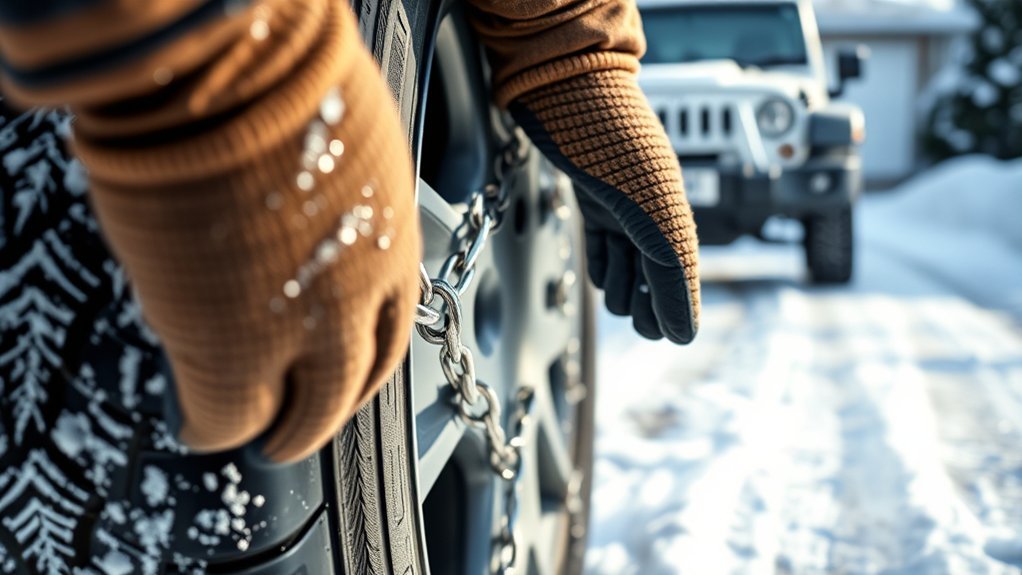
How to Install Tire Chains
To install tire chains, first gather the right size chains, gloves, and tools, and park your vehicle on a flat, safe spot with the parking brake engaged.
Tire chains are essential for improving traction in snowy or icy conditions, so ensuring you have the correct size is crucial.
Lay the chains flat and drape them over the tire with the hooks facing outward. Then, drive forward slightly to position the tire on the chains.
Connect the inside and outside fasteners, tighten for a snug fit, and test by driving a short distance before rechecking the tension. Keep going to uncover how to choose, adjust, and remove them properly.
Key Takeaways
- Gather correctly sized tire chains, gloves, and tools; inspect chains for damage before installation.
- Park on a flat, safe surface, engage the parking brake, and lay out untangled chains near tires.
- Drape chains over the tire with hooks outward, drive forward to position, then fasten inside and outside connectors.
- Evenly distribute chains, move the vehicle slightly, tighten chains by hand, and use tensioners for a secure fit.
- After driving a short distance, recheck chain tension and adjust if needed for safety and performance.
Gather Tools and Prepare for Installing Tire Chains
Where do you begin when installing tire chains? First, you need to gather all the necessary tools and materials. Make sure you have the correct size chains for your tires. Check your vehicle’s manual or tire sidewall for size information.
You’ll also want gloves to protect your hands, and possibly a pair of pliers or a chain tensioner, depending on the chain type. Find a flat, safe area away from traffic where you can work comfortably.
Before you start, lay out the chains to untangle them and inspect for any damage. Preparing your vehicle by parking it securely and engaging the parking brake helps ensure safety. Taking these steps upfront will make the installation process smoother and faster.
Step-by-Step Installation of Tire Chains
Installing tire chains involves a few straightforward steps that you can easily follow. First, lay the chains flat on the ground and untangle any twists. Drape the chains over the top of the tire, ensuring the hooks face outward to avoid damage.
Next, drive your vehicle forward slightly to position the tire on the chains, then pull the chains around the back of the tire. Connect the inside fastener first to secure the chains behind the tire. After that, connect the outside fastener to complete the loop.
Make sure the chains are evenly distributed over the tire tread. Finally, move your vehicle forward a few feet to allow the chains to settle in place. These steps set you up for a safe, effective fit before final adjustments.
How to Adjust and Secure Tire Chains for a Perfect Fit
How do you ensure your tire chains fit snugly and stay secure during your drive? After laying the chains over your tires, pull them tight by hand, removing any slack. Use the built-in tensioners or tightening devices to secure the chains firmly around the tire.
Make sure the chains are evenly distributed, avoiding bunching or twisting. Once tightened, check for any loose links or gaps that might cause slipping. After securing, drive a short distance and stop to recheck the tension, tightening again if necessary.
Proper adjustment prevents damage to both your tires and chains while maintaining traction. Taking these steps ensures your chains stay in place, giving you confidence and safety on icy or snowy roads.
How to Choose the Right Tire Chains for Your Vehicle and Conditions
When selecting tire chains, what factors should you consider to ensure they match your vehicle and driving conditions? First, check your tire size. Chains come in different sizes, so match them precisely to your tires for safety and effectiveness.
Second, consider your vehicle type. Some chains are designed for passenger cars, others for trucks or SUVs. Third, think about the driving conditions you’ll face. If you often drive on icy roads, opt for chains with tighter links or additional traction features.
For deep snow, heavier-duty chains work better. Also, check your vehicle’s clearance. Some cars have limited space between the tire and wheel well, requiring low-profile chains.
Finally, review local regulations, as some areas mandate specific types of chains or prohibit certain designs. Choose wisely to stay safe.
Driving Tips and How to Remove Tire Chains Safely
Where should you start once your tire chains are securely on? Begin by driving slowly, keeping your speed under 30 mph to avoid damaging the chains or tires. Focus on smooth acceleration and braking to maintain control on slippery roads.
When it’s time to remove the chains, follow these steps to do it safely:
- Park your vehicle on a flat, stable surface away from traffic.
- Loosen the chains by detaching the fasteners, then carefully pull them off the tires.
- Inspect the chains for damage, clean them, and store them properly to ensure they last.
Frequently Asked Questions
Are Tire Chains Legal in All States or Regions?
No, tire chains aren’t legal in all states or regions. You’ll find some places restrict or ban them except during severe winter conditions.
Always check local laws before using chains to avoid fines and guarantee safety.
Can Tire Chains Damage My Vehicle’s Tires or Suspension?
Imagine your car’s grip slipping on ice. Tire chains won’t damage your tires or suspension if you install them correctly and drive carefully.
But neglect or improper use can cause wear, so always double-check fit and speed limits.
How Do Tire Chains Affect Fuel Efficiency?
Tire chains reduce your fuel efficiency because they add weight and increase rolling resistance. You’ll notice your engine works harder, so expect higher fuel consumption, especially when driving at higher speeds or over long distances.
Are There Alternatives to Tire Chains for Winter Driving?
If winter roads are a wild beast, alternatives like snow tires, studded tires, and tire socks tame it. You’ll enjoy better grip without the hassle of chains, making your drive safer and smoother in icy conditions.
How Should Tire Chains Be Stored When Not in Use?
You should clean and dry your tire chains thoroughly before storing them. Then, keep them in a sturdy bag or container, away from moisture and direct sunlight to prevent rust and damage, ensuring they’re ready for next use.
Conclusion
Now that you know how to install and adjust tire chains, you’re ready to tackle snowy roads with confidence. Don’t let the fear of slipping hold you back—these chains are your safety net, proving that preparation truly beats panic.
Remember, the right chains and careful driving can make all the difference. So gear up, stay calm, and trust that with the right steps, you’ll conquer winter’s worst and keep moving forward safely. Installing tire chains properly ensures you get the best traction and stability when you need it most.