How Do I Mix 2 Stroke Fuel
To mix 2-stroke fuel, measure the exact oil-to-gas ratio your engine requires—commonly 50:1 or 40:1—using a precise container. This ensures the correct balance for optimal engine performance and longevity.
Pour gasoline first, then add the correct amount of 2-stroke oil. Shake the mixture well for about 30 seconds to blend thoroughly.
Use a clean, labeled container stored in a cool, dry place. Only mix what you’ll need within 30 days to maintain fuel quality.
Following these steps helps your engine run smoothly and last longer.
There’s more to know about choosing the right oil and avoiding mistakes.
Key Takeaways
- Use the manufacturer’s recommended oil-to-gas ratio, commonly 50:1 or 40:1, for correct fuel mixture.
- Pour gasoline into a clean, labeled container first, then add the measured 2-stroke oil.
- Measure oil precisely using a graduated container or measuring cup for accurate mixing.
- Shake the container vigorously for about 30 seconds to ensure thorough blending of oil and gasoline.
- Store mixed fuel in a sealed, cool, dry place and use within 30 days for best engine performance.
What Is 2 Stroke Fuel and Why Does It Matter?
What exactly is 2 stroke fuel, and why should you care? 2 stroke fuel is a specific mixture of gasoline and oil designed to lubricate and power two-stroke engines. Unlike four-stroke engines, two-stroke engines don’t have a separate oil reservoir, so the oil must be mixed directly with the fuel.
This mixture keeps the engine parts lubricated, prevents overheating, and guarantees smooth operation. If you use plain gasoline, your engine will suffer damage quickly. Using the correct 2 stroke fuel ratio is essential because too much oil can cause smoke and carbon buildup, while too little oil leads to poor lubrication and engine wear.
Understanding what 2 stroke fuel is helps you maintain your equipment’s performance and longevity.
How to Choose the Right Oil for 2 Stroke Fuel
Choosing the right oil for your 2 stroke fuel is key to keeping your engine running smoothly. You’ll want to contemplate the types of oil available, along with viscosity and any special additives.
Understanding these factors will help you pick the best oil for your specific needs.
Types Of 2 Stroke Oil
How do you pick the right oil for your 2 stroke fuel? Start by understanding the main types: mineral, synthetic, and semi-synthetic oils. Mineral oil is affordable and works well for light-duty engines but burns faster and leaves more deposits.
Synthetic oil offers better performance, cleaner combustion, and longer engine life, making it ideal for high-performance or frequent use. Semi-synthetic blends combine the benefits of both, balancing cost and efficiency.
Choose an oil that matches your engine’s requirements and usage. Also, look for oils labeled specifically for 2 stroke engines; they’re formulated to mix well with fuel and protect your engine. Avoid automotive or 4-stroke oils, as they can cause poor lubrication or damage.
Picking the right type ensures smooth running and prolongs your engine’s life.
Oil Viscosity And Additives
Once you’ve picked the right type of oil, the next step is understanding oil viscosity and additives. Viscosity refers to how thick or thin the oil is at operating temperatures. For 2-stroke engines, you want oil that flows easily but still provides solid lubrication.
Most 2-stroke oils are formulated to work well across a range of temperatures, so sticking to the manufacturer’s recommended viscosity is key.
Additives enhance the oil’s performance by reducing wear, preventing corrosion, and minimizing deposits. Look for oils with detergents and anti-wear agents to keep your engine clean and running smoothly.
Avoid oils with unnecessary extra additives that might cause smoke or carbon buildup. Choosing the right viscosity and additives ensures your 2-stroke engine runs efficiently and lasts longer.
Correct Oil-to-Gas Ratios for 2 Stroke Fuel
Why is getting the oil-to-gas ratio right so important for your 2 stroke engine? If the ratio is off, your engine might run too lean or too rich. Too little oil risks overheating and damage, while too much causes smoke and fouling.
Most 2 stroke engines recommend a specific ratio, commonly 50:1 or 40:1, which means 50 or 40 parts gas to 1 part oil.
Here’s a quick guide to help you mix correctly:
| Ratio | Gas (Liters) | Oil (Milliliters) |
|---|---|---|
| 50:1 | 1 | 20 |
| 40:1 | 1 | 25 |
Stick to the manufacturer’s suggested ratio to keep your engine running smoothly and lasting longer.
Tools You Need to Mix 2 Stroke Fuel Safely
What tools do you really need to mix 2 stroke fuel safely? First, grab a clean, well-ventilated workspace to avoid inhaling fumes. Use a properly labeled fuel container to store your mix.
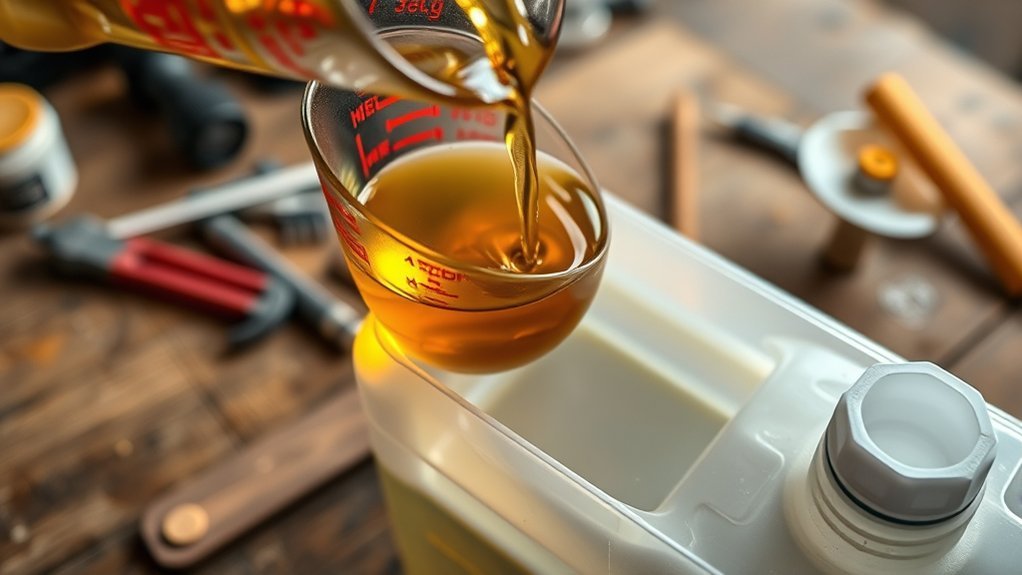
You’ll need a precise measuring cup or a graduated container to measure oil and gas accurately. This prevents incorrect ratios. A funnel helps pour fuel without spills, reducing fire risk.
Gloves protect your skin from harmful chemicals, and safety glasses shield your eyes. Keep a fire extinguisher nearby just in case. Avoid using containers previously holding other substances to prevent contamination.
Having these tools ready ensures you mix fuel correctly and safely, protecting both you and your equipment.
Step-by-Step Guide to Mixing 2 Stroke Fuel
How do you mix 2 stroke fuel accurately and safely? Start by choosing a clean, well-ventilated area. Measure the correct ratio of oil to gasoline as specified by your engine’s manual, usually 50:1 or 40:1.
Use a clean, approved container for mixing. Pour the gasoline in first, then add the 2 stroke oil. Close the container tightly and shake it vigorously for about 30 seconds to ensure thorough mixing.
Label the container clearly with the mix ratio and date. Always wear gloves to protect your skin, and keep fuel away from flames or sparks. Store the fuel mix in a cool, dry place and use it within 30 days for best performance.
Following these steps keeps your engine running smoothly and safely.
Adjusting Your 2 Stroke Fuel Mix for Different Engines
You’ll need to adjust your fuel mix depending on your engine type since ratios can vary widely. The right oil-to-gas ratio affects both performance and the engine’s longevity, so getting it wrong can cause issues.
Let’s look at how to tailor your mix to match your specific engine’s needs.
Engine Types And Ratios
Why does the fuel-to-oil ratio vary between different 2 stroke engines? It’s because each engine has unique design and lubrication needs. Smaller engines, like those in chainsaws or string trimmers, often require a leaner oil mix, such as 50:1, to run smoothly without excess smoke.
Larger engines or high-performance models may need richer mixes, like 32:1 or 40:1, to ensure adequate lubrication under heavier loads and higher temperatures. When you mix fuel, always check the manufacturer’s recommendations for your specific engine type.
Using the wrong ratio can cause poor performance, increased wear, or even engine damage. Adjusting your mix according to engine type helps maintain efficiency, prolongs engine life, and keeps your equipment running reliably.
Oil To Gas Variations
When should you adjust your 2 stroke fuel mix? You need to tailor it based on your engine’s specific requirements. Different engines, like chainsaws, dirt bikes, or lawnmowers, often call for varying oil-to-gas ratios to run smoothly.
For example, small handheld tools might need a richer oil mix, such as 40:1, while high-performance engines often require leaner mixes like 50:1. Always check the manufacturer’s recommendations before mixing.
Using too little oil can cause engine damage, while too much oil can lead to fouling and smoke. Adjust your mix to match engine size, age, and usage conditions.
Performance And Longevity Effects
Although it might seem like a minor detail, adjusting your 2 stroke fuel mix can substantially impact both your engine’s performance and its lifespan. Using the right ratio ensures optimal lubrication, preventing wear and overheating.
Too little oil risks engine damage, while too much can cause fouling and reduce power. Different engines require different mixes based on design and usage.
| Fuel Mix Ratio | Effect on Engine |
|---|---|
| Lean (e.g., 50:1) | Higher performance, less lubrication, risk of wear |
| Balanced (e.g., 40:1) | Optimal performance and longevity |
| Rich (e.g., 32:1) | Better lubrication, potential fouling, lower power |
Adjust your mix according to your engine’s needs to get the best balance of power and durability.
Tips for Storing Your Mixed 2 Stroke Fuel
Proper storage of your mixed 2 stroke fuel is essential to maintain its effectiveness and prevent damage to your equipment. Store the fuel in a clean, airtight container made of approved materials like metal or high-density plastic. Keep the container tightly sealed to avoid exposure to air, which can degrade the fuel.
Always label your container with the mixing date so you can track freshness. Store it in a cool, dry place away from direct sunlight and heat sources, as heat accelerates fuel breakdown. Avoid storing fuel near flames or sparks to prevent fire hazards.
Before using stored fuel, give it a gentle shake to mix any separated components. Following these tips helps ensure your fuel stays reliable and your engine runs smoothly.
How Long Does Mixed 2 Stroke Fuel Last?
You’ll want to know how long your mixed 2 stroke fuel stays good before it starts to break down. The shelf life depends heavily on how you store it. Cool, airtight containers help extend its freshness.
Keep an eye out for signs like a sour smell or cloudy appearance, which mean the fuel has gone bad.
Shelf Life Expectations
Since mixed 2 stroke fuel contains both gasoline and oil, its shelf life varies depending on storage conditions and fuel quality. Typically, you can expect mixed fuel to last about 30 days before it starts to degrade. After this period, the fuel may lose its combustibility and can cause engine problems.
To maximize fuel usability, consider these factors:
- Use fresh gasoline and high-quality 2 stroke oil for better stability.
- Mix only the amount you’ll use within a month to avoid waste.
- Store the mixed fuel in a sealed, clean container to slow degradation.
Keeping these points in mind helps you avoid issues like poor engine performance or starting difficulties caused by old fuel. Always check your fuel’s condition before use.
Storage Conditions Impact
How long your mixed 2 stroke fuel lasts depends heavily on how you store it. Keep the mixture in a tightly sealed, opaque container to minimize exposure to air and light, both of which accelerate fuel breakdown.
Store it in a cool, dry place away from direct sunlight and heat sources, as higher temperatures speed up chemical changes. Avoid frequent opening, which lets moisture and contaminants in, reducing fuel quality.
If you store mixed fuel in a metal container, make sure it’s designed for fuel to prevent corrosion. By controlling these factors, you can maintain your fuel’s effectiveness for up to 30 days.
Proper storage not only preserves fuel life but also ensures your engine runs smoothly when you need it most.
Signs Of Fuel Degradation
When does mixed 2 stroke fuel start to lose its effectiveness? Typically, mixed fuel begins to degrade within 30 days, especially if not stored properly. You’ll notice several signs that indicate your fuel is no longer good to use.
Watch out for these signs of fuel degradation:
- Change in color: Fresh fuel is usually clear or light amber; darkening suggests oxidation.
- Separation or sediment: If you see layers or particles at the bottom, the fuel has broken down.
- Strong or sour smell: A sharp, unpleasant odor means the fuel’s chemical balance has shifted.
If you spot any of these, it’s time to mix fresh fuel. Using degraded fuel can cause poor engine performance and damage over time.
Common Mistakes When Mixing 2 Stroke Fuel
Why do so many people struggle with mixing 2 stroke fuel correctly? One common mistake is guessing the oil-to-gas ratio instead of measuring precisely. Even a slight error can harm your engine.
Another error is using old or contaminated fuel, which reduces performance. Some skip shaking the mixture well, leaving the oil and gas unevenly blended.
You might also pour oil into the gas tank directly, rather than mixing in a separate container first. This causes poor mixing and potential engine damage.
Using the wrong type of oil or fuel is another pitfall. Finally, many don’t clean their mixing equipment regularly, leading to inaccurate measurements and buildup.
Avoid these mistakes to keep your 2 stroke engine running smoothly.
Signs Your 2 Stroke Fuel Mix Is Off
What happens if your 2 stroke fuel mix isn’t quite right? You’ll notice your engine won’t run smoothly, which can lead to bigger problems if you ignore it. Here are some common signs that tell you the mix is off:
- Engine sputtering or stalling: This often means there’s too little oil in the mix, causing insufficient lubrication.
- Excessive smoke: Too much oil creates thick, bluish smoke from the exhaust.
- Poor acceleration or power loss: The engine struggles when the fuel ratio is incorrect, impacting performance.
If you spot any of these, it’s time to adjust your fuel mix. Using the right ratio protects your engine and keeps your equipment running efficiently. Don’t overlook these signs; they’re your engine’s way of asking for the right fuel blend.
Frequently Asked Questions
Can I Use Ethanol-Free Gasoline for 2 Stroke Fuel?
Yes, you can use ethanol-free gasoline for 2 stroke fuel. It’s actually better because ethanol can damage small engines.
Just make sure to mix it properly with the right oil ratio to keep your engine running smoothly.
How Does Temperature Affect My 2 Stroke Fuel Mix?
Temperature affects your 2 stroke fuel mix by changing its evaporation rate and fuel-to-oil ratio.
Hotter temps can cause faster evaporation, so you’ll need to store fuel properly and adjust the mix to keep your engine running smoothly.
What Are the Environmental Impacts of 2 Stroke Fuel?
Burning 2-stroke fuel is like lighting a smoky candle. You release more pollutants, including hydrocarbons and carbon monoxide, which can harm air quality and wildlife. You’ll want to minimize use or switch to cleaner alternatives whenever possible.
Can I Use Synthetic Oil Instead of Regular 2 Stroke Oil?
Yes, you can use synthetic oil instead of regular 2 stroke oil. It often provides better lubrication and cleaner burning, but make sure it’s compatible with your engine to avoid potential damage or warranty issues.
How Do I Dispose of Old or Unused 2 Stroke Fuel Safely?
Old 2 stroke fuel might seem harmless, but it’s toxic and flammable. You should take it to a local hazardous waste disposal site or a recycling center.
Never pour it down drains or on the ground. You’re protecting yourself and the environment.
Conclusion
Mixing 2 stroke fuel might seem tricky, but once you get the hang of it, it’s as easy as pie. Remember, using the right oil-to-gas ratio is absolutely crucial—getting it wrong can turn your engine into a fiery dragon of trouble!
Follow the steps carefully, store your mix properly, and watch for signs that your fuel blend is off. With these tips, you’ll keep your engine running smooth and strong every time.
Properly mixing 2 stroke fuel is key to maintaining your engine’s performance and longevity.