How Long Does It Take to Patch a Tire
You can usually patch a tire in 20 to 30 minutes, whether you do it yourself or get a professional to help.
How long it takes to patch a tire depends on factors like the size and location of the puncture, your experience, and the tire’s condition and age.
Small, easy-to-access punctures take less time, while those near the sidewall may mean replacement.
Keep going, and you’ll discover how to spot damage, decide when to replace, and even speed up the patching process safely.
Key Takeaways
- DIY tire patching usually takes between 20 to 30 minutes depending on puncture size and location.
- Professional tire repairs generally take 15 to 30 minutes with higher quality results.
- Larger or more complex punctures may increase repair time or require replacement.
- Tire condition and age significantly influence the feasibility and duration of patching.
- Experience level impacts patching efficiency, with novices taking longer than professionals.
How to Quickly Diagnose Tire Damage
How can you tell if your tire needs immediate attention? Start by visually inspecting it for obvious issues like punctures, cuts, or embedded objects.
Next, check the tire’s sidewall for bulges or cracks, which indicate damage that could worsen quickly. Press on the tire to feel for soft spots or uneven firmness, signaling internal problems.
Don’t forget to monitor your tire pressure; a sudden drop often points to a leak. Listen for unusual sounds while driving, such as thumping or vibrations, which can signal tire trouble.
Lastly, if you notice your vehicle pulling to one side or experiencing poor handling, it’s a sign to inspect your tires promptly. Catching these signs early helps you act swiftly before the damage worsens.
When You Can’t Patch a Tire: Signs for Replacement
You can’t patch every tire problem, especially if you spot visible sidewall damage or extensive tread wear. Large punctures or multiple holes also mean it’s time to replace the tire.
Knowing these signs helps you stay safe on the road without wasting time on ineffective repairs.
Visible Tire Sidewall Damage
When should you consider replacing a tire instead of patching it? If you notice visible damage on the tire sidewall, it’s time to replace it. Sidewall damage, such as cuts, cracks, bulges, or bubbles, compromises the tire’s structural integrity.
Unlike tread punctures, sidewall injuries can’t be safely patched because this area flexes constantly while driving. Patching here risks sudden tire failure, which can cause accidents. Even small cracks or cuts in the sidewall are warning signs that the tire might not withstand pressure or impact.
If you spot any of these damages, don’t attempt a patch. Replace the tire immediately to ensure your safety on the road. Prioritize tire health to avoid unexpected blowouts and maintain control while driving.
Extensive Tread Wear
Why risk patching a tire with worn-out tread? When your tire’s tread is extensively worn, it can’t provide the grip and safety you need, especially in wet or slippery conditions. Patching a tire in this state won’t restore its performance or reliability.
You’ll want to check the tread depth regularly. If it’s below 2/32 of an inch, it’s time to replace the tire. Worn tread increases the chances of hydroplaning and reduces braking efficiency.
Even if you fix a puncture, worn tread means the tire’s overall integrity is compromised. So, instead of patching, focus on getting a new tire to ensure your safety and maintain proper vehicle handling.
Don’t take chances with tread that’s too far gone.
Large or Multiple Punctures
How do you know if a tire is beyond repair? Large or multiple punctures are a clear sign you can’t just patch it up. When the damage is extensive, patching won’t restore safety or performance.
You should replace the tire if you notice:
- Multiple punctures spaced close together
- A puncture larger than ¼ inch in diameter
- Damage to the sidewall or shoulder area
- Cuts or tears that penetrate deep into the tire layers
Trying to patch a tire with these issues risks blowouts or further damage. It’s safer and more cost-effective to replace the tire rather than patching it repeatedly.
Always inspect punctures carefully; some damage looks minor but isn’t safe to fix.
Typical Time to Patch a Tire and What Affects It
Wondering how much time you’ll spend fixing a flat? Typically, patching a tire takes about 20 to 30 minutes. The exact duration depends on several factors.
The location and size of the puncture affect how quickly you can access and repair it. If the puncture is in an easy-to-reach spot, you’ll finish faster.
The tire’s condition also matters; an older tire with multiple issues might take longer or be unsuitable for patching. Your experience level plays a role, too. If you’ve patched tires before, you’ll be more efficient.
Finally, the tools and materials you have on hand can speed up or slow down the process. Understanding these factors helps set realistic expectations for the repair time.
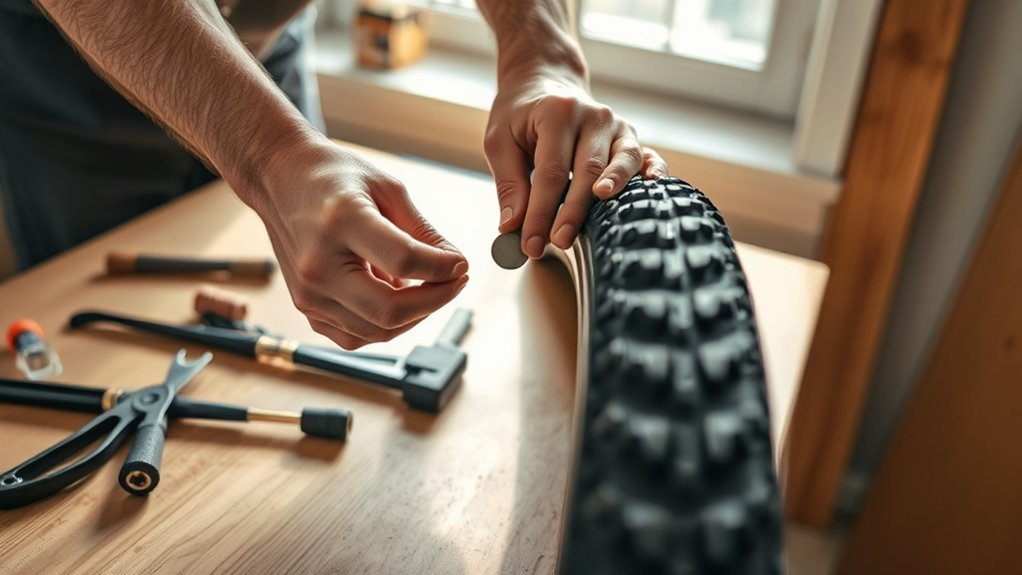
DIY Tire Patching: Step-by-Step Guide
Knowing the factors that affect patching time can help you prepare better before you start the repair. Here’s a simple DIY tire patching guide to get you back on the road quickly:
Locate the puncture: Inflate the tire and listen or look for escaping air bubbles.
Remove the tire: Take the tire off the wheel for easier access.
Prepare the puncture: Use sandpaper or a rasp tool to roughen the puncture area.
Apply the patch: Spread vulcanizing cement, wait briefly, then press the patch firmly over the hole.
Make sure to let the patch cure as recommended before reinflating the tire. With the right tools and focus, you can complete this in about 30 to 45 minutes, saving you both time and money.
How Professional Tire Patching Compares in Time and Quality
Why should you consider professional tire patching over a DIY fix? Professionals usually complete the job much faster because they have specialized tools and experience. While a DIY patch can take 30 minutes to an hour, a technician often finishes in 15 to 30 minutes without compromising quality.
They also ensure the patch is applied correctly, preventing leaks or blowouts that might happen if you miss a step. Plus, pros inspect the tire thoroughly, spotting damage you might overlook.
Their patches tend to last longer and maintain the tire’s safety and performance better than most DIY attempts. So, if you want a reliable, quick fix that keeps you safe on the road, professional tire patching is worth the investment.
Tips to Speed Up Tire Patching Safely
To patch your tire quickly and safely, make sure you have all your tools ready before you start.
Clean the tire thoroughly to ensure the patch sticks properly. Then, follow the step-by-step instructions carefully to avoid mistakes and save time.
Prepare Tools In Advance
How quickly can you gather the right tools before starting a tire patch? Preparing everything in advance saves you time and prevents interruptions during the repair.
You’ll want to have these essentials ready:
- Tire patch kit (including patches and vulcanizing glue)
- Tire levers or a flathead screwdriver to remove the tire
- Sandpaper or a metal rasp for roughening the puncture area
- A valve core tool to deflate and inflate the tire
Having these tools at hand means you won’t waste time searching mid-repair. You’ll move smoothly through each step, making the patching process quicker and safer.
Don’t skip this prep. Being organized sets the stage for a successful tire patch every time.
Clean Tire Thoroughly
A clean tire surface guarantees your patch sticks properly and lasts longer. Before you apply the patch, remove any dirt, debris, or grease from the damaged area. Use a wire brush or sandpaper to roughen the surface slightly; this helps the adhesive bond better.
Wipe away dust and residue with a clean cloth or a bit of rubbing alcohol. Avoid skipping this step, as leftover grime can cause the patch to peel off prematurely. Take your time here—it only takes a few minutes, but it makes a big difference in patch durability.
Follow Step-by-Step Instructions
Why waste time guessing the next step when you can follow clear, proven instructions? Sticking to a step-by-step guide helps you patch your tire quickly and safely without mistakes.
Here’s how to stay on track:
Inspect the tire carefully to locate the puncture.
Remove any debris and prepare the surface by roughening it.
Apply the patch adhesive evenly and wait for it to become tacky.
Press the patch firmly onto the tire, ensuring no air bubbles remain.
Frequently Asked Questions
What Materials Are Needed for Tire Patching?
You’ll need a tire patch kit, including vulcanizing cement, a tire patch, and a rasp tool to roughen the surface.
Also, tire levers, a chalk or marker, and sometimes rubber gloves to keep things clean while you work.
Can Patched Tires Handle High-Speed Driving?
Like Icarus reaching too close to the sun, you shouldn’t push patched tires to high speeds. While a proper patch restores integrity, it’s best you avoid extreme velocities to ensure safety and prevent further damage.
How Much Does Professional Tire Patching Cost?
You’ll usually pay between $10 and $30 for professional tire patching. Prices can vary depending on the shop and tire damage, but it’s a quick, affordable fix that keeps your tire safe and road-ready.
Are Tire Sealants Effective for Temporary Repairs?
Tire sealants are a quick band-aid, but they’re only effective for temporary repairs. You’ll patch small punctures fast, but don’t rely on them long-term. Getting a professional fix is the real safety net for your tire.
How Often Can a Tire Be Safely Patched?
You can safely patch a tire up to two times, as long as the damage is within the repairable area.
Always inspect the tire thoroughly and replace it if the damage is too severe or near the sidewall.
Conclusion
To patch a tire is like mending a small tear in your journey’s fabric—quick fixes can keep you moving, but knowing when to replace is key to staying safe. Whether you choose DIY speed or professional care, the time you invest ensures your ride stays smooth.
Remember, each patch is a stitch in your travel story, so patch wisely and keep your wheels turning confidently down the road ahead. Understanding how long it takes to patch a tire helps you prepare for the best care and timely maintenance.