How to Test Wheel Speed Sensor
To test your wheel speed sensor, first locate it near the wheel hub or brake assembly. Inspect the sensor for any visible damage or wiring issues that could affect its function.
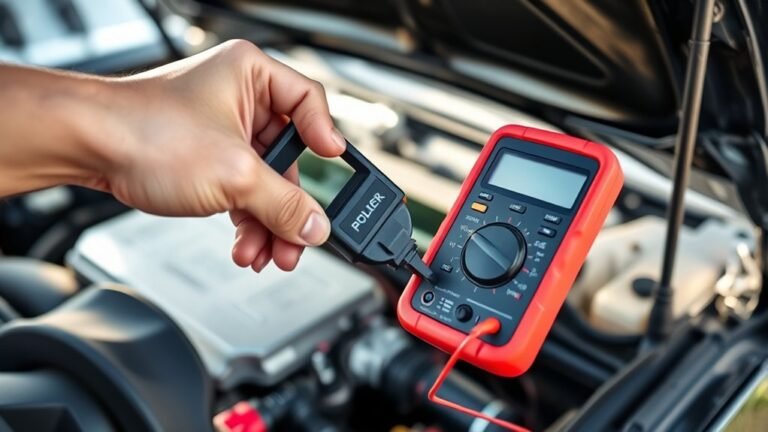
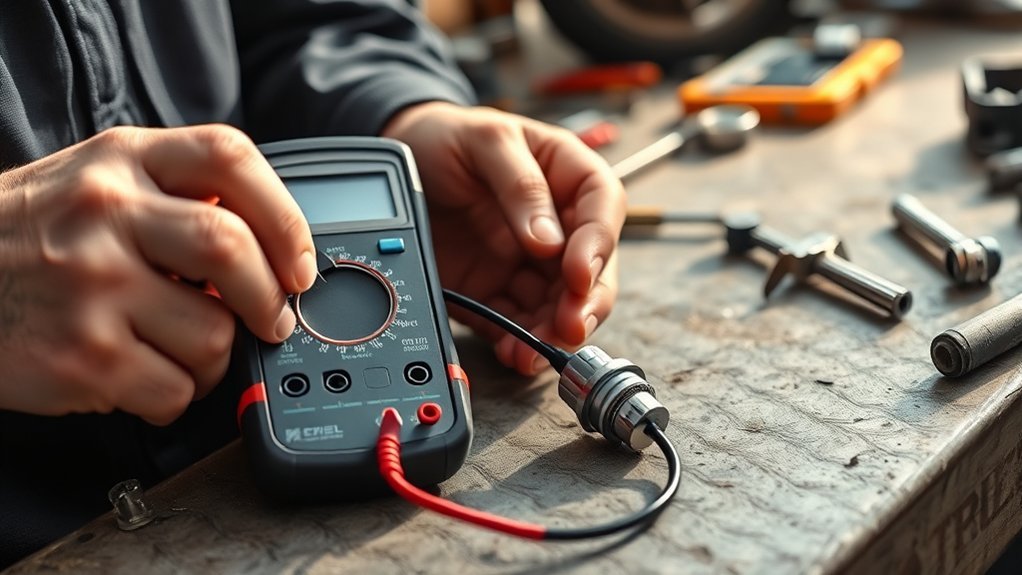
Next, use a multimeter to check the sensor’s resistance. Disconnect the connector and compare the readings to the manufacturer’s specifications to ensure accuracy.
After that, connect an oscilloscope or an AC voltage meter to the sensor. Spin the wheel slowly and observe the sensor signal. Consistent signals indicate the sensor is working properly, while erratic or absent signals suggest a fault.
Keep reading to discover more detailed steps and troubleshooting tips for testing your wheel speed sensor effectively.
Key Takeaways
- Visually inspect the wheel speed sensor and wiring for damage, corrosion, or loose connections before electrical testing.
- Use a multimeter to measure sensor resistance, comparing readings to manufacturer specifications for faults.
- Spin the wheel slowly and use an oscilloscope or AC voltage meter to observe sensor signal pulses.
- Check sensor connectors for secure locking tabs and clean, dry contacts to ensure proper electrical connection.
- Interpret results by confirming consistent voltage or frequency output; clean or replace sensor if signals are erratic or absent.
What Is a Wheel Speed Sensor and Why Test It?
Understanding what a wheel speed sensor does is key to diagnosing vehicle issues effectively. This sensor monitors the rotational speed of each wheel and sends this data to your car’s anti-lock braking system (ABS) and traction control system.
If a sensor malfunctions, your ABS or traction control might not work properly, leading to safety concerns and warning lights on your dashboard.
You’ll want to test the sensor to ensure it’s providing accurate information. Faulty readings can cause erratic braking or loss of control on slippery surfaces.
Testing helps you pinpoint whether the sensor itself is the problem or if another component is at fault. By staying proactive, you keep your vehicle safe and maintain optimal performance.
How to Locate Your Wheel Speed Sensor
To locate your wheel speed sensor, start by checking near the wheel hubs or brake assemblies where these sensors are commonly mounted. Look for small, wired connectors attached to the sensor itself. Identifying these connectors will help you access and test the sensor properly.
Common Sensor Locations
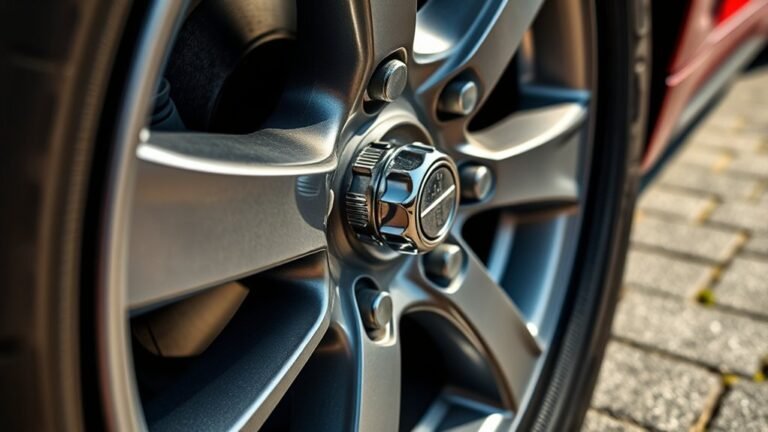
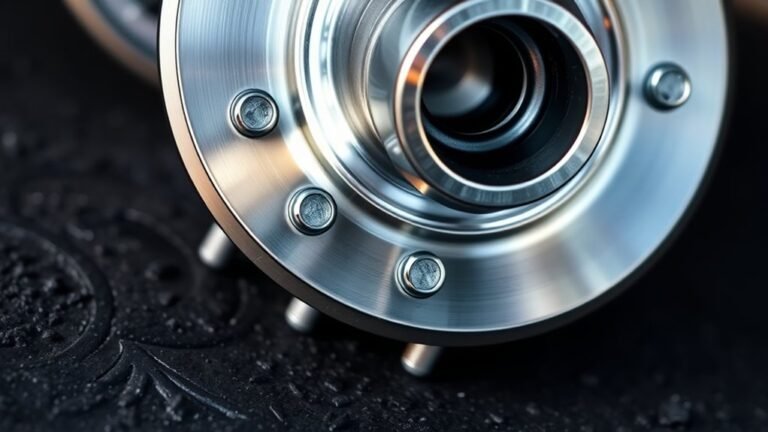
Where exactly can you find the wheel speed sensor on your vehicle? Typically, these sensors are mounted close to the wheel hub or the brake rotor, often near the wheel bearing assembly.
On most cars, you’ll spot them behind the brake disc or drum, secured with a small bolt or clip. Some vehicles place sensors on the axle shaft or inside the wheel hub itself.
You might also find them near the tone ring or reluctor ring, which the sensor reads to measure wheel speed. Keep in mind, locations can vary based on the make and model, but checking around the wheels, especially the front ones, is a reliable start.
Knowing these common locations helps you access the sensor quickly for testing or replacement.
Identifying Sensor Connectors
How can you quickly find the wheel speed sensor connector when you’re under the vehicle? Start by locating the sensor itself near the wheel hub or brake rotor. Follow the wiring harness from the sensor; the connector will usually be close by, often clipped to the suspension or frame.
Look for a small, waterproof plastic plug with two to four wires. These connectors often have locking tabs to keep them secure, so gently press or lift the tab to disconnect. If you’re unsure, consult your vehicle’s service manual or wiring diagrams for exact connector locations and colors.
Identifying the correct connector ensures accurate testing without damaging other components or mixing up sensors, making your diagnostic process smoother and more efficient.
What Tools You Need to Test a Wheel Speed Sensor
Testing a wheel speed sensor requires a few essential tools that help you accurately diagnose its condition. With the right equipment, you’ll save time and avoid guesswork when checking for faults.
Here are three key tools you’ll need:
- Multimeter Use this to measure resistance and voltage, ensuring the sensor’s electrical signals are within specifications.
- Oscilloscope This tool lets you see the sensor’s waveform in real-time, revealing issues that a multimeter might miss.
- Scan Tool/OBD-II Reader Connect this to your vehicle’s computer to read error codes related to the wheel speed sensor and monitor live data.
Having these tools ready sets you up for an accurate and efficient sensor test.
How to Visually Inspect the Wheel Speed Sensor for Damage
Start by closely examining the sensor housing for any cracks or damage that could affect its function. Then, check the wiring and connectors for signs of wear, corrosion, or loose connections.
Catching these issues early can save you from inaccurate readings later on.
Check Sensor Housing Integrity
Before you explore electrical testing, take a close look at the wheel speed sensor’s housing for any visible signs of damage. The sensor housing protects the internal components from dirt, moisture, and mechanical impacts, so any compromise here can affect sensor performance.
Check for:
- Cracks or breaks in the plastic or metal casing that might allow contaminants inside.
- Signs of corrosion or rust on the housing surface, indicating exposure to moisture.
- Loose or missing mounting hardware that could cause the sensor to shift or vibrate during operation.
If you spot any of these issues, the sensor might not function properly and could need replacement. Ensuring the housing integrity is a critical first step before moving on to electrical diagnostics.
Inspect Wiring And Connectors
Once you’ve confirmed the sensor housing is intact, turn your attention to the wiring and connectors. Carefully examine the wires for any signs of wear, cracks, or fraying.
Pay close attention to areas where the wiring bends or passes through tight spaces, as these spots are prone to damage. Next, inspect the connectors for corrosion, dirt, or loose pins that might disrupt the signal.
If you spot corrosion, gently clean it with electrical contact cleaner. Make sure connectors fit snugly without any wiggle. Damaged or loose wiring and connectors can cause intermittent sensor readings or failure.
Address any issues you find by repairing or replacing the damaged components before proceeding to electrical tests, ensuring accurate sensor performance.
Testing Wheel Speed Sensor Resistance With a Multimeter
How can you determine if your wheel speed sensor is functioning properly? Testing its resistance with a multimeter is a straightforward method. To do this:
- Disconnect the wheel speed sensor connector to isolate it from the vehicle’s wiring.
- Set your multimeter to the ohms (Ω) setting and place the probes on the sensor terminals.
- Compare the reading to the manufacturer’s specifications, usually found in the service manual.
A resistance value markedly higher or lower than the specified range indicates a faulty sensor. Keep in mind, an open circuit or infinite reading means the sensor coil may be damaged. By accurately measuring resistance, you can quickly identify if the sensor needs replacement before moving on to more complex diagnostics.
How to Check Wheel Speed Sensor Signal While Spinning the Wheel
Measuring resistance gives you a good idea if the wheel speed sensor’s coil is intact, but it doesn’t show how the sensor performs under real conditions. To check the sensor signal, connect an oscilloscope or a multimeter set to AC voltage to the sensor’s output wires.
Then, spin the wheel by hand slowly and steadily. Watch for a fluctuating voltage signal, which indicates the sensor is generating pulses as the wheel spins.
| Step | Action | Expected Result |
|---|---|---|
| 1 | Connect test device | Ready to read signal |
| 2 | Spin the wheel slowly | Signal voltage fluctuates |
| 3 | Spin faster | Signal frequency rises |
| 4 | Stop spinning | Signal drops to zero |
| 5 | Repeat for all sensors | Consistent signal output |
How to Interpret and Act on Your Wheel Speed Sensor Test Results
Wondering what your wheel speed sensor test results actually mean? Understanding these results is key to deciding your next move. Here’s how to interpret and act on them:
- Normal Readings: If the sensor outputs consistent voltage or frequency signals while spinning, your sensor is likely healthy. Just ensure all connections are secure.
- No Signal or Intermittent Output: This often indicates a faulty sensor or wiring issues. Check for damaged cables or connectors, then consider replacing the sensor if problems persist.
- Erratic or Weak Signal: Dirt, debris, or a misaligned sensor might be the culprit. Clean the sensor and the tone ring, then retest to confirm.
Frequently Asked Questions
Can a Faulty Wheel Speed Sensor Cause ABS Warning Lights?
Yes, a faulty wheel speed sensor can cause ABS warning lights to come on. You’ll notice the system detects inaccurate wheel speed data, triggering the light to alert you of a potential problem with your ABS.
How Often Should Wheel Speed Sensors Be Tested?
You should test your wheel speed sensors every 12,000 miles, every year, or whenever you notice ABS warnings. Checking regularly keeps your brakes responsive, your drives safer, and your sensors functioning properly without surprises.
Are Wheel Speed Sensors Universal or Vehicle-Specific?
Wheel speed sensors aren’t universal; they’re vehicle-specific. You’ll find different designs, connectors, and calibration requirements depending on your car’s make and model.
Always get the exact sensor that matches your vehicle for proper function.
Can Wheel Speed Sensor Issues Affect Traction Control?
Imagine driving on ice. Your traction control helps keep you steady. If your wheel speed sensor acts up, you’ll lose that grip.
Is It Safe to Drive With a Bad Wheel Speed Sensor?
It’s not safe to drive with a bad wheel speed sensor because it can disable your ABS and traction control, increasing the risk of skidding or accidents.
Get it fixed promptly to keep your driving safe and reliable.
Conclusion
Just like a doctor uses a stethoscope to listen to your heartbeat, testing your wheel speed sensor helps you hear your car’s “pulse.” Imagine ignoring a faulty sensor—it’s like missing a warning sign before a heart attack.
By regularly checking your sensor’s resistance and signal, you catch issues early, keeping your ABS and traction control in check.
Remember, a quick test can save you from costly repairs and keep your ride safe on every turn. Regularly performing a wheel speed sensor test is essential for maintaining your vehicle’s safety and performance.