Does 4 Wheel Drive Help on Ice
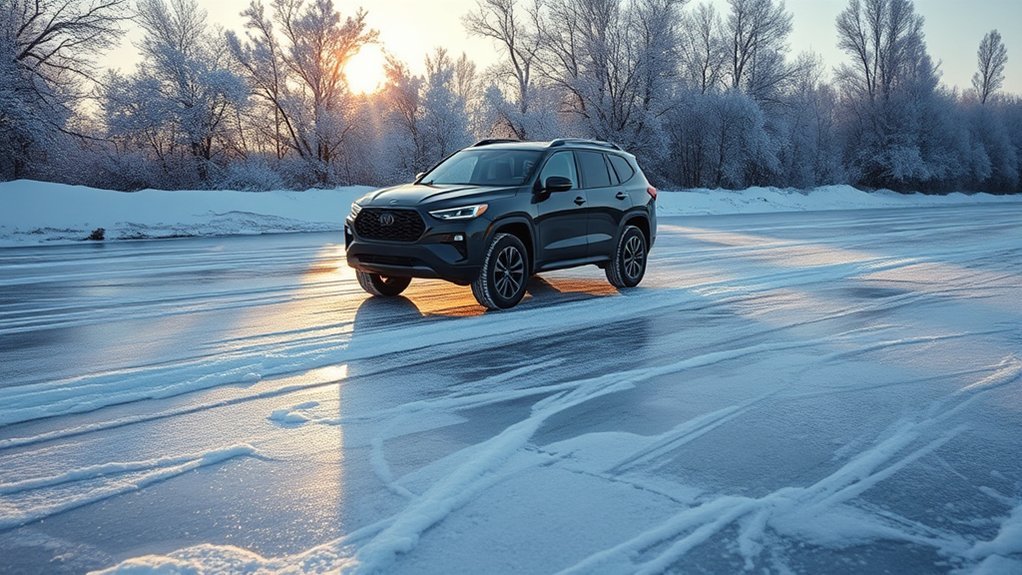
Yes, 4-wheel drive helps you get moving and maintain traction on ice by sending power to all wheels, reducing wheel spin and improving stability during gentle turns. This feature can make a noticeable difference when starting from a stop or navigating slippery patches.
However, it doesn’t make your vehicle invincible—you still need good tires, smooth steering, and cautious braking to stay safe. 4WD boosts acceleration but won’t prevent sliding or aid in stopping.
Keep these limits in mind, and you’ll find smarter ways to handle icy roads ahead.
Key Takeaways
- 4WD improves starting and forward momentum by sending power to all four wheels, reducing the chance of getting stuck on ice.
- It enhances traction and stabilizes handling during gentle turns but does not improve braking or steering on icy surfaces.
- 4WD helps prevent wheel spin and provides more predictable acceleration compared to two-wheel drive on ice.
- Despite traction benefits, 4WD cannot stop sliding during sharp turns or sudden maneuvers on ice.
- Safe driving with reduced speed, smooth inputs, and proper winter tires remains essential regardless of 4WD capability.
What 4WD Can and Can’t Do on Ice
How well does 4WD really help when you’re driving on ice? It can improve your ability to start moving and maintain forward momentum since power goes to all four wheels. This means you’re less likely to get stuck when accelerating.
However, 4WD doesn’t make your vehicle invincible on ice. It won’t help much when you need to stop or slow down. Your tires still need good traction to grip the icy surface.
Also, 4WD can’t prevent sliding during sharp turns or sudden maneuvers. You still must drive cautiously and adjust your speed accordingly. So, while 4WD boosts your chances of moving on ice, it doesn’t replace safe driving practices or the need for proper tires designed for icy conditions.
How 4WD Affects Traction and Handling on Ice
Why does 4WD make a difference in traction and handling on ice? It sends power to all four wheels, which helps you maintain better grip on slippery surfaces. When ice reduces the friction between tires and the road, having all wheels engaged means you’re less likely to lose traction compared to just two wheels driving the vehicle.
This balanced power distribution stabilizes your ride, making handling more predictable. You’ll notice improved acceleration and fewer wheel spins during starts. Plus, 4WD can help you navigate gentle turns with more confidence because power isn’t concentrated on just one axle.
However, remember that while 4WD aids traction, it doesn’t change how your tires interact with ice or how your vehicle responds during sudden maneuvers.
Why 4WD Doesn’t Guarantee Control on Ice
Even though 4WD improves traction by powering all four wheels, it doesn’t guarantee you’ll have full control on ice. Ice drastically reduces friction, meaning your tires can still slip despite the extra power.
4WD boosts traction but can’t prevent slipping on ice due to drastically reduced friction.
4WD helps you start moving, but it doesn’t improve your ability to stop or steer on slippery surfaces. So, even if you can accelerate, you might struggle to avoid hazards or maintain your lane.
Additionally, 4WD can give a false sense of security, tempting you to drive faster than conditions allow. Remember, 4WD aids traction but doesn’t enhance braking or cornering grip.
You must still rely on careful driving, proper tires, and awareness of your vehicle’s limits to stay safe on icy roads.
Best Tips for Driving Safely on Ice With 4WD
When driving on ice with 4WD, what steps can you take to stay safe and maintain control? First, reduce your speed significantly; 4WD helps with traction but doesn’t improve braking or steering. Keep a greater following distance to allow extra stopping time.
Avoid sudden movements. Accelerate, brake, and steer smoothly to prevent skidding. Use low gear to maintain steady momentum, especially on inclines. If your vehicle has traction control, keep it engaged.
Always equip your tires with proper winter or studded tires for better grip. Remember, 4WD aids in getting moving, not stopping, so plan accordingly. Finally, stay alert and anticipate ice patches, adjusting your driving to conditions.
These tips help you make the most of your 4WD safely on ice.
Frequently Asked Questions
Can 4WD Improve Fuel Efficiency in Icy Conditions?
No, 4WD won’t improve your fuel efficiency in icy conditions. It actually uses more fuel because it powers all four wheels.
You’ll get better traction, but expect your gas mileage to drop slightly.
Does 4WD Increase Tire Wear on Ice?
Like Icarus flying too close to the sun, using 4WD aggressively on ice can increase tire wear. But if you drive smoothly, you won’t burn through your tires any faster than usual on icy roads.
Are All 4WD Systems Equally Effective on Ice?
No, not all 4WD systems are equally effective on ice. You’ll find some offer better traction control and power distribution, while others might struggle.
Your vehicle’s design and technology play a big role in performance.
Can 4WD Help With Uphill Driving on Ice?
Yes, 4WD can help you drive uphill on ice by distributing power to all wheels, improving traction. However, you still need to be cautious. Slow, steady acceleration is key to avoid slipping or losing control.
Is 4WD Better Than AWD for Icy Roads?
You might think 4WD is better, but AWD actually outperforms it on icy roads by automatically distributing power to all wheels without input.
You’ll enjoy safer, smoother driving with AWD’s constant traction control.
Conclusion
While 4WD can improve your traction on ice, it doesn’t guarantee full control or prevent slipping. In fact, studies show that 4WD vehicles are involved in about 20% more ice-related crashes than expected, mostly because drivers overestimate their capabilities.
So, even with 4WD, you need to drive cautiously, reduce speed, and avoid sudden maneuvers. Remember, 4WD helps you get moving, but it won’t stop you faster or keep you from sliding on ice.
In conclusion, while 4WD can be beneficial, it is not a foolproof solution. Understanding how 4 wheel drive helps on ice is crucial for safe driving.