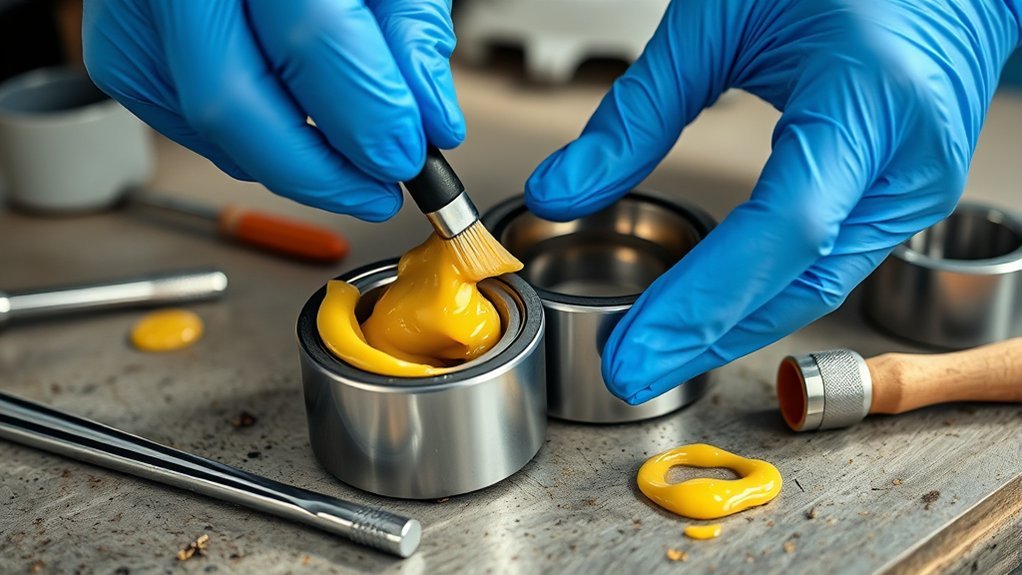
How to Pack Wheel Bearings
To pack your wheel bearings, start by removing them safely using proper tools. This essential step ensures you can work on the bearings without causing damage.
Next, clean off old grease thoroughly to prepare for fresh lubrication.
Use a high-temperature, water-resistant grease and press it into the bearing while rotating it to spread evenly.
Applying extra grease inside the hub before reinserting the bearings helps provide additional protection.
Reassemble carefully, ensuring proper seating and secure components to protect against dirt and moisture.
Doing this keeps your wheels smooth and prevents costly damage.
Keep going to uncover tips for inspection, reassembly, and testing.
Key Takeaways
- Clean bearings thoroughly by removing old grease and drying completely before packing.
- Use high-temperature, water-resistant grease compatible with your bearings for effective lubrication.
- Press grease into bearings by hand or with a bearing packer, rotating to evenly distribute grease.
- Apply a generous layer of grease inside the hub before reinserting packed bearings.
- Reassemble components carefully, tighten spindle nut while rotating the hub, and confirm smooth bearing operation.
Why You Should Pack Your Wheel Bearings Right
Properly packing your wheel bearings ensures they stay lubricated, reduces friction, and prevents premature wear. When you do it right, you’re protecting the bearings from dirt, water, and heat, which can cause rust and damage.
This means your wheels will spin smoothly and last longer, saving you from costly repairs or replacements. If you skip or rush this step, you risk overheating or seizing bearings, which can lead to dangerous driving conditions.
Essential Tools and Grease for Packing Wheel Bearings
What tools do you need to pack your wheel bearings effectively? First, you’ll want a quality grease gun or your hands for applying grease thoroughly. Next, gather these essentials:
- High-temperature wheel bearing grease Choose a grease rated for extreme pressure and heat resistance to ensure long-lasting protection.
- Clean rags or paper towels Keep your workspace tidy and wipe off excess grease.
- A small flathead screwdriver or bearing packer tool This helps you push grease deep into the bearing rollers.
Using the right tools and grease prevents premature wear and overheating. Make certain your grease is fresh and compatible with your bearings. With these essentials, you’re set to pack your wheel bearings efficiently and extend their life.
How to Remove Wheel Bearings Safely
When do you know it’s time to remove your wheel bearings? If you notice grinding noises, rough wheel rotation, or excessive play in the wheel, it’s time to act.
Start by safely lifting and securing your vehicle on jack stands. Remove the wheel, then the brake components to access the hub. Carefully take off the dust cap and loosen the axle nut.
Use a bearing puller or gently tap the hub to free the bearings without damaging them.
| Step | Action |
|---|---|
| 1. Lift Vehicle | Use jack stands for stability |
| 2. Remove Wheel | Take off lug nuts and wheel |
| 3. Access Bearings | Remove brake parts and hub |
| 4. Extract Bearings | Use puller or light tapping |
Always work methodically to avoid injury or damage.
How to Clean and Inspect Wheel Bearings for Damage
First, you’ll need to remove all the old grease from the bearings to get a clear look at their condition. Use the right cleaning tools and techniques to thoroughly clean each part without causing damage.
Then, inspect the bearings carefully for any signs of wear or damage before moving on.
Removing Old Grease
How do you effectively remove old grease from wheel bearings without causing damage? First, you’ll want to soak the bearings in a solvent like mineral spirits or a dedicated bearing cleaner. This breaks down the grease without harming the metal.
Next, use a soft brush or cloth to gently scrub off any remaining residue. Avoid sharp tools that can scratch the bearings. Finally, rinse the bearings thoroughly with clean solvent to wash away loosened grease and dirt.
After rinsing, let them air dry completely before moving on.
- Soak bearings in solvent to dissolve old grease.
- Gently scrub with a soft brush or cloth.
- Rinse thoroughly and air dry to prevent moisture buildup.
Following these steps ensures your bearings are clean and ready for inspection.
Checking Bearing Condition
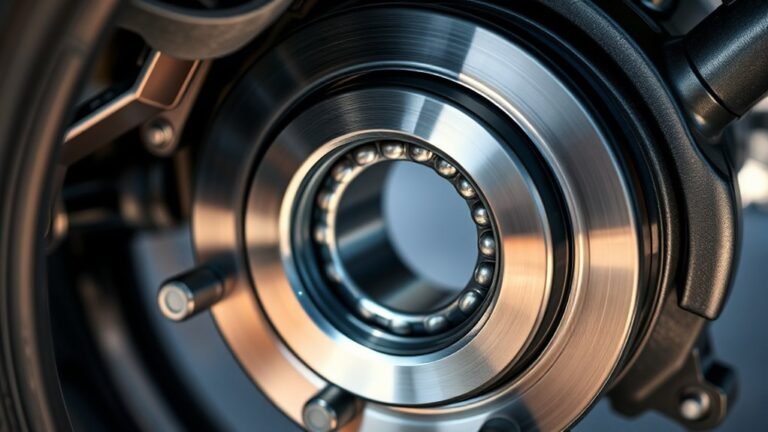
Once you’ve thoroughly cleaned and dried your wheel bearings, it’s time to check their condition for signs of wear or damage. First, inspect the bearings visually for cracks, corrosion, or pitting on the rollers and race surfaces.
Run your fingers over the rollers to feel for any roughness or unevenness, which indicates wear. Spin the bearings gently; they should rotate smoothly without resistance or grinding noises.
Also, check the bearing cages for any distortion or broken parts. Don’t ignore discoloration, as it might signal overheating. If you spot any signs of damage, replace the bearings immediately to avoid future failures.
Taking these steps ensures your wheel bearings are in good shape before you pack them with grease and reinstall them safely.
Cleaning Techniques and Tools
Where should you begin when cleaning wheel bearings to guarantee they function smoothly? Start by removing old grease and grime thoroughly. Use a dedicated solvent or brake cleaner to dissolve contaminants without damaging bearings. Then, gently scrub with a soft brush to avoid scratching surfaces.
Follow these steps:
- Soak bearings in a cleaning solvent for 10-15 minutes to loosen debris.
- Use a nylon brush to carefully remove remaining dirt and inspect each roller or ball.
- Dry bearings completely with compressed air or a lint-free cloth to prevent rust.
Avoid harsh tools like metal brushes or wire wheels, which can cause damage. Proper cleaning ensures you catch any hidden damage early and prepares bearings for fresh grease, extending their lifespan.
How to Pack Your Wheel Bearings With Grease
Now that your bearings are clean and inspected, it’s time to pack them with the right grease. You’ll want to follow a clear step-by-step process to ensure every part is properly coated.
Avoid common mistakes like using the wrong grease or missing spots to keep your wheels running smoothly.
Choosing The Right Grease
How do you know which grease is best for your wheel bearings? Choosing the right grease ensures smooth operation and longevity. Here’s what you should consider:
- Temperature Resistance: Pick a grease that handles the heat generated by your bearings, especially if you drive in hot climates or tow heavy loads.
- Water Resistance: Your grease should repel water to prevent rust and corrosion, particularly if you encounter wet or muddy conditions.
- Compatibility: Use grease compatible with your bearing seals and materials to avoid damage or breakdown.
Opt for high-quality, automotive-grade bearing grease that meets these criteria. Avoid general-purpose greases; they often lack essential additives. Selecting the right grease sets the foundation for effective packing and bearing protection.
Step-by-Step Packing Process
After selecting the right grease for your wheel bearings, you’re ready to pack them properly to assure smooth performance. Start by placing a dollop of grease in the palm of your hand.
Take a bearing and press it into the grease, forcing the lubricant through the rollers. Rotate the bearing, working the grease evenly throughout.
Continue this process until the bearing feels thoroughly coated and no gaps remain. Next, apply a generous layer of grease inside the hub where the bearing sits.
Insert the packed bearing back into the hub carefully. Repeat the packing process for the outer bearing if applicable.
Finally, secure the bearings with the spindle nut and any retaining components. Proper packing ensures longevity and reduces friction during wheel rotation.
Common Mistakes To Avoid
Although packing wheel bearings might seem straightforward, skipping key steps or using improper techniques can lead to premature wear and performance issues. To ensure your bearings last and function properly, avoid these common mistakes:
- Using the wrong grease: Always use high-quality, wheel-bearing-specific grease. Regular grease won’t handle heat and pressure, risking damage.
- Insufficient grease coverage: Don’t just lightly coat the bearings. Pack grease thoroughly between each roller and around the races to prevent metal-on-metal contact.
- Contaminated grease or bearings: Avoid dirt or water contamination. Clean bearings and use fresh grease to maintain smooth operation and prevent corrosion.
How to Reassemble and Test Packed Wheel Bearings
Once you’ve packed the wheel bearings with grease, you’ll need to carefully reassemble them to ensure smooth operation. Begin by placing the inner bearing back into the hub, followed by the grease seal, making sure it sits flush.
Slide the hub onto the spindle, then insert the outer bearing. Next, secure the assembly with the washer and spindle nut. Tighten the nut while rotating the hub to seat the bearings properly, then back off slightly to avoid overtightening.
Install the cotter pin and dust cap to protect against dirt and moisture. Finally, spin the wheel by hand to check for smooth rotation and listen for any unusual noises. If everything feels right, your bearings are correctly reassembled and ready for safe use.
Frequently Asked Questions
How Often Should Wheel Bearings Be Repacked?
You should repack your wheel bearings every 12,000 to 15,000 miles or once a year, especially if you drive in harsh conditions.
Regular maintenance keeps them running smoothly and prevents costly damage down the road.
Can I Use Any Type of Grease for Wheel Bearings?
You can’t use just any grease for wheel bearings; you need high-temperature, water-resistant bearing grease. Using the wrong type risks damage and failure, so always choose grease specified for wheel bearings to keep them running smoothly.
What Are the Signs of a Failing Wheel Bearing?
You’ll notice humming or grinding noises, especially when turning. Your wheel might wobble or feel loose, and uneven tire wear can appear.
Vibration in the steering wheel is another sign you shouldn’t ignore. Check it ASAP!
Is Professional Help Needed for Bearing Replacement?
You don’t always need professional help for bearing replacement if you’re confident with tools and procedures. However, if you’re unsure or lack experience, it’s best to let a professional handle it to avoid damage or safety risks.
How Do Weather Conditions Affect Wheel Bearing Maintenance?
You’ll find that extreme weather, like rain or snow, can wash away grease and cause rust. So, you’ll need to check and repack your wheel bearings more often to keep them running smoothly and avoid damage.
Conclusion
Packing your wheel bearings right means smoother rides, longer bearing life, and safer travels. You’ll remove old grease carefully, clean and inspect for damage thoroughly, and pack fresh grease evenly. Then, you’ll reassemble everything securely and test your work confidently.
By following each step with care and precision, you’ll guarantee your wheels roll smoothly and your journeys stay worry-free. Keep your bearings packed, your wheels turning, and your adventures rolling strong! Properly packing your wheel bearings is key to maintaining optimal performance and safety.