
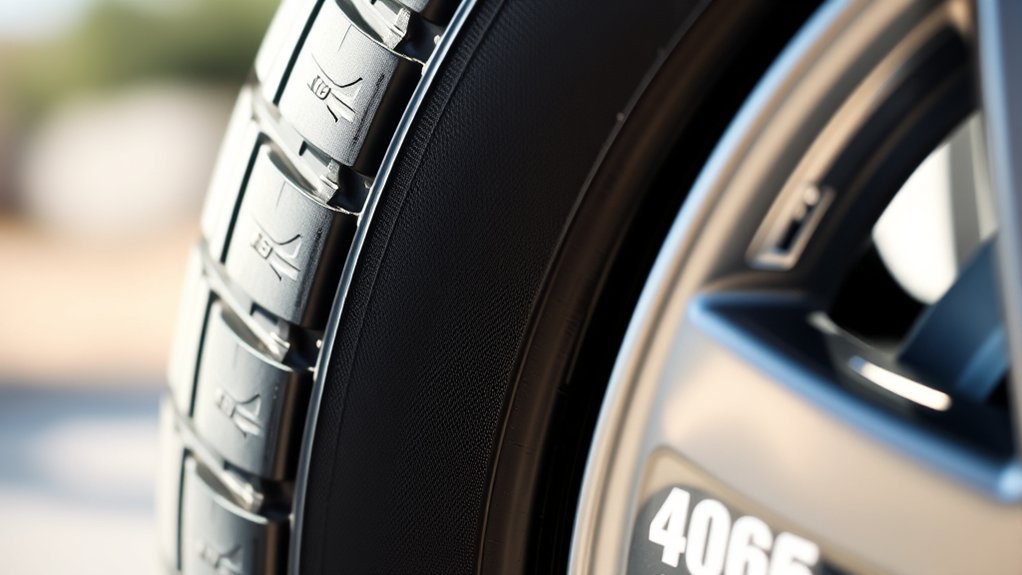
How to Read Tire Numbers
When you look at tire numbers like P215/65R15 95H, you’re seeing key info about width (215 mm), aspect ratio (65%), construction type (R for radial), and wheel diameter (15 inches).
Understanding how to read tire numbers is essential for selecting the right tires for your vehicle.
The load index (95) shows the maximum weight capacity, while the speed rating (H) indicates safe speed limits. You’ll also find the manufacture date in the DOT code.
Knowing these details helps you pick tires that fit and perform safely. Stick around to uncover more essential insights.
Key Takeaways
- The first number indicates tire width in millimeters, measured from sidewall to sidewall.
- The aspect ratio number shows sidewall height as a percentage of the tire’s width.
- The letter following width and aspect ratio denotes tire construction type, such as R for radial.
- The diameter number indicates the wheel size in inches that the tire fits.
- Load index and speed rating numbers indicate maximum weight capacity and safe speed limits for the tire.
Basics of Tire Numbers and Why They Matter
Why do tire numbers matter to you? Because they hold essential information about your tire’s performance, safety, and compatibility with your vehicle. When you understand these numbers, you can choose the right tire that fits your car perfectly, ensuring better handling, fuel efficiency, and durability.
Ignoring them might lead to poor performance or even dangerous situations on the road. Tire numbers also help you maintain consistency when replacing tires, which keeps your vehicle balanced and stable.
How to Read Tire Width, Aspect Ratio, and Diameter
Every tire number includes key measurements like width, aspect ratio, and diameter, which you need to understand to pick the right tire. The first number you see is the tire width, measured in millimeters from sidewall to sidewall. For example, a width of 225 means the tire is 225 mm wide.
Next comes the aspect ratio, which shows the tire’s sidewall height as a percentage of its width. If the number is 50, the sidewall height is 50% of the 225 mm width, or about 112.5 mm.
Finally, the diameter indicates the wheel size the tire fits, measured in inches. So, a 17 means the tire fits a 17-inch wheel. Understanding these numbers helps you choose tires that fit and perform properly.
Reading Tire Construction Codes on the Sidewall
How can you tell what a tire’s construction is just by looking at its sidewall? You’ll find a letter or combination of letters indicating the tire’s construction type right before the tire width number. These codes tell you whether the tire is bias-ply, radial, or another type.
Knowing this helps you understand the tire’s performance and durability.
Here’s a quick guide:
| Code | Construction Type | What It Means |
|---|---|---|
| B | Bias Ply | Layers crisscrossed |
| R | Radial | Layers run radially |
| D | Diagonal | Similar to Bias Ply |
Look for these letters to quickly identify tire construction on the sidewall.
What Tire Load Index Means and Why It Matters
You need to understand what the tire load index numbers mean before choosing tires. These load ratings tell you how much weight each tire can safely carry.
Knowing this helps you keep your vehicle safe and avoid tire damage.
Understanding Load Index Numbers
Why does the load index number on your tire really matter? It tells you the maximum weight each tire can safely carry. Ignoring this number can lead to tire failure, poor handling, and unsafe driving conditions.
The load index is a numerical code found on your tire’s sidewall. To understand it, remember these points:
- It corresponds to a specific weight capacity listed in load index charts.
- Choosing tires with the correct load index ensures your vehicle supports its weight and cargo safely.
- Overloading beyond this limit stresses your tires, increasing wear and the risk of blowouts.
Importance of Load Ratings
The load index number doesn’t just provide a weight limit; it defines the safety margin your tires offer under various driving conditions. When you choose tires with the correct load rating, you ensure they can handle the vehicle’s weight plus any added cargo or passengers.
Using tires with a lower load rating than recommended puts undue stress on them, increasing the risk of premature wear or failure. Conversely, tires with a higher load rating offer extra durability but may affect ride comfort slightly.
Knowing the load rating helps you match tires to your driving needs, whether you haul heavy loads or drive solo. Always check this number when replacing tires to maintain performance and avoid unexpected issues on the road.
Effects on Vehicle Safety
How does the tire load index directly impact your vehicle’s safety? It tells you the maximum weight each tire can safely carry, ensuring your vehicle handles properly under load. Ignoring this number can lead to tire failure, poor handling, or increased stopping distances, putting you at risk.
You need to match or exceed the load index specified by your vehicle manufacturer. Here’s why it matters:
- Prevent tire blowouts: Overloading tires beyond their index increases the chance of sudden failures.
- Maintain handling and stability: Tires designed for the correct load keep your vehicle balanced and responsive.
- Optimize braking performance: Proper load ratings help maintain effective stopping power, especially in emergencies.
What Tire Speed Ratings Mean for Your Vehicle
What do tire speed ratings reveal about your vehicle’s performance and safety? These ratings tell you the maximum speed your tires can safely handle under critical conditions.
When you check the speed rating on your tire’s sidewall, you’re seeing a letter that corresponds to a specific speed limit, like “H” for 130 mph or “V” for 149 mph.
Choosing tires with an appropriate speed rating ensures your vehicle performs as designed, especially in high-speed situations or emergency maneuvers. Using tires with too low a rating can compromise handling, increase wear, and raise the risk of blowouts.
Always match or exceed the manufacturer’s recommended speed rating to maintain safety and optimal performance on the road. Your tires play a crucial role in how your vehicle responds at different speeds.
Identifying Tire Type Codes in Tire Numbers
Ever wondered how to quickly tell if a tire is made for passenger cars, light trucks, or high-performance vehicles? Tire type codes, usually the first letter in the tire number, help you identify this instantly.
For example, a “P” indicates a passenger car tire, while an “LT” signals a light truck tire designed to handle heavier loads. Some tires may not have a letter, often meaning they’re European metric tires.
Here’s a quick guide:
- P: Passenger car tires, designed for everyday driving comfort and performance.
- LT: Light truck tires, built for durability and carrying heavier weights.
- No letter: Typically European metric tires, common on imported vehicles.
Recognizing these codes helps you pick the right tire for your vehicle’s needs.
Finding the Tire Manufacture Date on the Sidewall
To find the tire’s manufacture date, start by locating the DOT code on the sidewall. You’ll see a series of numbers that reveal the week and year the tire was made.
Understanding this code helps you determine the tire’s age and safety.
Locating the DOT Code
Where can you find the tire’s manufacture date? It’s embedded in the DOT code on the tire’s sidewall. This code is your key to knowing when the tire was made.
Look closely along the outer edge of the sidewall; you’ll spot a series of letters and numbers starting with “DOT.” This is the Department of Transportation code, and it holds crucial information.
To locate the DOT code, focus on these points:
- Check the tire’s outer sidewall; the DOT code is usually molded there.
- Look for a string beginning with “DOT,” followed by a mix of letters and numbers.
- The last four digits in this code represent the week and year the tire was manufactured.
Finding this code helps you verify tire age before use.
Understanding Week and Year
Once you spot the DOT code on the tire’s sidewall, you’ll want to focus on the last four digits. These numbers tell you exactly when the tire was made. The first two digits represent the week of the year, ranging from 01 to 52.
For example, if you see “23,” that means the tire was manufactured in the 23rd week of the year. The last two digits indicate the year itself, such as “21” for 2021.
Interpreting Tire Age Information
Finding the tire manufacture date on the sidewall is easier than you might think. You’ll want to locate the DOT code, a series of letters and numbers stamped on the tire’s sidewall.
The last four digits of this code reveal the tire’s age, showing the week and year it was made. For example, “2319” means the tire was manufactured in the 23rd week of 2019.
Here’s what to look for:
- DOT letters: Indicate compliance with safety standards.
- Date code: The final four digits represent week and year.
- Additional characters: Identify the plant and tire size.
Using Tire Numbers to Choose the Right Replacement Tires
How do you guarantee your replacement tires match your vehicle’s needs? Start by carefully reading the tire numbers on your current tires. These numbers tell you the exact size, load capacity, and speed rating your vehicle requires.
For example, a tire marked P215/65R15 95H gives you width, aspect ratio, construction type, rim diameter, load index, and speed rating. When shopping for replacements, match these numbers precisely to maintain safety and performance.
Don’t guess or opt for a different size without consulting your owner’s manual or a tire professional. Remember, using the right tire ensures optimal handling, fuel efficiency, and wear.
Frequently Asked Questions
How Do Tire Numbers Affect Fuel Efficiency?
Tire numbers affect fuel efficiency by indicating size and type, which influence rolling resistance. You’ll notice smaller, properly inflated tires with lower resistance improve mileage, while larger or wider ones can decrease fuel economy due to more friction.
Can Tire Numbers Indicate Tire Noise Levels?
You might think tire numbers show noise levels, but they don’t directly. Instead, you’ll find noise ratings on the tire’s label or product info, helping you choose quieter tires for a smoother, less noisy ride.
Do Tire Numbers Influence Winter Tire Performance?
Tire numbers don’t directly influence winter tire performance, but understanding size and speed ratings helps you choose the right tire.
Look for specific winter symbols and tread patterns designed for snow and ice to improve safety and traction.
How Often Should Tire Numbers Be Checked for Safety?
Every time you glance at your tires during a fueling stop or quick wash, check those numbers. You’ll catch wear or damage early, keeping you safe and confident on the road without any surprises. Don’t skip it!
Are Tire Numbers the Same Worldwide?
No, tire numbers aren’t exactly the same worldwide. Different regions use slightly varied systems or units, but most follow international standards like the DOT or ECE codes.
Always check your local regulations for accurate info.
Conclusion
Now that you know how to read tire numbers, choosing the right tires is easier and safer than you might think. You may worry it’s too technical, but once you understand the basics, it’s just like reading a code — one that protects your vehicle and improves performance.
Don’t let confusion stop you; a little effort goes a long way in keeping your ride smooth and secure on the road. By mastering how to read tire numbers, you ensure that every tire you select meets your needs perfectly.