How Often to Change Coolant
You should change your coolant every 20,000 to 50,000 miles, depending on your vehicle type and manufacturer guidelines.
The frequency of changing coolant varies, but it is crucial for maintaining your engine’s health.
Passenger cars typically fall between 30,000 and 50,000 miles, while heavy-duty or performance vehicles require more frequent changes, around 20,000 to 30,000 miles.
Hybrid and electric vehicles may have longer intervals between coolant changes.
Regular changes are essential to prevent corrosion, overheating, and engine damage.
Understanding signs of coolant issues and the benefits of proper maintenance will help you protect your engine better.
How to Spot When Your Coolant Needs Changing
How can you tell when your coolant needs changing? Start by regularly inspecting for spotting coolant leaks, which appear as puddles beneath your vehicle or residue around hose connections. Leaks indicate compromised seals or damaged components, reducing coolant effectiveness.
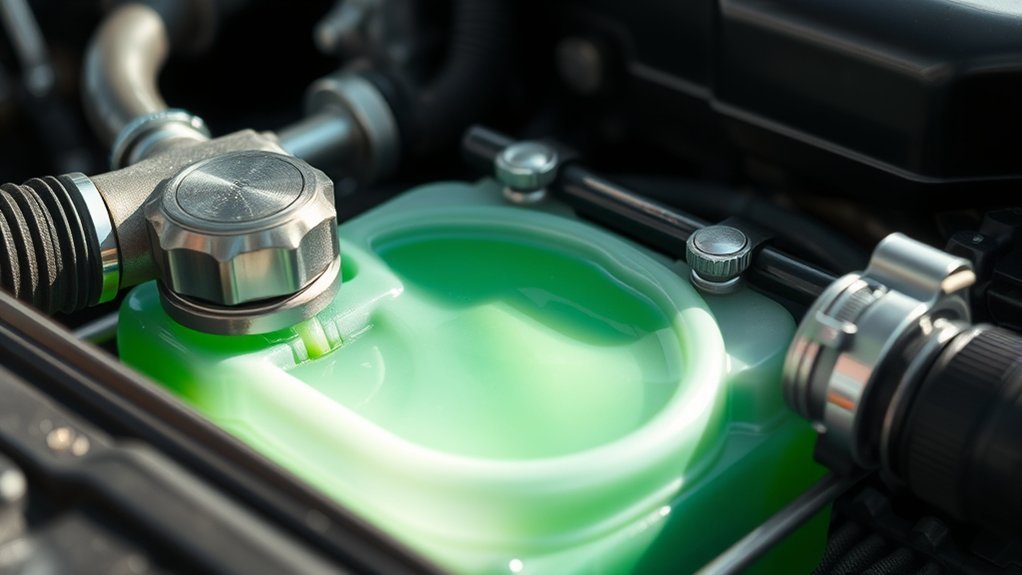
Next, check the coolant’s color and clarity; rusty or discolored fluid signals contamination. Use a hydrometer or test strips to measure coolant strength and pH, ensuring optimal freeze and boil protection.
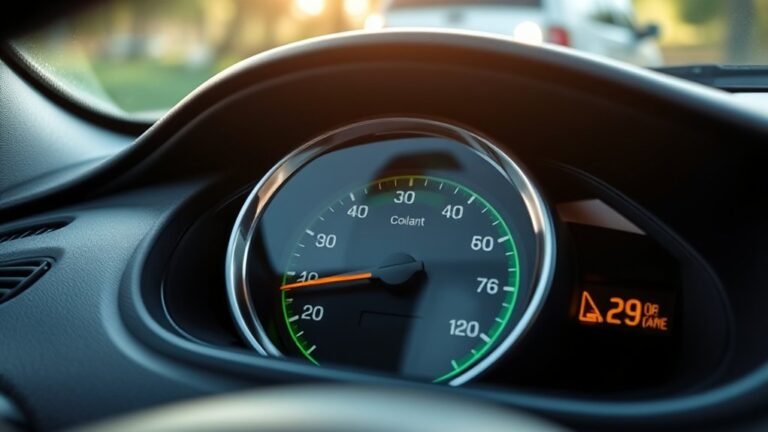
Detecting cooling system corrosion is crucial. Corrosion can cause blockages, impair heat transfer, and damage engine parts. Signs include rough engine operation and overheating.
Flushing and replacing coolant prevents corrosion buildup, maintaining system integrity. Monitoring these indicators lets you address coolant issues proactively, avoiding costly repairs and ensuring your engine operates within safe temperature ranges.
How Often to Change Coolant by Vehicle Type
When should you change your vehicle’s coolant? The interval depends largely on your vehicle type and manufacturer recommendations. Passenger cars typically require a coolant change every 30,000 to 50,000 miles due to moderate engine temperature ranges and standard coolant chemistry.
Coolant changes vary by vehicle type, with passenger cars needing replacements every 30,000 to 50,000 miles.
Heavy-duty trucks or performance vehicles, which experience higher engine temperatures, may need more frequent changes, often every 20,000 to 30,000 miles, to maintain optimal coolant chemistry and prevent overheating.
Hybrid and electric vehicles, generating less engine heat, might extend coolant replacement intervals, but you should still follow specific guidelines. Always consult your owner’s manual for precise schedules, as coolant chemistry varies between vehicles. Some use organic acid technology (OAT), others use inorganic additives, impacting longevity and engine temperature regulation.
Monitoring these factors ensures effective coolant maintenance tailored to your vehicle type.
Why Regular Coolant Changes Protect Your Engine
Why does regularly changing your coolant matter for engine protection? Over time, coolant’s chemical composition degrades, disrupting optimal engine chemistry essential for heat transfer and corrosion prevention.
Old coolant loses its ability to maintain proper pH balance, which can accelerate metal corrosion and compromise seals. By replacing coolant at recommended intervals, you ensure the system maintains stable engine chemistry, protecting internal components from rust and scale buildup.
Additionally, fresh coolant contains additives that help detect leak indicators, subtle signs of gasket or hose failures, allowing you to address issues early. Maintaining clean, effective coolant reduces the risk of overheating and mechanical damage, preserving engine performance and longevity.
Regular coolant changes are a proactive measure, essential for safeguarding your engine’s internal environment and ensuring reliable operation.
What Can Go Wrong If You Skip Coolant Changes
Neglecting to change your coolant regularly often leads to accelerated corrosion and sediment buildup within the cooling system. Over time, the coolant chemistry degrades, reducing its ability to inhibit rust and prevent scale formation.
As the protective additives break down, metals inside the radiator, water pump, and engine block become vulnerable to damage. You might notice warning signs like overheating, coolant leaks, or a discolored radiator fluid indicating contamination.
These symptoms signal that the coolant can no longer maintain optimal heat transfer or corrosion resistance. Ignoring these warning signs risks costly repairs due to clogged passages or failed components.
Understanding what is coolant chemistry helps you appreciate why maintaining fresh coolant is essential to preserving your engine’s performance and longevity.
Tips to Extend Your Coolant’s Lifespan
How can you maximize the efficiency and durability of your coolant between changes? First, ensure you use a coolant that matches your vehicle’s specifications, focusing on coolant compatibility to prevent mixing different chemical formulations that can diminish corrosion inhibitors’ effectiveness.
Always maintain proper coolant concentration by checking and topping off with the recommended mix of antifreeze and distilled water. Regularly inspect the cooling system for leaks or contamination, as foreign substances reduce the coolant’s protective properties.
Additionally, monitor the coolant’s pH and inhibitor levels using test strips or a refractometer to detect degradation early. Proper maintenance of hoses and radiator caps also helps maintain system pressure, preserving corrosion inhibitors’ function. Following these technical measures will extend your coolant’s lifespan and ensure optimal engine protection.
How to Change Your Coolant Without Stress
Maintaining your coolant’s effectiveness involves regular replacement to prevent buildup of contaminants and depletion of corrosion inhibitors. When changing your coolant without stress, it’s crucial to avoid common calibration myths that suggest overly complex procedures. Instead, follow these straightforward steps:
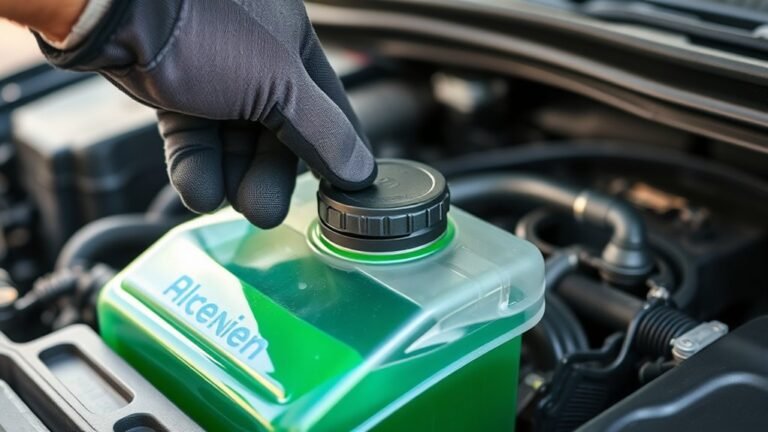
Drain the old coolant completely, ensuring the engine is cool to prevent burns. Flush the system with distilled water to remove residual debris. Refill with the correct coolant mixture, adhering to manufacturer specifications to prevent corrosion or overheating.
Be aware of DIY risks such as improper disposal of hazardous fluids and incorrect coolant ratios, which can damage your engine. Using precise tools and referring to your vehicle’s manual will minimize errors. By following these technical steps, you ensure optimal coolant performance without unnecessary complications.
Frequently Asked Questions
What Types of Coolant Are Compatible With My Vehicle?
You’ll need antifreeze blends compatible with your vehicle’s different engine types, like ethylene glycol for most gasoline engines or propylene glycol for others. Always check your owner’s manual to ensure you’re using the right coolant formulation.
Can I Mix Different Brands or Colors of Coolant?
Careful coolant compatibility counts! You shouldn’t mix color or brands without checking specs, as different formulas can cause chemical reactions, reduce effectiveness, or damage your engine.
Always consult your vehicle’s manual for precise guidance.
How Does Coolant Affect My Car’s Heating System?
Coolant viscosity directly impacts heater core efficiency by regulating heat transfer within your car’s heating system. If viscosity’s off, heat circulation slows, reducing warmth output.
Proper coolant ensures optimal flow and consistent cabin temperature control.
Is It Safe to Dispose of Old Coolant at Home?
You shouldn’t dispose of old coolant at home. For safe old coolant disposal, use designated recycling centers.
At home precautions include avoiding drains, soil, or water contamination due to its toxic chemical properties and environmental hazards.
Can Coolant Freezing Point Be Adjusted for Extreme Climates?
You can adjust coolant freezing point for extreme climates by mixing antifreeze and water in proper ratios. Avoid coolant mishandling to ensure optimal freezing point adjustment and engine protection, preventing damage from freezing or overheating conditions.