How to Service Carburetor
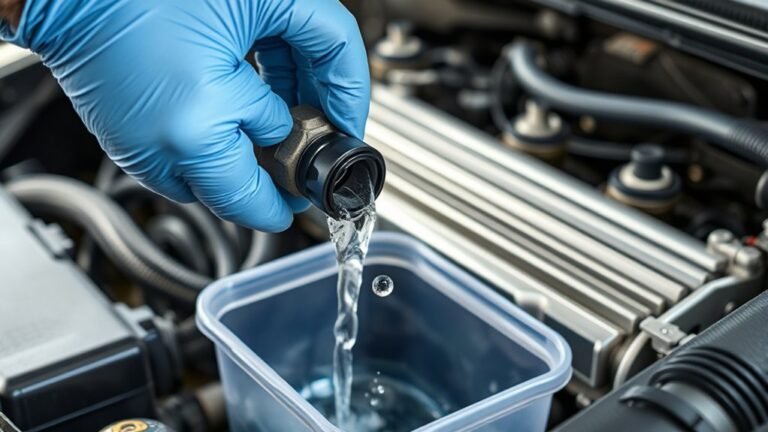
To service your carburetor, first work in a well-ventilated area while wearing gloves and eye protection. Proper safety measures are essential to avoid exposure to harmful chemicals and fuel vapors.
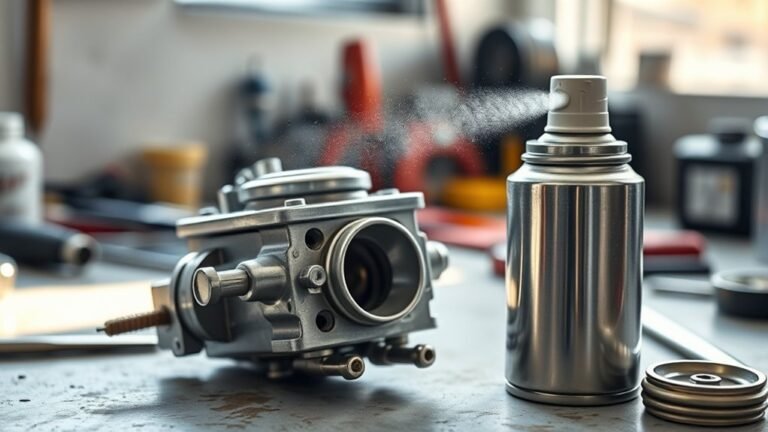
Safely remove the carburetor by disconnecting the fuel lines and linkages, ensuring the engine is cool before starting. Use carburetor cleaner, brushes, and compressed air to thoroughly clean jets and passages, which helps prevent clogs and ensures smooth fuel flow.
Inspect the throttle and choke mechanisms for smooth operation. Then, adjust the idle speed and mixture settings to achieve optimal combustion and engine performance.
After reassembling the carburetor, check for any vacuum leaks and test the overall performance of the engine. The next steps will guide you through detailed tuning and troubleshooting.
How a Carburetor Works: The Basics You Need to Know
How exactly does a carburetor mix air and fuel to power an engine? It relies on the Venturi effect, where air flows through a narrowed passage, creating suction that draws fuel into the airstream. This precise metering ensures the optimal air-fuel ratio for combustion.
Understanding carburetor history helps you appreciate its evolution from simple float chambers to more sophisticated designs accommodating fuel additives, which improve combustion efficiency and reduce deposits.
As air passes through the carburetor’s throat, fuel from the float bowl is atomized and mixed with air before entering the engine cylinders. Knowing this process allows you to identify how adjustments or issues might affect performance.
This fundamental knowledge sets the groundwork for effective servicing and troubleshooting of your carburetor.
Why Servicing Your Carburetor Matters for Engine Performance
Understanding the air-fuel mixture process is a key step, but keeping your carburetor in proper condition directly impacts engine performance. Neglecting service can cause fuel delivery issues, leading to poor acceleration, stalling, or rough idling.
You might have heard carburetor myths claiming they never need adjustment; however, routine servicing prevents buildup of varnish and debris that disrupt airflow and fuel atomization. Effective idle troubleshooting often reveals clogged jets or worn gaskets, symptoms easily resolved with proper maintenance.
Essential Tools for Servicing Your Carburetor
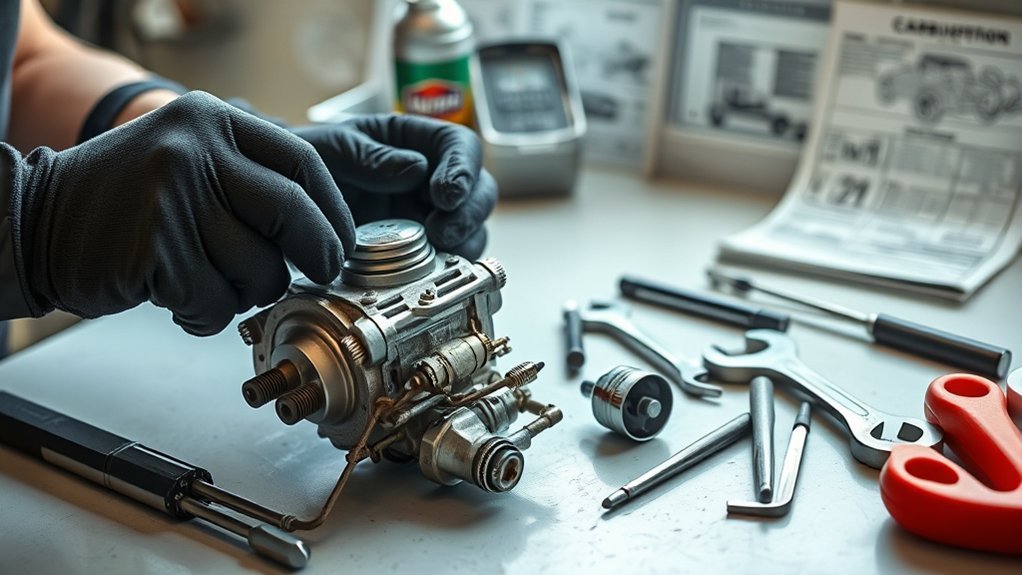
To service your carburetor effectively, you’ll need a set of basic hand tools like screwdrivers and wrenches tailored to your model. Cleaning supplies such as carburetor cleaner, brushes, and compressed air are essential for removing deposits.
Don’t forget safety gear like gloves and eye protection to prevent injury during the process.
Basic Hand Tools
A well-equipped set of basic hand tools is essential when servicing your carburetor, ensuring you can efficiently remove, inspect, and reassemble components without damage. Start with a precision screwdriver set, including flathead and Phillips types, to handle the diverse screws typical in carburetor history.
Needle-nose pliers help manipulate small clips and jets, while a set of small wrenches or sockets is necessary for bolts securing the carburetor to the intake manifold. Don’t overlook a clean workspace mat to organize parts during disassembly.
Since fuel additives can leave residues affecting performance, you’ll want tools that allow careful handling without stripping or damaging delicate parts. Having these basic hand tools ready will streamline your servicing process and maintain the carburetor’s reliability.
Cleaning Supplies Needed
Where should you begin when it comes to cleaning supplies for servicing your carburetor? Start by assembling the right materials to ensure an effective and thorough cleaning process. Proper cleaning supplies paired with appropriate safety gear will protect both you and the carburetor components.
Essential cleaning supplies include:
- Carburetor cleaner spray, specifically formulated to dissolve varnish, gum, and deposits without damaging metal parts.
- Soft-bristle brushes and lint-free cloths to scrub and wipe away residue without scratching delicate surfaces.
- Compressed air canister or air compressor for blowing out passages and jets to ensure no debris remains.
Having these supplies ready will streamline your work, maintain carburetor integrity, and prepare you for safe, efficient servicing.
Safety Gear Essentials
Alongside gathering the right cleaning supplies, equipping yourself with proper safety gear protects you from chemical exposure and mechanical hazards while servicing your carburetor. Safety gloves shield your hands from harmful solvents and sharp edges. Eye protection, such as safety goggles, guards against fuel splashes and debris.
Fuel safety is critical; always work in a well-ventilated area and avoid open flames.
| Safety Gear | Purpose |
|---|---|
| Safety Gloves | Protect skin from chemicals and cuts |
| Eye Protection | Prevent fuel and debris from eye injuries |
| Respirator Mask | Filter harmful fumes and vapors |
| Protective Clothing | Shield skin from fuel and solvent exposure |
Prioritize these essentials to maintain safety and efficiency during carburetor servicing.
Safely Removing Your Carburetor for Service
Before removing your carburetor, make sure your workspace is clean and all necessary tools are within reach. Carefully disconnect the fuel line to prevent spills and ensure the engine is cool to avoid injury.
Next, detach the throttle and choke linkages methodically to maintain proper alignment for reassembly.
Preparing Tools And Workspace
How do you guarantee a safe and efficient removal of your carburetor? Preparation is key, especially considering the carburetor’s history as a critical component in fuel delivery and the complexity introduced by fuel system crossovers. Before starting, organize your tools and workspace meticulously.
- Gather Essential Tools: Include screwdrivers, wrenches, pliers, and a clean container for small parts. Specialized carburetor cleaners may also be necessary.
- Clear and Clean Workspace: Ensure your workbench is well-lit, flat, and free of contaminants to avoid losing components or introducing debris.
- Safety Measures: Use gloves and eye protection to prevent injury from fuel residues or sharp edges.
Disconnecting Fuel And Linkages
Once your tools are arranged and your workspace is set, the next step is to carefully disconnect the fuel lines and linkages attached to the carburetor. Begin by relieving fuel pressure to prevent spills, then use proper wrenches to disconnect fuel lines without damaging fittings.
Next, detach throttle and choke linkages, noting their positions for reassembly. This step is crucial for safe and efficient linkages upkeep, avoiding misalignment or damage.
| Step | Tool Needed | Precaution |
|---|---|---|
| Relieve fuel pressure | Fuel pressure tool | Avoid fuel spray |
| Disconnect fuel lines | Open-end wrench | Prevent line damage |
| Detach linkages | Needle-nose pliers | Mark positions before removal |
| Inspect connections | Flashlight | Check for wear or corrosion |
Following these steps ensures safe disconnecting fuel and linkages for carburetor service.
How to Clean Your Carburetor Step-by-Step
Why does your carburetor need cleaning? Over time, deposits from fuel and contaminants accumulate, impairing fuel flow and engine efficiency. Despite carburetor myths suggesting fuel additives alone can prevent buildup, thorough cleaning remains essential.
Regular carburetor cleaning is vital to remove buildup that fuel additives alone cannot eliminate.
Follow these steps to clean your carburetor precisely:
- Disassemble Carefully: Remove the carburetor from the engine and disassemble all removable parts, noting their positions for reassembly.
- Use Appropriate Cleaners: Soak metal parts in a carburetor cleaner solution to dissolve varnish and sludge; avoid harsh abrasives that may damage surfaces.
- Clear Passages and Jets: Use compressed air or a fine wire to clear all fuel passages, jets, and the float bowl to ensure unblocked fuel flow.
This methodical cleaning restores optimal functionality beyond what fuel additives alone can achieve.
Inspecting and Tuning Your Carburetor for Best Performance
A thorough inspection and careful tuning of your carburetor are essential steps to assure your engine runs efficiently and reliably. Begin by examining the throttle linkage and choke for smooth operation and wear. Check for dirt accumulation or damage that could cause misfiring symptoms.
Next, perform the idle adjustment: with the engine warm, use a tachometer to set the idle speed to manufacturer specifications, ensuring stable RPMs without stalling. Adjust the idle mixture screw to achieve a smooth, consistent idle, avoiding overly rich or lean conditions.
Confirm there are no vacuum leaks around gaskets or hoses, as these can disrupt fuel-air ratios. Proper inspection and tuning will optimize performance, fuel economy, and prevent common running issues before they escalate.
Troubleshooting Common Carburetor Issues After Servicing
After servicing your carburetor, you might still encounter some operational issues that can affect engine performance. These problems often impact carburetor emissions and fuel efficiency, so it’s crucial to troubleshoot effectively.
- Rough Idle or Stalling: Check for incorrect idle mixture settings or clogged jets. Adjust the idle screw and clean jets to restore smooth operation and optimal emissions.
- Poor Acceleration: Inspect the choke operation and accelerator pump. A malfunctioning choke or weak pump reduces fuel delivery, harming fuel efficiency and throttle response.
- Fuel Leaks or Flooding: Examine float height and needle valve condition. Improper float adjustment causes flooding, increasing emissions and wasting fuel.
Frequently Asked Questions
How Often Should I Service My Carburetor for Optimal Performance?
You should service your carburetor every 6 months or 3,000 miles to ensure optimal performance.
Maintaining this cleaning frequency helps maximize carburetor longevity by preventing buildup and ensuring precise fuel-air mixture adjustments.
Can I Service a Carburetor on Any Type of Engine?
You’ll find that while you can service carburetors on many engines, engine compatibility varies, so always check tuning considerations first. Different engines demand specific adjustments, so precise knowledge ensures optimal performance and avoids damage or inefficiency.
What Are the Signs My Carburetor Needs Servicing?
You’ll notice rough idling, poor ignition timing, and decreased fuel efficiency when your carburetor needs servicing. Hesitation during acceleration and black smoke from the exhaust also indicate improper fuel-air mixture requiring immediate adjustment or cleaning.
Is Professional Carburetor Servicing Worth the Cost?
Yes, professional maintenance is often worth the cost versus benefit, especially if you lack technical skills. It guarantees precise adjustments, prevents damage, and improves performance, saving you time and expensive repairs in the long run.
How Does Altitude Affect Carburetor Tuning?
As you climb higher, thinner air means your carburetor needs tuning adjustments to avoid a rich mixture. Altitude effects reduce oxygen, so you’ll lean the mixture for optimal engine performance and prevent fouling or power loss.