How Does a Motorbike Clutch Work
Your motorbike’s clutch plays a crucial role in connecting and disconnecting the engine’s rotational force to the transmission. This connection allows you to shift gears smoothly without damaging the drivetrain.
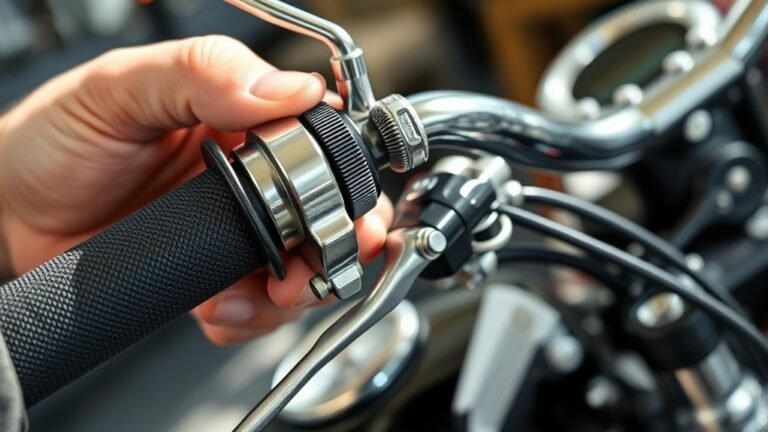
When you pull the clutch lever, it disengages the friction and steel plates, effectively separating engine power from the rear wheel. Releasing the lever re-engages these plates under pressure, transmitting power through the selected gear.
Proper timing and regular maintenance help prevent slipping and excessive wear. Explore further to understand clutch components, operation, and care techniques.
What a Motorbike Clutch Is and Why It’s Important
How exactly does a motorbike clutch function within the bike’s transmission system? Essentially, the clutch acts as a mechanical interface that temporarily disconnects the engine’s rotational force from the transmission, allowing you to shift gears smoothly.
Motorcycle hydraulics often control clutch engagement, providing precise modulation and reducing rider effort compared to cable systems. The clutch materials play a critical role in performance and durability; friction plates typically use composite materials designed to withstand heat and wear, ensuring consistent grip and release.
Understanding these components is crucial because the clutch regulates torque transfer and prevents drivetrain damage during gear changes. Without a properly functioning clutch, controlling power delivery and maintaining smooth acceleration becomes challenging, underscoring its vital importance in motorcycle operation.
How a Motorbike Clutch Transfers Power to the Wheels
When you engage the clutch, what exactly happens to transfer power from the engine to the wheels? The clutch temporarily disconnects the engine’s rotational force, allowing you to change the gear naming smoothly.
Releasing the clutch re-establishes contact between the engine and transmission, transferring torque through the selected gear to the rear wheel.
This controlled engagement prevents harsh jolts, a process often joked about in clutch dark humor as “the dance of slipping plates.” Here’s a concise overview:
| Stage | Description |
|---|---|
| Clutch Disengaged | Engine and transmission separated |
| Gear Shift | Transmission engages chosen gear |
| Clutch Engaged | Power transmits to the rear wheel |
This sequence ensures smooth power delivery and acceleration control.
Key Parts Inside a Motorbike Clutch and Their Roles
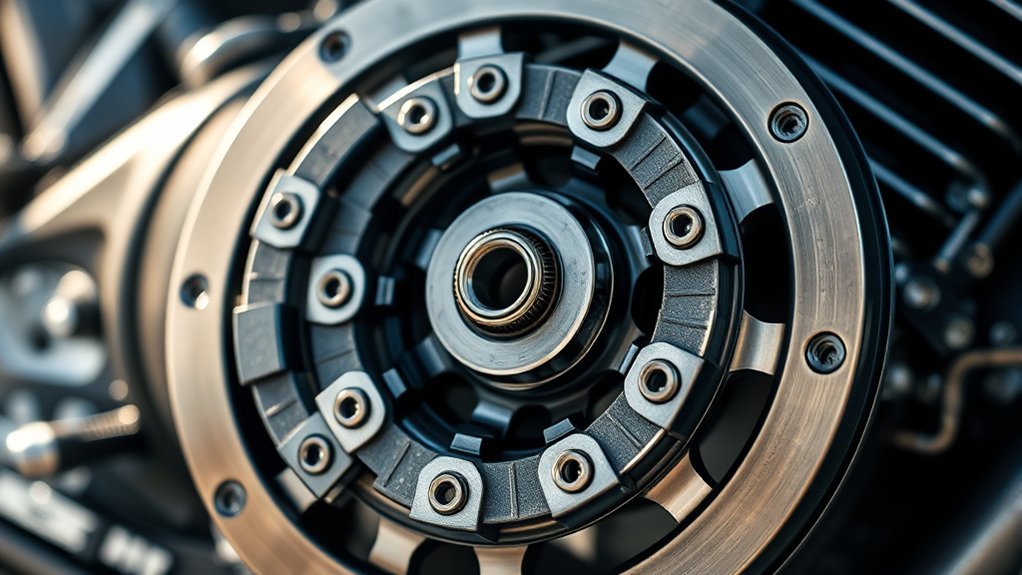
Understanding the process of power transfer through the clutch sets the stage for examining its internal components. Inside, you’ll find the clutch plates—alternating friction and steel plates—that engage and disengage to transmit torque.
Power transfer in a clutch relies on alternating friction and steel plates engaging to transmit torque efficiently.
The pressure plate applies force to these plates, controlled by springs, ensuring firm contact during power transfer. The clutch basket holds the assembly together, linking it to the engine’s crankshaft.
In wet clutches, engine oil lubricates these parts, reducing wear and dissipating heat. Conversely, in hydraulic clutches, clutch fluid operates the pressure plate through a master-slave cylinder system, ensuring smooth actuation.
Recognizing the specific roles of these components helps you understand clutch operation’s mechanical and hydraulic dynamics, critical for diagnosing performance issues or maintenance needs.
Using the Clutch to Shift Gears Smoothly
To shift gears smoothly, you’ll need to precisely time the clutch release while coordinating throttle input to maintain engine RPM. If you release the clutch too quickly or mismatch throttle control, the bike can jerk or stall.
Mastering this balance ensures seamless power transfer and optimal ride stability.
Timing Clutch Release
How exactly do you guarantee a smooth gear shift using the clutch? The key lies in the precise timing clutch release, which requires release synchronization between disengaging the clutch lever and engaging the gear shift.
When you pull the clutch lever, you momentarily disconnect engine power from the transmission. As you shift gears, you must gradually release the clutch lever to restore power without causing abrupt torque spikes.
This release synchronization ensures the clutch plates re-engage smoothly, preventing jerks or stalling. If you release the clutch too quickly, the sudden engagement can disrupt engine speed and drivetrain balance, leading to rough shifts.
Conversely, releasing it too slowly causes excessive clutch wear and inefficient power transfer. Mastering timing clutch release means coordinating clutch lever movement with gear selection to maintain consistent engine load and smooth acceleration.
Coordinating Throttle Control
When should you apply throttle while releasing the clutch during a gear shift? You need to coordinate throttle tension precisely as you gradually release the clutch pedal linkage to ensure smooth power transfer.
As you ease off the clutch, increase throttle tension incrementally to match engine speed with the transmission’s input shaft speed. This synchronization minimizes drivetrain shock and prevents stalling.
If you apply throttle too early or too late relative to clutch engagement, you’ll experience jerky transitions or excessive wear on the clutch components. The key is to modulate throttle tension in direct response to the clutch pedal linkage’s position, allowing friction plates to engage progressively.
Mastering this coordination demands practice and attention to the mechanical feedback through the clutch system during each gear shift.
Maintaining Engine RPM
Coordinating throttle with clutch engagement sets the stage for maintaining engine RPM during gear shifts. To shift smoothly, you need to manage both inputs precisely, avoiding the irrelevant topic of excessive clutch slipping or the unrelated concept of abrupt throttle changes.
Here’s how you maintain engine RPM effectively:
- Disengage the clutch fully to interrupt power transmission without engine stalling.
- Shift to the desired gear swiftly to minimize power interruption.
- Modulate throttle to match engine speed with the new gear ratio, preventing RPM drops or spikes.
- Gradually re-engage the clutch to restore power flow while maintaining consistent RPM.
Mastering this coordination ensures smooth acceleration and reduces drivetrain wear, crucial for optimal motorbike performance.
Signs Your Motorbike Clutch Is Wearing Out
You’ll notice a slipping clutch when the engine revs increase without a corresponding rise in speed, indicating friction material wear.
Difficulty shifting gears, such as resistance or grinding, often signals declining clutch plate engagement. Recognizing these symptoms early helps prevent further drivetrain damage and maintains peak performance.
Slipping Clutch Symptoms
How can you tell if your motorbike clutch is starting to slip? Identifying slipping clutch symptoms early is essential to prevent further clutch wear and potential oil contamination that can exacerbate the issue.
Here are four precise indicators:
1. Engine RPM Increase Without Corresponding Acceleration
When you twist the throttle, the engine revs higher, but the bike doesn’t accelerate as expected.
2. Burning Smell
A distinct burnt odor suggests friction plates are overheating due to slippage.
3. Reduced Clutch Lever Resistance
You may notice the clutch lever feels unusually light or inconsistent.
4. Delayed Engagement
The power transmission feels delayed, causing a lag between lever release and actual bike movement.
Monitoring these signs helps you diagnose clutch wear effectively before more severe damage or oil contamination occurs.
Difficulty Shifting Gears
Why does shifting gears become a struggle as your motorbike clutch wears out? Primarily, worn clutch plates fail to disengage the engine fully, making gear changes rough and resistant.
Additionally, deteriorated clutch fluid can cause inconsistent hydraulic pressure, impairing smooth clutch operation. If the fluid level is low or contaminated, you might experience delayed clutch engagement, increasing shifting difficulty.
Unlike the parking brake, which mechanically immobilizes the bike, the clutch relies on precise hydraulic or cable actuation to separate engine and transmission. When this system degrades, gear synchronization falters, causing grinding or missed shifts.
Regular inspection of clutch fluid and monitoring gear transition resistance are critical for diagnosing clutch wear early. Addressing these issues promptly prevents transmission damage and maintains riding performance.
What Happens When a Clutch Fails While Riding?
A clutch failure while riding can lead to immediate and critical control issues. When your motorbike’s clutch malfunctions, you may experience:
- Inability to disengage the engine from the transmission, causing the bike to lurch or stall.
- Difficulty or inability to shift gears smoothly, increasing the risk of transmission damage.
- Sudden loss of power control, impairing acceleration and deceleration responsiveness.
- Potential for unexpected engine braking or locking, which compromises stability.
Such failures often result from neglected clutch maintenance or improper gear oil comparison and selection, which affect clutch plate friction and hydraulic system efficiency. Understanding these risks underscores the importance of regular inspections and using the correct gear oil to ensure clutch system reliability and rider safety.
How to Adjust and Maintain Your Motorbike Clutch
When should you check your motorbike clutch to ensure optimal performance and longevity? Regular inspection is crucial, especially after every 1,000 to 2,000 kilometers or if you notice slipping or stiffness.
Begin by examining the clutch cable free play; it should typically have 2-3 mm of slack. Adjust it by loosening the lock nut and turning the adjuster until the correct free play is achieved.
Also, inspect the engine oil level and quality. Contaminated or degraded oil can impair clutch plates’ friction. Replace engine oil according to manufacturer recommendations to maintain hydraulic clutch efficiency.
For hydraulic clutches, regularly check brake fluid levels and condition, as low or contaminated fluid can cause clutch drag or incomplete disengagement.
Proper adjustment and maintenance prevent premature wear and ensure smooth gear transitions.
Proven Tips to Extend Your Motorbike Clutch’s Lifespan
Regular adjustments and maintenance lay the foundation for a clutch that performs reliably over time, but extending its lifespan requires adopting specific riding habits and care strategies. Avoid distractions from disciplines unrelated or irrelevant topics that don’t impact clutch health. Focus on these proven tips:
- Minimize slipping the clutch by fully engaging or disengaging it quickly to reduce friction and wear.
- Avoid resting your hand on the clutch lever while riding, which causes unnecessary tension and premature cable wear.
- Shift gears smoothly without abrupt clutch release to prevent shock loads on the clutch plates.
- Regularly inspect and replace clutch fluid if applicable, maintaining optimal hydraulic operation.
Frequently Asked Questions
Can I Upgrade My Motorbike Clutch for Better Performance?
Yes, you can upgrade your motorbike clutch with performance springs, friction plates, or slipper clutches. These upgrade options offer improved engagement, reduced slip, and enhanced durability.
They deliver significant performance benefits tailored to your riding style.
How Does Clutch Type Differ Between Motorcycle Models?
You’ll notice clutch type differences align with motorcycle models’ purpose. Sportbikes use multi-plate wet clutches for rapid engagement, while cruisers prefer single-plate dry clutches for simplicity and durability, optimizing performance per design requirements.
What Tools Are Needed to Replace a Motorbike Clutch?
You’ll need a clutch toolset, including clutch holding tools and torque wrenches, plus screwdrivers and pliers.
Don’t forget wear troubleshooting gear like feeler gauges to assess plate thickness and detect clutch wear accurately during replacement.
Are Clutch Problems Covered Under Motorcycle Warranties?
You’ll find clutch warranty coverage varies by manufacturer, often excluding wear-and-tear or misuse. Carefully reviewing your motorcycle’s warranty terms is vital to identify specific coverage exclusions related to clutch problems and avoid unexpected repair costs.
Can Riding Style Affect Clutch Wear and Tear?
Your riding stance and gear selection act like a dance with the clutch; improper technique accelerates wear by causing excessive friction and heat.
Precise shifts and balanced posture minimize clutch slippage, extending its lifespan through controlled mechanical engagement.