How Do You Check Engine Coolant
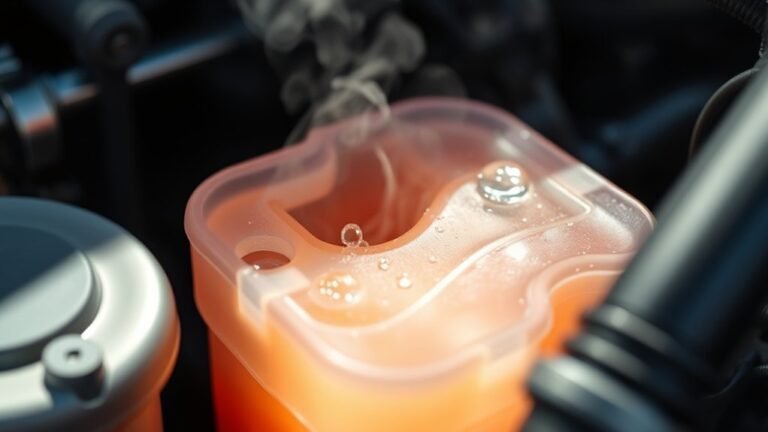
To check your engine coolant, first ensure the engine is completely cool to avoid pressure hazards. Locate the translucent coolant reservoir, usually near or above the radiator, marked with “Full” and “Low” indicators. Without opening the radiator cap, visually confirm the coolant level is between these marks.
Wear gloves and eyewear for safety. Regular checks help prevent leaks and overheating. Understanding proper maintenance intervals and signs of coolant issues can keep your engine running efficiently.
How to Locate the Engine Coolant Reservoir
Where do you find the engine coolant reservoir? Typically, the reservoir is a translucent plastic tank located near the radiator or along the engine bay’s perimeter. Its placement varies by vehicle model but is designed for easy access and visibility.
The engine coolant reservoir is usually a translucent tank near the radiator, designed for easy access and visibility.
The engine coolant reservoir allows you to monitor coolant levels without opening the radiator cap. You’ll recognize it by the “engine coolant” label or a symbol resembling a thermometer submerged in liquid.
The reservoir placement ensures that it remains above the radiator, facilitating coolant flow and expansion. Understanding this location is crucial for routine checks and maintenance.
Always consult your vehicle’s manual to confirm the exact reservoir placement, as improper identification may lead to inaccurate assessments of your cooling system’s condition.
How to Check Your Coolant Level Safely
After locating the engine coolant reservoir, the next step is to check the coolant level safely to avoid injury or damage. First, ensure the engine is completely cool; opening the reservoir cap while hot can cause pressurized coolant to spray out.
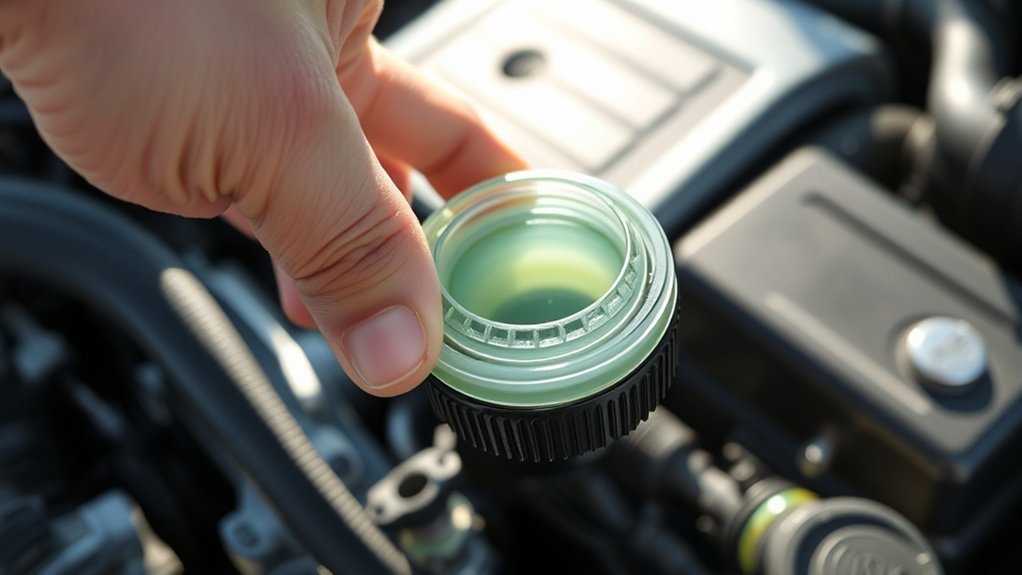
Wear protective gloves and eyewear for additional safety. Remove the cap slowly, allowing any residual pressure to release gradually. Inspect the coolant level against the reservoir’s marked “Full” and “Low” indicators.
If levels are low, inspect for leaks using leak diagnostics techniques, such as checking hoses and connections. Understanding coolant chemistry helps you determine if the fluid is contaminated or degraded, which could affect cooling efficiency.
Never open the radiator cap when the engine is hot, as this poses a severe risk of burns or injury.
When and How Often Should You Check Your Engine Coolant?
You should check your engine coolant at least once a month and before any long trips to ensure optimal performance. Pay close attention to signs of low coolant, such as overheating or warning lights, which indicate immediate inspection is necessary.
Additionally, adjusting your maintenance routine seasonally can help prevent coolant-related issues in extreme temperatures.
Recommended Check Intervals
How often should engine coolant be checked to protect optimum performance? Regular intervals are essential to maintain proper engine temperature and safeguard drivetrain coatings from damage caused by overheating. You should check your coolant:
- Before long trips or heavy usage periods to prevent unexpected overheating.
- At least once a month during extreme weather conditions, as temperature fluctuations affect coolant efficiency.
- After any maintenance that involves the cooling system, since coolant theft or accidental loss can occur during servicing.
Frequent inspections help you detect leaks or contamination early, guaranteeing the cooling system operates efficiently. Staying consistent with these intervals also helps safeguard your vehicle’s drivetrain coatings, extending engine life and performance while avoiding costly repairs.
Signs of Low Coolant
Why is it essential to recognize the signs of low engine coolant promptly? Identifying these indicators early prevents engine overheating and costly damage. Just like creative writing requires attention to subtle details, you need to be observant with your vehicle’s signals.
Think of it as using photography tips to capture precise moments; spotting coolant issues early can save your engine.
| Sign | What to Look For |
|---|---|
| Overheating engine | Temperature gauge rising quickly |
| Coolant warning light | Dashboard alert illumination |
| Visible leaks or puddles | Underneath vehicle inspection |
Regularly checking for these signs ensures your engine stays within optimal temperature ranges and avoids failures caused by insufficient coolant.
Seasonal Maintenance Tips
Although engine coolant levels can vary depending on driving conditions and vehicle type, it’s essential to check your coolant at least once every season to maintain prime engine performance. Seasonal maintenance helps prevent overheating in summer and freezing in winter.
When inspecting, pay close attention to the coolant color. It should be clear and vibrant, not rusty or cloudy, which indicates contamination or degradation.
For effective seasonal maintenance, focus on:
- Checking coolant level and topping off with the recommended type
- Inspecting coolant color for signs of rust, sediment, or oil contamination
- Flushing and replacing coolant based on manufacturer intervals or if discoloration appears
Adhering to these guidelines ensures your engine’s cooling system remains efficient and reliable year-round.
How to Identify Coolant Color and Texture
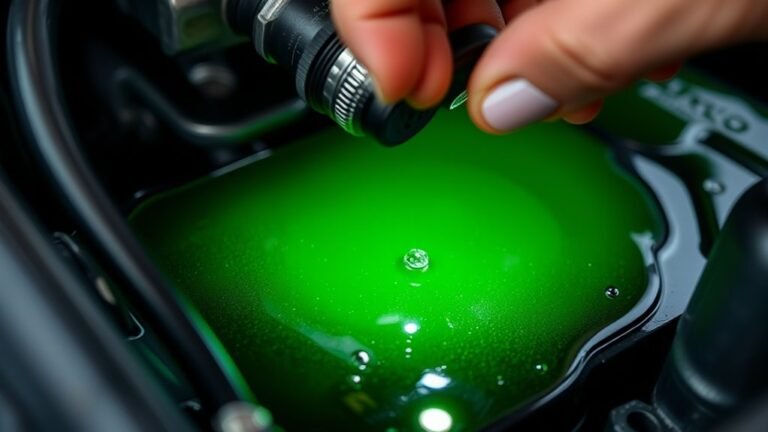
When inspecting your engine coolant, what you see in terms of color and texture can reveal a lot about its condition and effectiveness. For accurate color identification, note that fresh coolant typically appears bright, commonly green, orange, pink, or yellow, depending on the manufacturer’s formula.
Discoloration to brown or rust hues often indicates contamination or corrosion inside the cooling system. Conduct a texture comparison by observing whether the coolant is clear and fluid; any cloudiness, particles, or gelatinous consistency suggests degradation or microbial growth.
Avoid confusing normal color variations with signs of trouble by referencing your vehicle’s manual. Regularly performing this visual analysis helps ensure your engine coolant maintains optimal heat transfer and corrosion protection, preventing potential overheating or component damage.
How to Add Engine Coolant Without Overfilling
How much coolant should you add to your engine without risking overfill? To maintain optimal engine design and fuel efficiency, you need to add coolant carefully, avoiding excess that can cause pressure buildup or overflow.
Start by checking the coolant reservoir’s minimum and maximum marks; never exceed the max line.
Always check the coolant reservoir’s min and max marks and never go above the max line.
Follow these steps to add coolant properly:
- Add coolant slowly, allowing it to settle and stabilize in the reservoir.
- Use a funnel to prevent spills and ensure precise pouring.
- Check the coolant level again after the engine runs and cools down, as it may fluctuate.
Signs of Engine Coolant Leaks and How to Spot Them
Keep an eye out for signs that point to engine coolant leaks, as early detection is vital to prevent engine damage. Look for puddles under your vehicle, often green, orange, or pink, but don’t rely solely on coolant color myths. Leaks can appear in various colors due to additives or contamination.
Another sign is a sweet smell near the engine or inside the cabin. Monitor your temperature gauge; unexplained overheating may indicate a slow leak. Don’t fall for traditional coolant myths that suggest only bright colors signal leaks.
Check hoses, radiator, and reservoir for wet spots or crusty residue. Low coolant levels, despite regular top-offs, often indicate a hidden leak. Identifying these signs early can save you from costly repairs and maintain your engine’s efficiency.
How Engine Coolant Helps Prevent Overheating
Why is engine coolant essential for preventing your car from overheating? Engine coolant regulates engine temperature by absorbing heat generated during combustion and transferring it away from critical components. Without proper coolant levels, the engine risks overheating, leading to severe damage.
The coolant circulates through the engine and radiator, where radiator fans dissipate the absorbed heat efficiently. This continuous cycle maintains optimal operating temperature and prevents thermal stress.
Key functions of engine coolant include:
- Absorbing and transferring heat to maintain stable engine temperature
- Supporting radiator fans in enhancing heat dissipation
- Preventing corrosion and freezing within cooling system components
Tips to Maintain Your Engine Coolant System Between Checks
To keep your engine coolant system functioning optimally, you should regularly check the coolant level and top it off as needed. Inspect hoses and connections for leaks or cracks to prevent fluid loss and overheating.
Additionally, flushing the coolant system periodically removes contaminants and maintains proper thermal efficiency.
Regular Coolant Level Checks
How often should you check your engine coolant level to ensure optimal performance? Ideally, you should inspect it every two weeks or before long trips, especially if your vehicle is exposed to harsh environments like parking lots or areas with garden maintenance equipment that can cause debris buildup.
Regular checks help prevent overheating and prolong engine life.
To maintain your coolant system effectively, remember to:
- Perform visual inspections for proper coolant level in the reservoir when the engine is cold
- Top off with the manufacturer-specified coolant mixture as needed
- Schedule professional flushes as recommended in your vehicle’s manual
Consistent monitoring minimizes risks of leaks and corrosion, ensuring your engine runs smoothly without unexpected failures.
Inspect Hoses And Connections
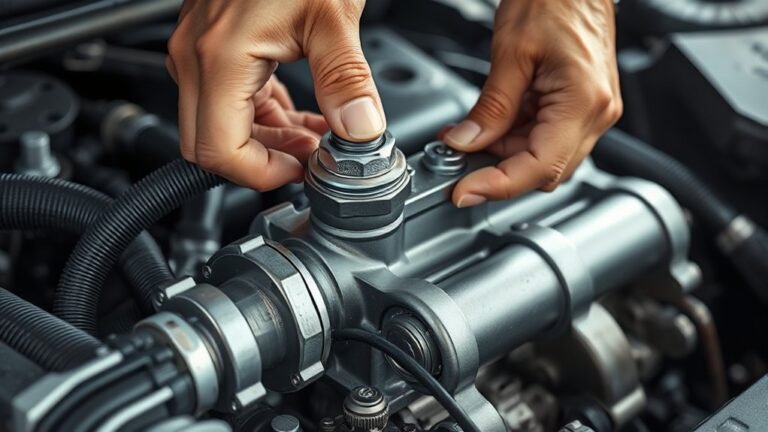
A thorough inspection of your engine’s coolant hoses and connections is essential for preventing leaks and maintaining system integrity. First, examine the hose routing to ensure hoses are properly positioned without kinks, twists, or contact with sharp edges or moving parts, which could cause premature wear or failure.
Next, check clamp integrity by confirming that all clamps are securely fastened and free from corrosion or damage. Loose or degraded clamps can lead to coolant leaks and system pressure loss.
Additionally, inspect hoses for any signs of cracks, bulges, or soft spots, which indicate material degradation. Addressing these issues promptly helps maintain optimal coolant flow and prevents overheating.
Performing this inspection regularly between coolant level checks will keep your engine cooling system reliable and efficient.
Flush Coolant System Periodically
After inspecting hoses and connections for wear and secure fittings, maintaining your engine’s cooling performance requires regular flushing of the coolant system. Flushing removes contaminants, rust, and degraded coolant, preventing corrosion and overheating. Avoid any irrelevant discussion or unrelated topic that detracts from this essential maintenance step.
You should flush your coolant system every 30,000 miles or as recommended by your vehicle manufacturer.
Key considerations include:
- Use a proper coolant flush solution to dissolve deposits effectively.
- Ensure complete drainage of old coolant before refilling to avoid dilution.
- Inspect the radiator and reservoir for sediment buildup during the flush process.
Frequently Asked Questions
What Types of Engine Coolant Are Compatible With My Vehicle?
You should consult your vehicle’s manual for engine coolant compatibility, focusing on recommended types and brands. Using the specified coolant ensures optimal performance and prevents corrosion, overheating, or damage to your engine’s cooling system.
Can I Mix Different Brands or Types of Coolant?
You shouldn’t mix different brands or types of coolant due to mixing cautions; incompatible formulations can cause corrosion or gelling.
Rely on color indicators only as a guide, but always verify compatibility with your vehicle’s specifications.
What Are the Health Risks of Engine Coolant Exposure?
You should know engine coolant exposure health risks include coolant toxicity symptoms like nausea, dizziness, and respiratory irritation.
Prolonged contact may cause severe poisoning, so avoid ingestion, inhalation, or skin contact to minimize health hazards effectively.
How Do I Dispose of Old or Used Engine Coolant Safely?
You should take used engine coolant to a hazardous waste facility for proper disposal. This guarantees disposal safety and minimizes environmental impact.
Proper disposal prevents toxic chemicals from contaminating water or soil and protects ecosystems effectively.
What Causes Engine Coolant to Degrade Over Time?
You might think engine oil or tire pressure impact coolant, but it’s mainly heat, oxidation, and contaminants that cause engine coolant to degrade over time. This reduces its ability to prevent corrosion and maintain proper cooling efficiency.