Can You Use Carburetor Cleaner as Starter Fluid
You shouldn’t use carburetor cleaner as starter fluid because it lacks the highly volatile compounds needed for quick ignition and can damage your engine’s seals and plastics. Carburetor cleaner is designed to dissolve deposits in fuel systems, not to aid combustion.
Using it risks fire hazards and engine corrosion. For safe and effective starts, rely on starter fluids formulated specifically for ignition assistance.
Keep exploring to understand how each product works and the risks involved with misuse.
Difference Between Carburetor Cleaner and Starter Fluid
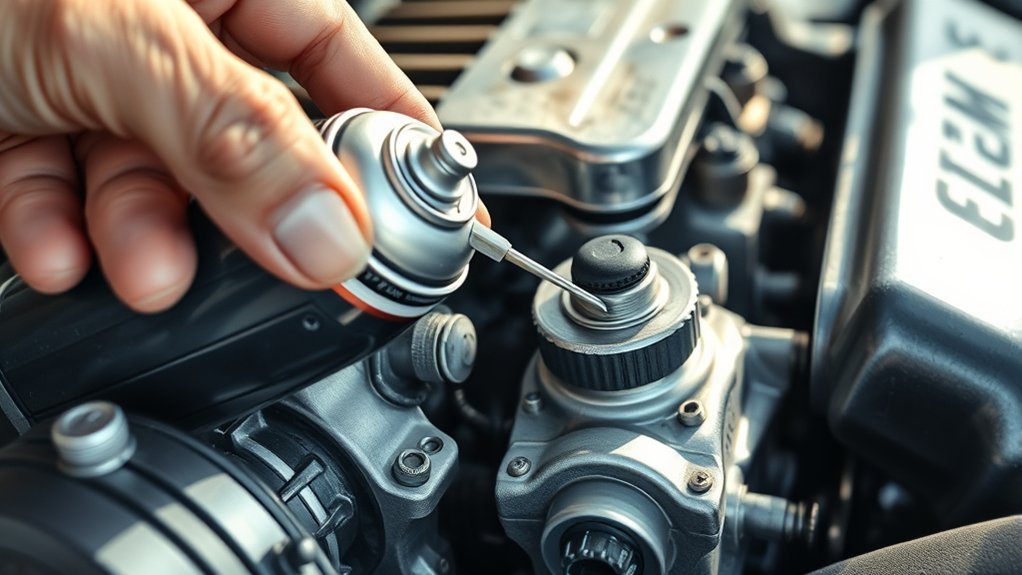
How do carburetor cleaner and starter fluid differ in composition and purpose? Starter fluid primarily consists of highly volatile hydrocarbons like ether, designed to ignite easily and assist internal combustion engines during cold starts. Its purpose is to provide a quick, combustible vapor that helps start the engine when fuel delivery or ignition is weak.
Conversely, carburetor cleaner contains solvents and detergents formulated to dissolve varnish, gum, and carbon deposits within carburetors and fuel systems. Its purpose is maintenance-oriented, enhancing engine performance by cleaning fuel pathways rather than aiding ignition.
While starter fluid is flammable and used briefly during starting, carburetor cleaner is a chemical solvent applied to clean and is not intended for combustion. Understanding these distinctions is essential to using each product appropriately and safely in engine maintenance and operation.
Can You Use Carburetor Cleaner as Starter Fluid?
Why would you consider using carburetor cleaner as starter fluid? Sometimes, in emergencies, you might think carburetor cleaner, designed for carburetor maintenance, could substitute starter fluid due to its flammable solvents. However, carburetor cleaner isn’t formulated like starter fluid, especially for diesel engines where diesel additives optimize combustion.
Using carburetor cleaner as starter fluid risks engine damage and inefficient starting.
| Feature | Carburetor Cleaner | Starter Fluid |
|---|---|---|
| Purpose | Carburetor maintenance | Aid engine start |
| Composition | Solvents for dissolving deposits | Highly volatile, quick ignition |
| Use in Diesel Engines | Not recommended | Contains diesel additives |
Stick to proper starter fluid for safe, effective engine starts.
How Starter Fluid Helps Engines Start Quickly
When does an engine need extra help to start? Typically, this occurs in cold weather or when the fuel system struggles to deliver the proper air-fuel mixture. Starter fluid acts as a potent aid by providing a highly volatile spray that ignites more easily than gasoline alternatives under low-temperature conditions. This quick ignition jumpstarts combustion, reducing crank time.
Here’s how starter fluid helps engines start quickly:
- Delivers a highly flammable compound that ignites faster than typical gasoline alternatives.
- Enhances initial combustion in cold or damp environments.
- Provides immediate ignition support, preventing extended cranking.
- Corrects diesel misconceptions by differentiating from diesel fuel’s ignition needs.
Using starter fluid ensures your engine overcomes initial starting resistance efficiently and reliably.
What Carburetor Cleaner Actually Does
What exactly does carburetor cleaner do to improve engine performance? Carburetor cleaner is designed to remove varnish, gum, and carbon deposits that accumulate in the fuel system over time. Understanding carburetor history helps here: older carburetors lacked modern fuel additives that keep fuel pathways clean.
These deposits restrict airflow and disrupt the precise air-fuel mixture necessary for efficient combustion. By dissolving and flushing out these contaminants, carburetor cleaner restores proper fuel atomization and flow. Unlike fuel additives that continuously maintain cleanliness during operation, carburetor cleaner is used periodically as a targeted treatment.
This ensures your engine runs smoothly, reduces hesitation, and improves throttle response. Essentially, carburetor cleaner revitalizes the mechanical components responsible for mixing fuel and air, optimizing engine performance.
Risks of Using Carburetor Cleaner as Starter Fluid
You shouldn’t use carburetor cleaner as starter fluid because it poses serious flammability and safety risks. Its chemical composition can cause unpredictable combustion, increasing the chance of fire hazards.
Additionally, repeated use may lead to engine damage due to its aggressive solvents and additives.
Flammability And Safety Hazards
How dangerous can using carburetor cleaner as starter fluid be? Carburetor cleaner contains highly volatile solvents, posing significant flammable hazards that can lead to severe fires or explosions if mishandled. Unlike starter fluid, it’s not designed for controlled ignition, increasing risks during engine startup.
You must consider storage safety, as improper containment or exposure to heat sources can cause spontaneous combustion or container rupture.
Key safety concerns include:
- Extremely low flash point, making it prone to ignition near sparks or flames
- Toxic fumes released when sprayed or burned, requiring ventilation
- Potential for rapid pressure build-up in sealed containers under heat
- Lack of additives for controlled combustion, raising fire risks during engine starts
Always prioritize using products specifically formulated for starting engines to minimize these hazards.
Engine Damage Potential
Why risk engine damage by using carburetor cleaner as starter fluid? Carburetor cleaner contains potent solvents not designed for combustion, which can degrade engine components like rubber seals, gaskets, and plastic parts. These chemicals may cause premature wear or failure, leading to costly repairs.
Unlike starter fluid, carburetor cleaner lacks proper additives to support safe ignition, increasing the risk of incomplete combustion and carbon buildup. Discussing irrelevant topics or extraneous details such as unrelated chemical compositions only distracts from the core issue: engine integrity.
Using carburetor cleaner as a substitute compromises lubrication and can cause corrosion in fuel system components, ultimately reducing engine lifespan. You should avoid this misuse to maintain engine reliability and prevent damage that genuine starter fluids are specifically formulated to minimize.
When Is Starter Fluid Safe to Use?
When is starter fluid safe to use? Starter fluid is designed to assist in starting engines, but you should only use it under specific conditions to avoid damage. It’s essential to perform thorough engine diagnostics first, identifying why the engine struggles to start.
Before resorting to starter fluid, consider finding alternatives like checking the battery, spark plugs, or fuel delivery system.
Check the battery, spark plugs, and fuel system before using starter fluid.
Use starter fluid safely when:
- The engine is cold and has difficulty igniting fuel.
- You have confirmed the ignition system is functioning properly.
- There’s no risk of flammable vapors accumulating in the intake manifold.
- Manufacturer guidelines explicitly permit its use for your engine type.
Following these parameters helps prevent unintended damage and ensures reliable engine starting.
Choosing Between Starter Fluid and Carburetor Cleaner for Starting Problems
When you’re facing starting issues, it’s important to understand that starter fluid is formulated to ignite quickly and assist combustion, while carburetor cleaner contains solvents designed to remove deposits.
Using carburetor cleaner as a substitute can introduce risks such as engine damage or fire hazards due to its chemical composition. You’ll need to weigh these factors carefully before deciding which product to use.
Purpose Of Starter Fluid
How does starter fluid function to resolve starting issues that carburetor cleaner can’t? Starter fluid is specially formulated to ignite quickly, aiding combustion when engine timing or fuel delivery is compromised. Unlike carburetor cleaner, it provides a highly volatile propellant that vaporizes instantly, helping your engine overcome cold starts or flooding.
Here’s why starter fluid is effective:
- Compensates for delayed or off engine timing by igniting swiftly
- Enhances fuel delivery in low-temperature or low-pressure conditions
- Provides a quick burst of ignition energy to start combustion
- Bypasses fuel system inefficiencies during cold or stalled starts
Using starter fluid ensures immediate ignition support, which carburetor cleaner’s cleaning agents can’t reliably provide for starting problems.
Carburetor Cleaner Composition
Why does the chemical makeup of carburetor cleaner make it unsuitable as a starter fluid substitute? Carburetor cleaner contains potent solvents and detergents designed to dissolve varnish, gum, and deposits in carburetor design components. These solvents, unlike the volatile hydrocarbons in starter fluid, lack the rapid ignition properties critical for cold starts.
Additionally, carburetor cleaners often include aggressive fuel additives intended to clean and protect internal passages, not to ignite efficiently. Starter fluid, conversely, is formulated with highly volatile compounds like ether, ensuring quick combustion and engine ignition.
Using carburetor cleaner as a starter fluid bypasses these necessary combustion characteristics, making it ineffective for starting problems. Understanding the distinct chemical compositions and intended applications of both products is essential when addressing engine startup issues.
Risks Of Misuse
What happens if you use carburetor cleaner instead of starter fluid to address engine starting issues? Misleading claims may suggest carburetor cleaner is a suitable alternative, but improper use can cause significant engine damage. Unlike starter fluid, carburetor cleaner lacks regulatory oversight for ignition aid, increasing risks.
You should consider these risks of misuse:
- Engine component corrosion due to harsh solvents
- Increased fire hazard from highly flammable, uncontrolled chemicals
- Potential damage to rubber seals and plastic parts
- Voiding warranties and causing costly repairs
Starter fluid is specifically formulated to ignite quickly and safely, while carburetor cleaner’s primary function is cleaning, not starting. Using the wrong product compromises engine performance and safety.
Safe Alternatives for Starting Engine Troubles
When facing engine start-up issues, which alternatives to traditional starter fluid can you rely on safely? You should consider using ether-based starter fluids specifically designed for ignition assistance, as they provide controlled volatility and minimize engine damage risks.
Another option is fuel additives formulated to improve cold starts by enhancing fuel combustion efficiency. Additionally, maintaining your engine’s components through a creative design approach, focusing on improved fuel delivery and ignition systems, can reduce reliance on starter fluids altogether.
While exploring these technical solutions, applying a social media strategy to gather user feedback on different products can help you select the safest, most effective options. Avoid improvising with carburetor cleaners or other non-intended chemicals, as they pose significant hazards and may compromise engine integrity.
Frequently Asked Questions
Can Carburetor Cleaner Damage Engine Sensors?
Think of your engine sensors as delicate guardians; carburetor cleaner’s harsh chemicals can corrode them, compromising starter safety.
You shouldn’t risk damaging these sensors by using carburetor cleaner improperly. Always opt for products designed specifically for starting assistance.
How Often Should Starter Fluid Be Used for Cold Starts?
You shouldn’t use starter fluid frequently; it’s best reserved for ignition troubleshooting during extreme cold starts.
Overuse increases starter fluid risks, such as engine damage and sensor issues. Use it sparingly to protect your engine’s longevity.
Is Starter Fluid Safe for Diesel Engines?
Like a precise tool, starter spray designed for diesel engines works safely by aiding ignition without harming components.
Since diesel fuel ignites differently, using proper starter fluid ensures efficient, reliable cold starts without engine damage.
Can Carburetor Cleaner Be Used for Fuel Injector Cleaning?
You shouldn’t use carburetor cleaner for fuel injector cleaning, as it’s formulated differently. Instead, use products specifically designed for fuel injector cleaning to avoid damage and ensure proper removal of deposits within the injectors.
What Are the Environmental Impacts of Using Starter Fluid?
You’ll find starter fluid contributes substantially to environmental emissions, releasing volatile organic compounds (VOCs) that harm air quality. Its VOC release accelerates smog formation, making its use a notable concern in environmental impact assessments and pollution control strategies.