How Car Carburetor Works
A car carburetor works by mixing air and fuel for combustion, using a venturi to create a pressure drop that pulls fuel from the float chamber. This precise mixture is essential for the engine to run efficiently.
When you press the gas pedal, the throttle valve opens, allowing more air to enter. This increased airflow draws more fuel into the mixture, providing the power needed for acceleration.
The carburetor mechanically adjusts the air-fuel ratio through various circuits and valves to suit different driving conditions. Understanding how it manages performance and common issues reveals much about engine operation and maintenance.
What a Car Carburetor Is and Why It Matters
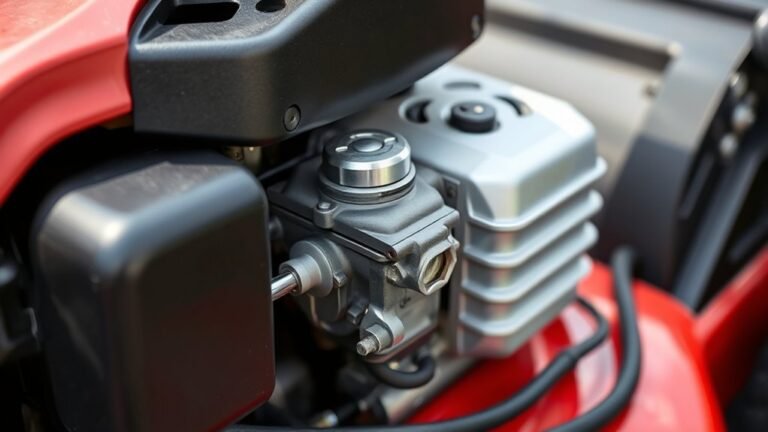
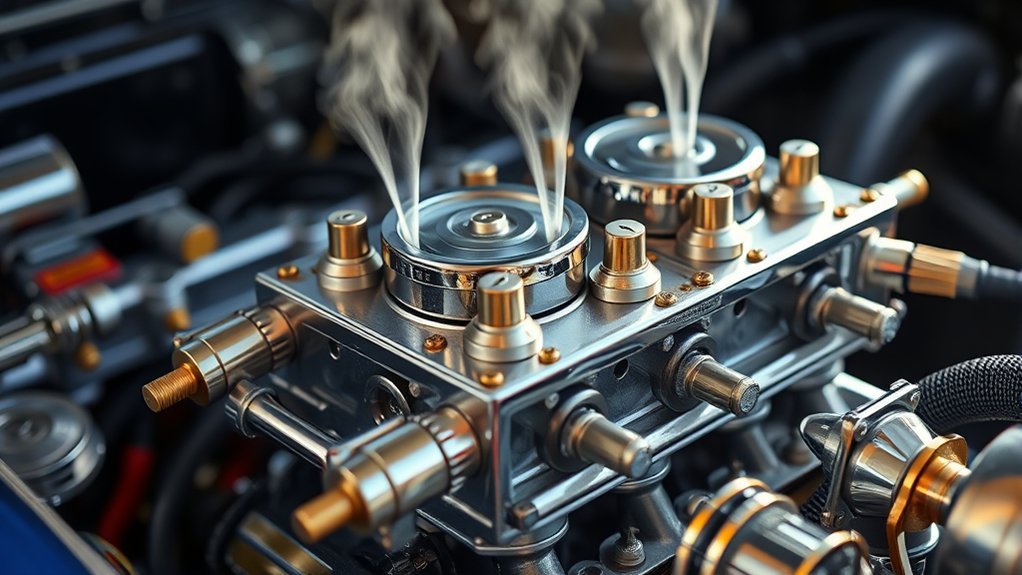
A car carburetor is a mechanical device that blends air and fuel in the correct ratio for combustion in an engine. Understanding its function is essential, especially given the carburetor history that dates back to early automotive engineering.
Despite advances in fuel injection, carburetors remain relevant in classic and certain performance vehicles. You should be aware of common fuel system myths like the idea that carburetors always cause inefficiency or emissions issues.
In reality, a well-maintained carburetor delivers precise fuel metering suitable for various engine loads and speeds. Knowing what a carburetor is and why it matters helps you appreciate its role in engine performance, fuel economy, and emissions control, debunking misconceptions and highlighting its practical engineering significance.
How the Carburetor Mixes Air and Fuel for Your Engine
How exactly does the carburetor guarantee the right mixture of air and fuel reaches your engine? Drawing on principles refined since the early carburetor history, it uses the pressure difference created by air flowing through a narrowed venturi to precisely draw fuel into the airstream.
As air accelerates, it lowers pressure, pulling fuel from the float chamber in proportion to airflow, ensuring consistent mixing. This balance is essential for prime combustion and performance.
The carburetor is designed with fuel compatibility in mind, accommodating various fuel types while maintaining correct atomization. By controlling this air-fuel ratio mechanically, it responds instantly to throttle changes without electronic input, providing your engine with a reliable, ready-to-burn mixture tailored to driving conditions.
Key Carburetor Parts and What They Do
Which components inside the carburetor work together to deliver the perfect air-fuel mixture to your engine? The main parts include the float chamber and throttle valve. The float chamber maintains a consistent fuel level, ensuring steady delivery. The throttle valve controls airflow, adjusting engine power.
You’ll also find the venturi, where air speeds up and pressure drops, drawing fuel into the airstream—a classic two word idea 1 illustrating fluid dynamics. Additionally, the choke valve restricts airflow during cold starts, enriching the mixture for easier ignition, another two word idea 2 that’s essential for operation.
Understanding these parts helps you appreciate how precise mechanical coordination ensures your engine runs smoothly and efficiently without electronic intervention.
What Happens When You Step on the Gas Pedal
When you step on the gas pedal, the throttle valve opens wider to allow more air into the carburetor. This increase in airflow draws in additional fuel, enriching the air-fuel mixture.
As a result, the engine’s RPM rises, delivering greater power output.
Throttle Valve Movement
The throttle valve controls the amount of air entering the carburetor, directly influencing engine speed and power. When you step on the gas pedal, it mechanically opens the throttle valve, allowing more air to flow through.
This change alters the airflow dynamics within the carburetor’s venturi, increasing air velocity and volume. The throttle valve’s position precisely modulates airflow, ensuring the engine receives the correct air volume for the desired speed.
As the valve opens wider, airflow resistance decreases, enabling higher engine RPMs. This movement is critical for responsive acceleration, as the valve’s angle directly correlates to the air intake rate.
Understanding throttle valve movement helps you grasp how your input translates into immediate changes in engine performance through controlled airflow dynamics.
Air-Fuel Mixture Increase
How exactly does pressing the gas pedal increase the air-fuel mixture in your carburetor? When you step on the gas pedal, the throttle valve opens wider, allowing more air to flow through the venturi. This increased airflow reduces pressure in the venturi, drawing more fuel from the main jet into the mixing chamber.
Consequently, the air-fuel mixture becomes richer to meet the engine’s higher power demand. During idle or cold starting, the carburetor uses an idle enrichment circuit to add extra fuel, compensating for poor vaporization and low engine temperature. This ensures smooth operation before the throttle valve opens significantly.
As you accelerate, the idle enrichment gradually disengages, and the main fuel circuit takes over, precisely adjusting the mixture for efficient combustion and optimal performance.
Engine RPM Response
Stepping on the gas pedal not only adjusts the air-fuel mixture but also directly influences engine RPM. When you press the pedal, the throttle valve opens wider, increasing airflow and prompting the carburetor to supply more fuel.
This rapid change demands efficient fuel vaporization for optimal combustion. If fuel isn’t properly vaporized, incomplete combustion occurs, reducing engine efficiency and increasing deposits that cause irreversible wear on engine components.
The increase in RPM corresponds to the engine’s response to the richer mixture and greater airflow, accelerating the pistons faster. However, frequent aggressive throttle use can accelerate irreversible wear, particularly in the carburetor and valves.
Understanding this response helps you manage throttle input to maintain engine longevity and performance while optimizing fuel vaporization and combustion.
How the Throttle Controls Engine Speed
Why does pressing the throttle pedal increase your engine’s speed? When you press the throttle, you open the throttle valve inside the carburetor, allowing more air to flow into the intake manifold. This increase in airflow raises the engine’s RPM by letting more oxygen mix with fuel for combustion.
The throttle directly controls engine speed by regulating this air volume. At idle speed, the throttle valve is nearly closed, limiting air and maintaining a low, steady RPM. When you press the pedal, the throttle valve opens wider, improving throttle response by quickly increasing airflow and engine speed.
This precise control ensures the engine responds immediately to driver input without unnecessary delay or surging, providing smooth acceleration and consistent power delivery.
How the Carburetor Adjusts Fuel Mixture for Driving Conditions
When you drive under different conditions, the carburetor must adjust the fuel mixture to keep your engine running efficiently. It achieves this by regulating the air-to-fuel ratio through various circuits and jets, responding to changes in engine load, temperature, and speed. Proper carb maintenance and tuning considerations ensure these adjustments are accurate.
Key mechanisms involved include:
- Idle circuit for low-speed operation
- Main jet controlling fuel at higher speeds
- Accelerator pump delivering extra fuel during acceleration
- Choke valve enriching mixture during cold starts
- Venturi effect regulating airflow and fuel draw
Common Carburetor Problems and Engine Issues
You’ll often encounter issues like fuel mixture imbalance that can cause rough idling or poor acceleration.
Clogged jets restrict fuel flow, leading to engine hesitation or stalling. Airflow restrictions also reduce performance by disrupting the carburetor’s ability to maintain the correct air-fuel ratio.
Fuel Mixture Imbalance
How does an imbalanced fuel mixture affect your engine’s performance? When the carburetor doesn’t maintain the correct air-to-fuel ratio, your engine may run too rich or too lean, causing inefficiency and damage.
An improper idle mixture can lead to rough idling or stalling. Additionally, fuel vaporization issues such as vapor lock can aggravate the imbalance, interrupting fuel flow and causing hesitation.
You might notice:
- Poor acceleration due to insufficient fuel delivery
- Increased fuel consumption from a rich mixture
- Engine knocking or pinging from a lean condition
- Difficulty maintaining stable idle speed
- Overheating caused by lean fuel mixtures
Addressing fuel mixture imbalance ensures smoother operation and prolongs engine life.
Clogged Jets Symptoms
Fuel mixture imbalances often trace back to issues within the carburetor jets, which regulate fuel flow into the engine. When jets become clogged, you’ll notice unclear carb misfire symptoms due to inconsistent fuel delivery.
Typical clogged jets symptoms include rough idling, reduced acceleration, and engine hesitation.
| Symptom | Cause | Effect on Engine |
|---|---|---|
| Rough Idling | Partial jet blockage | Unstable RPM |
| Unclear Carb Misfire | Fuel flow interruption | Engine stuttering |
| Reduced Acceleration | Restricted fuel supply | Poor throttle response |
| Hesitation | Uneven fuel-air mixture | Delayed engine reaction |
| Stalling | Severe clogging | Engine shutdown |
Airflow Restriction Effects
Why does proper airflow matter so much in a carburetor’s operation? Because any restriction disrupts the delicate balance of air-fuel mixture, leading to performance issues. When airflow is restricted, aerial turbulence increases, which can destabilize the fuel atomization process.
Additionally, intake resonance suffers, reducing engine efficiency and power output. You’ll notice several symptoms when airflow is compromised:
- Reduced engine power and throttle response
- Rough idling due to inconsistent fuel delivery
- Increased fuel consumption from improper mixture
- Hesitation or stalling during acceleration
- Overheating caused by lean or rich mixtures
Maintaining clear airflow paths is critical to prevent these problems. Inspect for obstructions and wear that cause aerial turbulence and negatively impact intake resonance, ensuring smooth, efficient carburetor function.
Comparing Carburetors and Modern Fuel Injection Systems
What sets carburetors apart from modern fuel injection systems is the method they use to mix air and fuel for combustion. Carburetors rely on vacuum created by airflow to draw fuel through jets, a principle rooted deeply in carburetor history.
This mechanical process, however, is less precise compared to fuel injection, which uses electronic controls to meter fuel directly into the intake manifold or combustion chamber. You might encounter fuel delivery misconceptions, such as believing carburetors inherently cause poor fuel economy or emissions; in reality, their limitations stem from less adaptive fuel metering.
Fuel injection systems adjust fuel delivery in real-time based on sensors, improving efficiency and performance. Understanding these differences helps you appreciate why modern engines favor fuel injection for reliability and regulatory compliance.
Frequently Asked Questions
How Do You Properly Clean a Car Carburetor?
You’ll want to disassemble the carburetor carefully, soak parts in carb cleaner, and remove debris without damaging jets. Don’t fall for carburetor myths; after reassembly, perform an idle adjustment to ensure proper engine performance.
What Tools Are Needed for Carburetor Tuning?
You’ll need a screwdriver, vacuum gauge, and tachometer for carb tuning, tools essential for precise fuel metering adjustments.
Interestingly, proper tuning can improve fuel efficiency by up to 15%, optimizing engine performance and emissions control.
Can a Carburetor Improve Fuel Efficiency?
Yes, a properly tuned carburetor can improve fuel efficiency, but don’t fall for common carburetor myths or fuel economy myths.
Accurate adjustments optimize air-fuel mixture, enhancing performance and reducing waste, but gains are often modest.
How Often Should a Carburetor Be Serviced?
If your car’s running rough after 12,000 miles, it’s time for carburetor maintenance. Regular fuel system diagnostics every 6-12 months help catch issues early, ensuring optimal performance and preventing costly repairs down the road.
Are Carburetors Compatible With Alternative Fuels?
Yes, with carburetor innovations, you can achieve alternative fuel adaptation. You’ll need precise adjustments in fuel jetting and air-fuel mixture control to ensure optimal combustion, maintaining engine efficiency and performance when using fuels like ethanol or propane.