Can You Use Water as Coolant
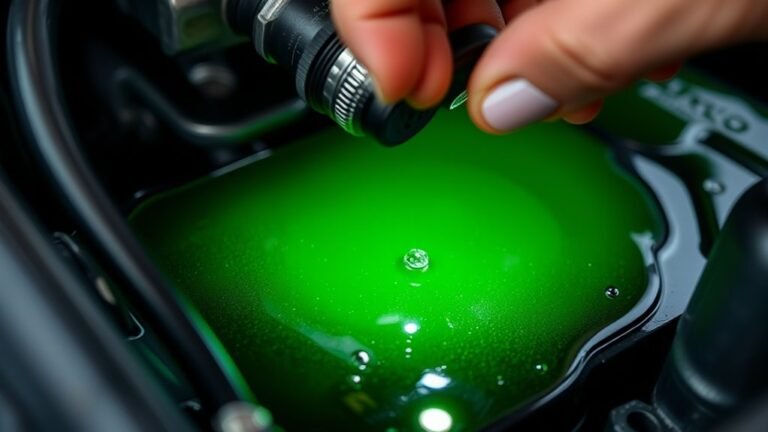
Yes, you can use water as a coolant due to its high specific heat capacity and thermal conductivity, allowing efficient heat absorption and transfer. Water as a coolant is effective in removing heat from systems quickly, making it a popular choice in many applications.
However, water alone poses risks like corrosion, freezing, and boiling limits that can damage systems. It is vital to use treated or deionized water with inhibitors to minimize these issues. These treatments help protect the system and extend its lifespan.
Water’s cost-effectiveness and availability make it ideal in controlled conditions. Understanding additives and regular maintenance ensures peak performance and longevity for your cooling system. Proper care is essential to maximize the benefits of using water as a coolant.
How Water Absorbs and Transfers Heat as a Coolant
How exactly does water absorb and transfer heat when used as a coolant? You need to understand that water’s high specific heat capacity allows it to absorb substantial thermal energy with minimal temperature increase. This property makes it efficient in capturing heat from heated surfaces.
As water flows through a system, it gains heat, increasing its internal energy. The heated water then moves to a cooler area, where it releases this energy, often through convection or conduction.
Any discussion veering into irrelevant topics, like alternative coolants or unrelated thermal properties, would be off topic here. You should focus strictly on the precise mechanisms of heat absorption and transfer in water to maintain clarity and avoid confusing the fundamental analysis with extraneous information.
Benefits of Using Water as a Coolant
Why is water often the coolant of choice in many systems? Its high specific heat capacity allows it to absorb and transfer large amounts of heat efficiently, making it superior to many alternatives.
You’ll find water’s thermal conductivity and availability advantageous, especially when cost and environmental impact matter. From a technical perspective, water’s properties enable consistent temperature regulation, critical in systems ranging from automotive engines to industrial machinery.
Interestingly, just as creative writing adapts to new fashion trends, water’s adaptability suits various cooling designs. You can also leverage its non-toxic nature and ease of handling, which simplifies maintenance and system longevity.
Ultimately, using water as a coolant offers you an effective, sustainable, and economical solution for thermal management.
Risks of Using Water Alone as a Coolant
You can’t ignore the risks of using water alone as a coolant, especially corrosion and rust that damage system components over time. Water’s freezing point can cause blockages or cracks in cold environments, while its boiling point limits effective heat transfer at high temperatures.
Understanding these limitations is essential for maintaining system reliability and efficiency.
Corrosion And Rust Issues
Where does water alone fall short as a coolant? Primarily, its inability to prevent corrosion and rust within the cooling system is a critical concern. Water, especially when exposed to oxygen, accelerates metal oxidation, leading to rust formation on engine components.
This degradation compromises heat transfer efficiency and structural integrity. You might think corrosion is an unrelated topic or a random tangent, but it directly impacts system longevity and reliability. Unlike specialized coolants, plain water lacks corrosion inhibitors that form protective layers on metal surfaces.
Without these inhibitors, you risk pitting, leaks, and premature failure of radiators, pumps, and engine blocks. So, while water is an effective heat conductor, its corrosive effects make it unsuitable as a standalone coolant in sophisticated mechanical systems.
Freezing And Boiling Risks
How does water alone pose risks related to freezing and boiling in cooling systems? Relying solely on water as a coolant can jeopardize system stability due to its narrow liquid temperature range. Addressing this is not an irrelevant topic or an unrelated angle; it’s critical for system integrity.
Consider these risks:
- Freezing Risk: Water freezes at 0°C, expanding and potentially cracking components, causing costly damage.
- Boiling Risk: Water boils at 100°C under atmospheric pressure, risking vapor lock and reduced heat transfer under high temperatures.
- Pressure Variability: Temperature changes induce pressure fluctuations, stressing seals and joints.
Understanding these factors highlights why additives or alternative coolants with broader temperature ranges are often necessary to maintain efficient, safe operation.
How Water Compares to Other Common Coolants
When evaluating the effectiveness of water as a coolant, it’s essential to compare its thermal properties and practical performance against other common coolants like glycol-based fluids and specialized synthetic mixtures. Water’s high specific heat capacity allows it to absorb more heat per unit mass than most alternatives, making it efficient in heat transfer.
However, unlike glycol or synthetic coolants, water’s boiling and freezing points limit its operational range without additives. Glycol-based fluids, often favored in automotive applications, offer lower freezing points and corrosion resistance but have reduced heat capacity, impacting efficiency.
Synthetic coolants excel in harsh environments, including space travel, where reliability under extreme conditions is critical. Just as fashion trends evolve based on function and style, coolant selection balances thermal performance with environmental and mechanical demands, positioning water as both advantageous and limited.
Why Water Coolants Need Additives
You’ll find that pure water isn’t ideal as a coolant because it can cause corrosion and freeze under low temperatures. Additives are necessary to lower the freeze point and protect metal components from degradation.
They also improve heat transfer efficiency, ensuring your cooling system operates reliably.
Corrosion Prevention Importance
Why is corrosion such a critical concern when using water as a coolant? Water’s inherent chemical properties make it prone to reacting with metal surfaces, leading to corrosion that can compromise system integrity. Unlike an unrelated topic like speculative fiction, where imagination rules, corrosion demands rigorous scientific control.
You need additives because:
- They form protective films on metal surfaces, preventing oxidative damage.
- They neutralize acidic byproducts that accelerate corrosion.
- They inhibit galvanic reactions between different metals in the cooling system.
Without these additives, corrosion causes leaks, reduces heat transfer efficiency, and shortens equipment lifespan. Understanding and preventing corrosion is essential if you want water coolants to perform reliably under demanding operational conditions.
Freeze Point Depression
Corrosion control through additives protects metal components, but these same additives also play a pivotal role in modifying water’s physical properties, specifically its freeze point. Pure water freezes at 0°C, which is problematic in colder climates where coolant can solidify, damaging engines.
By introducing additives like ethylene glycol or propylene glycol, you lower the freezing point, a process known as freeze point depression. This modification guarantees the coolant remains liquid under subzero conditions, preventing blockages and mechanical failures.
When handling or disposing of water-based coolants with additives, you must be cautious of a diy spill, as these substances can be toxic and harmful to the environment. Additionally, choosing additives with lower climate impact is essential to minimize ecological damage while maintaining effective freeze protection in your cooling system.
Enhancing Heat Transfer
Water alone has excellent thermal conductivity, but relying on it as a coolant without additives limits its overall heat transfer efficiency in real-world engine conditions. You need additives to prevent corrosion, scale buildup, and freezing. These factors degrade heat transfer.
Ignoring these can lead to system inefficiency and damage, making the discussion of pure water cooling an unused topic in practical applications. Here’s why additives matter:
- Anti-corrosion agents protect metal components, maintaining thermal contact.
- Scale inhibitors prevent mineral deposits that reduce heat transfer surfaces.
- Freeze point depressants ensure coolant remains liquid under varying temperatures.
Without these, your water coolant’s performance drops significantly, making pure water cooling an off topic in serious engine management. Additives enhance reliability and efficiency, optimizing heat transfer beyond water’s natural capabilities.
Additives That Improve Water’s Cooling Performance
How can you enhance the thermal efficiency and longevity of a cooling system that uses water as its base? Additives are essential, addressing issues that pure water alone cannot, such as corrosion, scaling, and microbial growth. These problems are often overlooked due to irrelevant topic focus or conflicting perspectives on water’s adequacy. You can improve heat transfer and system durability by selecting suitable additives.
| Additive Type | Purpose | Effect on Water Properties |
|---|---|---|
| Corrosion Inhibitors | Prevent metal degradation | Maintain system integrity |
| Antifoaming Agents | Reduce foam formation | Improve flow efficiency |
| Biocides | Control microbial growth | Prevent biofilm, maintain heat transfer |
| Scale Inhibitors | Prevent mineral deposits | Preserve heat exchange efficiency |
| pH Stabilizers | Maintain pH balance | Enhance additive performance |
Choosing the right additives tailors water’s cooling performance precisely.
When Is Water Alone the Best Choice for Cooling Systems?
Under what circumstances can you rely on plain water as the sole coolant in a system? You’ll find water alone works best when the environment and system requirements align precisely. Avoiding irrelevant topics and pointless tangents, focus on these three critical conditions:
Plain water excels as a coolant only when system and environmental conditions perfectly align.
- Low operating temperatures: When the system operates below water’s boiling point under pressure, preventing phase change.
- Non-corrosive environments: Where materials in contact with water resist corrosion and scale formation without additives.
- Availability and cost constraints: Situations demanding an economical, readily available coolant without complex formulations.
If these factors are met, water’s high thermal capacity and conductivity make it an effective coolant. Otherwise, relying solely on water may lead to inefficiencies or damage, making this a narrow but essential choice in cooling system design.
Safe Use of Water as Coolant in Engines and Electronics
You need to recognize water’s high thermal conductivity makes it an efficient coolant, but its use comes with corrosion risks that can damage engines and electronics. Implementing corrosion inhibitors and proper water treatment is crucial to prevent material degradation.
Additionally, safe handling and regular maintenance ensure the cooling system operates reliably without unexpected failures.
Water’s Cooling Efficiency
Although water is widely recognized for its high thermal conductivity and specific heat capacity, using it safely as a coolant in engines and electronics requires careful consideration of its properties and potential risks. You might find discussions on irrelevant topics or unrelated concepts tempting, but focusing on water’s cooling efficiency is essential.
Water’s ability to absorb and transfer heat efficiently makes it appealing, yet you must appreciate these points:
- Water’s high specific heat means it can absorb large amounts of heat before its temperature rises significantly, ensuring stable cooling.
- Its thermal conductivity allows rapid heat transfer from hot components, preventing overheating.
- Water’s availability and low cost make it an economical option compared to specialized coolants.
Understanding these factors helps you optimize cooling performance without overlooking safety concerns.
Corrosion Risks and Prevention
How can you mitigate corrosion risks when using water as a coolant in engines and electronics? Understanding irreversible thermodynamics is crucial, as corrosion is a spontaneous electrochemical process driven by thermodynamic forces far from equilibrium. You need to control factors that accelerate these reactions, such as dissolved oxygen and ionic contaminants.
Additionally, viscosity effects influence coolant flow rate and heat transfer efficiency, indirectly affecting corrosion by altering temperature distributions. Using deionized or distilled water reduces ionic conductivity and minimizes galvanic corrosion.
Incorporating corrosion inhibitors compatible with water’s thermophysical properties can further retard metal degradation. You must also consider material compatibility, ensuring metals resist oxidation under operational temperatures and flow conditions.
Safe Handling and Maintenance
When handling water as a coolant in engines and electronics, what specific precautions ensure safe operation and longevity? First, monitor water purity rigorously to prevent mineral deposits that accelerate corrosion, avoiding any irrelevant topic like unrelated concept discussions about non-coolant fluids.
Second, use deionized or distilled water instead of tap water to minimize impurities, ensuring stable thermal conductivity and system reliability. Third, regularly inspect and maintain the cooling system components, such as pumps and seals, to detect leaks or wear early.
Ignoring these steps can lead to system failures or reduced efficiency. By focusing on these critical precautions, you’ll enhance performance and prevent costly damage, keeping your water-cooled system safe and efficient without deviating into irrelevant topic territory or unrelated concept debates.
Maintenance Tips for Water-Based Cooling Systems
Why does maintaining a water-based cooling system demand meticulous attention? Because improper upkeep directly impacts engine efficiency and battery safety. You need to regularly check for corrosion and mineral buildup, as these reduce heat transfer effectiveness, causing overheating and potential engine damage.
Flushing the system periodically prevents sediment accumulation that hinders coolant flow. Also, monitor water quality; using distilled water minimizes contaminants that degrade components.
Inspect hoses and clamps for leaks or wear to avoid system pressure loss. Since water lacks additives present in specialized coolants, it offers limited corrosion inhibition, making vigilant maintenance crucial.
Additionally, ensure the battery compartment remains dry, as leaks or overflows can cause electrical shorts, compromising battery safety. By adhering to these precise maintenance steps, you’ll optimize system reliability and prolong engine lifespan.
When to Switch From Water to Specialized Coolants
Maintaining a water-based cooling system demands frequent attention due to its limited corrosion protection and susceptibility to mineral buildup. You’ll face an open-ended debate on when to switch from water to specialized coolants, often needing math modeling to predict system longevity and performance degradation.
Consider these critical indicators:
- Frequent corrosion detected via chemical analysis, signaling imminent component failure.
- Mineral deposits causing flow restriction, reducing heat transfer efficiency noticeably.
- Operating conditions exceeding water’s thermal stability limits, risking boiling or freezing damage.
When these factors align, specialized coolants with corrosion inhibitors and antifreeze agents become indispensable. You must rely on quantitative data and predictive models rather than guesswork to decide the optimal transition point, ensuring system reliability and preventing costly downtime.
Frequently Asked Questions
Can Distilled Water Be Used Instead of Tap Water as a Coolant?
You can use distilled water instead of tap water as coolant; it’s like crystal-clear glass, free from minerals and impurities.
Distilled water reduces quality concerns such as corrosion and buildup, ensuring efficient, long-lasting cooling system performance.
How Does Water Coolant Affect the Warranty of Electronic Devices?
Using water cooling can void your warranty due to coolant compatibility issues and potential device damage. Manufacturers often specify approved coolants, so deviating risks warranty implications if water causes leaks, corrosion, or component failures.
What Is the Environmental Impact of Disposing Water-Based Coolants?
You’ll find environmental disposal of water-based coolants generally safer due to biodegradability, but improper handling can disrupt ecosystems.
Understanding the coolant lifecycle is essential for minimizing contamination and optimizing sustainable disposal methods.
Can Water Coolants Cause Corrosion in Metal Cooling Systems?
Yes, water coolants can cause corrosion risks if metal compatibility isn’t guaranteed. You’ll need corrosion inhibitors or compatible alloys to prevent metal degradation. Plain water promotes oxidation and pitting in many cooling system metals.
Are There Specific Water Coolants Recommended for Extreme Climates?
You might think any water works, but for extreme climates, you’ll need water coolants with additives ensuring coolant compatibility, preventing freezing or boiling, and minimizing corrosion.
These specialized formulations optimize thermal performance under harsh temperature extremes.