How to Replace Fuel Filter
To replace your fuel filter, first look for signs such as reduced engine performance or fuel leaks. Identifying these issues early can help maintain your vehicle’s efficiency and safety. The fuel filter plays a crucial role in keeping contaminants out of the fuel system.
Gather the necessary tools before starting: wrenches, fuel line disconnect tools, and safety gear including gloves and eye protection. Relieving the fuel system pressure is an important safety step to avoid fuel spray.
Next, carefully detach and remove the old filter, capping the fuel lines quickly to prevent spills. Install the new fuel filter in the correct orientation, then secure all fittings tightly.
Finally, test for leaks and ensure the engine idles smoothly. Proper installation of the fuel filter helps prevent system damage and extra repair costs. For detailed steps and troubleshooting tips, continue exploring further guidance.
Identify When to Replace Your Fuel Filter
Several indicators can help you determine when to replace your fuel filter. First, check for reduced engine performance or difficulty starting, which often signals clogging. Inspect the fuel lines for identifying fuel leaks; any visible wet spots or fuel odor around the filter suggests deterioration or damage.
Pay close attention to engine misfires or hesitation during acceleration, as these symptoms typically arise from restricted fuel flow. Always consult your vehicle’s maintenance schedule for recommended replacement intervals.
When you replace the filter, adhere strictly to proper fuel filter disposal methods to prevent environmental harm. Do not discard it with regular waste. Instead, use designated hazardous waste facilities or automotive parts recyclers.
Monitoring these signs ensures optimal engine efficiency and safety while maintaining responsible environmental practices.
Gather Tools for Fuel Filter Replacement
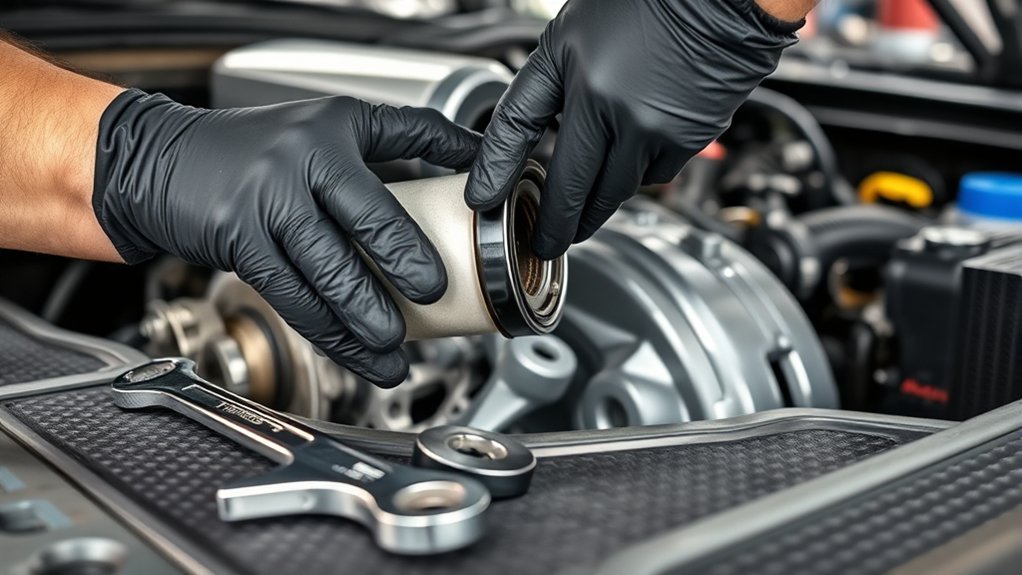
Before starting the replacement, gather all essential tools such as wrenches, screwdrivers, and a new fuel filter, along with safety gear like gloves and eye protection. Ensure each tool is in good condition and easily accessible to streamline the process.
Proper preparation minimizes risks and prevents delays during the replacement.
Essential Tools Checklist
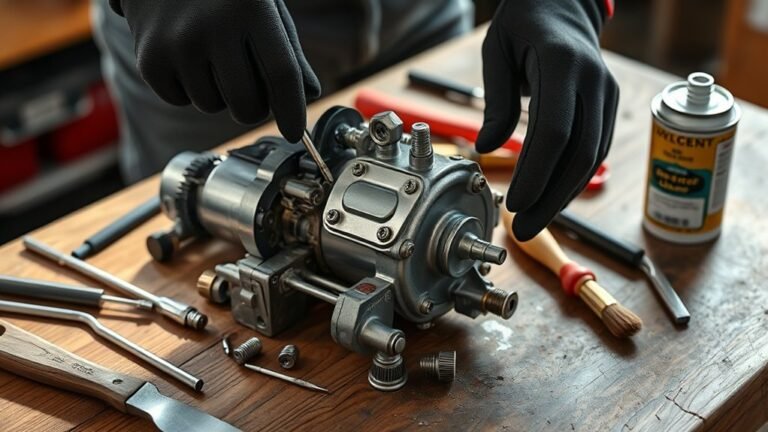
What tools will you need to replace a fuel filter efficiently and safely? First, you’ll require a wrench set to loosen and tighten fittings without damaging them. Fuel line disconnect tools may be necessary depending on your vehicle’s design.
Have a new fuel filter compatible with your model, ensuring correct filter orientation for proper fuel flow. Replace gasket materials with OEM-grade seals to prevent leaks.
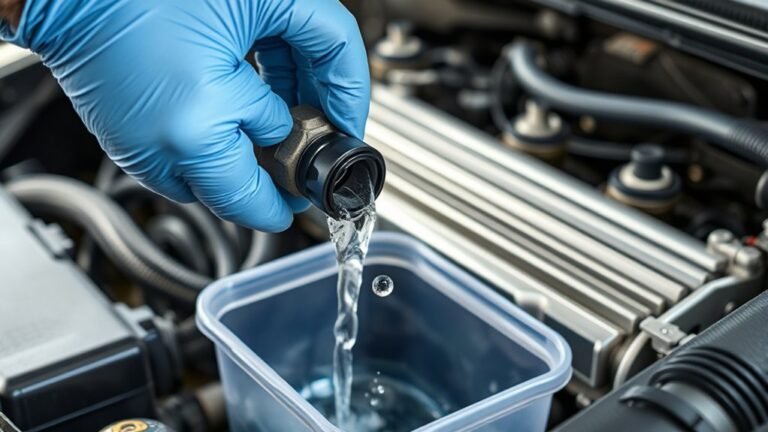
A container to catch residual fuel during removal is essential to avoid spills. Additionally, use a clean rag to wipe connections and prevent contaminants.
A screwdriver set might be needed for clamps or brackets. Lastly, a torque wrench helps secure fittings to manufacturer specifications, ensuring a leak-free installation.
Preparing these tools beforehand streamlines the replacement process and maintains system integrity.
Safety Equipment Needed
Equip yourself with proper safety gear to protect against fuel exposure and potential hazards during the replacement process. First, wear chemical-resistant gloves to prevent skin contact with fuel, which can cause irritation or burns.
Safety goggles or face shields are essential to protect your eyes from fuel splashes. Long sleeves and pants made from non-synthetic materials reduce the risk of skin exposure and static electricity buildup.
Use a respirator or work in a well-ventilated area to avoid inhaling harmful fumes. Additionally, having a fire-resistant apron and non-slip footwear ensures protection against spills and slips.
Always keep a fire extinguisher rated for flammable liquids nearby. Adhering strictly to this safety equipment protocol minimizes risks and ensures a secure environment when replacing the fuel filter.
Tool Preparation Tips
Once you’ve secured all necessary safety equipment, the next step is to gather the specific tools required for replacing the fuel filter. Having the right tools ensures you can address complications arising from fuel chemistry and residual fuel additives that may affect filter removal or installation.
Prepare the following tools:
- Fuel line disconnect tool: Essential for detaching fuel lines without damage.
- Wrenches or socket set: For loosening filter fittings and mounting brackets.
- Drain pan: To catch any fuel released due to pressure in the line.
- Replacement fuel filter and O-rings: Ensure compatibility with your vehicle’s specifications considering the impact of fuel additives.
Organizing these tools beforehand streamlines the process and prevents contamination or damage linked to fuel chemistry variations.
Remove the Old Fuel Filter
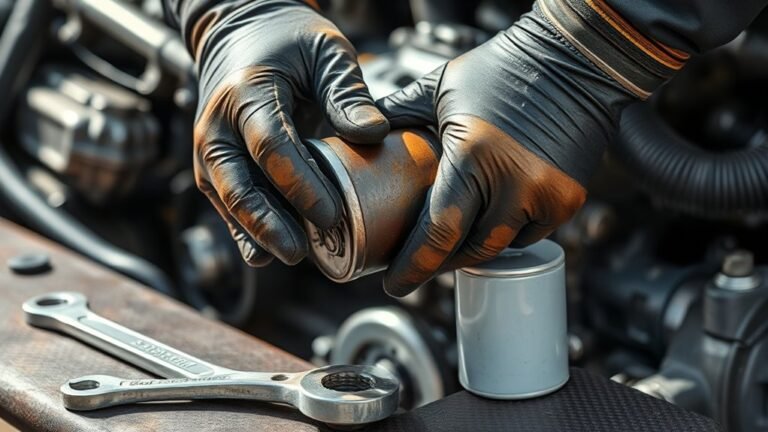
First, locate the fuel filter along the fuel line, typically near the engine or under the vehicle. Next, use the appropriate tools to carefully detach the fuel lines from the filter, being prepared for any residual fuel spillage.
Ensure you relieve fuel system pressure before disconnecting to avoid fuel spray.
Locate Fuel Filter
Locating the fuel filter involves identifying its position along the fuel line, which is typically found either near the fuel tank, along the frame rail, or within the engine compartment. To locate fuel filter placement accurately, follow these steps:
Consult your vehicle’s service manual to determine the exact fuel filter location. Visually inspect along the fuel line starting from the fuel tank toward the engine.
Look for a cylindrical or canister-shaped component connected inline with the fuel hoses. Use a flashlight to check hard-to-see areas like under the vehicle or behind engine components.
Detach Fuel Lines
How do you safely detach the fuel lines without causing leaks or damage? First, relieve the fuel system pressure by locating the fuel pressure test port and using a gauge to measure pressure. This step prevents fuel spray when disconnecting lines.
Once pressure is fully released, wear safety glasses and gloves. Identify the connectors securing the fuel lines to the filter, then use the appropriate tool, often a quick-disconnect tool or wrench, to carefully detach lines.
Avoid twisting or bending the lines excessively to prevent damage. Cap or plug the open fuel line ends immediately to minimize fuel spillage and contamination. Keep a rag nearby to catch any residual fuel.
Properly detaching lines ensures a clean, safe removal of the old fuel filter and prepares the system for installation of the new filter.
Install the New Fuel Filter
Where should you position the new fuel filter to guarantee proper fuel flow and system integrity? You need to install it following the original fuel flow direction, usually indicated by an arrow on the filter body. This ensures the filter functions correctly without restricting fuel delivery.
Remember, idea one: align the inlet and outlet ports accurately. Idea two: securely attach the filter in the mount to avoid vibrations.
To install the new fuel filter:
Confirm the flow direction arrow points from the fuel tank to the engine.
Connect the fuel lines tightly to prevent leaks.
Use new clamps or fittings as needed.
Mount the filter firmly to its bracket to minimize movement.
Correct installation maintains system integrity and avoids potential fuel delivery issues.
Test Your Fuel System After Fuel Filter Replacement
Why is testing your fuel system critical after replacing the fuel filter? Ensuring proper fuel flow and system integrity is essential to prevent engine performance issues or damage.
First, start the engine and observe for smooth idling; hesitation or stalling indicates a problem.
Idea one: Check for leaks around the filter connections by applying a soapy water solution and watching for bubbles. This confirms a secure seal and no fuel escape.
Idea two: Monitor fuel pressure with a gauge if available; pressure within manufacturer specifications verifies the filter is correctly installed and unblocked. If pressure is low, double-check connections and filter orientation.
Performing these tests immediately after replacement guarantees your fuel system operates efficiently and safely before driving.
Common Problems During Fuel Filter Replacement
Although replacing a fuel filter might seem straightforward, you can encounter several common problems that complicate the process. Being aware of these issues helps you avoid common mistakes and manage budgeting challenges effectively.
Difficulty relieving fuel system pressure: If you don’t release pressure properly, fuel spray can occur, causing safety hazards.
Incorrect filter orientation: Installing the filter backward disrupts fuel flow and engine performance.
Using incompatible replacement parts: Choosing the wrong filter wastes money and causes system malfunctions, impacting your budget.
Fuel leaks post-installation: Improper sealing or damaged O-rings can lead to leaks, requiring rework and additional expenses.
Anticipating these issues ensures a smooth replacement process, saving you time and money while maintaining system integrity.
Frequently Asked Questions
What Type of Fuel Filter Is Best for My Vehicle?
Choosing the best filtration is like finding the perfect puzzle piece; you need a fuel filter that matches your vehicle’s fuel compatibility precisely.
Check your owner’s manual or manufacturer specs to ensure optimum performance and protection.
How Often Should I Replace My Fuel Filter?
You should replace your fuel filter every 20,000 to 40,000 miles, depending on your vehicle’s maintenance schedule.
Regular fuel filtration ensures prime engine performance and prevents contaminants from damaging critical components. Check your manual for specifics.
Can I Use Fuel Additives Instead of Replacing the Filter?
You can’t rely solely on fuel additives instead of filter replacement. Additives clean fuel but don’t remove contaminants trapped by the fuel filter.
Regular filter replacement remains essential for optimal engine performance and fuel system protection.
What Are the Symptoms of a Clogged Fuel Filter?
You’ll notice engine misfires, difficulty starting, and reduced power if the fuel filter’s clogged.
As a random thought, unrelated topic: always separate symptoms logically to avoid misdiagnosis when troubleshooting fuel system issues in vehicles.
Is It Safe to Drive With a Dirty Fuel Filter?
You shouldn’t drive with a dirty fuel filter, as it causes engine stalling, reduced power, and poor fuel efficiency. Ignoring these safety concerns isn’t just risky; it’s unrelated to safe vehicle operation and could lead to costly repairs.