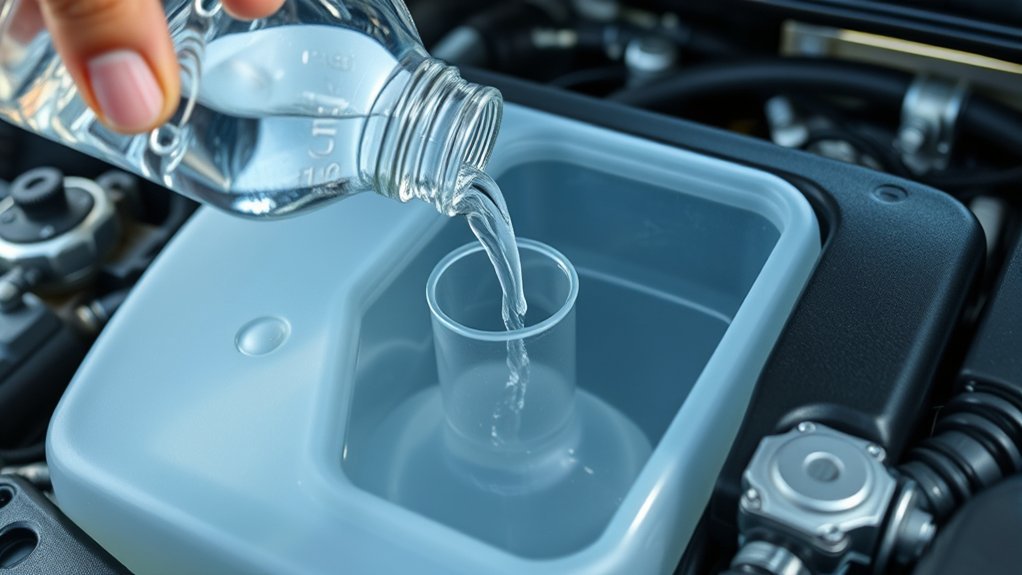
Can I Put Water in My Coolant Tank
You can put water in your coolant tank only in emergencies when coolant levels are critically low. However, it is essential to use distilled or deionized water to minimize mineral deposits and avoid damage.
Plain tap water can cause rust, corrosion, and reduced cooling efficiency. Water should only be considered a temporary fix and must be replaced promptly with the recommended coolant mix.
Understanding these factors helps ensure your engine operates safely and efficiently under various conditions.
Can You Put Water in Your Coolant Tank Safely?
When it comes to adding water to your coolant tank, you need to understand the specific conditions under which it’s safe to do so. Adding water can be acceptable in emergency situations where the coolant level is critically low, as operating with insufficient coolant increases the overheating risk significantly.
However, water alone lacks the necessary additives that prevent corrosion, lower freezing points, and raise boiling points. Therefore, it’s essential to use distilled water rather than tap water to minimize mineral deposits.
Ideally, you should only add water temporarily until you can replenish the proper coolant mixture. Consistently relying on water risks engine damage due to overheating and inadequate protection.
Always follow your vehicle manufacturer’s guidelines to maintain optimal cooling system performance and avoid mechanical failures.
What Are the Risks of Using Only Water as Coolant?
Why should you avoid using only water as coolant in your vehicle? Water alone lacks the necessary additives to protect your engine, which can lead to corrosion, rust, and mineral buildup within the cooling system.
Modern engine design relies on specific coolant formulations to maintain optimal operating temperatures and prevent overheating or freezing. Using only water compromises the cooling system’s efficiency, potentially causing localized hot spots that damage components.
Additionally, without proper coolant, your engine may run less efficiently, negatively impacting fuel economy. Water also has a lower boiling point than standard coolant mixtures, increasing the risk of vapor lock under high temperatures.
For these reasons, relying solely on water in your coolant tank can jeopardize both engine longevity and performance.
How Water in the Coolant Tank Affects Your Engine
When water is in your coolant tank, it directly influences how your engine manages temperature, potentially causing overheating or inefficient cooling. You also risk accelerated corrosion and rust inside the cooling system, which can lead to damage over time.
Understanding these effects is vital for maintaining the overall efficiency and longevity of your engine.
Engine Temperature Regulation
How does water in the coolant tank influence your engine’s temperature regulation? Water has a high specific heat capacity, allowing it to absorb and transfer heat efficiently, which helps maintain engine balance by preventing temperature spikes.
When used properly, it stabilizes the engine’s operating temperature, ensuring components function within optimal ranges. This consistent temperature control directly impacts fuel economy, as engines running too hot or cold experience inefficient combustion.
However, relying solely on water lacks the boiling point elevation and freeze protection offered by antifreeze mixtures, which can compromise temperature stability under extreme conditions. Thus, while water can support temperature regulation temporarily, it’s best combined with coolant additives to maintain engine balance and optimize fuel economy without risking overheating or inefficient thermal management.
Corrosion and Rust Risks
While water plays a key role in regulating engine temperature, its presence in the coolant tank also introduces potential risks related to corrosion and rust. Pure water lacks the corrosion inhibitors found in commercial antifreeze, allowing metal components within the cooling system to oxidize.
Over time, this corrosion can produce rust, which may clog passages and impair coolant flow. You might notice increased engine noise as rust particles disrupt normal operation.
When handling coolant mixtures or flushing the system to address corrosion, always wear disposable gloves to protect your skin from irritants. Neglecting corrosion can lead to costly repairs, so it’s crucial to monitor coolant composition and replace pure water with appropriate antifreeze solutions to maintain engine integrity and prevent rust-related damage.
Cooling System Efficiency
Why does the presence of water in your coolant tank markedly impact your engine’s cooling system efficiency? Water alone lacks the additives found in proper coolant mixtures, which optimize heat transfer and prevent overheating.
While water has a high heat capacity and initially aids cooling, it boils at 212°F (100°C), lower than coolant’s boiling point, increasing the risk of vapor lock and engine overheating. Additionally, water doesn’t protect against corrosion, which can impair radiator and thermostat function, further reducing cooling efficiency.
Poor cooling stresses your engine, affecting overall auto maintenance and potentially shortening battery life due to increased engine load. For optimal cooling system performance, always use manufacturer-recommended coolant blends, ensuring both efficient heat dissipation and protection for components critical to your vehicle’s longevity.
Why Should You Avoid Tap Water in Your Cooling System?
What makes tap water a poor choice for your cooling system is its mineral content and impurities. These minerals can lead to scale buildup, reducing heat transfer efficiency and causing overheating. Additionally, impurities promote corrosion, which damages metal components.
Using tap water introduces risks unrelated to the irrelevant topic of coolant formulation but directly impacts system longevity and performance.
| Mineral/Impurity | Effect on Cooling System | Consequence |
|---|---|---|
| Calcium | Scale formation | Reduced heat exchange |
| Magnesium | Corrosive reactions | Metal degradation |
| Chlorides | Accelerated corrosion | Leaks and component failure |
| Iron | Rust formation | Blockages and damage |
| Sediments | Clogging of coolant passages | Impaired fluid flow |
Avoiding tap water prevents these issues, ensuring reliable cooling system operation.
Is Distilled Water a Better Temporary Coolant?
You’ll find distilled water is a better temporary coolant because it lacks minerals and impurities that cause corrosion and scale buildup. Unlike regular tap water, distilled water reduces the risk of clogging and damage to your cooling system.
However, it’s still not a substitute for a proper antifreeze mixture designed for long-term use.
Benefits Of Distilled Water
How does distilled water compare to regular water when used as a temporary coolant? Distilled water offers significant benefits due to its purity and controlled coolant chemistry. Unlike regular tap water, distilled water is free from dissolved minerals, salts, and contaminants that can disrupt the coolant’s chemical balance.
This purity reduces the risk of corrosion and scaling inside your engine’s cooling system, preserving metal components and maintaining optimal heat transfer efficiency. Using distilled water helps maintain the integrity of the coolant’s additives, ensuring consistent performance.
While it’s not a permanent replacement for a formulated coolant, distilled water’s stable chemistry makes it a safer temporary option. So, if you ever need to top off your coolant tank in an emergency, distilled water minimizes the potential damage compared to untreated water.
Risks Of Using Regular Water
Why should you think twice before using regular water in your coolant system? Regular tap water contains minerals and impurities that can accelerate corrosion and scale buildup inside your engine’s cooling system. These deposits reduce heat transfer efficiency, causing increased radiator temps and potential overheating.
One common coolant myth is that water alone suffices for cooling needs; however, water lacks the anti-corrosive additives found in commercial coolants or distilled water. Distilled water, being mineral-free, minimizes sediment buildup and protects metal components, making it a safer temporary coolant option.
While using regular water might seem convenient, its long-term impact on radiator temps and engine health can be detrimental. To maintain optimal performance and avoid costly repairs, it’s best to rely on distilled water or proper coolant mixtures rather than plain tap water.
How to Properly Top Up Your Coolant Tank With Water
When should you top up your coolant tank with water to maintain best engine performance? You should add water only when the coolant level drops below the minimum mark, especially during emergencies or when you don’t have access to the proper coolant mixture.
Before topping up, ensure the engine is cool to prevent irreversible ventilation caused by pressure buildup. Use distilled or deionized water to minimize mineral deposits that could impair heat transfer.
Slowly pour water into the reservoir until it reaches the recommended level, avoiding overfilling. After topping up, check for leaks and monitor the coolant level regularly.
Proper maintenance preserves fuel efficiency by ensuring the engine operates within optimal temperature ranges, preventing overheating and mechanical wear.
Best Coolant Mixtures When Adding Water
Which coolant mixture works best when you need to add water to your coolant tank? Ideally, you should use a 50:50 mix of coolant concentrate and distilled water. This ratio optimizes freeze and boil-over protection while preventing engine varnish buildup caused by impurities in untreated water.
Using distilled water is essential as it reduces mineral deposits that lead to radiator sheathing damage and corrosion. Avoid plain tap water, which can accelerate engine varnish formation and degrade radiator sheathing integrity.
If emergency top-up is necessary and only water is available, add it temporarily, then replace with the correct mixture promptly. Maintaining the proper coolant-to-water ratio ensures efficient heat transfer, protects engine components, and prolongs the coolant system’s lifespan without risking damage from contaminants or improper chemical balance.
How Often Should You Replace Water Added to Coolant?
You should replace the water in your coolant tank based on manufacturer guidelines, typically every 2 to 3 years or 30,000 miles.
Monitor for signs like discoloration, sediment, or a drop in coolant performance, which indicate it’s time for a change.
Water Replacement Frequency
How often should you replace the water added to your vehicle’s coolant system? The water replacement frequency largely depends on the type of water used and your coolant maintenance schedule.
If you’ve added distilled water as a subtopic idea 1, it typically doesn’t require frequent replacement due to its purity and minimal mineral content. However, if tap water or untreated water was used as a subtopic idea 2, it’s vital to replace the mixture more often to prevent mineral buildup and corrosion.
Generally, it’s recommended to flush and replace the coolant mixture every 2 to 3 years or 30,000 to 50,000 miles, whichever comes first. Regular replacement maintains excellent heat transfer efficiency and protects your engine from overheating and corrosion.
Signs Water Needs Changing
Regularly scheduled coolant replacement is a good baseline, but certain indicators suggest when the water in your coolant needs changing sooner. You should perform frequent temperature checks; if your engine runs hotter than usual, it may signal degraded water quality reducing heat transfer efficiency.
Another key sign is unusual radiator noise, such as gurgling or bubbling, which can indicate air pockets caused by water contamination or corrosion. Additionally, if the coolant appears rusty or cloudy during inspection, it’s time to replace the water.
These symptoms point to compromised coolant performance, risking engine overheating or damage. Monitoring these signs ensures timely water replacement, maintaining optimal cooling system function and preventing costly repairs. Don’t rely solely on schedules; use these diagnostics to decide when to change the water in your coolant.
Impact of Water Quality
Why does the quality of water matter when added to your coolant? Poor water quality can introduce minerals and contaminants that degrade coolant performance and damage your engine. Regular water testing is essential to ensure the water you add meets specifications for coolant compatibility.
Hard water with high mineral content can cause scale buildup, reducing heat transfer efficiency and increasing corrosion risk. Distilled or deionized water is recommended to maintain optimal coolant function.
You should replace the water component in your coolant mixture based on manufacturer guidelines or whenever water testing indicates contamination beyond acceptable levels. Frequent monitoring helps maintain coolant integrity, prevents engine overheating, and extends system lifespan.
Always confirm that the water you add aligns with the coolant’s chemical requirements to avoid compromising your vehicle’s cooling system.
How to Tell If Your Cooling System Needs a Professional Flush
When should you consider a professional flush for your cooling system? You’ll want one if you notice signs like overheating, coolant discoloration, or a persistent low coolant level without leaks. Contaminants and rust buildup impair heat transfer efficiency, risking engine damage.
Also, if your vehicle’s temperature gauge fluctuates erratically, it suggests internal blockages. While unrelated topics such as other vehicle systems’ malfunctions may appear, focus on signs directly tied to the cooling system’s performance.
A professional flush removes sediment and deposits that simple draining can’t eliminate, restoring optimal coolant flow. Regular maintenance intervals vary by manufacturer, but if your coolant hasn’t been changed in over two years or 30,000 miles, a flush is prudent to maintain system integrity and prevent corrosion.
What to Do If You Put Only Water in Your Coolant Tank?
How should you respond if you accidentally fill your coolant tank with only water? First, avoid driving the vehicle extensively, as pure water lacks corrosion inhibitors and antifreeze properties, risking irreversible damage to the engine. You should drain the coolant system promptly and refill it with the correct coolant mixture to maintain optimal fuel efficiency and prevent overheating.
| Step | Action | Notes |
|---|---|---|
| 1 | Stop driving immediately | Prevents engine damage |
| 2 | Drain the coolant system | Removes unprotected water |
| 3 | Refill with manufacturer-recommended mix | Ensures proper freezing point |
| 4 | Monitor temperature gauge | Confirm system stability |
Timely intervention is crucial to protect your engine and maintain vehicle performance.
Frequently Asked Questions
Can I Use Bottled Water Instead of Distilled Water in My Coolant Tank?
You shouldn’t use bottled water instead of distilled water because the water type matters; bottled water contains minerals that affect coolant compatibility, potentially causing corrosion or deposits. This can reduce your cooling system’s efficiency and lifespan.
How Does Water Quality Affect Coolant System Warranty Coverage?
Water quality whispers warnings: poor quality or contamination signs often void your coolant system warranty. You shouldn’t risk corrosion or deposits; always use recommended fluids to ensure coverage and protect your engine’s cooling efficiency and longevity.
Can Adding Water to Coolant Improve My Car’s Fuel Efficiency?
Adding water to coolant can slightly improve fuel efficiency by enhancing heat transfer, but only if the water quality is high to prevent corrosion and deposits.
Poor water quality can harm your system and reduce efficiency gains.
Is It Safe to Mix Different Brands of Coolant With Water?
You shouldn’t mix brands without checking coolant compatibility first, as different formulations can cause chemical reactions or reduce corrosion protection.
Always consult manufacturer guidelines to ensure safe mixing and maintain optimal cooling system performance when adding water.
What Are the Signs of Coolant Contamination After Adding Water?
You’ll notice signs like discoloration, sludge buildup, or a milky appearance indicating contamination risks. Dilution effects reduce coolant efficiency, causing overheating or corrosion.
Regularly check for these to maintain optimal cooling system performance and prevent damage.