Is a Ford Escape a 4 Wheel Drive
The Ford Escape is not equipped with traditional four-wheel drive (4WD); instead, many trims come with all-wheel drive (AWD). AWD automatically distributes power to all four wheels when necessary, enhancing traction on slippery roads without any input from the driver.
This system is ideal for everyday driving conditions, such as rain, snow, and light off-road use. However, it is not designed for rugged terrain like true 4WD systems.
If you want to learn which Ford Escape models offer AWD and how it compares to 4WD, keep exploring.
Key Takeaways
- The Ford Escape offers an all-wheel-drive (AWD) option, not a traditional four-wheel-drive (4WD) system.
- AWD in the Escape automatically distributes power to all wheels without driver input.
- Escape’s AWD improves traction and handling but is designed for on-road and light off-road use only.
- No part-time or true 4WD system with transfer case is available on the Ford Escape.
- For rugged off-roading, a vehicle with true 4WD, like a Jeep Wrangler or Ford Bronco, is recommended instead.
Does the Ford Escape Have Four-Wheel Drive?
Wondering whether the Ford Escape comes with four-wheel drive? Yes, the Ford Escape offers an all-wheel-drive (AWD) option, which many people confuse with four-wheel drive (4WD).
While not a traditional 4WD system, the Escape’s AWD automatically distributes power to all four wheels when needed, enhancing traction on slippery roads. You won’t find a part-time 4WD system in this model, but the AWD still provides improved handling and stability compared to front-wheel drive.
If you often drive in rain, snow, or light off-road conditions, the Escape’s AWD can be a valuable feature. However, it’s important to know that not every Escape has it—you’ll need to choose a trim or package that includes AWD if you want that capability.
What Is Four-Wheel Drive (4WD) and How Does It Work?
How exactly does four-wheel drive (4WD) work, and why might you need it? 4WD sends power to all four wheels simultaneously, improving traction on slippery or uneven surfaces. You typically activate it when driving off-road or in tough weather conditions.
It uses a transfer case to distribute torque evenly, giving you better control and stability.
| Feature | How It Works | When to Use |
|---|---|---|
| Power Delivery | Sends power to all wheels | Off-road, snow, mud |
| Transfer Case | Splits torque front/rear | Engaged manually or automatically |
| Traction | Better grip on rough terrain | Slippery or uneven roads |
| Control | Enhances vehicle stability | Challenging driving conditions |
| Activation | Manual or automatic switch | When extra traction’s needed |
You’ll find 4WD especially useful in demanding driving situations.
Ford Escape Drivetrain Options: AWD vs. Front-Wheel Drive
When choosing a Ford Escape, you’ll find both All-Wheel Drive (AWD) and Front-Wheel Drive (FWD) options available. AWD offers improved traction and handling in various conditions, while FWD provides efficiency and simplicity.
Understanding these differences helps you pick the drivetrain that fits your driving needs best.
All-Wheel Drive Benefits
Why choose all-wheel drive (AWD) over front-wheel drive (FWD) in your Ford Escape? AWD offers enhanced traction by distributing power to all four wheels, which means you’ll handle slippery roads, rain, or light snow with greater confidence.
This system automatically adjusts to changing road conditions, improving stability and control without any input from you. Whether you’re navigating winding mountain roads or driving through wet city streets, AWD helps maintain grip and reduces the risk of skidding.
Plus, it can boost your Escape’s off-road capability, letting you explore rougher terrain more safely. If you prioritize versatility and peace of mind in varied driving conditions, AWD in your Ford Escape is a smart choice that boosts both safety and performance.
Front-Wheel Drive Features
While all-wheel drive offers great traction and control, front-wheel drive (FWD) presents its own set of advantages that might suit your needs better. With FWD, power goes directly to the front wheels, making the Ford Escape lighter and more fuel-efficient.
This means you’ll spend less at the pump while still enjoying confident handling on dry and wet roads. FWD also tends to be less complex mechanically, which can translate to lower maintenance and repair costs over time.
If you mostly drive in urban settings or mild weather conditions, FWD provides reliable performance without the extra weight or expense of AWD. So, if you want a practical, budget-friendly option that handles everyday driving well, the front-wheel drive Ford Escape might be the perfect choice for you.
How Does the Escape’s All-Wheel Drive Compare to 4WD?
You’ll notice the Escape’s all-wheel drive works differently from traditional 4WD systems, especially in how it handles various terrains. AWD adjusts power delivery automatically to improve traction, while 4WD often requires manual engagement for off-road conditions.
Understanding these differences helps you choose the right system for your driving needs.
AWD Versus 4WD
How does the Ford Escape’s all-wheel drive (AWD) stack up against traditional four-wheel drive (4WD) systems? AWD automatically distributes power to all four wheels, adapting to changing road conditions without your input. It’s designed for on-road use and light off-road situations, giving you better traction in rain, snow, or gravel.
On the other hand, 4WD is typically more robust, letting you manually engage power to all wheels. This system excels in serious off-road terrain and tough conditions where maximum control is essential. While the Escape’s AWD enhances everyday driving safety and convenience, it doesn’t offer the same level of rugged capability or driver control you’d find in a 4WD system.
Terrain Handling Differences
The Ford Escape’s AWD system adjusts power distribution automatically to keep you steady on slippery or uneven pavement, making it ideal for everyday conditions like rain or light snow. Unlike traditional 4WD, which you engage manually and is designed for rugged off-road trails, the Escape’s AWD focuses on on-road stability and mild off-road use.
Here’s how the terrain handling stacks up:
- On-road traction: AWD continuously monitors grip, shifting power to wheels with the best traction, perfect for wet or icy roads.
- Off-road capability: AWD manages light dirt or gravel paths but lacks the low-range gearing and locking differentials found in 4WD systems.
- Ease of use: AWD requires no input from you, unlike 4WD, which demands manual activation for rough terrain.
Power Delivery Systems
What sets the Ford Escape’s all-wheel drive apart from traditional 4WD lies in how power gets delivered to the wheels. Unlike 4WD systems that often require manual engagement and lock differentials for off-road use, the Escape’s AWD automatically adjusts power between front and rear wheels based on traction needs.
You don’t have to flip a switch or shift gears; the system responds in real time to slippery conditions, improving stability on wet or uneven pavement.
Traditional 4WD sends equal power to all wheels, which is great for rugged terrain but less efficient on normal roads. The Escape’s AWD prioritizes fuel economy and smooth handling, sending power only where it’s needed.
Which Ford Escape Models Offer AWD or FWD?
Which Ford Escape models come with all-wheel drive or front-wheel drive options? When you’re shopping for a Ford Escape, you’ll find both AWD and FWD configurations depending on the trim and year. Here’s a quick breakdown to help you choose:
- Base and S Trims: Usually come standard with front-wheel drive, perfect if you mostly drive on paved roads and want better fuel efficiency.
- SE, SEL, and Titanium Trims: Offer all-wheel drive as an option, giving you better traction and control in varying weather conditions.
- Hybrid and Plug-In Hybrid Models: Often feature all-wheel drive to maximize stability, especially useful if you live in areas with rain or snow.
Knowing which model fits your needs will make your driving experience safer and more enjoyable.
Can the Ford Escape Handle Off-Road and Rough Terrain?
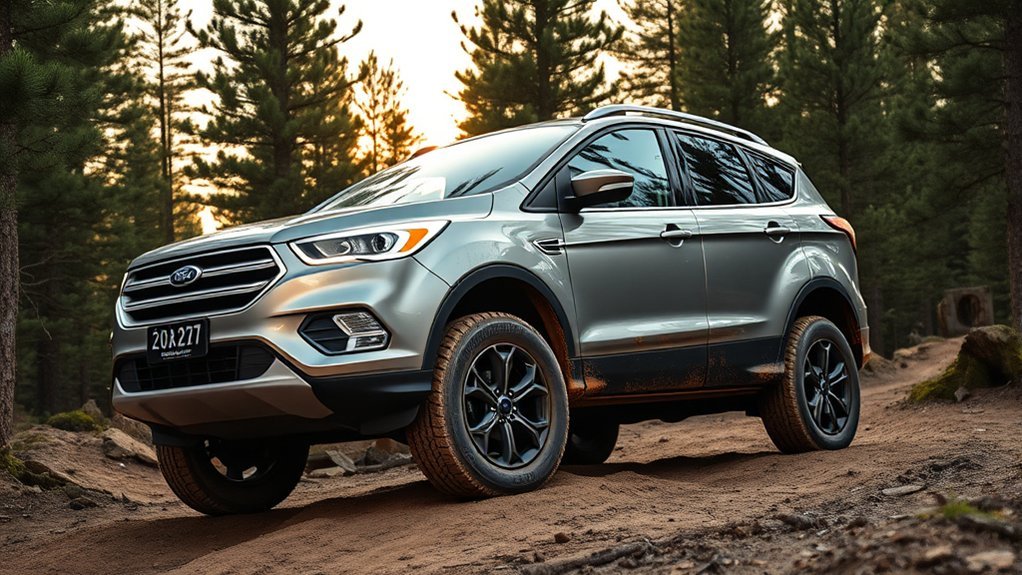
Wondering if the Ford Escape can handle off-road and rough terrain? While it’s not a dedicated off-roader, the Escape with available AWD does offer decent traction on dirt roads, gravel, and light trails.
You’ll find it capable of managing mild uneven surfaces thanks to its all-wheel drive system and moderate ground clearance. However, it’s not designed for serious rock crawling, deep mud, or steep inclines that require a true 4WD vehicle with low-range gearing.
If your adventures involve mostly paved roads with occasional rough patches or light off-roading, the Escape can handle that comfortably. Just keep in mind that pushing it beyond moderate conditions might challenge its suspension and drivetrain, so it’s best to stay within its intended limits for off-road use.
Benefits of AWD vs. 4WD for Everyday Driving in the Ford Escape
While the Ford Escape’s AWD system handles light off-road conditions well, it’s designed primarily to improve everyday driving. You’ll notice that AWD offers better traction in rain, snow, and on slippery roads without you having to do anything.
Compared to traditional 4WD, AWD is more user-friendly for daily use. Here are three key benefits:
- Automatic Engagement: AWD kicks in when sensors detect wheel slip, so you don’t have to manually activate it.
- Improved Fuel Efficiency: AWD systems are generally lighter and more efficient than 4WD, helping you save on gas.
- Smoother Handling: AWD provides better stability and cornering on paved roads, enhancing your overall driving experience.
This makes AWD a great fit for your daily commute and weekend errands.
When Should You Choose a Ford Escape With AWD?
How do you know if the Ford Escape with AWD is right for you? If you often drive in changing weather conditions like rain, snow, or light ice, AWD gives you extra traction and confidence.
It’s ideal if your daily routes include winding roads or occasional off-pavement adventures, such as gravel or dirt trails. AWD helps maintain control during sudden maneuvers, so if you prioritize safety in unpredictable environments, it’s a smart choice.
However, if you mostly drive in dry, urban settings, AWD may add unnecessary weight and reduce fuel efficiency. Choose AWD when you want improved stability and handling without the complexity of traditional 4WD systems.
It’s a practical upgrade that balances capability and everyday usability for most drivers.
If You Need True 4WD, What Are Your Alternatives?
If you find that AWD on a Ford Escape doesn’t meet your needs for rugged terrain or heavy-duty off-roading, you’ll want to explore vehicles with true 4WD systems. True 4WD offers better control and power distribution, especially in challenging environments.
Here are three alternatives to consider:
- Jeep Wrangler Known for its legendary off-road capability, it features a robust part-time 4WD system perfect for trails and rough landscapes.
- Toyota 4Runner Offers a full-time 4WD with locking differentials, making it reliable for serious off-roading and towing.
- Ford Bronco Combines modern technology with durable 4WD hardware, ideal if you want a rugged vehicle with advanced off-road features.
Choosing one of these ensures you get the traction and durability you need beyond what AWD can provide.
Frequently Asked Questions
What Is the Fuel Economy of a Ford Escape With AWD?
You’ll get around 23 mpg city and 29 mpg highway with the Ford Escape AWD. It balances fuel efficiency and traction well, so you can drive confidently without sacrificing too much on fuel economy.
How Much Does It Cost to Maintain AWD on a Ford Escape?
You’ll spend about $200 to $400 annually maintaining AWD on your Ford Escape, including fluid changes and inspections.
Costs vary by mileage and driving habits, but staying consistent helps avoid expensive repairs down the road.
Are There Any Warranty Differences for AWD Models?
They say, “An ounce of prevention is worth a pound of cure.” You won’t find different warranties for AWD models; Ford’s coverage stays the same, so you’re covered equally whether you choose AWD or FWD.
Does AWD Affect the Resale Value of a Ford Escape?
Yes, AWD can boost your Ford Escape’s resale value since many buyers prefer better traction and handling. It’s especially appealing in areas with harsh weather, giving your vehicle an edge when you decide to sell it.
Can You Disable AWD on a Ford Escape When Not Needed?
You can’t simply disable AWD on a Ford Escape, unlike switching off cruise control. It’s designed to engage automatically, giving you traction when needed without manual input.
This allows you to focus on driving, not toggling systems.
Conclusion
If you’re considering a Ford Escape, know it offers all-wheel drive (AWD), not true four-wheel drive (4WD). AWD automatically adjusts power to all wheels for better traction, which suits 90% of drivers who face everyday road conditions.
While it’s great for rain or light snow, it’s not designed for intense off-roading. So, if you need serious off-road capability, you might want to explore other 4WD vehicles instead.
In conclusion, a Ford Escape is not a 4 wheel drive but an AWD vehicle designed primarily for on-road use.