
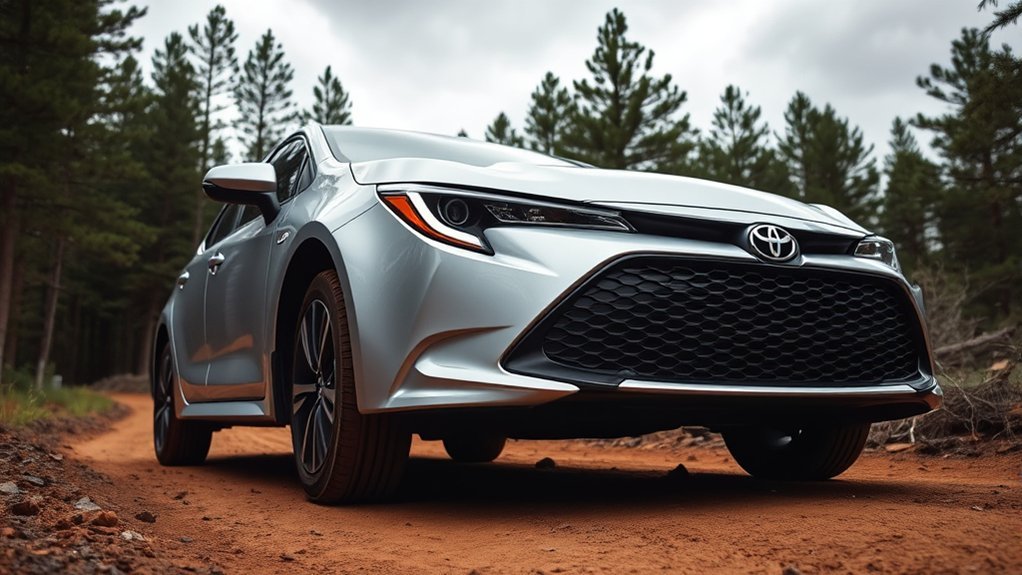
Is Toyota Corolla 4 Wheel Drive
The Toyota Corolla is not equipped with traditional four-wheel drive (4WD); it mainly uses front-wheel drive (FWD) for everyday efficiency. This setup helps maximize fuel economy and provides reliable performance on paved roads.
However, some Corolla Cross models and select hatchbacks offer all-wheel drive (AWD), which automatically improves traction without driver input. Hybrid Corollas may also include AWD systems for added stability and better handling in varying conditions.
If you need serious off-road capability, though, a 4WD vehicle is a better choice. You can uncover more about how these drivetrains affect performance and fuel economy next.
Key Takeaways
- The Toyota Corolla does not come with traditional four-wheel drive (4WD) from the factory.
- Corolla’s primary drivetrain is front-wheel drive (FWD) focused on efficiency and everyday driving.
- Some Corolla variants, like the Corolla Cross and select hatchbacks, offer all-wheel drive (AWD), not 4WD.
- AWD in Corolla models automatically engages for traction and is not intended for off-road use.
- For true 4WD capability, consider other Toyota models like the Tacoma or 4Runner instead.
Does the Toyota Corolla Come With Four-Wheel Drive?
Wondering if the Toyota Corolla comes with four-wheel drive? The short answer is no. Toyota designs the Corolla primarily as a front-wheel-drive vehicle, focusing on efficiency and everyday driving rather than off-road capability.
You won’t find a traditional four-wheel-drive system in any Corolla model. Instead, the Corolla sticks to front-wheel drive to keep things simple and fuel-efficient.
If you’re looking for a Toyota with four-wheel drive, you might consider other models like the RAV4 or Tacoma. Those vehicles offer true four-wheel-drive systems designed to handle rough terrain and challenging weather.
What’s the Difference Between 4WD and AWD in Toyota Corolla and Compact Cars?
While the Toyota Corolla doesn’t offer traditional four-wheel drive, you might come across terms like 4WD and AWD when exploring compact cars and their drivetrain options. Four-wheel drive (4WD) usually means you can manually switch power to all four wheels, which is great for off-roading or tough conditions.
It often includes low-range gearing for extra control on rough terrain. All-wheel drive (AWD), on the other hand, automatically distributes power between the front and rear wheels based on traction needs. AWD works seamlessly in everyday driving, improving grip on wet or slippery roads without any input from you.
In compact cars like the Corolla, AWD is more common if offered, focusing on safety and convenience rather than rugged off-road capability that 4WD targets.
Are There Toyota Corolla Models With All-Wheel Drive Options?
If you’re curious about all-wheel drive options in the Toyota Corolla, you’ll find that certain models do offer AWD. This technology helps improve traction by distributing power to all four wheels when needed.
Let’s look at which Corolla trims come with this feature and how it works.
Corolla AWD Availability
How does all-wheel drive fit into the Toyota Corolla lineup? If you’re looking for a Corolla with AWD, you’ll want to focus on the Corolla Cross and certain Corolla hatchback models.
The traditional Corolla sedan doesn’t offer an all-wheel drive option, but Toyota introduced AWD in the Corolla Cross SUV, giving you better traction and stability in various driving conditions. Additionally, some recent Corolla hatchbacks come with AWD, especially in sportier trims.
This means you can enjoy the Corolla’s reliability and efficiency while benefiting from the added control that AWD provides. Keep in mind, AWD availability varies by model year and trim, so checking the specific version you’re interested in is key to finding one with this feature.
AWD Technology Overview
Though the traditional Toyota Corolla sedan doesn’t come with all-wheel drive, certain models like the Corolla Cross and select hatchbacks do offer AWD options. When you choose these models, you get a system that automatically distributes power to all four wheels when needed.
This improves traction and stability, especially on slippery or uneven roads. The AWD system works seamlessly in the background, activating only when sensors detect wheel slip or challenging conditions.
You won’t have to switch modes manually; it’s designed to enhance safety and control without extra effort from you. So, if you want the reliability of a Corolla with the added confidence of AWD, looking at the Corolla Cross or AWD hatchbacks is your best bet.
How Hybrid Corollas Handle Traction and Drive
When you drive a hybrid Corolla, you’ll notice its traction control system works smoothly to keep you steady on the road. Some hybrid models also offer all-wheel drive, boosting grip in slippery conditions.
This combination helps you maintain control whether you’re on wet streets or light off-road paths.
Hybrid Traction Control Systems
Ever wondered how a Toyota Corolla Hybrid manages traction without traditional four-wheel drive? It uses a smart hybrid traction control system that optimizes grip by coordinating electric motors and engine power. Here’s how it works:
- Sensors detect wheel slip instantly, adjusting power delivery to maintain stability.
- The system blends electric motor torque with the gasoline engine, providing smooth and responsive traction.
- Regenerative braking helps control wheel speed, improving grip on slippery surfaces.
This setup lets you enjoy confident handling in various road conditions without the complexity of a full 4WD system. So, while the Corolla Hybrid isn’t equipped with traditional four-wheel drive, its hybrid traction control keeps you secure and steady, especially when traction matters most.
All-Wheel Drive Availability
Curious about whether the Toyota Corolla offers all-wheel drive? While traditional Corolla models stick to front-wheel drive, the hybrid versions provide an interesting twist.
The Corolla Hybrid doesn’t have full four-wheel drive, but it features an advanced all-wheel drive system called AWD-e. This system automatically engages the rear wheels when the front wheels lose traction, helping you maintain control on slippery surfaces.
You won’t find a mechanical connection like in traditional 4WD systems; instead, the AWD-e uses an electric motor to power the rear wheels when needed. This setup enhances stability and grip without sacrificing fuel efficiency.
Road Performance In Various Conditions
How does the Toyota Corolla Hybrid handle tricky road conditions? While it doesn’t offer full four-wheel drive, its front-wheel-drive system combined with electronic traction control keeps you steady on slippery roads. The hybrid powertrain delivers smooth and responsive torque, which helps maintain grip during acceleration.
Here’s what you can expect:
- Wet Roads: The Corolla Hybrid’s traction control minimizes wheel spin, improving stability in rain.
- Light Snow: Front-wheel drive paired with anti-lock brakes provides decent handling on lightly snow-covered streets.
- Uneven Terrain: While not designed for off-roading, its suspension absorbs bumps well, offering a comfortable ride on rough pavement.
You’ll find the Corolla Hybrid reliable for daily driving across various conditions, but it’s not meant for serious off-road or deep snow challenges.
How Front-Wheel Drive Affects Corolla Performance and Fuel Economy
Why does front-wheel drive matter for the Toyota Corolla’s performance and fuel economy? Because it directly impacts how the car handles and how much gas you use. Front-wheel drive sends power to the front wheels, which helps the Corolla maintain better traction during everyday driving, especially in wet or slippery conditions.
This setup also makes the car lighter and simpler mechanically, reducing drivetrain losses and improving fuel efficiency. You’ll notice that the Corolla’s front-wheel drive keeps it nimble around corners and more predictable on city streets.
Plus, since the engine and drivetrain components are all up front, you get more interior space. Overall, front-wheel drive optimizes your Corolla’s balance of performance and economy, making it a practical choice for daily driving.
How Corolla AWD Compares to Other Toyota 4WD Models
You’ll notice the Corolla’s AWD system is designed mainly for improved traction rather than serious off-roading. Compared to Toyota’s traditional 4WD models like the Tacoma or 4Runner, it offers less rugged capability but better fuel efficiency.
Let’s see how these differences affect your driving experience.
Corolla AWD System
What sets the Corolla’s AWD system apart from other Toyota 4WD models is its focus on efficiency and everyday usability rather than rugged off-road capability. When you drive a Corolla with AWD, you get a system designed primarily to enhance traction on wet or slippery roads without sacrificing fuel economy.
Unlike Toyota’s traditional 4WD models, the Corolla’s AWD is usually automatic and engages only when needed.
Here’s what you can expect from the Corolla AWD system:
- Improved stability and control on various road conditions.
- Seamless engagement without driver input, maximizing convenience.
- Better fuel efficiency compared to full-time 4WD systems.
This setup makes the Corolla AWD perfect for daily commuting and light weather challenges.
Comparison With Toyota 4WD
While the Corolla’s AWD system prioritizes efficiency and ease of use, Toyota’s traditional 4WD models focus more on rugged performance and off-road capability. When you compare the Corolla’s AWD to models like the Toyota Tacoma or 4Runner, you’ll notice the Corolla is designed for improved traction on wet or slippery roads rather than serious off-roading.
The Corolla’s system engages automatically and doesn’t require driver input, making it convenient for everyday driving. In contrast, Toyota’s 4WD systems often include low-range gearing and manual controls to tackle rough terrain.
Which Driving Conditions Benefit Toyota Corolla 4WD or AWD?
When do Toyota Corolla models with 4WD or AWD really shine? You’ll find their true benefits in specific driving conditions where extra traction and stability matter most. Here are the top scenarios where you’ll appreciate these drivetrains:
1. Wet or Slippery Roads
AWD helps maintain grip and control during rain or light snow, reducing the chances of slipping.
AWD boosts traction on wet or snowy roads, helping you stay steady and in control.
2. Snowy or Icy Terrain
4WD or AWD enhances traction on snow-covered streets, making winter driving safer and more manageable.
3. Uneven or Gravel Surfaces
When you encounter rougher roads or off-pavement paths, 4WD provides the additional power needed to avoid getting stuck.
In these situations, you’ll notice the Corolla’s AWD or 4WD systems improve your confidence and safety behind the wheel.
How the Corolla’s Drivetrain Impacts Fuel Economy and Cost
How does the Corolla’s drivetrain affect your fuel economy and overall cost? Since most Corolla models come with front-wheel drive (FWD), you’ll benefit from lighter weight and better fuel efficiency compared to all-wheel-drive (AWD) systems. FWD Corollas typically deliver excellent gas mileage, helping you save at the pump and reduce emissions.
On the other hand, AWD versions, available on some trims, add weight and complexity, which can lower fuel economy slightly. However, AWD provides improved traction and handling in challenging conditions. You’ll also notice that AWD Corollas tend to cost more upfront and may have higher maintenance expenses due to the additional drivetrain components.
Can You Add Four-Wheel Drive to a Toyota Corolla?
Wondering if you can add four-wheel drive to a Toyota Corolla? The short answer is no. Toyota doesn’t offer a factory 4WD option for the Corolla, and converting it yourself is highly impractical.
If you still want to explore adding 4WD, keep these points in mind:
- Complexity: Installing a 4WD system requires extensive modifications to the transmission, suspension, and drivetrain.
- Cost: The parts and labor could cost more than buying a vehicle designed for 4WD.
- Reliability: Aftermarket conversions often result in decreased reliability and potential safety issues.
Given these challenges, it’s usually better to choose a vehicle designed with 4WD rather than trying to retrofit it onto a Corolla.
Should You Choose a Toyota Corolla or Another Toyota for 4WD Needs?
Why settle for a Toyota Corolla if you need reliable four-wheel drive? The Corolla doesn’t come with 4WD or AWD options, so it won’t handle rough terrains or slippery conditions as well as other Toyota models.
If you want a vehicle built for traction and stability in diverse environments, consider the Toyota RAV4 or Tacoma. Both offer robust four-wheel-drive systems designed for off-road and adverse weather.
The RAV4 blends everyday usability with capable AWD, while the Tacoma provides off-road toughness and durability. Choosing one of these models ensures you get the performance you need without compromising reliability.
Frequently Asked Questions
What Are Common Maintenance Issues With Toyota Corolla AWD Systems?
You’ll commonly face issues like worn-out CV joints, transfer case fluid leaks, or faulty AWD sensors. Regularly check and replace fluids, inspect drivetrain components, and address unusual noises promptly to keep your Toyota Corolla AWD system running smoothly.
How Does Toyota Corolla AWD Impact Insurance Costs?
You’ll likely see slightly higher insurance costs with AWD Toyota Corollas because they’re pricier to repair and handle. However, the increase is usually minimal, so it won’t dramatically affect your overall insurance premium.
Are There Specific Tires Recommended for Corolla AWD Models?
Think of your Corolla AWD gripping the road like a mountain goat on rocky terrain. You’ll want all-season or performance tires designed for AWD to keep that steady grip, ensuring safety and smooth drives no matter the weather.
What Is the Resale Value Difference for AWD vs. FWD Corollas?
You’ll generally see AWD Corollas hold slightly higher resale value than FWD models due to better traction and appeal in harsh climates. The difference isn’t huge. Expect around 5-10% more depending on condition and location.
How Does Toyota Corolla AWD Perform in Snowy Climates?
Imagine your Corolla as a trusty hiking boot gripping icy trails. Toyota’s AWD system boosts traction in snowy climates, helping you stay steady and confident. This is especially useful when roads get slippery and unpredictable during winter storms.
Conclusion
If you often drive on snowy roads or rough terrain, you might wonder if the Toyota Corolla offers four-wheel drive. While it doesn’t come with 4WD, some models have all-wheel drive, which helps with traction. Imagine cruising through a rainy mountain pass in a Corolla AWD—feeling secure and in control.
If you need serious off-road capability, consider a Toyota RAV4 instead. But for everyday driving, the Corolla’s front-wheel drive is efficient and reliable.
In conclusion, the Toyota Corolla is not a four-wheel drive vehicle, but its available all-wheel drive options provide added stability for various road conditions.