How Do You Change a Fuel Injector
To change a fuel injector, first disconnect your battery and relieve the fuel system pressure to stay safe. This is an important initial step to prevent any accidents or fuel leaks.
Next, carefully remove the fuel rail, electrical connectors, and mounting clips that hold the old injector in place.
Make sure to clean the injector ports thoroughly before installing the new injector. Use fresh seals and lubricated O-rings to ensure a proper fit and prevent leaks.
Reassemble everything securely, then double-check for any leaks and ensure all connections are properly attached.
If you want to avoid common mistakes and test your new injector correctly, keep exploring these steps.
Key Takeaways
- Disconnect the vehicle battery and relieve fuel system pressure to ensure safety before starting the fuel injector replacement.
- Remove fuel rail and electrical connectors, then carefully extract old injectors without damaging seals or surrounding parts.
- Lubricate new injector O-rings, align injectors properly, and securely install with retaining clips or bolts.
- Reconnect all electrical connectors and fuel rail, then check for leaks and ensure proper connections.
- Test new injectors by verifying fuel spray patterns, listening for consistent injector clicks, and confirming smooth engine operation.
Spotting When Your Fuel Injector Needs Replacing
Recognizing when your fuel injector needs replacing can save you from costly repairs down the road. You’ll notice rough idling or engine misfires when an injector clogs or leaks.
If your car hesitates during acceleration or stalls frequently, that’s another sign to check the injectors. Poor fuel economy also points to injector issues because they affect how efficiently fuel mixes with air.
Additionally, you might smell fuel odors or see black smoke from the exhaust, indicating excess fuel from a faulty injector. Don’t ignore warning lights on your dashboard, especially the check engine light, which often signals injector problems.
Gathering the Right Tools for Fuel Injector Replacement
Before you start replacing your fuel injector, make sure you have the essential tools ready, including wrenches, screwdrivers, and a fuel pressure gauge.
Don’t forget safety gear like gloves and eye protection to keep yourself safe. You can find these tools at auto parts stores or online retailers for convenience.
Essential Tools Checklist
While replacing a fuel injector might seem straightforward, having the right tools on hand will make the job much easier and safer. Start with a good set of socket wrenches, including deep sockets, to remove components without damaging them.
You’ll also need a ratchet and extension bars for hard-to-reach areas. A torque wrench is essential to tighten bolts to the manufacturer’s specifications. Don’t forget a flathead and Phillips screwdriver for hose clamps and connectors.
Needle-nose pliers help remove clips and small parts. A fuel line disconnect tool makes detaching fuel lines simpler and prevents damage. Lastly, keep a clean rag and a small container handy to catch any fuel drips and hold tiny parts while you work.
With these tools ready, you’ll be set for a smooth injector replacement.
Safety Equipment Needed
You’ll almost always want to prioritize safety gear when working on your fuel system to protect yourself from hazards like fuel leaks and sparks. Start with safety goggles to shield your eyes from fuel spray or debris.
Wear nitrile gloves to prevent skin contact with fuel and harmful chemicals. A long-sleeved shirt and pants will protect your skin from accidental spills.
Use a fire-resistant mat or work in a well-ventilated area to reduce fire risks. Keep a fire extinguisher nearby, preferably a Class B rated one for flammable liquids.
Lastly, disconnect the vehicle’s battery before starting to avoid electrical sparks. Taking these precautions helps ensure your safety, letting you focus on replacing the fuel injector without unnecessary risks.
Where To Buy Tools
Where can you find the right tools to replace a fuel injector efficiently? Start by checking local auto parts stores. They often stock specialized tools. Online retailers also offer a wide selection, usually with customer reviews to guide your choice.
Don’t forget rental shops if you need expensive tools just once. Here’s a quick guide on where to buy essential tools:
| Tool | Best Source | Price Range |
|---|---|---|
| Fuel Injector Puller | Auto parts store | $15 – $40 |
| Socket Set | Online retailer | $20 – $70 |
| Torque Wrench | Rental shop | $10 – $25/day |
| O-ring Pick Set | Auto parts store | $5 – $15 |
| Cleaning Kit | Online retailer | $10 – $30 |
Choosing the right place saves time and money.
Preparing Your Vehicle Safely for Fuel Injector Removal
Before you start removing the fuel injector, make sure to disconnect your vehicle’s battery to prevent any electrical hazards. You’ll also need to relieve the fuel system pressure to avoid fuel spray.
Finally, work in a well-ventilated area to keep fumes from building up.
Disconnect Battery Power
Several safety measures are essential when working with your vehicle’s fuel system, and disconnecting the battery power is one of the most critical steps. Before you start, locate your car’s battery, usually found under the hood.
Use a wrench to loosen the negative terminal clamp, typically marked with a minus sign or black cable. Remove the negative cable from the battery post to cut off electrical power and prevent accidental sparks or short circuits.
Always disconnect the negative terminal first to reduce the risk of electrical shock. Once disconnected, secure the cable away from the battery to avoid accidental reconnection.
Never work on the fuel system with the battery connected, as electrical components can ignite fuel vapors. This safety step protects both you and your vehicle during the fuel injector replacement.
Relieve Fuel System Pressure
How do you safely relieve fuel system pressure to avoid fuel spray and injury? First, locate the fuel pump fuse or relay in your vehicle’s fuse box. With the engine off and the key removed, pull the fuse or relay to cut power to the fuel pump.
Next, start the engine and let it run until it stalls. This uses up residual fuel in the lines. Turn off the ignition and crank the engine a few more times to ensure all pressure is released.
If your vehicle has a Schrader valve on the fuel rail, carefully depress it with a rag to release any remaining pressure. Wearing safety glasses and gloves during this step is crucial to protect yourself from unexpected fuel spray.
Ensure Proper Ventilation
Why is proper ventilation essential when working with fuel injectors? Fuel vapors are highly flammable and toxic, so ensuring adequate airflow reduces the risk of fire and protects your health. Before you start, open garage doors or windows to promote air circulation.
Avoid working in enclosed spaces without ventilation. Also, keep a fire extinguisher nearby just in case. Here’s what you need to do:
- Work in a well-ventilated area, preferably outdoors or in a garage with open doors.
- Use fans to increase airflow if ventilation is limited.
- Avoid sparks or open flames near the work area.
- Wear a mask if you’re sensitive to fumes or working in a less ventilated space.
Taking these steps helps you stay safe while changing your fuel injector efficiently.
Removing the Old Fuel Injector Step-by-Step
Where do you start when removing an old fuel injector? First, disconnect the battery to avoid electrical shocks. Then, relieve the fuel system pressure by opening the fuel cap and using the appropriate valve or tool.
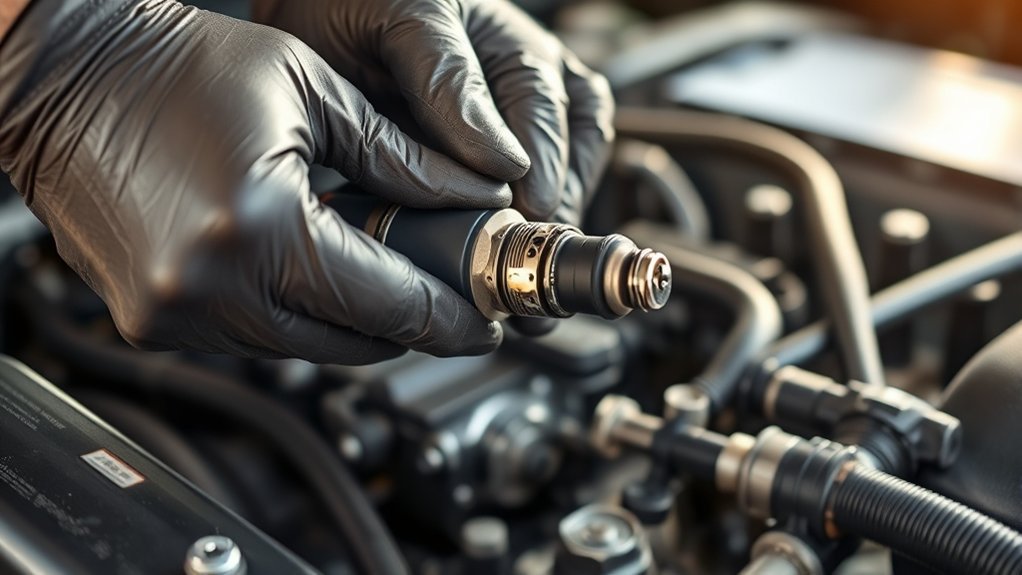
Next, disconnect the fuel rail and electrical connectors carefully. Remove any mounting bolts or clips holding the injector. Finally, gently pull out the old injector without damaging surrounding components.
| Step | Action | Tip |
|---|---|---|
| 1 | Disconnect battery | Prevents electrical hazards |
| 2 | Relieve fuel pressure | Avoids fuel spray |
| 3 | Remove fuel rail | Use proper tools |
| 4 | Disconnect injector connectors | Label them for easy reassembly |
| 5 | Remove injector | Pull straight out carefully |
Installing Your New Fuel Injector Correctly
Installing a new fuel injector requires careful attention to assure proper fit and function. First, make sure the injector’s O-rings are lubricated with a bit of engine oil to prevent damage during installation.
Next, carefully align the injector with the fuel rail and intake manifold to avoid bending or breaking delicate parts. Push the injector firmly into place until you hear or feel it click. Finally, secure any retaining clips or bolts to keep the injector stable.
Keep these points in mind:
- Use only new O-rings or seals to prevent leaks.
- Avoid forcing the injector; it should slide in smoothly.
- Double-check alignment before final installation.
- Reconnect electrical connectors firmly but gently.
Following these steps ensures your new injector works efficiently.
Common Mistakes to Avoid When Changing Fuel Injectors
A common mistake people make when changing fuel injectors is rushing through the process without proper preparation. You should always disconnect the battery and relieve fuel pressure to avoid accidents.
Avoid damaging the injector seals by handling them carefully and using the right tools. Don’t forget to clean the injector ports before installation to ensure a proper fit.
Lastly, never reuse old seals or O-rings, as they can cause leaks.
| Mistake | Cause | Solution |
|---|---|---|
| Rushing the process | Lack of preparation | Plan, disconnect battery, relieve pressure |
| Damaging seals | Using wrong tools or force | Use correct tools, handle gently |
| Not cleaning ports | Neglecting cleanliness | Clean injector ports thoroughly |
| Reusing old seals | Ignoring wear and tear | Always replace seals and O-rings |
How to Test Your New Fuel Injector After Installation
How can you be sure your new fuel injector is working correctly? After installation, testing it ensures your engine runs smoothly and efficiently. Start by visually inspecting the injector for leaks or damage.
Next, check the electrical connection with a multimeter to confirm proper resistance. Then, perform a fuel spray test to verify the injector sprays fuel evenly.
Finally, listen to the injector with a mechanic’s stethoscope or a long screwdriver; a consistent clicking sound means it’s functioning well. Follow these steps:
- Inspect for leaks or physical damage
- Measure electrical resistance with a multimeter
- Conduct a fuel spray pattern test
- Listen for consistent clicking noises
These quick checks help you catch any issues early and keep your engine in top shape.
Frequently Asked Questions
What Type of Fuel Injector Is Best for My Vehicle Model?
You’ll want the fuel injector that matches your vehicle’s make, model, and engine type. Check your owner’s manual or consult a trusted mechanic to get the exact part number and guarantee peak performance and compatibility.
How Often Should Fuel Injectors Be Replaced?
You should replace your fuel injectors every 50,000 to 100,000 miles, depending on your vehicle and driving conditions.
If you notice poor performance or fuel efficiency, it’s time to check and possibly replace them sooner.
Can Bad Fuel Injectors Affect Engine Emissions?
Yes, bad fuel injectors can increase your engine emissions because they disrupt the fuel-air mixture. You’ll notice rough idling, poor fuel economy, and higher pollution levels if they’re clogged or leaking, so get them checked promptly.
Are Fuel Injector Cleaners Effective for Maintenance?
Yes, fuel injector cleaners can be effective for maintenance if you use them regularly. They help remove deposits and improve spray patterns, but they won’t fix severe clogs or mechanical problems.
What Are the Symptoms of a Clogged Fuel Injector?
You’ll notice rough idling, poor acceleration, and decreased fuel efficiency when a fuel injector clogs.
In fact, clogged injectors cause up to 30% more emissions, making your car less eco-friendly and harder to drive smoothly.
Conclusion
Changing your fuel injector might seem like a tiny task, but it’s like giving your engine a heart transplant. Skipping steps or rushing can turn a simple fix into a full-blown disaster, leaving you stranded and frustrated.
Take your time, follow the guide, and treat your engine with care—you’re not just swapping parts; you’re breathing new life into your ride. Trust me, your car will thank you with smoother rides and better performance when you change your fuel injector properly!