How to Measure Wheel Size
To measure your wheel size, start by measuring the diameter straight across the rim’s center, ignoring the tire. This is the main step in determining the correct wheel size for your vehicle.
Then, measure the width between the inner bead seats, not the outer edges.
Use a tape measure or caliper for accuracy. Don’t forget to check the bolt pattern by counting lug nuts and spacing, and note the offset—the distance from the mounting surface to the wheel centerline. Getting these right helps you avoid fit and performance issues.
Keep exploring to understand sizing for different vehicles and common pitfalls. Properly measuring your wheel size ensures compatibility and optimal performance.
Key Takeaways
- Measure wheel diameter straight across the center from rim edge to rim edge, ignoring the tire for accuracy.
- Use a tape measure or caliper to measure rim width between the inside bead seats, not the outer edges.
- Determine bolt pattern by counting lug nuts and measuring spacing between holes for proper fit.
- Check wheel offset as the distance from the hub mounting surface to the wheel centerline to avoid clearance issues.
- Read tire sidewall markings for width, aspect ratio, and diameter to ensure tire and rim compatibility.
Why Measuring Your Wheel Size Matters
Why does measuring your wheel size matter? You need the right wheel size to ensure your vehicle runs smoothly and safely. Using wheels that don’t fit properly can cause handling problems, uneven tire wear, and even damage your car’s suspension.
When you know your wheel size, you can find tires that match perfectly, improving fuel efficiency and ride comfort. It also helps you avoid buying incompatible parts, saving you time and money in the long run.
Whether you’re replacing worn-out wheels or upgrading for performance, accurate measurements ensure you get the best fit. So, taking the time to measure your wheel size precisely protects your investment and keeps your vehicle performing at its best.
Tools Needed to Measure Wheel Size
To measure your wheel size accurately, you’ll need a few essential tools like a tape measure or caliper. These basic tools will help you get precise measurements quickly.
Additionally, some optional accessories can make the process easier and more efficient.
Essential Measuring Tools
Which tools do you need to accurately measure your wheel size? You’ll want to gather a few essential items to get precise measurements. Here’s what you should have on hand:
- Tape Measure Use a flexible tape measure to wrap around the tire or measure diameter and width.
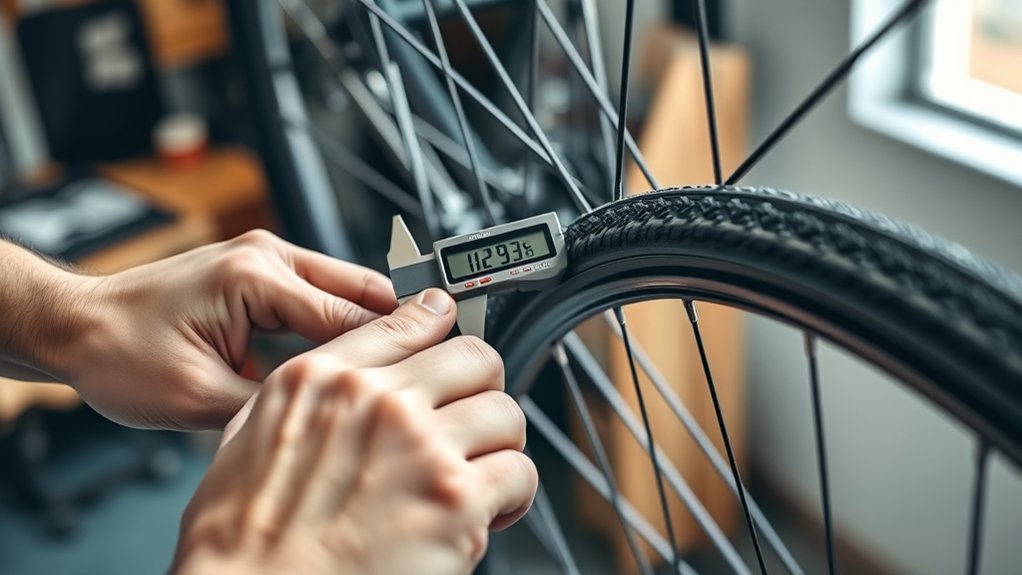
- Caliper A digital or manual caliper provides exact readings for rim width and bolt circle diameter.
- Straight Edge or Ruler Helps measure the wheel diameter if the tape measure is too flexible.
- Marker or Chalk Mark key points on the wheel to ensure consistent measurement locations.
With these tools, you’ll confidently capture all necessary dimensions without guesswork or errors, setting you up perfectly for the next steps.
Optional Accessories Explained
Wondering how to simplify your wheel measuring process even further? Optional accessories can make your job quicker and more accurate. A digital caliper, for instance, lets you measure wheel width and diameter with precision down to the millimeter.
You might also consider a spoke ruler, which helps gauge wheel circumference by counting spoke lengths easily. A tire pressure gauge, while not directly measuring size, ensures your tires are properly inflated for accurate readings.
If you often measure multiple wheels, a wheel size gauge tool can speed things up by giving instant size readings. These accessories aren’t mandatory, but they save time and reduce guesswork, making your measurements more reliable.
Adding one or two to your kit can truly upgrade your wheel measuring experience.
How to Measure the Diameter of Your Wheel
How do you accurately measure the diameter of your wheel? It’s simpler than you might think. First, find a tape measure or ruler long enough to span the wheel. Then, follow these steps:
- Place the wheel on a flat surface so it’s stable.
- Measure straight across the center from one edge of the rim to the opposite edge.
- Ensure the tape measure passes through the center hub for an accurate diameter.
- Record the measurement in inches or millimeters, depending on your preference.
This measurement is the wheel’s diameter, which helps you find the right size for replacements or upgrades. Remember, don’t include the tire; focus solely on the rim itself for this measurement.
How to Measure the Width of Your Wheel
Measuring the width of your wheel is just as important as measuring its diameter when ensuring a proper fit. To get an accurate width measurement, place your wheel on a flat surface with the valve stem facing up.
Measuring wheel width accurately is crucial for a perfect tire fit and optimal performance.
Use a measuring tape or ruler to measure the distance between the inside edges of the wheel’s bead seats, the areas where your tire rests. Avoid measuring the outer edges or lips of the wheel, as these don’t reflect the true width.
Record this distance in inches, as wheel widths are typically expressed that way. Knowing the exact width helps you select the right tire size and ensures optimal performance and safety.
Taking this simple step can prevent costly mistakes when buying new tires or wheels.
How to Read Wheel Size Markings on Tires and Rims
Where can you find the exact size of your wheels and tires? You’ll spot these essential details stamped right on the tire sidewall and rim. Tires have a series of numbers and letters that reveal their size.
To read them:
- Look for the tire width in millimeters (e.g., 225).
- Find the aspect ratio next, showing the tire’s height as a percentage of width (e.g., 50).
- Check the letter indicating construction type, usually “R” for radial.
- Finally, note the wheel diameter in inches (e.g., 17).
On the rim, the diameter and width are usually engraved or cast into the metal, often near the valve stem. By understanding these markings, you’ll quickly identify your wheel and tire sizes without guesswork.
Additional Wheel Specs: Bolt Pattern and Offset
Why do bolt pattern and offset matter when choosing wheels? The bolt pattern determines if your wheel will fit onto your vehicle’s hub. It’s the arrangement of lug holes, usually noted as two numbers, like 5×114.3, meaning five bolts spaced 114.3 millimeters apart. Getting this right ensures the wheel mounts securely.
Offset is the distance between the wheel’s mounting surface and its centerline. It affects how far your wheels sit in or out relative to the fender. Too much positive or negative offset can cause clearance issues with brakes, suspension, or bodywork. Knowing both specs helps you pick wheels that fit properly and perform safely, avoiding costly mistakes or modifications down the line.
Measuring Wheel Size for Different Vehicles (Car vs. Bike)
When measuring wheel size for cars, you’ll focus on diameter, width, and bolt pattern to ensure a proper fit. For bikes, you’ll pay close attention to rim diameter and tire width, which can vary widely based on bike type.
Let’s look at the key steps to measure wheels for both vehicles accurately.
Car Wheel Measurement Steps
How do you accurately measure wheel size for different vehicles like cars and bikes? For cars, you’ll focus on a few key steps to get precise dimensions. First, measure the diameter from one edge of the rim to the opposite edge, ignoring the tire.
Second, check the width of the rim by measuring the distance between the inside edges where the tire sits. Third, note the bolt pattern by counting the lug nuts and measuring the distance between them. Finally, record the offset, which is the distance from the hub mounting surface to the wheel’s centerline.
These steps ensure you get the right wheel size and fit for your car, avoiding compatibility issues or safety risks.
Bike Wheel Sizing Tips
Measuring bike wheel size differs from measuring car wheels, and you’ll need a few specific tips to get it right. Unlike car wheels, bike wheels are typically measured by diameter and width in inches, often marked on the tire sidewall with numbers like 26×2.1.
First, measure the wheel diameter from one edge to the opposite edge across the center. Then, check the tire width, which affects fit and performance. Remember, bike tires come in various standards, like ISO and traditional sizing, so cross-reference measurements carefully.
Unlike cars, bike rims and tires must match precisely to guarantee safety. Finally, use a flexible tape measure for accuracy on curved surfaces. Following these tips helps you choose the right replacement or upgrade without hassle.
Common Mistakes to Avoid When Measuring Wheel Size
Why do so many people get wheel size measurements wrong? It’s usually because they overlook key details or rush through the process. To avoid mistakes, keep these points in mind:
- Measuring the tire instead of the rim. This leads to inaccurate sizes.
- Ignoring the tire width. It affects fit and performance.
- Not using a proper measuring tool. A tape measure or ruler must be precise.
- Forgetting to measure in millimeters or inches consistently. Mixing units causes confusion.
Frequently Asked Questions
Can I Use a Tape Measure for All Wheel Types?
Yes, you can use a tape measure for most wheel types, but it might be tricky on complex rims. Make sure you measure diameter and width accurately, and consider calipers for more precise results on smaller or irregular wheels.
How Often Should I Check My Wheel Size?
Better safe than sorry. You should check your wheel size every time you change tires or notice handling issues.
Regular checks keep your ride smooth and prevent costly problems down the road. Don’t skip this simple step!
Does Tire Pressure Affect Wheel Size Measurement?
Tire pressure doesn’t affect the actual wheel size measurement since the wheel’s diameter stays constant. However, underinflated tires can make the overall tire diameter seem smaller, so always measure wheels with properly inflated tires for accuracy.
Can Aftermarket Wheels Fit My Vehicle Without Modifications?
You can fit aftermarket wheels without modifications if they match your vehicle’s bolt pattern, offset, and diameter.
Always check compatibility carefully to avoid issues with clearance, handling, or safety before purchasing or installing new wheels.
How Do Wheel Sizes Impact Fuel Efficiency?
Like a marathon runner carrying extra weight, bigger wheels can lower your fuel efficiency by increasing rolling resistance. You’ll feel your engine working harder, so choosing lighter, smaller wheels helps you save fuel and drive smarter.
Conclusion
Now that you’ve learned how to measure your wheel size, picture yourself confidently holding a ruler against your tire, reading the numbers clearly etched on the rim.
With the right tools in hand, you’ll avoid guesswork and ensure a perfect fit for your ride. Whether it’s for your car or bike, accurate measurements keep your wheels spinning smoothly and safely.
Like a well-oiled machine ready for the open road, knowing how to measure wheel size is key to maintaining optimal performance and safety.