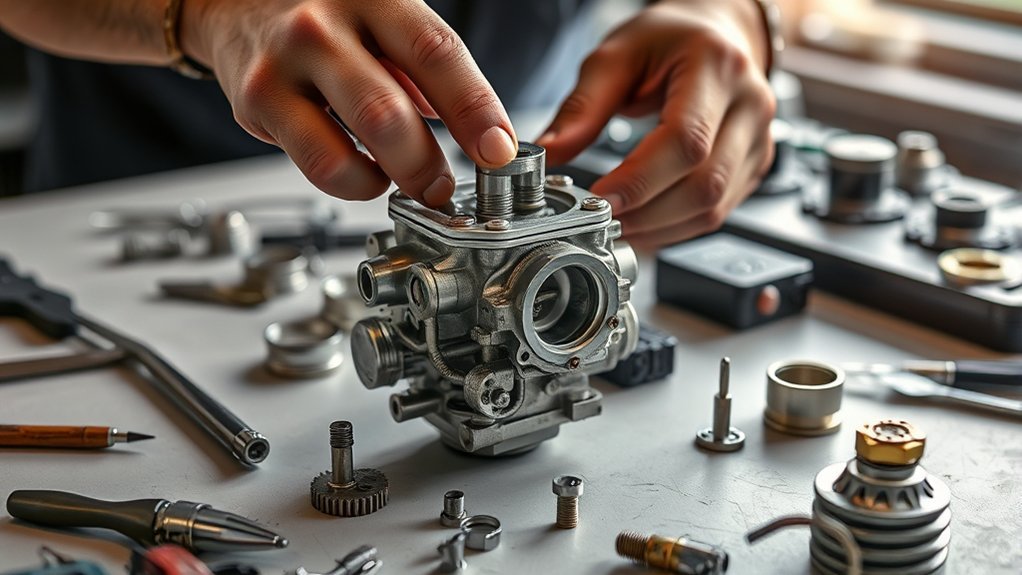
How to Rebuild a Carburetor
You should rebuild your carburetor if you notice rough idling, inconsistent speeds, flooding, or hard starts.
Rebuilding a carburetor helps restore optimal engine performance and fuel efficiency.
Start by gathering precision tools and a quality rebuild kit, including gaskets and jets.
Carefully document part placement as you disassemble the carburetor.
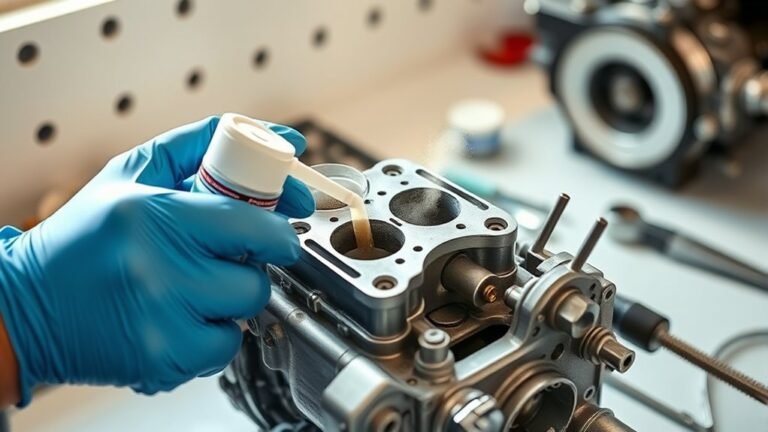
Clean components thoroughly with solvent, and replace worn parts like needle valves and throttle shafts.
Reassemble using proper torque specifications, then test float height and idle quality to ensure smooth operation.
Understanding each step thoroughly will help you master the process efficiently.
When to Rebuild Your Carburetor: Signs and Symptoms
You’ll often notice specific signs indicating it’s time to rebuild your carburetor. Common signs of sticking needles include inconsistent idle speeds, flooding, or fuel leaks. These needles control fuel flow, and when they stick, fuel delivery becomes erratic, causing poor engine performance.
Symptoms of vacuum leaks manifest as rough idling, hesitation during acceleration, or a lean mixture evident by backfiring. Vacuum leaks disrupt the air-fuel ratio, leading to inefficient combustion.
Additionally, if you experience hard starting, excessive smoke, or decreased fuel efficiency, these can also signal carburetor issues. Addressing these problems promptly prevents further engine damage.
Essential Tools and Parts for Carburetor Rebuilds
Recognizing the signs that your carburetor needs rebuilding is only the first step; having the right tools and parts on hand will make the process efficient and effective. Proper tool selection is critical. Using incorrect tools can damage precision components.
Identifying carburetor issues is key, but using the right tools ensures a smooth, damage-free rebuild process.
Adhering to safety measures, like working in a well-ventilated area and wearing gloves, protects you from fuel residues and sharp parts. Essential tools and parts for carburetor rebuilds typically include:
- Precision screwdrivers and wrenches for delicate adjustments
- Carburetor rebuild kits containing gaskets, seals, and jets
- A fuel-resistant cleaning brush and solvent
- A torque wrench to ensure correct assembly tension
Preparing these tools and parts beforehand streamlines your rebuild and ensures reliability post-repair.
Disassembling and Cleaning Your Carburetor
The process of disassembling your carburetor begins with carefully documenting the position and orientation of all components to assure accurate reassembly. Use clear labels or photos to capture each part’s placement.
Exercise disassembly cautions by working in a clean, well-lit area and handling delicate parts, such as jets and diaphragms, with care to avoid damage. Remove screws and small components systematically, keeping them organized.
For cleaning, select appropriate cleaning solvents designed for carburetor parts; avoid harsh chemicals that might degrade rubber or plastic components. Submerge metal parts in the solvent, using a soft brush to remove deposits and varnish buildup. Rinse thoroughly and allow complete drying before proceeding.
Avoid forcing stuck parts, as this can cause deformation or breakage. Following these steps ensures a thorough, damage-free disassembly and cleaning process.
Replacing Worn Parts and Reassembling Your Carburetor
After thoroughly cleaning and inspecting each part of your carburetor, it’s time to replace any components that show signs of wear or damage. Addressing worn parts is essential to prevent future carb issues and guarantee optimal performance. Focus on these key areas:
- Replace gaskets exhibiting gasket wear to maintain airtight seals.
- Swap out damaged needle valves and seats to control fuel flow accurately.
- Install new accelerator pump diaphragms if they’re brittle or cracked.
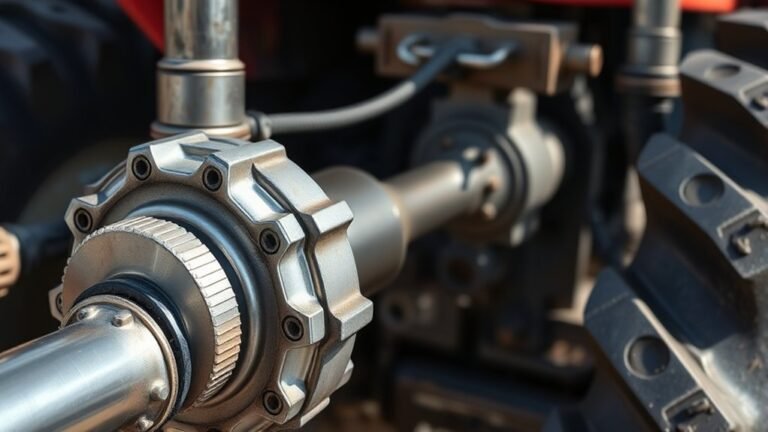
- Change worn throttle shafts and bushings to eliminate air leaks and improve throttle response.
When reassembling, carefully align parts according to manufacturer specifications, ensuring all screws and clips are tightened to proper torque. Avoid overtightening, which can cause damage.
Proper replacement and reassembly reduce the risk of carb issues and prolong the carburetor’s service life.
Testing, Adjusting, and Troubleshooting Your Rebuilt Carburetor
Once you’ve reassembled your carburetor with all necessary replacements, you’ll need to test its functionality to ensure proper fuel delivery and engine performance. Start by verifying the float height; improper float height can cause flooding or fuel starvation, so adjust it according to your carburetor’s specifications.
Next, check the idle jets for clogging or wear, as they control fuel flow at low RPMs. Run the engine and observe the idle quality. If it’s rough or stalls, fine-tune the idle mixture screws.
Use a vacuum gauge or tachometer to achieve a stable idle. If problems persist, inspect for air leaks around gaskets and linkages. Systematic testing and incremental adjustments will help you troubleshoot and optimize your rebuilt carburetor for reliable operation.
Frequently Asked Questions
Can I Rebuild a Carburetor Without Prior Mechanical Experience?
You can rebuild a carburetor without prior experience if you use reliable tools and follow detailed guides carefully. Avoid common mistakes like improper gasket placement or incorrect jet adjustments to ensure a successful, functional rebuild.
How Long Does a Typical Carburetor Rebuild Take?
A typical carburetor rebuild takes 1 to 3 hours, depending on carburetor variations and engine compatibility.
More complex models or unfamiliar engines may extend the process, so plan accordingly for precision and thoroughness.
Are Rebuilt Carburetors More Fuel-Efficient Than New Ones?
You might find rebuilt carburetors offer a balanced reliability vs cost advantage, but they’re not always more fuel-efficient than new ones. Choosing rebuilds can reduce environmental impact by reusing parts, yet efficiency depends on precise tuning and condition.
Can I Rebuild Carburetors From All Engine Types?
You can’t rebuild carburetors from all engine types due to compatibility issues and reliability concerns. Some modern or specialized engines use fuel injection, so focus on carburetors designed for your specific engine to ensure effectiveness and safety.
What Safety Precautions Should I Take During a Rebuild?
You should always wear safety gloves and eye protection to prevent chemical burns and debris injuries.
Work in a well-ventilated area, avoid open flames, and keep tools organized to maintain a safe, efficient rebuild environment.