How Long Does a Fuel Filter Last
A fuel filter typically lasts between 20,000 and 40,000 miles, depending on your vehicle model, fuel quality, and driving conditions.
Knowing how long a fuel filter lasts is essential for maintaining your vehicle’s performance and preventing engine issues.
If you drive often in dusty environments or take frequent short trips, the filter’s lifespan may shorten.
Regular inspections for cracks, leaks, or clogging signs help assure timely replacement, preventing engine performance issues.
Proper maintenance and fuel selection also extend filter life.
Understanding these factors can help you optimize your fuel system’s reliability and efficiency.
How Long Does a Fuel Filter Usually Last?
How long does a fuel filter usually last before it needs replacement? Typically, a fuel filter’s lifespan ranges between 20,000 to 40,000 miles, depending on the vehicle model and fuel quality.
The fuel filter’s primary role is to prevent contaminants like dirt, rust, and debris from entering the engine, which can impair performance. How long it lasts is influenced by driving conditions; frequent short trips or dusty environments can reduce its effective life.
Modern vehicles often specify fuel filter replacement intervals in the owner’s manual, and adhering to these guidelines ensures optimal engine efficiency. Ignoring the recommended fuel filter service can lead to decreased fuel flow and engine strain.
Therefore, regularly monitoring the filter’s condition based on mileage will help maintain vehicle reliability.
What Are the Signs Your Fuel Filter Needs Replacing?
You’ll notice your engine struggling with reduced power or hesitation if the fuel filter is clogged. A drop in fuel efficiency can also indicate restricted fuel flow.
Additionally, difficulty starting the engine may signal that it’s time to replace the fuel filter.
Engine Performance Issues
When might you notice that your engine isn’t running as smoothly as usual? Often, this signals issues with engine compatibility related to a clogged fuel filter, especially if fuel quality has been inconsistent. A blocked filter restricts fuel flow, causing hesitation, misfires, or rough idling.
| Symptom | Emotional Impact |
|---|---|
| Engine stalling | Frustration, worry |
| Difficulty starting | Anxiety, inconvenience |
| Loss of power | Disappointment, concern |
These signs indicate your fuel filter may no longer be effectively protecting your engine. Address them promptly to maintain optimal engine function and avoid costly repairs.
Regular checks ensure your filter matches your engine’s specifications and fuel quality, preventing performance degradation.
Fuel Efficiency Drops
Why does your vehicle suddenly seem to consume more fuel than usual? A clogged fuel filter restricts fuel flow, forcing the engine to work harder and lowering fuel economy.
When contaminants accumulate, the filter’s efficiency drops, causing inconsistent fuel delivery and reduced combustion efficiency. You might notice your fuel gauge dropping faster despite normal driving habits.
While fuel additives can sometimes help clean minor deposits, they won’t resolve issues caused by a severely clogged filter. Regularly replacing the fuel filter ensures optimal fuel flow and maintains engine efficiency.
Ignoring fuel filter maintenance not only reduces fuel economy but also risks damaging fuel injectors and other components, leading to costly repairs. Monitoring fuel efficiency is a reliable way to know when it’s time for a filter replacement.
Starting Difficulties
How can you tell if your fuel filter is causing starting difficulties? A clogged or deteriorated fuel filter restricts fuel flow, leading to delayed engine cranking or failure to start. You might notice extended crank times, sputtering upon ignition, or the engine stalling shortly after starting.
These symptoms directly indicate fuel delivery issues rather than incorrect topics or unrelated discussion like electrical or ignition system problems, which require separate diagnostics. To precisely diagnose, rule out battery and starter faults first.
If starting issues persist alongside reduced fuel pressure, your fuel filter likely needs replacing. Ignoring these signs can cause long-term engine damage. Regular maintenance based on manufacturer recommendations prevents these problems and ensures optimal fuel system performance.
Recommended Fuel Filter Replacement Intervals
You should follow the manufacturer’s recommended fuel filter replacement intervals to maintain optimal engine performance. These guidelines typically range between 20,000 and 40,000 miles but can vary based on your vehicle model.
Keep in mind that driving conditions, like dusty environments or frequent short trips, can shorten the filter’s effective lifespan.
Manufacturer Guidelines Overview
When should you replace your fuel filter to maintain optimal engine performance? Manufacturer guidelines provide the most reliable intervals for fuel filter replacement, typically ranging from 20,000 to 40,000 miles depending on the vehicle model. These recommendations are based on extensive testing and are designed to prevent clogging that can reduce fuel flow and damage the engine.
It’s important not to confuse this with an unused topic like unrelated concept of fuel additives’ effects, which doesn’t substitute for filter maintenance. Always consult your vehicle’s owner manual or manufacturer service schedule to determine the exact mileage or time frame.
Adhering to these guidelines ensures your fuel system remains clean, prolonging engine life and maintaining efficiency. Ignoring manufacturer advice can lead to performance issues and costly repairs.
Driving Conditions Impact
Why do driving conditions play a crucial role in determining your fuel filter replacement intervals? The environment you drive in directly affects how quickly your fuel filter clogs, impacting both driving safety and engine performance. Poor fuel quality combined with harsh conditions accelerates filter wear.
Consider these factors:
- Dusty or Off-Road Environments: Contaminants increase debris accumulation, shortening filter lifespan.
- Urban Stop-and-Go Traffic: Frequent engine starts cause fuel system stress, requiring more frequent filter checks.
- Fuel Quality Variations: Low-grade or contaminated fuel introduces sediments that clog the filter faster.
How to Inspect Your Fuel Filter for Wear and Damage
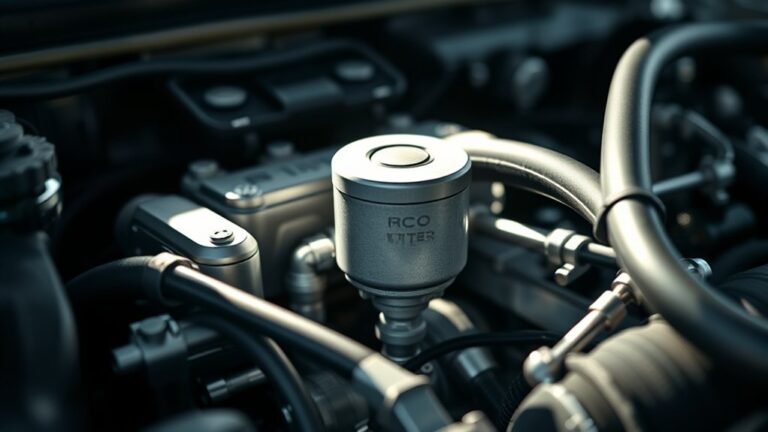
How can you determine if your fuel filter needs attention? Begin by locating the filter, typically found along the fuel line or near the fuel tank. Visually inspect for cracks, corrosion, or fuel leaks, which indicate wear or damage.
Next, check for clogging signs: decreased fuel economy, engine misfires, or hesitation during acceleration. These symptoms suggest restricted fuel flow caused by a deteriorating filter.
Using a pressure gauge, measure fuel pressure; a significant drop below manufacturer specifications confirms blockage. Regular inspection helps you identify issues early, allowing for timely replacement that maintains optimal fuel economy and prevents costly repairs.
Incorporate this inspection into your maintenance budgeting to avoid unexpected expenses and ensure your vehicle runs efficiently without interruptions.
What Factors Affect Your Fuel Filter’s Lifespan?
What determines the lifespan of your fuel filter largely depends on several key factors, including the quality of the fuel you use, driving conditions, and your vehicle’s maintenance schedule. Understanding these elements helps prevent unrelated topic diversions or off topic discussions when diagnosing fuel system issues.
The lifespan of your fuel filter depends on fuel quality, driving habits, and maintenance routines.
Here are the main factors:
- Fuel Quality: Contaminants and impurities in low-grade fuel accelerate clogging, reducing filter efficiency.
- Driving Conditions: Frequent stop-and-go traffic, dusty environments, or long idling periods increase strain on the filter.
- Maintenance Schedule: Neglecting timely fuel filter replacements leads to buildup, impairing fuel flow and engine performance.
Ignoring these factors can shorten your fuel filter’s operational life, emphasizing the importance of focused, relevant maintenance rather than unrelated topic concerns.
Tips to Extend Your Fuel Filter’s Life
A well-maintained fuel filter can markedly improve your vehicle’s fuel system efficiency and engine performance. To extend your fuel filter’s life, prioritize clean fuel storage; avoid using old or contaminated fuel as it accelerates filter clogging.
Regularly inspect and replace fuel storage containers to prevent debris or water intrusion. Additionally, conducting periodic emissions testing can help identify early signs of fuel system issues, including filter degradation, enabling timely maintenance.
Always use manufacturer-recommended fuel grades to minimize residue buildup in the filter. Avoid extended idling and harsh driving conditions that increase particulate accumulation.
Finally, adhere strictly to scheduled maintenance intervals. Delaying filter replacement increases strain on your fuel pump and engine components. These measures collectively preserve filter integrity, ensuring optimal fuel flow and prolonging its operational lifespan.
What Happens If You Ignore a Bad Fuel Filter?
Ignoring a deteriorating fuel filter can lead to significant engine performance issues and costly repairs. When you neglect this crucial component, you risk:
- Engine Clogging: Contaminants accumulate, restricting fuel flow and causing rough idling or stalling.
- Fuel Pump Strain: A blocked filter forces the pump to work harder, increasing wear and potential failure.
- Poor Fuel Aesthetics: Impurities affect fuel color preferences and aesthetics, indicating internal contamination that can degrade engine components.
Maintaining fuel aesthetics isn’t just about appearance; it reflects the fuel’s purity and system health. Ignoring a bad fuel filter compromises your vehicle’s efficiency and longevity. Addressing issues promptly ensures optimal fuel delivery and prevents damage, aligning with your vehicle’s performance standards and preserving its internal color preferences for fuel integrity.
How to Choose the Right Fuel Filter for Your Vehicle
How do you guarantee your vehicle runs smoothly by selecting the proper fuel filter? Start by consulting your vehicle’s manual to identify the exact fuel filter specifications, as compatibility ensures optimal filtration and engine performance.
Consider the filter’s micron rating; a finer rating traps smaller contaminants, protecting components similarly to how high-quality engine oil preserves engine integrity. Also, evaluate the filter material. Synthetic media often provides superior dirt-holding capacity.
Don’t overlook the fuel system type. Direct injection engines demand filters designed for higher pressure. While selecting your fuel filter, remember that just as tire tread affects traction and safety, the right fuel filter affects fuel flow and engine efficiency. Choosing the correct filter prevents clogging and maintains consistent fuel delivery, ensuring your vehicle operates reliably and efficiently.
Frequently Asked Questions
Can a Clogged Fuel Filter Cause Engine Overheating?
Yes, a clogged fuel filter can cause engine overheating by restricting fuel flow, leading to carburetor clogging and inefficient combustion.
You should perform fuel system diagnostics to identify and resolve such blockages promptly.
Is It Safe to Drive With a Dirty Fuel Filter?
Driving with a dirty fuel filter is like breathing through a clogged straw. It restricts flow and stresses your engine. You shouldn’t ignore your fuel filter replacement interval.
Neglecting it risks performance drops and potential damage.
Do All Vehicles Use the Same Type of Fuel Filter?
No, you won’t find all vehicles using the same fuel filter type. Discussing two word models, carbureted and fuel-injected, helps. Avoid irrelevant subtopic details like oil filters; focus on precise fuel filter specifications for your vehicle’s system.
Can Fuel Additives Clean or Replace a Fuel Filter?
You can’t put new wine in old bottles. Fuel additives can aid carburetor cleaning and improve fuel pressure but won’t replace clogged fuel filters.
Filters physically trap debris; additives can’t remove solid contaminants inside the filter element.
How Much Does a Fuel Filter Replacement Typically Cost?
You’ll typically pay between $50 and $150 for a fuel filter replacement.
Staying on top of maintenance scheduling ensures optimal fuel efficiency, preventing clogged filters that can reduce engine performance and increase fuel consumption.