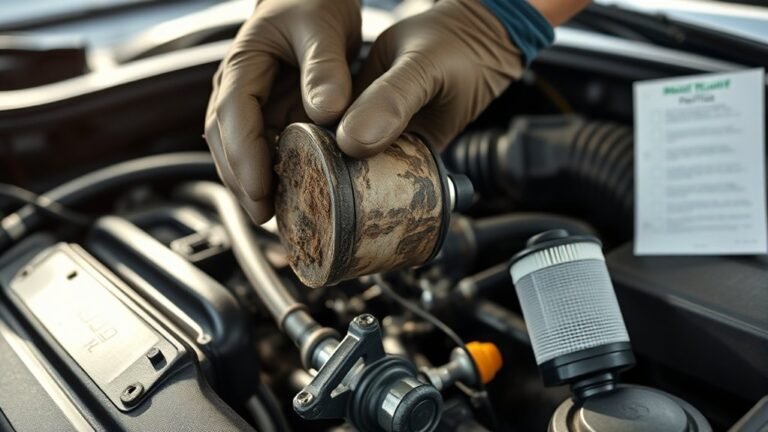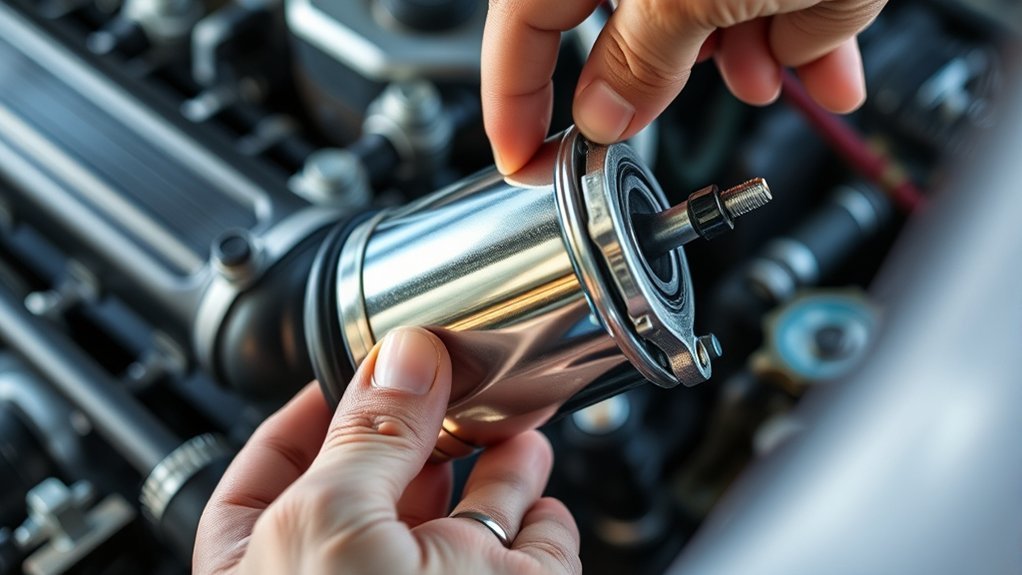
How to Put on a Fuel Filter
To put on a fuel filter, start by relieving the fuel system pressure. Do this by disabling the fuel pump and running the engine until it stalls. This step is crucial for safety before handling the fuel system.
Next, disconnect the battery and wear appropriate safety gear. Carefully remove the old fuel filter, making sure to note its flow direction.
Install the new filter with its arrow aligned from the tank to the engine. Secure all fittings tightly and replace any seals if needed. Finally, check for leaks around the connections.
Once everything is secure and clean, start the engine to confirm smooth operation. Following these detailed steps will help ensure a proper and safe fuel filter installation.
What a Fuel Filter Does and When to Replace It
What exactly does a fuel filter do, and how do you know when it needs replacing? A fuel filter removes contaminants like dirt, rust, and debris from the fuel before it reaches the engine. This filtration is critical because clogged or dirty filters restrict fuel flow, negatively affecting your fuel economy and increasing exhaust emissions.
You’ll notice signs such as engine misfires, rough idling, or difficulty starting, indicating the filter is compromised. Regular replacement ensures an unobstructed fuel supply, maximizing engine performance and maintaining efficient fuel combustion.
Typically, manufacturers recommend changing the fuel filter every 20,000 to 40,000 miles, but you should consult your vehicle’s manual. Replacing it promptly prevents damage to fuel injectors and preserves maximum fuel economy and lower exhaust emissions over time.
Tools Needed for Fuel Filter Replacement
You’ll need specific tools like a wrench set and fuel line disconnect tools to replace the fuel filter efficiently.
Don’t forget essential safety equipment, including gloves and safety glasses, to protect yourself from fuel exposure. Preparing these items beforehand ensures a smooth and safe replacement process.
Essential Replacement Tools
Which tools are indispensable when replacing a fuel filter? You’ll need a set of wrenches or fuel line disconnect tools specific to your vehicle’s fittings. A drain pan is essential to catch residual fuel, preventing spills.
Have cleaning solvents ready to degrease components and ensure a clean interface for the new filter, preventing contamination. Use a stiff-bristled brush to apply solvents effectively. Proper workshop ergonomics matter. Ensure your workspace is well-lit, organized, and at a comfortable height to reduce strain and improve precision.
Additionally, a new fuel filter, replacement O-rings or seals, and a torque wrench for proper tightening are critical. Having these tools prepared streamlines the process, ensuring a secure, leak-free installation without unnecessary delays or damage.
Safety Equipment Required
Always prioritize safety when replacing a fuel filter, as you’re dealing with flammable liquids and pressurized systems. To ensure proper fuel safety, you must equip yourself with essential personal protective gear.
Start with safety goggles to shield your eyes from fuel splashes and debris. Wear chemical-resistant gloves to protect your hands from harmful fuel exposure and prevent skin irritation.
Use long-sleeved clothing or a protective coverall to minimize skin contact. A fire-resistant workspace is critical; keep a fire extinguisher rated for flammable liquids nearby.
Additionally, ensure proper ventilation to avoid inhaling fuel vapors. Avoid open flames or sparks during the procedure.
Equipping yourself with these safety tools and adhering to fuel safety protocols will significantly reduce the risk of injury while replacing the fuel filter.
Choosing the Right Fuel Filter for Your Car
You’ll need to select a fuel filter type that matches your vehicle’s fuel system, such as inline or cartridge-style filters. Guarantee the filter is compatible with your car’s make and model to maintain proper fuel flow and filtration.
Pay attention to the filter material, as options like paper, mesh, or synthetic media affect filtration efficiency and durability.
Types Of Fuel Filters
How do you determine the right fuel filter for your vehicle? Understanding types is essential to debunk reliability myths and evaluate pricing strategies effectively.
Fuel filters generally come in three types: cartridge, spin-on, and in-tank. Each serves specific applications and filtration needs.
| Type | Filtration Method | Common Pricing Strategy |
|---|---|---|
| Cartridge | Replaceable paper element | Budget-friendly, DIY focus |
| Spin-On | Sealed canister | Mid-range, easy installation |
| In-Tank | Integrated with pump | Higher cost, OEM preferred |
Choosing among them depends on your engine’s demands and maintenance preferences. Avoid assuming higher price always means better reliability; rather, match filter type to your vehicle’s specific requirements.
Compatibility With Vehicle
Selecting the right fuel filter goes beyond understanding types and pricing. It requires matching the filter to your vehicle’s specific make, model, and engine specifications. To ensure proper fit and function, always consult compatibility guidance provided by the manufacturer or trusted automotive resources.
Here’s what you should focus on:
- Verify OEM part numbers to confirm exact matches.
- Check vehicle year, engine size, and fuel system type.
- Use compatibility charts from reputable parts suppliers.
- Avoid generic filters that may compromise performance or cause installation issues.
Filter Material Options
A fuel filter’s material drastically impacts its filtration efficiency and durability, so choosing the right one is vital for your car’s performance. Common fuel filter materials include cellulose, synthetic fiber, and metal mesh.
Cellulose filters offer basic filtration efficiency and are cost-effective but degrade faster. Synthetic fiber filters provide superior filtration efficiency by trapping smaller contaminants and resist moisture better, making them ideal for modern fuel systems.
Metal mesh filters are reusable and durable but generally provide lower filtration efficiency and are best suited for off-road or heavy-duty applications. When selecting fuel filter material, consider your vehicle’s fuel system specifications and operating conditions to guarantee optimal filtration efficiency and component longevity.
Always verify that the chosen fuel filter material meets OEM standards for your specific car model.
Safely Relieve Fuel System Pressure
Why is relieving fuel system pressure essential before replacing the fuel filter? It prevents fuel spray, which can cause injury or fire. Following proper safety protocol minimizes risks associated with pressurized fuel lines.
Relieving fuel system pressure prevents dangerous fuel spray, reducing risk of injury or fire during filter replacement.
Before you begin, heed any fuel system warning indicators on your vehicle’s dashboard.
To safely relieve pressure:
Locate the fuel pump fuse or relay and remove it to disable the fuel pump.
Start the engine and let it run until it stalls, indicating pressure has dropped.
Turn off the ignition and disconnect the battery’s negative terminal to avoid sparks.
Wear safety glasses and gloves to protect against residual fuel.
Removing the Old Fuel Filter
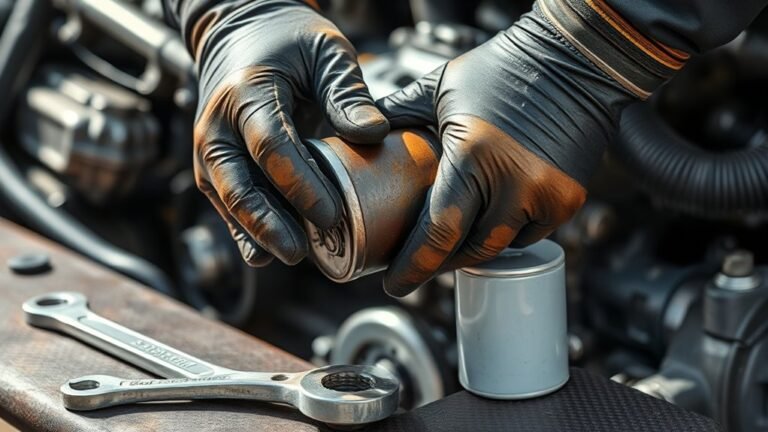
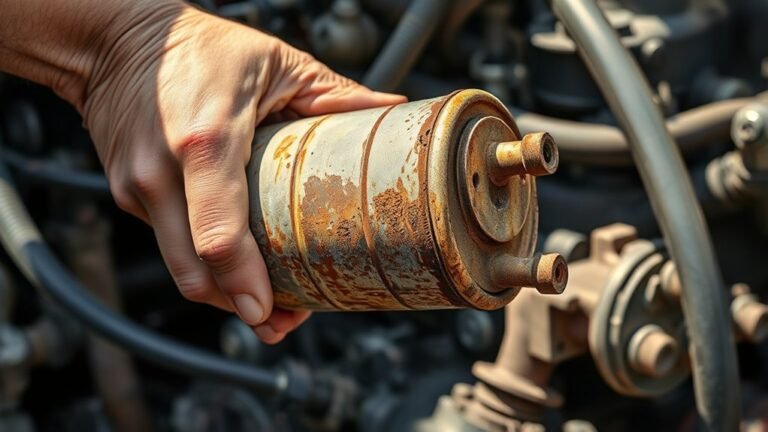
With the fuel system pressure safely relieved, you can now proceed to remove the old fuel filter. First, locate the filter and identify the inlet and outlet connections. Use appropriate wrenches or quick-disconnect tools to detach the fuel lines carefully, avoiding fuel spillage. Place a rag or container beneath to catch residual fuel.
Once disconnected, loosen any mounting brackets or clamps securing the old filter. Remove the filter, noting its orientation for later installation.
Follow local regulations for disposal steps. Fuel filters contain contaminants and must be handled as hazardous waste. Seal the old filter in a suitable container or bag to prevent leaks during transport. Proper disposal protects the environment and ensures compliance with safety standards. Avoid reusing old filters or improperly discarding them.
Installing the New Fuel Filter
Before installing the new fuel filter, make sure you’re familiar with its flow direction, usually indicated by an arrow on the filter body. This ensures fuel flows correctly through the system, preventing performance issues.
Avoid any unrelated topic or off topic discussion during installation to maintain focus and safety. Follow these steps precisely:
- Align the filter arrow with fuel flow direction, typically from the tank to the engine.
- Insert the filter into the mounting bracket securely.
- Reconnect fuel lines firmly to prevent leaks; use new clamps if needed.
- Double-check all connections for tightness before proceeding.
Skipping or rushing these steps can cause fuel delivery problems. Stay focused on this critical task, avoiding unrelated topic distractions to ensure a proper and safe installation.
Inspecting Fuel Lines and Connections
How should you verify the integrity of fuel lines and connections after installing the filter? Begin by thoroughly inspecting lines for any signs of wear, cracks, or leaks. Carefully check each connection point to ensure fittings are secure and free from damage.
During your connections inspection, confirm that clamps or quick-connect fittings are properly seated and tightened according to manufacturer specifications. Avoid overtightening, which can damage seals and compromise fuel system safety.
Use a clean rag to wipe any residual fuel and observe for seepage under pressure. This precise inspection prevents fuel leaks that could cause engine performance issues or fire hazards.
Testing Your Car After Fuel Filter Replacement
Why is it essential to test your car immediately after replacing the fuel filter? Testing ensures the new filter is functioning correctly, maintaining proper fuel flow, and preventing potential engine issues.
After installation, follow these steps:
- Check for leaks around the fuel filter connections to avoid fuel loss and fire hazards.
- Start the engine and observe for smooth idling, indicating restored fuel efficiency.
- Listen carefully for any abnormal noises; proper noise reduction suggests the fuel system operates correctly.
- Monitor acceleration and throttle response to confirm consistent fuel delivery.
Performing these checks verifies your work and helps maintain optimal engine performance. Neglecting this step might lead to decreased fuel efficiency, increased noise, or engine stalling, negating the benefits of the new fuel filter.
Frequently Asked Questions
Can a Clogged Fuel Filter Cause Engine Misfires?
If your engine misfires coincidentally with reduced power, a clogged filter might be the culprit. It restricts fuel flow, causing inconsistent combustion.
You’ll want to inspect and replace the clogged filter to restore proper engine function.
How Often Should Fuel Filters Be Replaced for Diesel Engines?
You should replace diesel fuel filters every 15,000 to 25,000 miles to guarantee ideal diesel maintenance.
Regular two-word discussion ideas like “filter lifespan” and “fuel contamination” help you monitor performance and prevent engine issues efficiently.
Are Fuel Filters Reusable or Always Disposable?
Think about the grime trapped inside. Would you want to reuse that? You shouldn’t; reusable filters aren’t typical.
Most fuel filters are disposable filters designed for one-time use to ensure optimal engine performance and prevent contamination.
Can Fuel Filter Replacement Improve Fuel Efficiency?
Yes, replacing your fuel filter can improve fuel efficiency by ensuring optimal fuel flow and preventing clogging. This maintenance enhances engine performance, reducing strain and fuel consumption, ultimately keeping your engine running smoothly and efficiently.
What Are Signs of a Faulty Fuel Pump?
You’ll notice warning signs of a faulty pump like engine sputtering, difficulty starting, loss of power under load, unusual whining sounds, or frequent stalling.
Monitoring these symptoms helps you identify and address pump issues promptly.