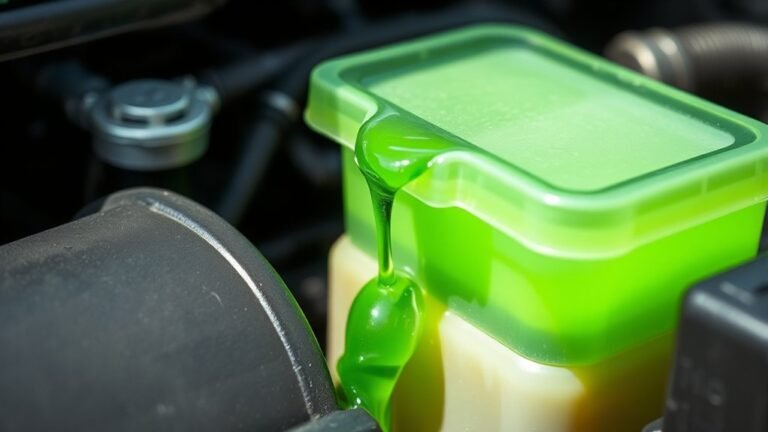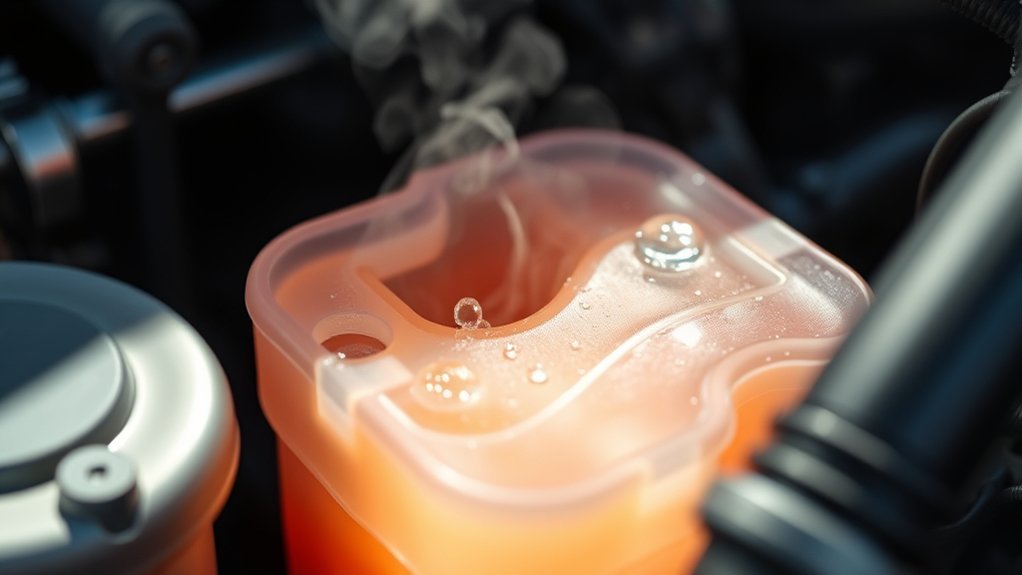
Why Is My Coolant Boiling
Your coolant boils because your cooling system isn’t maintaining sufficient pressure or flow, which lowers the coolant’s boiling point and allows vapor to form under normal engine heat.
Faulty radiator caps, thermostat malfunctions, radiator blockages, and leaks can all disrupt pressure and circulation, causing overheating and vapor pockets.
This leads to hot spots and potential engine damage.
Understanding how these components interact and how to detect faults can help you protect your engine and restore proper cooling function.
How Your Cooling System Keeps Coolant From Boiling
How exactly does your vehicle’s cooling system prevent the coolant from boiling under high temperatures? It relies on a closed-loop design that increases the coolant’s boiling point through pressurization.
The cooling system maintains pressure via a sealed radiator cap, typically set around 15 psi, which raises the boiling point above the standard 212°F (100°C). This pressurization inhibits phase change from liquid to vapor despite engine heat.
Additionally, the system circulates coolant continuously through passages in the engine block and radiator, dissipating heat efficiently. The thermostat regulates flow, ensuring optimal temperature balance.
Why Boiling Coolant Can Damage Your Engine
While your cooling system is designed to keep coolant from boiling by maintaining pressure and circulation, overheating can still cause the coolant to reach its boiling point. When this happens, the coolant’s chemical stability, its coolant chemistry, breaks down, reducing its ability to transfer heat efficiently.
Boiling coolant produces vapor pockets that disrupt coolant flow, leading to localized hot spots in the engine. These hot spots can warp cylinder heads, damage gaskets, and cause engine seizure.
Additionally, coolant boil over remedies, like adding water or antifreeze, provide only temporary relief and don’t address underlying damage risks. You need to prevent boiling to avoid costly engine repairs, as persistent overheating compromises engine integrity and performance by accelerating wear and corrosion within critical components.
Common Causes of Coolant Boiling: Thermostats, Radiators, and Leaks
If your thermostat malfunctions, it can prevent proper coolant flow, causing overheating and boiling. A blocked radiator reduces heat dissipation, raising coolant temperature beyond safe limits.
Additionally, leaks lower coolant levels, impairing the system’s ability to regulate engine heat effectively.
Thermostat Malfunction Effects
Because the thermostat regulates coolant flow based on engine temperature, a malfunction can cause coolant to overheat and boil. When it sticks closed, coolant circulation is restricted, leading to engine overheating and boiling coolant.
If stuck open, the engine may run too cool, but boiling is less likely. Detecting thermostat issues early prevents severe damage.
| Thermostat State | Coolant Flow Impact | Resulting Condition |
|---|---|---|
| Stuck Closed | No coolant flow | Engine overheating, boiling coolant |
| Stuck Open | Continuous flow | Engine runs cool |
| Intermittent | Fluctuating flow | Temperature spikes |
| Functional | Regulated flow | Optimal temperature |
Monitoring temperature variations helps identify thermostat malfunctions causing boiling coolant and engine overheating.
Radiator Blockage Problems
A radiator blockage can severely restrict coolant flow, causing localized overheating and boiling within the cooling system. You’ll often find that deposits from degraded coolant chemistry accumulate inside the radiator tubes, narrowing passages and impeding heat dissipation.
This buildup disrupts the radiator’s efficiency, forcing the engine temperature to spike despite a functioning thermostat. Additionally, cooling fan failures exacerbate this problem by reducing airflow through the radiator, diminishing heat exchange further.
When coolant can’t circulate properly or release heat effectively, boiling becomes inevitable. To address this, you should inspect the radiator for clogs, flush the system to restore coolant chemistry balance, and verify that cooling fans operate correctly.
Ignoring radiator blockages will lead to persistent overheating and potential engine damage.
Coolant Leak Symptoms
How can you tell when a coolant leak is causing your coolant to boil? One key indicator is consistent coolant loss without visible external leaks, suggesting internal leakage or evaporation due to boiling.
Additionally, abnormal pressure relief valve activation can signal excessive system pressure from coolant escaping as vapor. You might notice steam from under the hood or a sweet smell indicating coolant vapor.
Monitoring your coolant reservoir for rapid drops confirms loss, which reduces system volume and impairs heat dissipation, causing boiling. A faulty radiator cap may fail to maintain proper pressure relief, exacerbating boiling by allowing premature coolant vaporization.
Diagnosing coolant leaks precisely requires inspecting hoses, radiator, and gasket integrity, as even minor breaches disrupt pressure equilibrium, leading to overheating and coolant boiling.
How a Faulty Thermostat Causes Coolant to Boil
If your thermostat is stuck closed, coolant circulation is blocked, causing the engine temperature to rise rapidly. You’ll notice symptoms like overheating, heater malfunction, and fluctuating temperature gauges.
Understanding these signs helps you pinpoint thermostat failure as a cause of boiling coolant.
Thermostat Stuck Closed
Why does your engine overheat when the thermostat is stuck closed? A thermostat failure occurs when the valve inside the thermostat housing remains shut, preventing coolant from circulating through the radiator.
Since coolant flow is blocked, heat generated by the engine cannot dissipate efficiently. This lack of heat transfer raises coolant temperature rapidly, causing the coolant boil symptom to manifest. You’ll notice steam or bubbling as pressure builds within the cooling system.
Because the thermostat regulates coolant flow based on temperature, its inability to open disrupts this balance, leading directly to overheating and boiling coolant. Identifying a thermostat stuck closed is crucial, as prolonged operation under these conditions risks severe engine damage due to excessive heat and pressure buildup in the cooling circuit.
Impact on Engine Temperature
When does a faulty thermostat most critically affect your engine’s temperature? It’s when the thermostat remains closed, restricting coolant flow and preventing heat dissipation. This causes localized overheating, pushing your coolant’s temperature beyond its designed boiling point.
Understanding coolant chemistry is vital here; additives raise the boiling point to withstand high engine temperatures. However, if the thermostat malfunctions, the coolant can’t circulate properly, defeating these chemical safeguards.
Without proper circulation, heat accumulates, and despite the coolant’s elevated boiling point, it eventually boils. This phase change leads to vapor pockets, reducing heat transfer efficiency and causing engine temperature spikes.
Thus, boiling point awareness combined with thermostat function is essential for maintaining thermal equilibrium and preventing coolant boiling under normal operating conditions.
Symptoms of Thermostat Failure
Recognizing the signs of a failing thermostat can help you identify why your coolant is boiling. When the thermostat malfunctions, its calibration is off, causing it to remain closed or open at incorrect temperatures.
If it stays closed, coolant flow is restricted, leading to localized overheating and boiling. Conversely, if it remains open, the engine may not reach optimal temperature, affecting coolant chemistry by preventing proper heat exchange.
You might notice erratic engine temperature readings, overheating warnings, or steam from the radiator. Additionally, inconsistent cabin heating can signal thermostat failure.
Monitoring these symptoms lets you address thermostat calibration issues early, preventing coolant degradation and potential engine damage caused by improper thermal regulation. Understanding these signs is critical for maintaining effective coolant chemistry and overall engine performance.
How Radiator Problems Make Coolant Boil
How exactly do radiator issues cause your coolant to boil? When your radiator malfunctions, it disrupts the coolant chemistry and heat exchange process. Radiator blockages or corrosion impede coolant flow, reducing heat dissipation efficiency.
This causes localized hotspots where the coolant temperature exceeds its boiling point. Additionally, radiator noises like hissing or gurgling often indicate trapped air pockets or leaks, which compromise system pressure.
A drop in pressure lowers the coolant’s boiling point, making it easier to boil at normal operating temperatures. Faulty radiator cap seals exacerbate this by failing to maintain the required pressure, further destabilizing coolant chemistry.
Signs Your Coolant Leak Is Causing Boiling
Radiator malfunctions often lead to coolant leaks, which directly impact system pressure and temperature regulation. When you notice a drop in coolant levels combined with rising engine block temperature, it indicates compromised heat transfer efficiency.
You might observe steam or vapor near the radiator cap, signaling abnormal pressure release. Changes in coolant chemistry, such as discoloration or contamination, further reduce cooling performance and contribute to boiling.
Additionally, inconsistent ignition timing and reduced fuel efficiency can result from overheating caused by coolant loss. If your vehicle exhibits these signs, persistent overheating, visible leaks, or unusual engine behavior, it’s a clear indication the coolant leak is causing boiling.
Monitoring these parameters helps you identify and prevent extensive engine damage due to ineffective thermal management.
How to Fix Boiling Coolant and Save Your Engine
What steps can you take to address boiling coolant before it causes severe engine damage? First, you need to stop engine overheating immediately to prevent further harm. Then, systematically diagnose and fix the underlying causes.
Here’s what you should do:
- Check coolant levels and top off with the correct mixture.
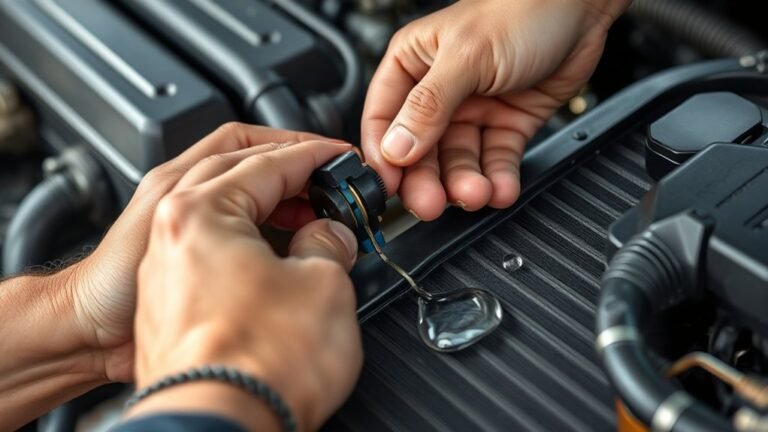
- Inspect the radiator cap for proper pressure retention.
- Examine hoses and connections for leaks or blockages.
- Test the thermostat and replace if stuck closed.
- Flush and replace old or contaminated coolant.
Addressing boiling coolant promptly helps restore optimal cooling system function and avoids costly engine repairs. Each step targets critical components related to coolant boiling and overheating, ensuring your engine runs safely and efficiently.
Frequently Asked Questions
Can Using the Wrong Coolant Type Cause Boiling?
Yes, using the wrong coolant can cause boiling because it may not have the correct boiling point or additives.
Also, mixing coolant types can create chemical reactions that reduce effectiveness, leading to overheating and boiling issues in your system.
Does Altitude Affect Coolant Boiling Point?
Ever felt your engine’s heart race at high altitudes? You’ll find altitude effects lower coolant boiling points, causing coolant boiling sooner due to decreased atmospheric pressure.
This demands precise coolant selection and system adjustments for efficient thermal management.
How Often Should Coolant Be Replaced?
You should replace coolant every 2-5 years or 30,000-50,000 miles, debunking old coolant myths. Always follow proper disposal protocols to avoid environmental harm and maintain system efficiency.
Regular testing ensures optimal performance.
Can Engine Overheating Cause Coolant to Boil?
Imagine driving uphill, noticing overheating symptoms like rising temperature and steam. Yes, engine overheating can cause coolant to boil, especially if coolant contamination reduces its boiling point.
This contamination impairs heat dissipation and can cause system failure.
Is It Safe to Drive With Boiling Coolant?
You shouldn’t drive with boiling coolant; it risks engine damage. Check coolant color for contamination, and suspect thermostat failure causing overheating.
Address these issues promptly to avoid costly repairs and ensure safe vehicle operation.