How Do Clutch Fans Work
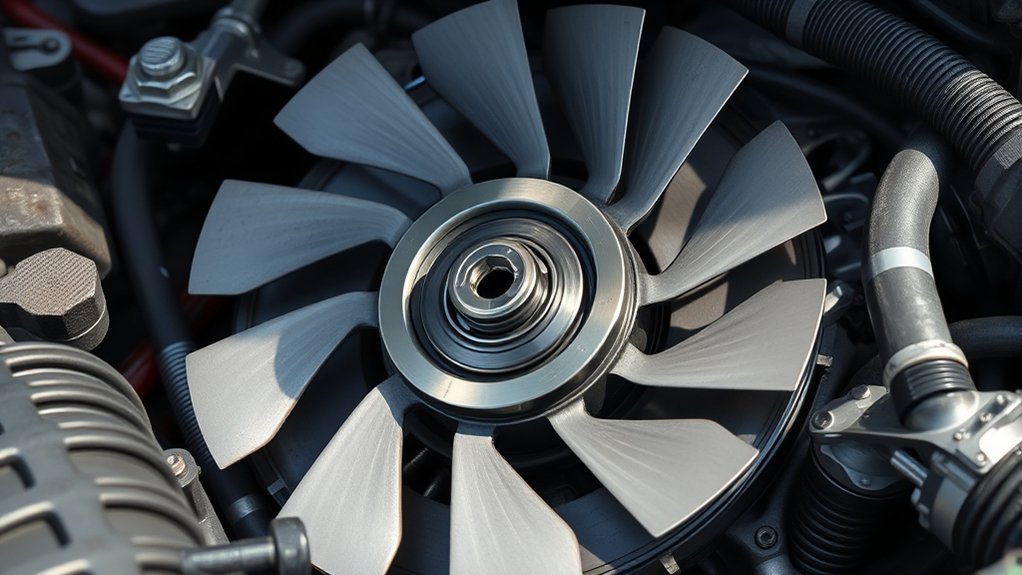
You’ll find that clutch fans work by using a viscous coupling filled with silicone fluid, which engages or disengages the fan based on your engine’s temperature. This mechanism allows the fan to respond dynamically to the cooling needs of the engine.
As heat rises, the fluid’s viscosity increases, accelerating the fan to cool the engine efficiently while minimizing energy waste. When cooling isn’t needed, the fan slows down, reducing engine drag and improving fuel economy.
Understanding this engagement mechanism is key to grasping how clutch fans maintain ideal engine performance and longevity. This balance ensures the engine stays within optimal temperature ranges without unnecessary power loss.
What Is a Clutch Fan and Why It Matters
What exactly is a clutch fan, and why should you care about its function in your vehicle? A clutch fan is a thermostatically controlled device that regulates engine cooling by engaging or disengaging the fan based on temperature.
Unlike a fixed fan, it only operates when necessary, which directly impacts your fuel economy by reducing unnecessary power draw from the engine. This selective operation minimizes energy waste, improving overall efficiency.
Additionally, the clutch fan plays a critical role in engine protection by maintaining optimal operating temperatures, preventing overheating that can cause severe damage. By controlling the fan speed precisely, it ensures the engine runs within safe thermal limits, promoting longevity and consistent performance.
Understanding its function helps you appreciate how it balances cooling needs with fuel efficiency and mechanical reliability.
How Clutch Fans Control Engine Cooling
You’ll notice that clutch fans engage based on engine temperature, using a viscous coupling to regulate their speed. This temperature-based operation ensures the fan only runs when necessary, optimizing cooling efficiency and reducing energy waste.
Understanding this mechanism is key to grasping how clutch fans maintain optimal engine temperatures.
Fan Engagement Mechanism
How exactly does a clutch fan regulate engine temperature? The fan engagement mechanism relies on a viscous coupling filled with silicone fluid. When the engine’s temperature rises, the fluid’s viscosity increases, transferring torque from the drive shaft to the fan blades.
This precise transfer depends on ideal stator alignment, which ensures smooth fluid flow and efficient torque transmission. Proper blade balance is equally critical; any imbalance can cause vibration, reducing engagement efficiency and potentially damaging the clutch assembly.
As the engine cools, the fluid viscosity decreases, disengaging the fan to reduce drag and improve fuel efficiency. This dynamic system modulates fan speed in response to engine demands, maintaining ideal cooling without excessive power loss.
Understanding this mechanism highlights the interplay between mechanical alignment and fluid dynamics in clutch fan operation.
Temperature-Based Operation
Why does a clutch fan adjust its engagement based on temperature? Because precise heat management is critical for optimal engine performance and longevity. The clutch fan modulates its operation by sensing engine temperature, controlling heat transfer from the radiator to the surrounding air.
Here’s how it effectively manages engine cooling:
- At low temperatures, minimal fan engagement reduces unnecessary load and conserves energy.
- As temperature rises, the fan progressively increases engagement to enhance heat transfer.
- When the engine reaches high temperature thresholds, full fan engagement maximizes airflow for rapid cooling.
- Upon cooling, the fan disengages gradually, preventing thermal shock and maintaining system stability.
This temperature-based operation balances efficient engine cooling with energy conservation, ensuring you avoid overheating without sacrificing performance.
What Viscous Fluid Does in a Clutch Fan
Viscous fluid plays a critical role in the operation of a clutch fan by regulating the transfer of torque between the engine and the fan blades. When clutch engagement begins, the viscous fluid’s shear properties control how smoothly and progressively the fan blades accelerate.
This fluid fills the gap between the clutch’s rotating plates, creating resistance proportional to the relative velocity difference. As you accelerate, the viscous fluid’s resistance increases, transmitting more torque and allowing the fan to spin faster.
This modulation prevents sudden fan engagement, reducing mechanical stress and noise. The fluid’s viscosity directly influences clutch engagement responsiveness, ensuring efficient cooling without excessive drag on the engine. In essence, the viscous fluid acts as a dynamic coupling agent, precisely managing power transfer for optimal fan operation.
How Temperature Affects Clutch Fan Engagement
You’ll notice the clutch fan engages once the engine reaches a specific temperature threshold, ensuring optimal cooling only when necessary. This temperature-sensitive activation adjusts the fan’s torque to balance cooling efficiency with energy consumption.
Understanding this mechanism helps you see how temperature directly controls fan engagement and overall thermal management.
Temperature Threshold Activation
How exactly does temperature influence when a clutch fan engages? The clutch fan activates based on a precise temperature threshold, responding to rising engine temperature.
As friction heat builds within the viscous coupling, it reaches a critical point where the fan’s blades begin to spin faster, enhancing cooling. This activation ensures the engine stays within optimal temperature limits.
You’ll notice the process involves:
- Monitoring engine temperature via a thermostat or sensor.
- Friction heat in the clutch increases with temperature rise.
- Viscous fluid inside the clutch heats and changes viscosity.
- Reduced fluid viscosity engages the fan, increasing airflow.
This system prevents overheating while minimizing unnecessary fan operation, optimizing performance and efficiency.
Cooling Efficiency Adjustment
Building on the way temperature triggers clutch fan engagement, the system continuously adjusts cooling efficiency by modulating fan speed in response to real-time thermal conditions. This dynamic control counters common cooling myths, like the notion that the fan always runs at full speed or causes excessive fan noise unnecessarily.
Instead, the intelligent clutch varies torque transmission to optimize engine cooling while minimizing noise and wear.
| Temperature (°C) | Fan Engagement Level | Cooling Effectiveness (%) |
|---|---|---|
| Below 70 | Disengaged | 0 |
| 70-85 | Partial Engagement | 40-70 |
| 85-100 | Full Engagement | 90-100 |
| Above 100 | Full Engagement + Max Torque | 100+ |
This modulation ensures efficient heat dissipation without overworking the fan or disturbing cabin quietness.
How Clutch Fans Boost Fuel Efficiency
Why does a clutch fan considerably improve fuel efficiency in vehicles? The key lies in its ability to optimize clutch efficiency and enhance fan reliability, minimizing unnecessary engine load. Unlike fixed fans, clutch fans engage only when needed, reducing wasted energy.
Clutch fans improve fuel efficiency by engaging only when needed, reducing engine load and wasted energy.
Here’s how clutch fans boost fuel efficiency:
- Reduced Engine Drag: By disengaging at lower temperatures, the fan decreases engine resistance, conserving fuel.
- Optimized Cooling Demand: The variable engagement matches cooling needs precisely, preventing overcooling.
- Enhanced Clutch Efficiency: A well-functioning clutch transfers torque effectively, avoiding energy loss.
- Improved Fan Reliability: Durable clutch mechanisms ensure consistent performance, maintaining fuel-saving benefits over time.
This precise control mechanism directly lowers fuel consumption, making clutch fans essential for efficient engine operation.
Signs Your Clutch Fan Is Not Working Properly
What indicators should you watch for to determine if your clutch fan isn’t functioning correctly? Reliability concerns often arise from irregular fan engagement or excessive engine temperatures.
Installation pitfalls can lead to premature failure or inconsistent clutch activation. You may notice unusual noises or vibration, signaling mechanical wear or misalignment.
Monitoring these signs is crucial for early detection.
| Symptom | Possible Cause | Impact on System |
|---|---|---|
| Overheating | Clutch fails to engage | Engine damage risk |
| Excessive noise | Bearing wear | Reduced fan lifespan |
| Fan spins constantly | Clutch stuck engaged | Fuel efficiency loss |
| Vibration | Misaligned installation | Component stress |
Recognizing these signs helps address reliability concerns before severe damage occurs.
Common Clutch Fan Problems and Fixes
How can you effectively diagnose and resolve common clutch fan issues to maintain optimal engine cooling? Identifying problems early prevents engine overheating and costly repairs. Focus on these key areas:
- Insufficient Engagement: Check if worn clutch plates or low-quality engine oil reduce friction, affecting fan speed relative to the transmission ratio.
- Overheating Clutch: Excessive slippage due to degraded oil viscosity or incorrect transmission ratio causes heat buildup. Replace oil and inspect the clutch.
- Noisy Operation: Listen for grinding or rattling, indicating bearing wear or loose components. Tighten or replace as needed.
- Fan Not Spinning: Inspect for mechanical failure or seized clutch. Test clutch engagement under temperature changes.
Regular maintenance of engine oil quality and monitoring transmission ratio ensures clutch fans function reliably.
Clutch Fans vs. Electric Fans: What’s the Difference?
Maintaining a properly functioning clutch fan is essential for engine cooling, but understanding how it compares to electric fans can help you make informed decisions about cooling system upgrades or repairs. Clutch fans are mechanically linked to the engine, engaging based on temperature via a viscous coupling. This optimizes airflow relative to engine heat and reduces parasitic drag.
Electric fans operate independently, controlled by thermostats or electronic modules, providing consistent cooling regardless of engine speed. While clutch fans contribute slightly to engine load and affect lubricants through added heat, electric fans offer more precise temperature control and can improve fuel efficiency.
Unlike humidification systems that regulate moisture, these fans directly influence thermal management. Choosing between them depends on your vehicle’s cooling demands and design constraints.
Maintenance Tips to Extend Your Clutch Fan’s Life
Why should you prioritize routine inspections for your clutch fan? Regular checks prevent failures that could stall your engine cooling, much like pair programming prevents coding errors early. To extend your clutch fan’s life, consider these precise maintenance tips:
- Inspect the fan clutch for leaks and abnormal noises; early detection is crucial.
- Check the fan blades for cracks or damage, especially after heavy rain exposure. Think of rain boots protecting feet similarly.
- Ensure the fan clutch engages and disengages smoothly by measuring temperature differentials accurately.
- Clean the fan assembly to remove debris that impedes airflow and increases wear.
Following these steps methodically maintains optimal function and prevents costly repairs, ensuring your clutch fan operates reliably under all conditions.
Frequently Asked Questions
Can Clutch Fans Be Used in Electric Vehicles?
You can’t effectively use clutch fans in electric vehicles due to their mechanical dependence on engine speed, limiting clutch fan efficiency and electric vehicle compatibility. Electric cooling systems offer precise, variable control better suited for EV thermal management.
How Do Clutch Fans Impact Engine Noise Levels?
Clutch fans reduce engine noise by engaging only when necessary, minimizing unnecessary fan operation. This targeted activation aids noise reduction and vibration control, resulting in quieter engine performance and enhanced overall acoustic comfort under varying load conditions.
Are Clutch Fans Compatible With All Engine Types?
Clutch fans aren’t a one-size-fits-all key; their engine compatibility varies, mainly suited for internal combustion engines. They don’t apply to electric vehicle applicability, where cooling relies on different, electrically-driven systems.
What Materials Are Clutch Fans Typically Made From?
You’ll find clutch fan construction typically uses durable clutch material like steel or aluminum for strength and heat resistance, combined with nylon or composite blades to optimize airflow while minimizing weight and enhancing overall thermal efficiency.
How Does Altitude Affect Clutch Fan Performance?
You’ll notice altitude effects reduce air density, which lowers clutch fan cooling efficiency. As altitude rises, the fan’s ability to dissipate heat diminishes, requiring adjustments in fan engagement or engine cooling to maintain ideal performance.