How Can I Tell if My Clutch Is Slipping
You’ll notice your clutch slipping if the engine RPM rises sharply without a corresponding increase in vehicle speed, especially during acceleration or on inclines. This is a common sign of clutch slipping. You might also feel a softer or inconsistent clutch pedal, delayed gear engagement, or detect high-pitched noises and subtle vibrations.
Power delivery may lag, and a burning smell could occur. These signs typically indicate worn friction material or hydraulic issues. Understanding these symptoms and testing methods can help you pinpoint the problem and know when repair or replacement is needed.
What Does a Slipping Clutch Feel Like?
How can you tell if your clutch is slipping? You’ll notice unfamiliar sensations primarily during acceleration. When you press the accelerator, the engine RPM may increase without a corresponding rise in vehicle speed. This indicates a slipping clutch.
You might feel a lack of power transfer between the engine and transmission. Another diagnostic sign is a delayed response when engaging gears, as the clutch plate fails to grip firmly.
This slipping clutch condition often manifests as a burning smell due to friction, though you shouldn’t rely solely on odor. Pay close attention to pedal behavior: a slipping clutch can cause the pedal to feel unusually soft or require more travel before engaging.
Recognizing these precise, technical symptoms helps confirm clutch slippage before mechanical failure occurs.
What Noises Indicate a Slipping Clutch?
Alongside the physical sensations of a slipping clutch, specific noises can provide critical diagnostic clues. You might notice a noisy transmission characterized by a high-pitched whining or grinding sound when the clutch engages or disengages. This noise often results from the clutch disc slipping against the flywheel, causing inconsistent friction and heat buildup.
Additionally, a subtle vibration you feel through the clutch pedal or chassis can signal uneven clutch plate wear or contamination. These vibrations often accompany the noisy transmission, indicating that the clutch isn’t fully engaging. If you hear these symptoms under load, such as accelerating uphill or towing, it’s a strong indication your clutch is slipping.
Early detection of these auditory and tactile signals helps prevent further drivetrain damage and guides timely repairs.
How Your Clutch Pedal Reveals Slipping Problems
Why does your clutch pedal feel different when slipping occurs? When slipping symptoms develop, the pedal often exhibits a distinct change in resistance and travel. Typically, you’ll notice the pedal engages higher than usual, meaning the clutch engagement point shifts closer to the floor.
This happens because the friction material is worn or contaminated, causing incomplete engagement between the clutch disc and flywheel. As a result, the pedal may feel spongy or soft rather than firm, signaling reduced mechanical connection.
Additionally, inconsistent pedal feedback during operation is a key diagnostic indicator of slippage. Monitoring these subtle changes in pedal behavior helps you precisely identify clutch wear before complete failure, allowing timely maintenance to restore proper clutch engagement and prevent drivability issues.
How to Spot Clutch Slippage in Different Driving Conditions
Detecting clutch slippage requires careful attention to your vehicle’s behavior under varied driving conditions. When accelerating on inclines, if the engine revs increase disproportionately without corresponding speed gains, it signals clutch slippage.
Watch for rising engine revs without speed gain on inclines—an early sign of clutch slippage.
Pay close attention to the pedal feel; a softer or inconsistent resistance often indicates slipping. In stop-and-go traffic, if you notice drivetrain resonance, vibrations or unusual noises transmitted through the drivetrain, this can also suggest clutch wear.
During steady cruising, slippage may be subtler but noticeable as a lag in power delivery when you depress the accelerator. Testing in different gears helps isolate the issue; slippage typically worsens in higher gears under load.
Monitoring these symptoms collectively helps you diagnose clutch slippage precisely before it escalates to complete failure.
What Causes a Clutch to Slip and How to Prevent It
You’ll often find clutch slippage caused by worn friction material, oil contamination, or improper adjustment. Recognizing early signs like a burning smell or difficulty in gear engagement helps you address wear before it worsens.
Regular maintenance, including timely inspections and fluid checks, is key to preventing these issues.
Common Causes Explained
How does a clutch start slipping in the first place? It often begins with compromised clutch material. Over time, heat and friction degrade the friction surface, reducing its ability to grip effectively. If the clutch material wears thin or becomes contaminated with oil, slippage occurs under load.
Another frequent cause lies within the hydraulic systems that engage your clutch. Leaks, air in the lines, or a failing master or slave cylinder can lead to insufficient pressure, preventing full disengagement or engagement.
To prevent slipping, regularly inspect clutch material thickness and ensure hydraulic fluid levels are correct and free from contamination. Promptly address any signs of hydraulic failure to maintain proper clutch function and avoid accelerated wear on components.
Signs of Wear
Why does your clutch start to slip as components wear down? The friction material on the clutch disc thins, reducing its ability to grip the flywheel effectively. You’ll notice a burning smell during acceleration or delayed engagement when you release the pedal.
Additionally, engine revs may increase without corresponding acceleration, indicating slippage. It’s essential to differentiate these signs from an irrelevant topic like transmission noise or an unrelated subject such as brake issues, which don’t indicate clutch wear.
Diagnosing clutch wear precisely involves observing pedal feel changes, often softer or spongier, and slight shuddering during gear shifts. Recognizing these symptoms early helps confirm clutch disc degradation rather than other unrelated drivetrain problems, ensuring you focus on the correct component for repair or replacement.
Maintenance Tips
When does a clutch start slipping, and what steps can you take to prevent it? Slipping typically occurs from excessive wear, contamination, or improper adjustment. To maintain your clutch system effectively, follow these key tips:
- Regularly check clutch lubrication to ensure smooth operation and prevent premature wear.
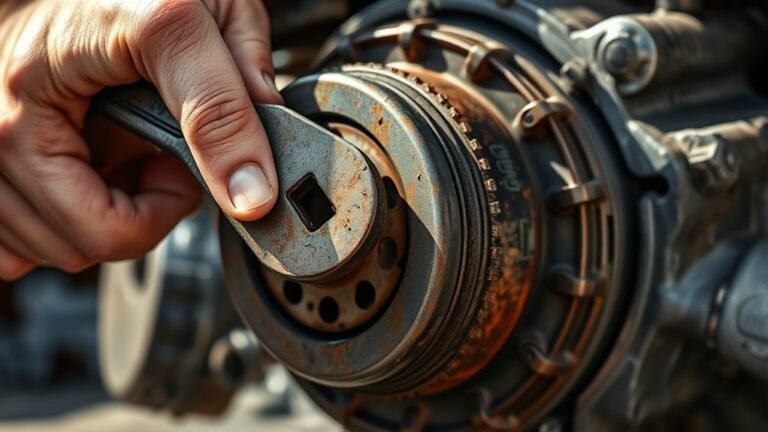
- Perform a flywheel inspection during maintenance to detect glazing, hotspots, or uneven surfaces that cause slipping.
- Avoid riding the clutch pedal, which generates unnecessary heat and accelerates disc wear.
- Monitor hydraulic systems for leaks or air, as inconsistent pressure leads to incomplete clutch engagement.
How to Test Your Clutch at Home for Slippage
You can start by performing a visual inspection to check for worn or damaged components.
Next, conduct a road test to observe any unusual slipping during acceleration.
Finally, monitor RPM versus acceleration to identify inconsistencies that indicate clutch slippage.
Visual Inspection Tips
How can you quickly determine if your clutch is slipping without disassembling the transmission? Begin with a thorough visual inspection under the hood and inside the cabin. Pay close attention to the brake pedal feel, as an unusually soft or inconsistent pedal may indicate hydraulic issues affecting clutch operation.
Follow these steps:
- Check for oil leaks near the clutch housing. Contamination can cause slippage.
- Inspect the clutch cable or hydraulic line for wear or leaks.
- Observe the clutch pedal’s travel and resistance. Excessive free play or sponginess signals adjustments or fluid problems.
- Look for signs of overheating or glazing on the clutch disc through inspection ports if available.
This diagnostic approach helps isolate clutch issues efficiently before more invasive testing.
Road Test Techniques
Why test your clutch on the road? Because slip detection is most accurate under real driving conditions where clutch wear manifests clearly. Start by driving at a moderate speed in a higher gear, around third or fourth. Gradually apply throttle without pressing the accelerator aggressively.
If you notice engine revs rising disproportionately to vehicle acceleration, that’s an early indication of clutch slippage. Next, try accelerating from a stop in second gear. If the engine revs increase but the vehicle lags without a smooth power transfer, clutch wear is likely severe.
Repeat these tests on a gentle incline for more definitive results. Always ensure safety and legal compliance during testing. This practical, diagnostic approach gives you a reliable assessment of clutch condition before engaging in further RPM and acceleration checks.
RPM and Acceleration Check
After identifying signs of clutch slippage during road tests, the next step involves a controlled RPM and acceleration check that can be performed at home. This method isolates clutch performance by correlating engine revolutions with vehicle acceleration.
Follow these steps for precise rpm checks and acceleration tests:
- Start in a low gear, press the accelerator steadily to raise RPM without fully engaging the clutch.
- Observe the tachometer for unexpected RPM spikes while the vehicle’s speed increases slowly.
- Release the accelerator and note if engine RPM drops consistently with deceleration.
- Repeat the test in multiple gears to confirm consistent clutch engagement behavior.
Inconsistent RPM response or delayed acceleration indicates clutch slippage, confirming the need for further inspection or replacement.
When to Repair or Replace a Slipping Clutch
Determining when to repair or replace a slipping clutch depends on the severity of the symptoms and the underlying cause. If you notice minor slipping during high RPMs but normal engagement at low speeds, a repair, such as resurfacing the clutch disc, may suffice.
However, consistent slipping, burning odors, or difficulty maintaining acceleration indicate significant wear, necessitating full replacement. Avoid confusing this with unrelated topic issues like transmission faults or engine performance, which require separate diagnostics.
When evaluating repair versus replacement, consider two word discussion ideas like “wear depth” and “pressure plate” condition, as these directly impact clutch functionality. Ultimately, if the friction material is thin or the pressure plate is compromised, replacement is the most effective and reliable solution to restore proper clutch operation.
How Much Does Clutch Repair Cost?
Once you’ve identified whether your clutch needs repair or replacement, understanding the associated costs becomes the next step. Effective how to budgeting requires precise knowledge of the factors influencing clutch repair expenses. Cost comparisons between repair and replacement will guide your maintenance budgeting and repair timing decisions.
- Labor costs vary widely by region and complexity, sometimes exceeding parts costs.
- Parts prices differ based on vehicle make, model, and quality. OEM parts cost more.
- Additional components like the flywheel or hydraulic system may need servicing, increasing costs.
- Timing repairs early can reduce labor intensity and prevent further damage, lowering overall expenses.
Frequently Asked Questions
Can a Slipping Clutch Affect My Fuel Efficiency?
Yes, a slipping clutch reduces fuel efficiency by causing power loss and increased engine revs. For buzzer beater ideas, use snappy tips like checking clutch wear and adjusting cable tension to diagnose and improve performance quickly.
Are Certain Car Models More Prone to Clutch Slippage?
Like a worn-out shoe sole, some car models with specific clutch materials and transmission design are more prone to clutch slippage.
You’ll notice quicker wear in vehicles using organic clutches under high-stress conditions.
How Does Clutch Slippage Impact Overall Vehicle Safety?
Clutch slippage compromises clutch safety by reducing your vehicle’s power transmission, increasing driving risk. It can cause delayed acceleration, overheating, and potential failure, impairing control and increasing accident likelihood.
Monitor and repair promptly.
Can Driving Habits Cause a Clutch to Slip Prematurely?
Yes, your driving habits directly influence clutch wear. Frequent riding of the clutch, aggressive shifting, and excessive slipping increase friction, accelerating clutch wear and causing premature slippage.
This reduces its operational lifespan and affects vehicle performance.
Is It Possible to Temporarily Fix a Slipping Clutch?
You might hear claims of temporary fixes, but slipping usually signals worn components. Possible causes like oil contamination or misadjustment can be addressed briefly, yet proper repair options often require clutch replacement for lasting reliability.