How Do I Use Fuel Injector Cleaner
To use fuel injector cleaner, first choose a product compatible with your engine and follow the exact dosage on the label.
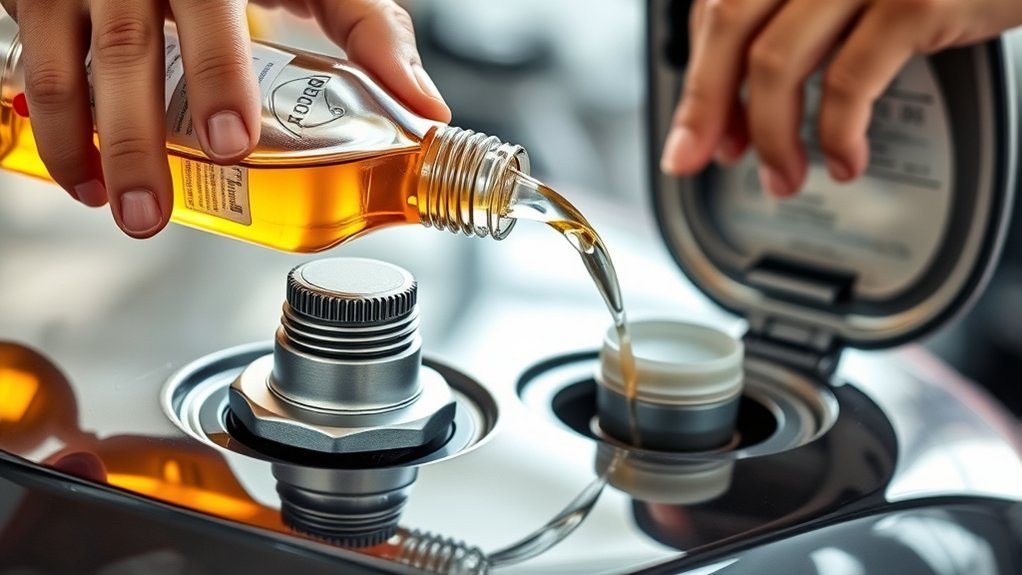
Add the cleaner to a cool fuel tank before refueling, using a funnel to avoid spills.
Work in a well-ventilated area and wear gloves for safety.
Regular use every 3,000–5,000 miles helps maintain smooth engine performance.
If you want to ensure the best results and avoid common mistakes, there’s more to consider before you start.
Key Takeaways
- Choose a fuel injector cleaner compatible with your engine and containing effective detergents like polyether amines (PEA).
- Add the cleaner to a cool engine’s fuel tank before refueling using a clean funnel to avoid spills.
- Follow the product’s dosage instructions exactly and avoid mixing with other chemicals for safe use.
- Use the cleaner every 3,000 to 5,000 miles or as recommended, adjusting frequency based on driving habits and vehicle condition.
- Work in a well-ventilated area wearing gloves and eye protection, and consult your vehicle manual for specific guidance.
Signs You Need to Use Fuel Injector Cleaner
How do you know when it’s time to use fuel injector cleaner? If you notice your engine hesitating or stumbling during acceleration, it’s a clear sign your fuel injectors might be clogged.
You might also experience rough idling or a drop in fuel efficiency, meaning your engine isn’t running as smoothly as it should. Another giveaway is difficulty starting your car or increased exhaust emissions, which could indicate poor fuel atomization.
If your check engine light flickers without any obvious cause, it’s worth considering a fuel injector cleaning. Catching these signs early helps you maintain your engine’s health without costly repairs.
Regular maintenance using cleaner keeps your injectors working properly, so you don’t have to deal with these frustrating symptoms.
How Fuel Injectors Affect Your Engine’s Performance
Your fuel injectors control how efficiently fuel reaches your engine, directly affecting fuel delivery. When they work properly, combustion is smooth and powerful, giving your engine the performance you expect.
If they’re clogged or dirty, your engine might struggle with power and efficiency.
Fuel Delivery Efficiency
Why does fuel delivery efficiency matter so much for your engine’s performance? Because your engine relies on precise fuel amounts delivered at the right time to run smoothly. When fuel injectors work efficiently, they spray fuel evenly, ensuring optimal power and responsiveness. Poor fuel delivery can cause your engine to hesitate, stall, or lose power.
Here’s why maintaining fuel delivery efficiency is crucial:
- Consistent Fuel Flow – Prevents engine misfires and rough idling.
- Improved Acceleration – Ensures quick throttle response.
- Reduced Fuel Waste – Helps you save money on gas.
- Lower Emissions – Keeps your car environmentally friendly.
Using fuel injector cleaner helps keep your injectors clear, maintaining this efficiency and protecting your engine’s performance.
Impact on Combustion
Fuel injectors don’t just control fuel delivery, they directly influence how fuel mixes with air inside the engine’s cylinders. When your injectors spray fuel in a fine mist, it blends evenly with air, creating an ideal combustion mixture.
This efficient mix allows your engine to burn fuel completely, boosting power and reducing emissions. If injectors clog or malfunction, the spray pattern distorts, leading to uneven combustion. You might notice rough idling, decreased acceleration, or higher fuel consumption.
Using fuel injector cleaner helps restore proper spray patterns by removing deposits, improving combustion quality. By keeping your injectors clean, you ensure smoother engine performance, better fuel economy, and lower emissions. So, maintaining injector health directly impacts how well your engine performs every time you drive.
How to Choose the Right Fuel Injector Cleaner
How do you pick the right cleaner for your vehicle’s injectors? Start by considering your engine type and fuel system to guarantee compatibility. Next, check the ingredients. Look for effective detergents like polyether amines (PEA) that target deposits without harming components. Also, review product reviews and manufacturer recommendations to gauge real-world performance and reliability.
Choosing the right injector cleaner starts with engine compatibility and effective ingredients like polyether amines (PEA).
Finally, consider the concentration and dosage instructions to match your vehicle’s needs without overusing the product.
Here’s a quick checklist:
- Confirm compatibility with your engine and fuel type
- Choose cleaners with proven effective ingredients (e.g., PEA)
- Read reviews and follow trusted recommendations
- Match dosage and concentration to your vehicle’s specifications
This way, you pick a cleaner that works efficiently and safely.
Tools and Supplies You’ll Need Before Starting
What gear do you need before you start cleaning your injectors? First, grab a quality fuel injector cleaner suited for your engine type. You’ll also want a clean funnel to pour the cleaner into your gas tank without spills.
Keep a pair of gloves handy to protect your hands from chemicals. A rag or paper towels will help you wipe up any accidental drips. If your vehicle’s manual suggests it, have a fuel pressure gauge ready to monitor pressure during the process.
Lastly, ensure you have a well-ventilated workspace and your vehicle’s manual nearby for reference. Having these tools and supplies ready makes the cleaning process smoother and helps you avoid any unnecessary delays or messes.
How to Use Fuel Injector Cleaner Safely
Once you’ve gathered all the necessary supplies, you’ll want to focus on using the fuel injector cleaner safely to protect yourself and your vehicle. Handling the cleaner with care ensures effective results and avoids damage or injury. Here’s how you can do it right:
- Work in a well-ventilated area to avoid inhaling fumes.
- Wear gloves and eye protection to prevent skin and eye contact.
- Follow the product instructions exactly. Don’t mix with other chemicals.
- Add the cleaner to a cool engine, typically by pouring it into the fuel tank before refueling.
Avoid These Common Fuel Injector Cleaner Mistakes
Why do some fuel injector cleaner treatments fail to deliver results? Often, it’s because you might be using the wrong type of cleaner for your engine or ignoring the product instructions. Don’t just pour the cleaner in and forget about it; your engine needs time to circulate the cleaner properly.
Also, avoid using fuel injector cleaner as a quick fix for serious engine problems. It won’t replace professional repairs. Another mistake is neglecting to use the cleaner on low fuel levels, which reduces its effectiveness.
Lastly, don’t mix different brands or types of cleaners; this can cause chemical reactions that harm your engine. Stick to the product guidelines, and you’ll get the best results from your fuel injector cleaner.
How Often to Use Fuel Injector Cleaner
You’ll want to use fuel injector cleaner based on your vehicle’s mileage and driving conditions. Typically, it’s recommended every 3,000 to 5,000 miles, but factors like fuel quality and engine performance can change that.
Paying attention to these details helps you decide the best interval for your car.
Recommended Usage Intervals
How often should you use fuel injector cleaner to keep your engine running smoothly? Generally, following the product’s instructions is best, but here are some recommended intervals to consider:
- Every 3,000 to 5,000 miles for regular maintenance.
- Before a long trip to ensure optimal engine performance.
- If you notice rough idling, hesitation, or reduced fuel efficiency.
- After filling up with low-quality or contaminated fuel.
Sticking to these intervals helps prevent buildup and maintains fuel injector efficiency. Remember, consistent use as part of your maintenance routine can save you costly repairs down the road. Always check your vehicle’s manual or the cleaner’s label for specific guidance tailored to your engine type.
Factors Affecting Frequency
When should you adjust how often you use fuel injector cleaner? It depends on several factors. If you frequently drive in stop-and-go traffic or on dusty roads, your injectors clog faster, requiring more frequent cleaning.
Using lower-quality fuel can also increase deposits, so you might need to clean more often. Conversely, if you drive mainly on highways with high-quality fuel, you can extend the intervals between cleanings.
Additionally, older vehicles or those with higher mileage often benefit from more frequent treatments to maintain performance. Pay attention to signs like rough idling or reduced fuel efficiency. These indicate it’s time for a cleaner.
Tailoring the frequency based on your driving habits and vehicle condition helps keep your engine running smoothly.
How to Know If Your Fuel Injector Cleaner Worked
Wondering if your fuel injector cleaner actually made a difference? You can tell by observing a few key signs in your vehicle’s performance. Here’s how to know if it worked:
- Smoother Engine Idle: Your engine runs more steadily without rough idling or stalling.
- Improved Acceleration: You notice quicker and more responsive acceleration when you press the gas pedal.
- Better Fuel Efficiency: Your miles per gallon (MPG) improves, meaning your engine burns fuel more efficiently.
- Reduced Engine Noise: The engine sounds quieter and runs more smoothly, with fewer knocking noises.
If you experience these improvements after using the cleaner, your fuel injectors are likely cleaner and functioning better. Keep monitoring your vehicle to ensure consistent performance.
Extra Tips to Keep Your Fuel Injectors Clean and Efficient
Why wait for problems to arise before taking action? Regularly using a fuel injector cleaner is a great start, but you can do more to keep your injectors running smoothly. Always use high-quality fuel to reduce deposits.
Avoid letting your gas tank run too low, as this can cause sediment to clog injectors. Schedule routine maintenance, including fuel system inspections, to catch issues early. Keep your air filter clean to maintain proper air-fuel mixture and prevent injector strain.
If you notice rough idling or decreased fuel efficiency, don’t ignore it. Address it promptly. These extra steps help you avoid costly repairs and ensure your engine performs efficiently for the long haul.
Taking proactive care keeps your fuel injectors in top shape.
Frequently Asked Questions
Can Fuel Injector Cleaner Improve Fuel Economy?
Yes, fuel injector cleaner can improve your fuel economy by removing deposits that clog injectors, helping your engine run more efficiently.
You’ll notice smoother performance and potentially better gas mileage when you use it regularly.
Is Fuel Injector Cleaner Safe for All Vehicle Types?
Think of fuel injector cleaner like a multivitamin; it’s generally safe for most vehicles, but just like some people have allergies, certain engines might react.
Always check your owner’s manual to avoid any surprises.
Can I Use Fuel Injector Cleaner With Diesel Engines?
You shouldn’t use regular fuel injector cleaner with diesel engines since they’re formulated for gasoline engines. Instead, look for diesel-specific injector cleaners designed to handle diesel fuel’s properties and keep your engine running smoothly.
How Long Does a Fuel Injector Cleaning Treatment Take?
A fuel injector cleaning treatment usually takes about 15 to 30 minutes when you add the cleaner to your fuel tank and let it run through the system.
Full results might need a few tanks to show up.
Will Fuel Injector Cleaner Remove Carbon Deposits Completely?
Only about 60% of carbon deposits get removed with fuel injector cleaner. You won’t completely clear heavy buildup, but it’ll considerably improve performance.
For stubborn deposits, consider professional cleaning or mechanical methods instead.
Conclusion
Now that you know how to use fuel injector cleaner, keeping your engine running smoothly is a breeze. Don’t let clogged injectors turn your car into a sluggish snail—regular cleaning can boost performance and save you big on repairs.
Just pick the right cleaner, follow safety steps, and avoid common mistakes. With a little care, your fuel injectors will stay spotless and efficient.
Making every drive feel like a joyride is easier when you consistently use fuel injector cleaner.